
Bitunix card review: spending USDT on a virtual Visa, weighed against the catch
 Available in US
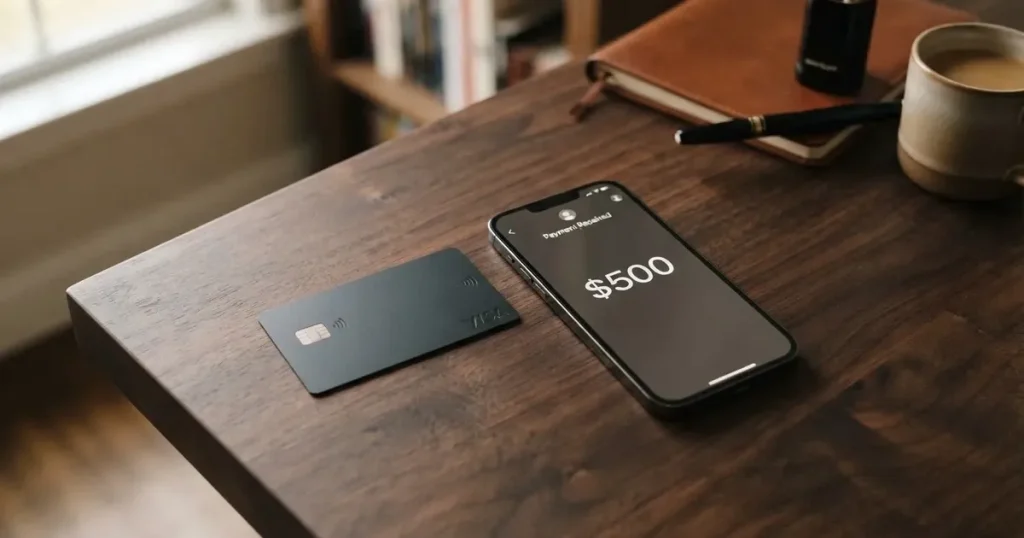
The Bitunix card is a virtual Visa debit card that pulls from a USDT balance held inside the Bitunix cryptocurrency exchange. You convert stablecoins into a card balance, the card converts that into whatever currency the merchant charges, and you spend it online or in stores. It is one of the newer entries in a growing field of crypto payment cards, and like most of them it makes one thing easy (spending crypto) and several other things harder.
I went through Bitunix’s public help center, card agreement and FAQ, and cross-referenced what I found with the exchange’s Trustpilot profile, the company press release from July 2026, and user reports. This review covers who can actually get the card, what it costs in real life, how the top-up process works, and where the friction sits. My goal is to help you decide whether this card is useful for your situation, or whether one of the alternatives I cover at the end would suit you better.
Conditions on this page are current as of October 28, 2026.
Verdict
Bitunix earns 5.3 out of 10 in my scoring. That is a middling score, and it reflects a real split: the card is cheap, simple to set up for an existing Bitunix customer, and works in the obvious ways a Visa should. But it is also narrow (USDT only, virtual only at launch, no ATM access yet), the company behind it is not transparent about who actually issues the card, and the exchange itself has a low rating on Trustpilot with frequent complaints about account freezes and slow customer service. For a Bitunix user who wants to spend USDT online without converting to a bank account first, it is a reasonable tool. For everyone else, the alternatives offer more.
Who it suits
- Existing Bitunix exchange users who hold USDT and want to spend it directly without an off-ramp to a bank.
- People in countries where local banking is unreliable or where getting a Visa debit card from a regular bank is difficult.
- Anyone comfortable with crypto-only funding and a virtual card only at this stage.
Who it does not suit
- People who need to spend Bitcoin, Ethereum or any non-USDT crypto. The card accepts USDT only.
- Anyone who needs a physical card right now. Bitunix says one is coming, but it is not available.
- Users who rely on ATM withdrawals. Not supported in the current version.
- Residents of the United States, Canada, France, Turkey, Singapore, Hong Kong, China, India, the UAE, Brazil and around 80 other listed jurisdictions. The restricted list is not exhaustive, so the card may be unavailable even in countries Bitunix has not named.
- Customers who want a clearly named, regulated card issuer. Bitunix does not name the issuer on its public pages.
Score breakdown
| Criterion | Mark | Reason |
|---|---|---|
| Who can get it | 7 / 10 | Long but not exhaustive restricted list; some big countries excluded, others quietly not addressed. |
| Cost | 6 / 10 | No issuance, monthly or annual fees; a 1.5% FX markup and a 0.5% cross-border fee are the main drags. |
| Top-up options | 3 / 10 | USDT only, from internal Bitunix accounts; no external blockchain deposits. |
| Reliability and complaints | 4 / 10 | Company and card issuer not fully disclosed; Trustpilot is 3.7/5 with persistent freeze complaints. |
| Everyday use | 5 / 10 | Virtual only, no ATM yet, but mobile wallets including Apple Pay and Google Pay work. |
| Total | 5.3 / 10 | — |
Who can get the card
Bitunix runs the card through a “Restricted Jurisdictions” policy that lists around 80 countries and regions where the card is not available. The list explicitly includes the United States, Canada, France, Turkey, Ukraine, Singapore, Hong Kong, China, India, the UAE, Cyprus, Serbia, Armenia, Kyrgyzstan, Tajikistan, Brazil, Israel and a number of others. The help center adds the Russian Federation and Belarus to the restricted set, and the policy is described as not exhaustive (“may include”) — so the absence of your country from the list does not guarantee you can get the card.
The eligibility rule is by residence, not by citizenship. That matters: if you hold a passport from a permitted country but live in a restricted one, the card application will not work. The card’s onboarding screen asks for your country of residence, and the restricted list is checked against it.
A second layer of restriction comes from the card issuer itself. The card terms refer to “the Issuer” without naming the institution. That means the actual decision about whether you can hold a Bitunix card is shared between Bitunix (the programme manager) and the unnamed issuing bank or e-money institution, and the issuing partner’s own geographic policy applies on top of Bitunix’s list. The card agreement is dated 2026-07-22 and names Blue Rock Management Pte. Ltd. as the company behind Bitunix.
Beyond residency, you must complete the exchange’s full identity verification before you can apply. That includes confirming a residential address. Bitunix publishes information on KYC levels for the exchange itself but does not document specific document requirements, age thresholds or processing times for the card beyond the general requirement.
How to get it
The signup path Bitunix describes is short: sign up for a Bitunix account, complete identity verification including address confirmation, apply for the card, and on approval the virtual card becomes available. There is no separate card application form in the public materials I reviewed, so the application step happens inside the Bitunix app once the KYC is done.
A few things to note before you start:
- The card is virtual only at launch. Bitunix says a physical card is “planned for a future phase” but has not opened applications for it. The expected delivery window, when the physical card does launch, is 7 to 20 business days, with fees depending on the delivery location.
- Issuance and replacement of the virtual card are free.
- The card’s currency is not stated on the public card pages, but Bitunix’s support materials describe USDT converting to USD at 1:1 when moved onto the card, so the underlying balance is held in USD and converted to the merchant’s currency at the point of sale.
- KYC rejection reasons, processing time for the card-specific application and any card-level tiers are not stated.
If you live in one of the 80 or so restricted jurisdictions, the application will not proceed. If you are in a permitted country but have not completed address verification, you will be asked to upload a proof-of-address document before the card option becomes available.
Fees: what the card really costs
Bitunix’s card pricing is split into three layers: the card-level fees (mostly zero), the conversion and FX charges that apply on most transactions, and the everyday small fees that catch people out. Here is the picture from the public fee schedule.

Costs at a glance
| Fee or limit | Amount |
|---|---|
| Virtual card issuance | 0 |
| Virtual card replacement | 0 |
| Monthly fee | 0 |
| Annual fee | 0 |
| Crypto conversion fee (USDT to USD on the card) | 0 |
| FX markup over the Visa rate | 1.5% |
| Cross-border fee on USD spending | 0.5% |
| Small-transaction service fee (under 10 USD) | 0.3 USD per transaction, first 3 per month waived |
| Inactivity fee (after 12 months no use) | 1 USD per month |
| Card cancellation | 0 |
| ATM withdrawals | Not supported in current version |
| Single transaction limit | 10,000 USD |
| Daily limit | 10,000 USD |
| Monthly limit | 50,000 USD |
| Cashback by VIP tier | 1% to 8% (see below) |
Three everyday payments, walked through
A 50 USD online subscription in US dollars. The card converts your USDT into USD at 1:1 with no conversion fee, then Visa settles at the network rate with a 1.5% FX markup. The cross-border fee applies only if the merchant is outside the US, so for a US merchant it does not. The total visible cost is 0.75 USD on top of the subscription price. If the subscription is below 10 USD you would pay an extra 0.30 USD, but the first three such transactions each month are waived.
A 200 EUR in-store payment in Europe. Your USDT becomes USD at 1:1, then Visa converts USD to EUR at its rate with the 1.5% markup. The cross-border fee does not apply because the spend is in a non-USD currency, but the FX markup is the dominant cost. The total additional cost is about 3 EUR on a 200 EUR purchase. This is the case where Apple Pay or Google Pay becomes useful, because the in-store experience is identical to any other Visa debit card.
A 1,000 CNY payment through WeChat Pay or Alipay. Bitunix adds a 3% fee on payments over 200 CNY through these wallets, separate from the FX markup. The reason is that WeChat Pay and Alipay sit on top of an extra processing layer; the fee reflects that. For a 1,000 CNY purchase, that is an extra 30 CNY before FX. If you are spending through these wallets, factor the 3% in.
The cashback structure offsets some of this. Cashback is paid in USDT to the card account after settlement, and the rate depends on your Bitunix VIP tier: 1% for VIP 1, 2% for VIP 2-3, 4% for VIP 4-5, 6% for VIP 6-7 and 8% for VIP 8. The cashback is described as offsetting the FX and cross-border fees, so a VIP 4-5 user effectively neutralises both the 1.5% FX markup and the 0.5% cross-border fee. A press release from Bitunix’s distribution partner (Chainwire, dated 16 July 2026) describes cashback “up to 8%” capped at 1,000 USDT monthly, and a balance yield “up to 11.6% annually” — that latter figure is unofficial and not confirmed by the card agreement.
When the physical card does launch, ATM withdrawals will cost 2% on amounts over 100 USD per month, with the first 100 USD per month free, and the daily ATM limit is 1,500 USD with a 15,000 USD monthly cap. None of this matters today, because the physical card is not yet available.
Top up: how to fund the card
The card has a “Card Account” inside the Bitunix app, and the only way to put money on it is to move USDT from one of three internal sources: your Bitunix Spot account, your Futures account, or your Earn account. There is no way to deposit USDT directly from an external blockchain wallet, and there is no way to load the card with fiat from a bank. USDT converts to USD at 1:1 once it lands in the Card Account, and the card then spends from that USD balance.
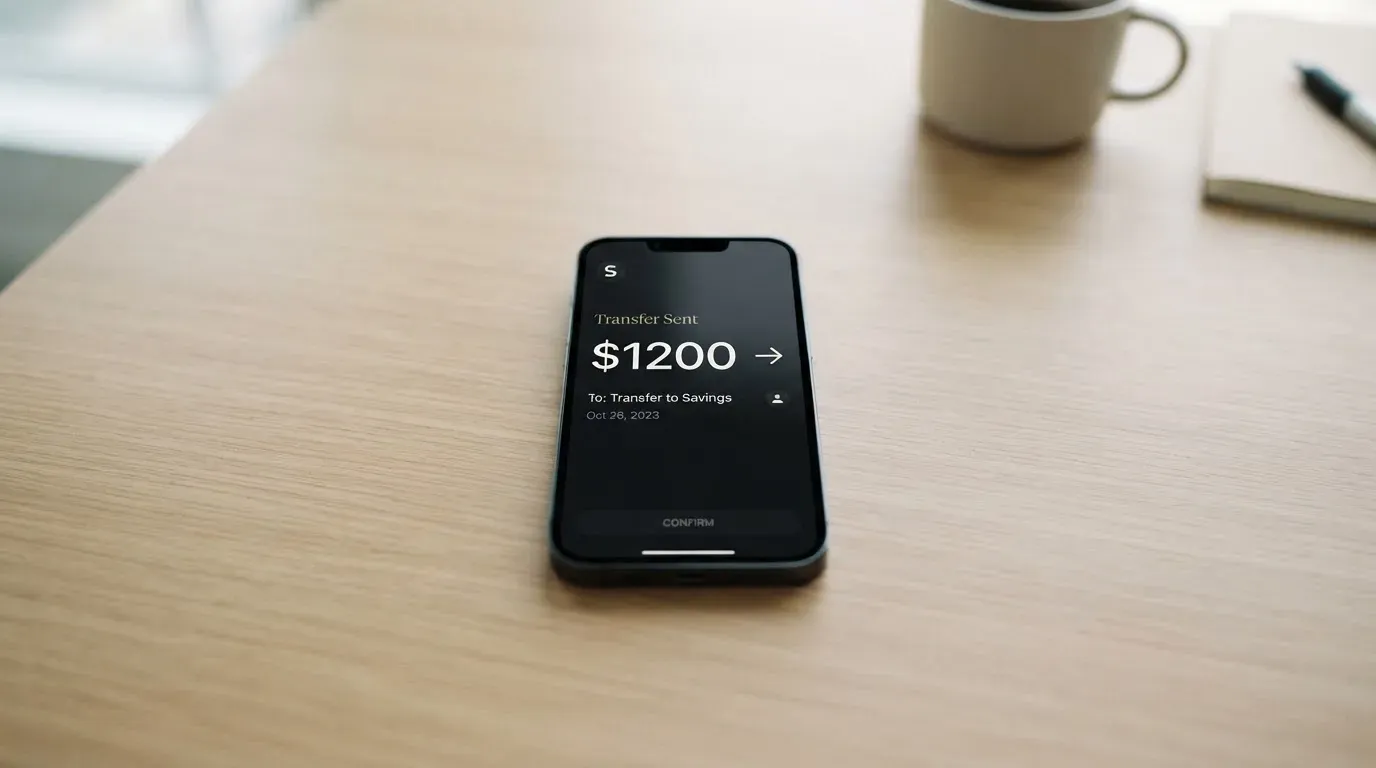
This is a much narrower funding model than competitors offer. Bybit’s card, for example, draws from a funding account that itself can be topped up with crypto from external wallets or with fiat through Bybit’s “Buy Crypto” function. Coinbase’s card draws from a US bank account or from a crypto balance held on Coinbase. Bitunix offers neither: if your USDT is on an external wallet, you must first send it to your Bitunix Spot account, then transfer it to the Card Account. Each transfer is an internal ledger move rather than a blockchain transaction, so there are no gas fees, but you are depending on Bitunix’s internal accounting.
A few practical points:
- The minimum top-up amount is not stated in the public materials I reviewed.
- The supported networks for the original USDT deposit to Bitunix are not documented on the card page. If you are sending USDT from an external wallet to Bitunix’s main deposit address, you will need to follow the exchange’s general deposit instructions, including any network selection (ERC-20, TRC-20, etc.). Blockchain transfers are irreversible, so a wrong network means lost funds.
- Cashback and referral rewards are the only flows documented in the reverse direction: Bitunix’s help center explicitly says you can transfer cashback from the Card Account to the Spot Account and then withdraw it, but the help center does not describe withdrawing the general card balance back to crypto. Card closure is free, and any positive balance “is returned under applicable law and internal procedures”, which may include identity verification and a holding period to cover chargebacks.
In short: the card is a one-way pipeline from your Bitunix USDT balance into merchant payments, with cashback as the only documented route back.
Paying with it every day
Once the virtual card is in the Bitunix app, you can add it to mobile wallets. The supported list includes Apple Pay, Google Pay, Samsung Pay, PayPal, WeChat Pay, Alipay, LINE Pay and GrabPay, with the usual caveats about platform terms and regional restrictions. In countries where Apple Pay and Google Pay are widely accepted, the card behaves like any other Visa debit card at the point of sale: tap to pay in store, autofill for online checkout, and confirm with Face ID, Touch ID or device passcode.
A few things to be aware of in everyday use:
- There is no separate card app. The card lives inside the Bitunix app. Freezing, unfreezing, viewing limits, adjusting the per-transaction ceiling, and contacting support all happen in the same place.
- Email alerts go out for transactions of 200 USD or more. The cardholder can adjust transaction and monthly limits in the Card Management section.
- Cashback is paid in USDT to the Card Account after the transaction settles, and it excludes refunds, chargebacks, cash-like transactions and certain merchant category codes. Bitunix does not publish a list of excluded MCCs, but the usual pattern across crypto cards is to block gambling (MCC 7995), quasi-cash merchants and some financial-services codes. If a particular merchant category matters to you, the only way to know is to test a small transaction first.
- Disputes are free to file, but a formal Visa chargeback carries a 50 USD fee. The investigation can take several weeks and up to 90 days in some cases. Unauthorised transactions must be reported within 14 days of the transaction or posting date. Merchant refunds usually take 5 to 14 business days. Bitunix’s policy is that you should contact the merchant first, that chargeback rights are not guaranteed, and that cash-like transactions may be ineligible for dispute.
- Address Verification Service (AVS) is mainly available in the US, Canada and the UK, and is generally unavailable on foreign-issued cards. A handful of US merchants decline prepaid or foreign-issuer cards outright, which can affect where the card works smoothly online. This is not a Bitunix-specific issue; it applies to most non-US Visa debit cards.
The card supports up to 15 third-party wallets or tokenised devices per card. In practice that is more than enough for one phone, one watch, one tablet and a few regional wallets, but the limit exists.
What can go wrong
The card itself has a small set of explicit risks in the public materials. The bigger risks are around the company, the exchange, and the category.
Card-specific risks
- The card agreement explicitly states that “no entity assumes custody of fiat funds on behalf of users” and that card funds are not bank deposits and not deposit-insured. In the EU this matters because even authorised e-money institutions are required to safeguard customer funds, and if the issuer is not an EU-regulated EMI, the safeguarding regime may be weaker. The card issuer is not named in the public materials.
- Card closure returns a positive balance “under applicable law and internal procedures”, which may include a verification step and a holding period. If the company is in financial difficulty, “applicable procedures” can turn into a long wait.
- The small-transaction fee (0.30 USD under 10 USD, first 3 per month waived) and the inactivity fee (1 USD per month after 12 months of no use) can quietly eat into balances if the card sits unused.
- A Bitunix app compromise is a single point of failure. The card lives in the exchange app, and 2FA on the exchange account is the only thing standing between an attacker and the card. Bitunix recommends 2FA but does not enforce it.
Exchange-level risks
- Bitunix is rated 3.7/5 on Trustpilot (the display shows 3.5 stars), based on 819 reviews, 546 in the last twelve months. The rating is for the exchange, not the card — no card-specific complaints showed up in my search. Common themes in the reviews are poor customer service and a clunky mobile interface.
- More worrying are the recurring complaints about account freezes with extra verification rounds. One user report from October 2026 describes about 440 USD frozen for three months while the exchange requested additional documents. Other reports from the same month mention liquidation disputes and withdrawal delays.
- The Trustpilot profile itself notes that the company “has received regulatory attention”. Bitunix does not publish the card issuer’s licence or regulator on the public card pages, so the regulatory standing of the card is opaque.
- Blue Rock Management Pte. Ltd., the company named in the card agreement, is a Singapore entity. The card issuer (“the Issuer”) is not named in the materials I reviewed.
Category-level risks that apply to every crypto card
- Stablecoins are not risk-free. Tether’s USDT and Circle’s USDC are dollar-pegged, but the wider stablecoin market has seen depegs — most notably TerraUSD in May 2022, and a brief USDC depeg in March 2023 during the US banking stress. Bitunix accepts USDT only, which concentrates that risk.
- Blockchain deposits to Bitunix are irreversible. If you send USDT on the wrong network, the funds may be unrecoverable. Internal transfers inside Bitunix are not blockchain transactions, so they do not carry this risk, but the on-ramp does.
- KYC can freeze funds. Under EU rules, if due diligence cannot be completed, the institution is required to end the relationship. In the US, the customer identification programme requires name, date of birth, address and an ID number. The same logic that protects you from money laundering can also lock you out of your own money if documents expire or details do not match.
- Tax: spending crypto on a card is generally a disposal in most jurisdictions. In the US, the IRS treats digital assets as property, and each card payment funded from crypto may produce a taxable gain or loss measured in USD at fair market value on the date of the transaction. Bitunix does not provide tax reports for card spending in the materials I reviewed.
What to take instead
If the Bitunix card’s narrow funding (USDT only, internal sources only) or its opaque issuer give you pause, three alternatives cover different needs.
Bybit Card — 6.0 / 10
Bybit offers a card in more regions than Bitunix, including Argentina, the AIFC in Kazakhstan, Georgia, Australia, Mexico, Brazil, Peru and a broader Asia Pacific rollout. The application asks for your country of residence; if it is not supported, Bybit will register your interest rather than refuse outright. The cards page says EEA customers are prohibited from participating.
The card is virtual plus physical in most regions, with the physical card not yet available in Peru. Networks and currencies vary by region: Mastercard prepaid in Argentina, Mastercard credit in Australia, AIFC, Georgia, Kazakhstan and Mexico, and Visa prepaid or credit in Brazil, Peru and Asia Pacific. Card fiat currencies include USD, ARS, MXN, BRL and PEN/USD.
The cost profile is mixed. Virtual issuance is free in all regions “until further notice”, but physical card issuance and replacement run 5 to 29.99 USD depending on region, with VIP holders in Australia, Kazakhstan (AIFC), Georgia and Asia Pacific exempt. Crypto conversion is 0.9% over the One-Click Sell rate in most regions, 0.5% in Argentina, and unsupported in Peru. FX is 2% in most regions (1% in Brazil, 7% in Argentina) with an FX padding of 0% in the main group, 5% in Argentina and 1% in Brazil, the excess refunded.
Bybit’s card has no card balance of its own: it draws from the Funding Account and Flexible Easy Earn balance, fiat first, with crypto sold automatically at the One-Click Sell rate plus a 0.9% conversion fee if fiat is insufficient. Supported cryptos include BTC, ETH, XRP, USDT, USDC and GRAM, with a default conversion priority the user can reorder.
The rewards structure is more elaborate than Bitunix’s. From 5 October 2026 only crypto-funded transactions earn points or cashback. Tiers run from Base (2%, 5 USD monthly cap) through Beta, Alpha, Apex and Omega up to Infinite (10%, 600 USD monthly cap). Cashback is paid in USDT at 0.002 USDT per point, Auto Cashback must be on, and there is a 30-day welcome offer of 10% cashback up to 110 USDT. A Pay Later instalment bonus adds another 1%.
For someone who wants a wider range of funding cryptos, a tiered cashback system with real monthly caps, and a physical card in most regions, Bybit is a more capable option. The trade-off is a heavier conversion fee (0.9% vs Bitunix’s 0%) and a more complex tier structure.
Coinbase Card — 6.4 / 10
Coinbase’s card is the simplest of the three alternatives. It is a Visa prepaid debit card, virtual or physical, available in all US states except Hawaii. Account opening follows the USA PATRIOT Act identity rules. There are no other countries.
The cost is the cleanest in the comparison: zero spending fees, no annual fees, no Coinbase transaction fees. A spread applies when Coinbase converts crypto at the point of payment, but the cardholder agreement is the source of truth for the exact rate.
Funding is also simple: link a US bank account, deposit part of a paycheck into Coinbase with zero fees, or hold a crypto balance on Coinbase and spend from it. Coinbase converts any crypto to USD at the time of payment.
The rewards are understated but flexible: optional crypto rewards on every purchase for US cardholders, the rate variable and shown in the app, the user picks from rotating crypto options. There is no elaborate tier system and no spend threshold to unlock cashback.
For a US resident who wants the simplest possible crypto card, Coinbase is hard to beat. The geographic restriction is the main limitation: if you are not in the US, it is not available.
OKX — 6.2 / 10
OKX launched a Mastercard debit card in the EU plus Norway on 28 January 2026, with Iceland and Liechtenstein excluded. The rule is by EEA user of OKX Europe Ltd., which is MiCAR-licensed. The card is euro-denominated, virtual, linked to OKX Pay, and issued via an unnamed European licensed payment provider. A physical card is not mentioned.
Costs are competitive: no card fee, no transaction fee, no OKX FX fee. The conversion spread is 0.1% per the most recent explainer (May 2026), versus 0.4% in the launch press release, with the explainer being the newer figure. Conversion to euro happens at the moment of purchase.
Funding is narrower than Bybit’s: only USDC or USDG held in OKX Pay, either via Convert or external deposit. Other coins must be converted first. There is no auto top-up, so a payment is declined if the balance is insufficient.
Cashback is paid only on USDG purchases (USDC earns none), with monthly caps in euros: Regular 2% capped at 10, VIP1 4% at 300, VIP2 4.5% at 450, VIP3 5% at 1,000 and VIP4+ 10% at 1,000. The 10% tier is inconsistent with the text (which says 2-5%), and promos vary. The launch release advertised a 30-day promo of up to 20% for VIPs and 15% for regular users.
For an EEA user, OKX offers a regulated structure (MiCAR-licensed entity) and a euro balance, which neither Bitunix nor Bybit matches cleanly. The trade-off is funding limited to two stablecoins and no physical card.
Quick comparison
| Card | Score | Funding | Cashback | Issuer transparency | Card form |
|---|---|---|---|---|---|
| Bitunix | 5.3 | USDT from internal accounts only | 1-8% by VIP | Issuer not named | Virtual only at launch |
| Bybit | 6.0 | BTC, ETH, XRP, USDT, USDC, GRAM, fiat | 2-10% by tier | Per region | Virtual and physical in most regions |
| Coinbase | 6.4 | US bank, paycheck, any Coinbase crypto | Variable, user picks crypto | Coinbase Inc. (US) | Virtual and physical (US only) |
| OKX | 6.2 | USDC, USDG only | 2-10% by tier, USDG only | Unnamed European licensed provider | Virtual only |
Who I would recommend it to
If you already use Bitunix, hold USDT, and want to spend it online or in store without first converting to a bank account, the Bitunix card is a reasonable tool. The fee structure is transparent, the cashback tiers are clearly published, and the card works with the major mobile wallets. The combination of a 0% conversion fee, a 1.5% FX markup, and a 0.5% cross-border fee means the cost of a typical online payment is comparable to other crypto cards, and the higher VIP cashback tiers (4% at VIP 4-5) effectively cancel out the FX and cross-border charges.
If you are not an existing Bitunix user, the case is weaker. The card is USDT-only, virtual-only, and the issuer is not named publicly. The exchange itself has a middling Trustpilot rating with persistent complaints about account freezes. The combination of a 1.5% FX markup, a 0.5% cross-border fee, and the small-transaction service fee can quietly add up if you make a lot of small purchases, especially through WeChat Pay or Alipay where the additional 3% fee applies.
For most readers I would suggest one of the three alternatives. Bybit’s card offers more funding options and a more elaborate cashback structure. Coinbase’s card is the cleanest for a US resident. OKX’s card is the most clearly regulated option for an EEA user, with a MiCAR-licensed entity behind it. None of these are perfect, and the category as a whole still has rough edges, but the Bitunix card’s narrow funding and opaque issuer make it a niche option rather than a general-purpose one.
If you do decide to use the Bitunix card, a few habits will save you money and trouble:
- Keep your VIP level in mind. At VIP 4-5 (4% cashback) the FX markup and cross-border fee are effectively offset. Below that, every cross-border payment carries a real cost.
- Avoid WeChat Pay and Alipay for purchases under 200 CNY when possible, since the 3% wallet fee is the same regardless. The fee only applies above 200 CNY, but it stacks on top of the FX markup.
- Use Apple Pay or Google Pay for in-store purchases. They work the same as any Visa tap-to-pay, and you avoid the wallet-specific fees.
- Set the per-transaction limit as low as you can tolerate. The default 10,000 USD is high for a debit card; tightening it limits your exposure if the app is compromised.
- Turn on 2FA on your Bitunix account. The card lives in the app, so the account is the only security boundary.
- Make at least one purchase every 12 months. The 1 USD monthly inactivity fee after 12 months is small, but it is one more thing to remember.
- For tax purposes, keep your own record of every card payment, the USDT balance used, and the USD value on the date of the transaction. Bitunix does not provide a tax report for card spending in the materials I reviewed.
Frequently asked questions
What is the Bitunix card?
The Bitunix card is a virtual Visa debit card issued inside the Bitunix cryptocurrency exchange app. It draws from a Card Account funded with USDT converted to USD at 1:1, and the card balance is spent at any merchant that accepts Visa, online or in store. A physical card is planned but not yet available.
How does the Bitunix card work?
You move USDT from your Bitunix Spot, Futures or Earn account to the Card Account, where it becomes a USD balance. When you pay, the card converts the USD into the merchant’s currency at the Visa rate, plus a 1.5% FX markup. Cashback is paid in USDT after settlement, with the rate depending on your VIP tier.
Is Bitunix a bank?
No. Bitunix is a cryptocurrency exchange. The company behind it is named in the card agreement as Blue Rock Management Pte. Ltd., a Singapore entity. The card agreement explicitly says card funds are not bank deposits and not deposit-insured, and that “no entity assumes custody of fiat funds on behalf of users”.
Who owns Bitunix?
The card agreement names Blue Rock Management Pte. Ltd. as the company behind Bitunix. The card issuer itself is referred to as “the Issuer” and is not named in the public materials. Bitunix does not publish a regulatory licence for the card programme on the public card pages.
Is the Bitunix card available in my country?
Bitunix publishes a Restricted Jurisdictions list of around 80 countries and regions, including the US, Canada, France, Turkey, Singapore, Hong Kong, China, India, the UAE and Brazil. The rule is by residence, not by citizenship. The list is described as not exhaustive, so the card may be unavailable in countries Bitunix has not named. The card agreement was last updated 2026-07-22, and the restricted list was updated 2026-10-08.
How do I get the Bitunix card?
Sign up for a Bitunix account, complete identity verification including a confirmed residential address, and apply for the card from inside the app. On approval the virtual card is available immediately. There is no separate physical card application; the physical card is not yet available.
Does the Bitunix card require KYC?
Yes. Identity verification, including a residential address, must be completed before you can apply. The exchange has multiple KYC levels, but the card-specific document list, age requirement and processing time are not stated in the public materials.
How do I top up the Bitunix card?
Transfer USDT from your Bitunix Spot, Futures or Earn account to the Card Account inside the app. External blockchain deposits to the Card Account are not supported. The minimum top-up amount is not stated.
How do I add the Bitunix card to Apple Wallet or Google Pay?
Open the Bitunix app, find the card in Card Management, and follow the prompt to add it to Apple Pay, Google Pay, Samsung Pay, PayPal, WeChat Pay, Alipay, LINE Pay or GrabPay. The supported list is subject to platform terms and regional restrictions, so the wallets that actually appear depend on your device and country.
Is the Bitunix card safe?
The card uses standard 2FA on the Bitunix account, supports instant freeze and unfreeze in Card Management, sends email alerts for transactions of 200 USD or more, and supports up to 15 third-party wallets or tokenised devices. Card funds are not bank deposits and not deposit-insured, the issuer is not named publicly, and the exchange has a 3.7/5 Trustpilot rating with recurring complaints about account freezes. Treat the card with the same caution you would apply to any custodial crypto product.
Exchange cards – cryptocardsranked
Content created by the «cryptocardsranked» team