
A virtual USD card that runs on stablecoins, and a product still finding its feet
 Available in US
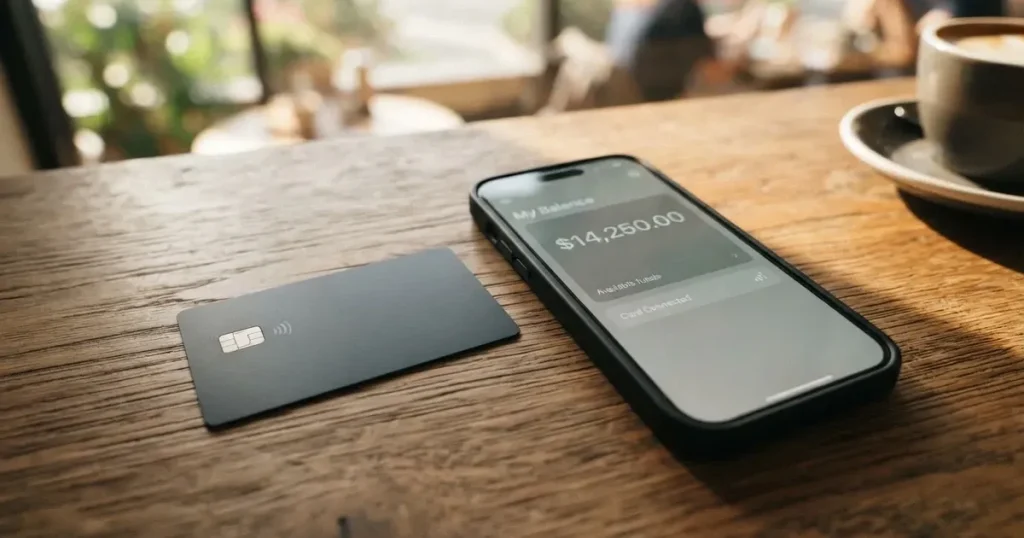
Trustee sells itself as a worldwide crypto card, but the experience is narrower than the marketing suggests. The card is virtual, USD-denominated, and funded by USDC or USDT moved through the Trustee Plus app. It works where Mastercard works, but cash withdrawals are off the table, the physical card is on a waitlist, and the user reviews tell a story of funds frozen during reviews that the company says are routine. That mix of low everyday friction and uneven reliability sits behind the score below.
I went through the card’s pages, the app store listing, the Trustpilot reviews and a few unofficial guides, and this review is what I found. The conditions on these pages are current as of October 28, 2026.
Verdict
Trustee earns 5.1 out of 10. The product works for a specific use case: a virtual USD card, top-up with stablecoins, spending wherever Mastercard is accepted, and a virtual card issued in a few minutes. If that is what you need, the bones are decent: 0% on transactions, 30,000 USDC a month as a spending ceiling, Apple Pay and Google Pay, and a relatively cheap entry price of $10 for the virtual card. The numbers fall because the official pages leave too much unsaid. Country eligibility is not listed, the FX markup is not disclosed, the fee schedule is a black box, and the user reviews pile up around one theme: funds stuck in compliance review with no clear timeline.
The score in detail:
| Criterion | Mark | Short reason |
|---|---|---|
| Who can get it | 5 / 10 | Countries not listed; “Worldwide” and “Issued in Great Britain” are the only clues; unofficial sources point to EEA plus Ukraine and Moldova |
| Cost | 7 / 10 | Virtual at $10, advertised 0% on transactions; conversion markup undisclosed, reviews cite up to 2% |
| Top-up options | 5 / 10 | USDC or USDT only, no networks named; 30,000 USDC monthly ceiling |
| Reliability and complaints | 3 / 10 | 2.2 out of 5 on Trustpilot from 236 reviews, 56% one-star, recurring story of frozen funds |
| Everyday use | 5 / 10 | Virtual only, no ATM withdrawals, Apple Pay and Google Pay work |
| Total | 5.1 / 10 | — |
The audience this card suits is narrow but real. If you are an EU resident who wants a virtual USD card funded by stablecoins, and you do not need cash from an ATM or a physical card in the post, Trustee can do the job for a low upfront cost. If you need a physical card right now, rely on cash withdrawals, or live outside the regions hinted at in third-party guides, this is not the product for you.
Will they give you the card
Trustee’s own pages keep eligibility short: the card is described as a “Worldwide Crypto Card” and the issuer is named as “Issued in Great Britain”. No list of supported countries appears. That vagueness is the first thing to know, because in practice where you live and where your ID is from will decide whether you can complete the sign-up at all.
Unofficial sources fill some of the gap. A guide on cryptocardhub and a forklog walkthrough, dating from the 2023-2025 era, describe the card as available to residents of the European Economic Area plus Ukraine and Moldova, and usable wherever Mastercard is accepted. Those guides may be out of date; Trustee has not confirmed them on its own pages. Treat them as useful hints, not as a promise.
Beyond the country question, the card’s identity is unusual. The page does name an issuer: Wirex Limited, a UK-based e-money institution. Wirex is a known and regulated card issuer in the crypto space, which gives some comfort about the rails under the card. The “Trustee” brand itself is not described on the page as a bank or as a licensed e-money institution, so the safest read is that Trustee is the front-end and Wirex is the regulated partner doing the actual issuing.
The general rule in this category is that KYC is required, and Trustee is no exception. You have to verify your identity before the card is issued, and the issuer will run sanctions and politically exposed person screening as part of that process. If due diligence cannot be completed, EU rules require the institution either to refuse the relationship or to close it, which is the background to many of the frozen-account stories in the reviews.
How to get it
The full sign-up process is described below, but the shape of the process is straightforward: download the Trustee Plus app, complete KYC, order the card, and top up the balance in USDC or USDT. That is the entire pipeline in four steps, and the virtual card is issued in a few minutes once the verification is done.
What the official pages do not spell out is which documents you will need, and what can slow the process down. The walkthrough the app uses is a single KYC step: open Profile, tap Identity, choose your country, pick “Other method”, state the account purpose and source of income, add your address, scan an ID card (national passport) or international passport, and take a selfie. Levels, processing time, and the reasons a verification might be rejected are not stated.
Unofficial write-ups and user reviews suggest a few practical realities. The list of documents can grow. Proof of address and additional checks may be requested after the initial verification, not in the same sitting. Some users have reported being asked for five separate documents. And an AML review can follow the initial approval, separate from the sign-up step itself; the card can be issued and then the balance frozen weeks or months later when the source-of-funds checks start.
A few things to check before you start:
- The app needs iOS 17.0 or later on iPhone; the Android version is offered as an APK directly from the site, which means it is not on Google Play, and the App Store listing is the Nepal storefront with no rating yet.
- The card currency is USD, so the card balance and any FX treatment only make sense once you know which currencies you will actually spend in.
- The issuer is Wirex Limited, a UK e-money institution, and the dispute and complaint rights you have are ultimately under UK and EU rules for e-money.
What it really costs
The headline numbers are simple; the details are where it gets interesting. Virtual card $10, no monthly fee stated, “0% fees on transactions” advertised. That is the part Trustee puts forward. The part it does not put forward is the FX markup on payments that are not in USD, the network fees you pay on the way in, and what the conversion actually costs you at the moment of payment.
A note on unofficial figures: third-party sites and a forklog guide from the 2023-2025 era list a virtual card at €10 and a physical card at €25, with no monthly maintenance fee in euros. One of those sites mentions a promotion with no virtual issuance charge. These are not confirmed by Trustee’s own pages, and the official page lists the virtual at $10, so the safe reading is that you will pay around $10 for the virtual card and that anything beyond that is a promotion you should expect to end.
The conversion picture is the one to watch. The card spends in USD, and payments in EUR, PLN, GBP or other currencies are converted automatically. Trustee’s pages do not state the markup on that conversion, which is the fee that usually matters most for everyday spending. Unofficial sources point to a 0.5% crypto-to-euro conversion fee, and the most consistent number across 2023-2025 articles, but Trustpilot reviewers report conversion fees of up to 2% per transaction, with no breakdown. If the higher number is closer to the truth, that is a meaningful drag on every non-USD payment.
ATM withdrawals are not currently available from the Trustee Plus card. The official page says so plainly: “At the moment, cash withdrawals from the card in Trustee Plus at ATMs are not available.” The product page for the physical card still mentions cash withdrawals as a feature, but the physical card is on a waitlist. Unofficial guides describe ATM access at NFC-enabled terminals with PIN, with limits up to €2,000 per day and €10,000 per month at 1.5% plus €1, but those figures come from older guides and contradict the current official line.
The costs at a glance:
| Fee or limit | Value |
|---|---|
| Virtual card | $10.00 |
| Physical card | Temporarily unavailable (waitlist) |
| Monthly fee | Not stated |
| Transaction fee | Advertised 0% |
| FX markup on non-USD payments | Not stated (unofficial: ~0.5%; reviews cite up to 2%) |
| ATM withdrawals | Not available at the moment |
| Monthly transaction limit | 30,000 USDC |
| Daily limit | Not stated |
To make this concrete, three everyday scenarios:
- A €50 payment at a German supermarket. The card balance is in USD, so Trustee converts. At an unofficial 0.5% markup that is about $0.27, at the 2% reviewers report it is about $1.08. The advertised 0% transaction fee does not apply to the conversion.
- A $100 online subscription paid in USD. No conversion needed, the 0% transaction fee should apply, and the only friction is the on-chain network fee you paid to fund the card with USDC in the first place.
- A PLN 200 payment in Poland. Same as the euro case but on a different currency; the FX markup matters and is not disclosed, so the safest move is to test with a small payment first and check the receipt in the app.
A few things to check first:
- Confirm the conversion rate shown in the app at the moment of payment, and screenshot it if you want to challenge it later.
- Treat the 30,000 USDC monthly limit as a hard ceiling, because no daily limit is published and you do not know how the two interact.
- Network fees for the USDC or USDT transfer to the Trustee Plus wallet are charged by the blockchain, not by Trustee; the card provider does not control that part of the cost.
Top up
The top-up flow has two steps, and the distinction between them is worth keeping clear. First you fund the Trustee Plus wallet, and only then do you move money onto the card balance. The two balances are separate, and the card can only spend what has been moved across. The official pages say top-up is in USDC or USDT; no other assets are mentioned, and the networks are not specified on the card pages.
The funding page says the card balance is credited “usually within up to 5 minutes”, and the wallet-to-card step is also described as quick. Fees, minimums, and supported networks are not stated on the page itself. A wiki page links to a “How to add funds to the EUR balance” article and a “Trustee Plus fees” article, but those articles were not retrievable from the public pages I read, so the practical answer is that you have to test a small amount first and watch the network fees.
Unofficial sources describe a wider wallet, with 30 or more assets supported inside Trustee Plus (BTC, ETH, TRX, USDT, USDC, SOL among them), and one guide limits card spending to BTC, ETH, USDT, with USDC only allowed as a wallet top-up. The official page is narrower: only USDC and USDT can be moved to the card balance, and only after they are already inside the wallet.
A few things worth knowing about the networks:
- USDC and USDT are issued on many blockchains, and the wrong network is the most common cause of lost deposits in this category. Transfers are irreversible on every chain.
- USDC on Tron is not a native option since Circle stopped supporting it in February 2024, so “USDC over TRC20” is not a route to this card.
- On Ethereum you need a small amount of ETH in the sending wallet to pay gas; a wallet with USDT but no ETH cannot send.
- On Tron, fees are paid in TRX or via bandwidth and energy resources; you may need a small TRX balance to move USDT.
A few things to check first:
- Send a test amount first, smaller than the minimum you are willing to lose, before committing a larger balance.
- Match the network on the deposit screen exactly, including the memo or destination tag if one is shown.
- Treat the personal IBAN and SEPA transfer option that the wiki mentions as a separate funding path, with its own fees and limits; it is not described on the card pages I read.
Paying with it every day
Once the card is loaded, the experience is a normal contactless or online card experience. The card supports Apple Pay and Google Pay, so a tokenised version of the card can be added to a phone wallet and used at a terminal or in an app. The official pages do not list blocked merchant categories, but most crypto cards in this category block gambling and a few high-risk categories; that is a policy question for Trustee’s support if it matters to you.
A few practical points:
- The card is virtual, so the only way to pay in a physical store is through a phone wallet. There is no physical card to insert or swipe.
- Online payments may be challenged with 3-D Secure (Mastercard Identity Check), in which case you confirm the payment in the Trustee Plus app or by a one-time code.
- Some merchants decline prepaid or foreign-issued card numbers outright, especially when the BIN lookup shows an issuer country different from the billing address. This is a category-wide pattern, not a Trustee-specific one.
- A declined authorisation can leave a hold on the balance for several days, even when the charge never settles; that is a Visa/Mastercard rule, not a Trustee one.
- There is no published cashback, points or rewards programme, and reviews on the cards being moved to a merged platform do not mention any loyalty hook.
The app itself is the control panel. The version I checked was 2.1.6 on iPhone iOS 17.0 or later, the developer listed as MIKEPAY INC., and the App Store listing showed no rating because there were not enough ratings. The Android build is an APK offered on the Trustee site, not the Google Play store. The app supports English, Bulgarian, Lithuanian, Polish, Portuguese, Russian and Ukrainian.
A few things to check first:
- Add the card to Apple Pay or Google Pay as soon as it is issued, since that is the only way to pay in person right now.
- Check the app for an instant card-freeze or card-restart option, since the official security page mentions sign-in protection but does not describe a card-freeze toggle.
- Dispute and chargeback handling is not described on the card or wiki pages, and at least one reviewer reports an account closed after a chargeback request, so it is worth asking support about the dispute procedure before you rely on it.
What can go wrong
The product is new enough that the official incident list is empty, and the user reviews fill in the picture. The most consistent theme is funds frozen during review, and the experience of being unable to use the card or withdraw the balance for weeks or months at a time. The official company replies to negative reviews almost always (98% of the time on Trustpilot), and the language is usually the same: “funds are safe”, with a request for documents and a reference to the compliance team. That is reassuring in the sense that there is a reply, and not reassuring in the sense that the same reply turns up again and again.
The numbers on the user reviews:
- Trustee Plus on Trustpilot: 2.2 out of 5 from 236 reviews, 97 in the last 12 months, 56% one-star and 37% five-star, read 2026-10-20.
- A separate trustee.io Trustpilot page (possibly a different entity) shows 2.5 out of 5 from 5 reviews, all one-star, from June to October 2026, including one account closed after a chargeback request on 22 September 2026 and a five-document request on 12 October 2026; the profile is unclaimed.
A few specific themes from the reviews:
- Funds frozen under AML review with no clear timeline. One report cites 21,360 USDT held since 1 October 2026; another reports 53 days; others describe 30+ days.
- “Return to source” refunds requested by the platform not completed over periods of three to seven months.
- Copy-paste support replies, particularly from June to October 2026.
- Lost access or verification revoked, in July and October 2026.
- A card blocked in July 2026, with a company reply on 30 July 2026 attributing the block to the card issuer (Wirex).
- A July 2026 review reporting a card block that the company reply attributes to the card issuer.
A separate set of concerns comes from the security and custody model. The official security page says “We safeguard, but we do not control”, without explaining what safeguarding means in practice. Sign-in is by passkey, biometrics (Face ID), or an Apple or Google account; multi-level two-factor authentication is advertised; Hacken does vulnerability testing and runs a HackenProof bug bounty; reserves are monitored 24/7. Insurance is not mentioned.
The company-side picture is also worth keeping in mind. The card is issued by Wirex Limited, a regulated UK e-money institution, and the cards themselves are programme-managed by the Trustee brand. A July 2026 review describes cards being moved to a merged platform or new provider, which is the kind of structural change that has historically been painful for users in this category; programme closures typically give a notice period, then stop spending and loading, then ask users to withdraw remaining balances, with no guarantee on the speed of refunds.
A few things to check first:
- Treat the card balance as a working balance, not a store of value. Move crypto in, spend it, and keep the bulk of holdings elsewhere.
- Read the AML review policy and document-retention rules before you load a large amount, and keep records of the source of every deposit.
- If a freeze happens, the company response is usually to ask for source-of-funds documents, and the unofficial reports suggest a faster resolution when the documents are comprehensive and consistent from the first deposit.
What to take instead
The right alternative depends on what you actually need. Trustee’s pitch is a USD-denominated virtual card funded by stablecoins, and the strongest competitors in that niche each take a different angle.
| Card | Score | Best for | Annual cost | FX | Cashback | Card network |
|---|---|---|---|---|---|---|
| Trustee | 5.1 / 10 | Cheap virtual USD card, EEA users | $10 virtual, no monthly fee | Not stated | Not stated | Mastercard (not stated on card page) |
| MetaMask Card | 7.1 / 10 | Self-custody spending, 45 listed countries | Virtual free; Metal $199/year | No extra FX fee, Mastercard rate | Up to 3% in mUSD (Metal, capped at $10,000) | Mastercard |
| KAST | 6.1 / 10 | Tiered stablecoin card with cashback | Standard $0; Premium $1,000/year; Private $10,000/year | 0.5%–1.75% by region and programme | Up to 3% in USD on the Private tier | Visa |
| Zeal | 6.1 / 10 | Multi-currency stablecoin wallet, no FX markup | Not stated | No extra FX fee, Visa wholesale | Up to 4% in GNO, paid on Gnosis Chain | Visa |
MetaMask Card is the closest spiritual alternative. It spends directly from a self-custody wallet on Linea, Base, Monad or Solana, the virtual card is free, the Metal tier is $199 a year, and the headline cashback is 1% on the Virtual card and 3% on the Metal (3% capped at the first $10,000 spent, then 1%). It uses the Mastercard rate with no extra FX fee, and the trade-off is a tighter country list: sign-up is open in 45 listed countries (Andorra, Argentina, Brazil, Canada, Mexico, Germany, France, Spain, Uruguay among them), and the rest of the world is a waitlist. US and UK sign-ups are temporarily closed. Card issuer is Monovate, with Crypto Life as card provider.
KAST is the closest competitor on the stablecoin-funded model. It accepts USDT, USDC, PYUSD and RLUSD on Ethereum, Solana, Polygon, Arbitrum and Tron, and the stablecoin-to-USD conversion is 0% with 0% card spend commission. Non-USD FX is 0.5% to 1.75% depending on residence country, transaction country and card programme, and there is a 0.50 USD fee on declined transactions from insufficient balance. The membership model is the catch: Standard is $0, Premium $1,000 a year, Private $10,000 a year, all billed annually upfront. Cashback is up to 1.5% on Standard, 2% on Premium, 3% on Private, paid in USD.
Zeal is the multi-currency option, with accounts in EUR, USD and GBP and balances held in a “card Safe” on Gnosis Chain and Celo. Zeal charges no extra FX fee, conversion is at the Visa wholesale rate, and cashback is up to 4% in GNO, paid on Gnosis Chain. Country coverage is wider than Trustee’s: spend in 150+ countries, with the live card programme (Gnosis Pay) in the EU, UK, Brazil, Colombia, Mexico, Japan, Singapore, Philippines, Indonesia, Thailand, and recent notes adding Mexico, Colombia and Bolivia. Physical card availability is not stated, and the fee schedule is not published on zeal.app or the App Store.
The pattern across all three: a more transparent fee schedule, a published country list, and a rewards or cashback hook that Trustee does not currently match.
Who I would recommend it to
Trustee is worth a look in a narrow set of cases:
- You live in the EEA (or possibly Ukraine or Moldova) and want a virtual USD card for online spending, with a low upfront cost and stablecoin top-up.
- You do not need a physical card and do not need cash from an ATM in the short term.
- You plan to use Apple Pay or Google Pay for in-person payments, and you are comfortable with the card being a Mastercard token rather than a piece of plastic.
- You understand the fee structure is partially hidden, and you are willing to test the FX markup with a small payment before committing a larger balance.
- You are willing to keep the card balance small, and keep the bulk of your holdings in a wallet you control.
Trustee is not for you if any of the following apply:
- You need a physical card now; the physical card is on a waitlist and the wait time is not stated.
- You need ATM access; cash withdrawals are not available at the moment.
- You live outside the regions hinted at in unofficial guides and cannot afford to be blocked at KYC.
- You plan to hold a large balance on the card for a long time, given the user reviews on frozen funds.
- You want a published cashback, points or rewards programme; Trustee does not advertise one.
- You want full fee transparency, including the FX markup; the official pages leave that out.
If you fall in the first group, Trustee can do the job. If you fall in the second, the alternatives above are a better starting point.
Frequently asked questions
What is Trustee card?
Trustee is a virtual Mastercard-style card denominated in US dollars, sold through the Trustee Plus app and issued by Wirex Limited in Great Britain. You fund it with USDC or USDT from the Trustee Plus wallet, and you spend the USD balance anywhere Mastercard is accepted online or through Apple Pay and Google Pay. The physical card is on a waitlist at the moment.
How does Trustee card work?
You download the Trustee Plus app, complete KYC, order the virtual card, top up the Trustee Plus wallet with USDC or USDT, move the balance from the wallet to the card, and then spend. Payments in non-USD currencies are converted automatically at the moment of payment. The conversion markup is not disclosed on the official pages.
Is Trustee a bank?
No. Trustee is the brand that markets the card, and the card is issued by Wirex Limited, a UK e-money institution. Trustee is not described on the card pages as a bank or as a licensed e-money institution itself, and the funds you load are safeguarded by the issuer under e-money rules, not protected as bank deposits.
Who owns Trustee?
The card pages name Wirex Limited as the issuer and “Issued in Great Britain”. The Trustee brand itself is not described as a regulated entity on the card pages, so the safest read is that Trustee Plus is the programme manager and front-end, and Wirex is the regulated partner that issues the card.
How do I get a Trustee card?
Download the Trustee Plus app, complete KYC, order the virtual card, and top up the balance in USDC or USDT. The virtual card is issued in a few minutes once verification is done. The documents the app asks for are an ID card (national passport) or international passport, a selfie, your address, and the account purpose and source of income; proof of address and other documents can be requested later.
Does Trustee card require KYC?
Yes. KYC is required before the card is issued, and the page describes a single step in the app: Profile, Identity, choose country, “Other method”, state the account purpose and source of income, address, ID card or international passport, and a selfie. An AML review can follow the initial approval, and the source-of-funds checks can lead to funds being held pending documents.
How do I top up Trustee card?
Top up the Trustee Plus wallet in USDC or USDT, then move the balance from the wallet to the card. The card balance is credited “usually within up to 5 minutes”. Networks, minimums, and fees for the wallet-to-card step are not stated on the card pages. Transfers are irreversible, so a deposit sent on the wrong network can be lost.
Is Trustee card free?
No. The virtual card is listed at $10 on the official page, the physical card is on a waitlist, and the monthly fee is not stated. The card advertises “0% fees on transactions”, but the FX markup on non-USD payments is not disclosed, and reviewers report conversion fees of up to 2% per transaction. Network fees for the USDC or USDT transfer are charged by the blockchain, not by Trustee.
Is Trustee card safe?
The card is issued by Wirex Limited, a regulated UK e-money institution, and the official security page advertises passkey and biometric sign-in, multi-level 2FA, Hacken vulnerability testing, a HackenProof bug bounty, and 24/7 reserve monitoring. Insurance is not mentioned, the custody model is not explained, and the user reviews (2.2 out of 5 on Trustpilot from 236 reviews, 56% one-star) describe funds frozen during AML review for weeks or months at a time. Treat the card balance as a working balance, not a store of value.
Where can I use Trustee card?
Anywhere Mastercard is accepted, online or in person through Apple Pay or Google Pay, subject to the issuer’s policy on blocked merchant categories. The card is virtual only at the moment, so in-person payments require a phone wallet. Some merchants decline prepaid or foreign-issued card numbers outright, and a declined authorisation can leave a hold on the balance for several days.
Wallet cards – cryptocardsranked
Content created by the «cryptocardsranked» team