
How useful is the KuCard for everyday spending, and who is it really for?
 Available in US
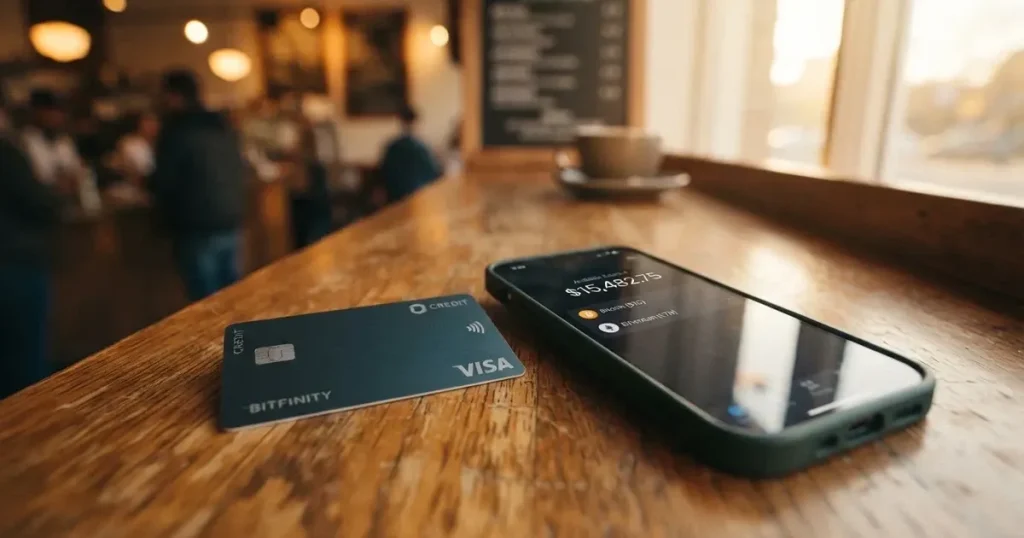
KuCard is a Visa debit card that ties your spending to a crypto balance on the KuCoin platform, with the issuer being Wallester AS in Estonia rather than KuCoin itself. That distinction matters more than the marketing suggests, because it shapes who can get one, how the money moves, and what recourse you have if something goes wrong. The card targets people who already keep funds on KuCoin and want a familiar Visa interface to spend them, and the design is honest about that audience: this is not a generic crypto card, and the EEA-only rule means most of the world cannot apply.
I went through the terms, the help articles and the publicly available fee pages, and I also looked at user reports, to put together a balanced picture. The card has real strengths: a free first virtual card, free euro payments, a regulated EU issuer and very few card-specific complaints. It also has real limits: the published fee schedule is thin, the supported coins and networks for top-ups are not listed, everyday limits are not disclosed, and the KuCoin exchange around it has a turbulent public feedback record. If you live in the EEA, already use KuCoin and want a simple euro Visa to draw down a stablecoin balance, KuCard does the job. If you are outside the EEA, want a card that supports a wide range of coins, or care about predictable published limits, this is not the card for you.
The conditions below are current as of October 28, 2026.
Verdict
My overall mark for KuCard is 6.0 out of 10. That number reflects the tradeoff between a clean, regulated euro product on the one hand and a thin public fee schedule plus the uncertainty that comes with the KuCoin brand on the other. The card does the simple things well, but it does not give you enough information to plan around it, and that pulls the score down.
Who it suits: residents of the European Economic Area (and Iceland, Liechtenstein and Norway) who already hold crypto on the KuCoin EU platform and want to spend it through a Visa without converting to a bank account first. If your main spending is in euros, you do most of it online or with a phone wallet, and you are comfortable with USDT as a working currency, KuCard is a reasonable fit.
Who it does not suit: anyone outside the EEA, including the United Kingdom, Switzerland and Malta, where the help page explicitly says the card is not available. It is also a poor fit if you want to spend a wide range of coins directly, if you want a published limit table to plan large purchases, or if you would rather not be tied to the KuCoin exchange for both custody and customer support.
| Criterion | Mark | Why |
|---|---|---|
| Who can get it | 5/10 | EEA citizens and residents only, with an EEA-issued ID; not available in Malta. |
| Cost | 6/10 | First virtual card free, then €9.90 or €9.99 per card; euro payments free, non-euro payments 2%, ATM in Europe €2. |
| Top-up options | 4/10 | Funded from crypto held on KuCard, USDT by default; the list of supported coins and networks is not published. |
| Reliability and complaints | 7/10 | Issuer is Wallester AS, supervised by the Estonian FSA; almost no card-specific complaints; the surrounding exchange has a poor public feedback record. |
| Everyday use | 8/10 | Visa debit, virtual card available immediately, Chip&Pin physical card, mobile wallets available unofficially. |
| Total | 6.0/10 | A workable euro card for existing KuCoin users, held back by thin public information and an EEA-only rule. |
Who they will give the card to
The eligibility rule is narrow, and the rule on the terms page is the one that matters: KuCard is “only available to citizens and residents of the European Economic Area (EEA)”, and the permitted jurisdictions list in section 3.2 of the terms is the EU member states plus Iceland, Liechtenstein and Norway. The help page adds one country where the card is not available even though it is in the EEA: Malta. The card asks for an EEA-issued identity document, so an EEA citizenship or residence status alone is not enough on its own; the ID has to be issued by an EEA country too. In practice this means a French citizen living in Singapore with a Singaporean ID is not eligible, and a German citizen in Germany with a German passport is.
The rule is citizenship- and residence-based rather than country-of-birth based, but the identity document check is still a country check. If you are a dual national and your only document is from a non-EEA country, you will not pass. If you have settled status in an EU country but your passport is from elsewhere, you will need to check whether the issuer accepts your residence permit together with a national ID from the country you live in. The terms do not walk through every combination, and that is something to clarify with support before you start the KYC if you are in a borderline case.
For everyone else — the United Kingdom, Switzerland, the United States, Canada, Australia, Latin America, Africa, most of Asia — KuCard is not on offer. The terms do not describe a “waitlist” or a “register your interest” path for non-EEA residents, so the only route if you live outside the EEA is to wait.
How to get it
The application runs on top of an existing KuCoin EU account, so the order matters: you cannot apply for the card without the exchange account already in place. There is one KYC level, and it is the full one. The platform asks for a valid KuCoin EU account, full identity verification with a supported EEA-issued ID or passport, proof of address, and confirmation that you are 18 or older. The verification covers your name, your date of birth, your address, and the document itself, and address verification is part of it rather than something you can skip.
The card itself is a Visa debit, available in two forms. The virtual card is issued immediately on approval, so you can use it as soon as KYC clears. It expires at the end of the month and has to be re-applied for, which is unusual for a virtual card and worth noting if you are the kind of person who likes to keep a long-lived card number on file with a subscription service. The physical card is a Chip&Pin Visa and is posted to the address you registered during KYC, then activated in the KuCoin app or on the site. You can hold up to five cards on the same account, in any mix of virtual and physical, and the spending currency on each is USDT by default, converted to euros at the moment of payment.
A few practical points that come up in the terms: the physical card is sent only to the address on file, so a second home, a friend’s address or a parcel locker will not work; express delivery is available for €30 per card, which is a meaningful premium on a card whose own issuance fee is in single-digit euros; replacing a card costs €9.90; and the standard delivery cost and time are not published, which means the only delivery quote you can rely on is the express option. If timing matters, treat express as the default.
The terms list the reasons an application can be rejected: an invalid phone number, a name or date of birth that does not match the documents, an invalid 3-D Secure password, insufficient balance to cover the card fee, or a risk-control decision. The processing time for the application itself is not stated, so the only honest thing to say is that virtual cards are typically available within minutes once KYC is complete, and physical cards depend on the postal service.
What it really costs: fees, limits, and what they mean in everyday life
The fee story has two layers. The terms point to a Fee Schedule that the published pages do not fully reproduce, and a separate “fee schedule” page rounds the figures out. Where the two sources differ, I have noted it. The headline numbers are these: the first virtual card is free, every further virtual card costs €9.90 (a slightly older support article puts the same fee at €9.99, so the live number is one of those two), and the physical card is €9.90 for the first one, with a €19.90 figure that the schedule does not fully explain and that I would treat as a corner case rather than the main number. Replacing a lost or damaged card is €9.90, cancelling a card is free, and express delivery is €30 per card.
| Fee or limit | Value | Notes |
|---|---|---|
| First virtual card | Free | Issued immediately on approval |
| Further virtual cards | €9.90 | An older support article lists €9.99; treat €9.90 as current |
| Physical card | €9.90 (first) | A €19.90 figure appears in the schedule; the page is not explicit on when it applies |
| Replacement card | €9.90 | Lost, damaged or reissued |
| Cancellation | Free | — |
| Express delivery | €30 per card | Standard delivery cost and time not stated |
| Euro payments | Free | No transaction fee |
| Non-euro payments | 2% of the transaction total | Applied to the converted amount |
| ATM withdrawal, Europe | €2 per withdrawal | Operator fees may add on top |
| ATM withdrawal, international | 2% of the transaction total + €2 | Same caveat on operator fees |
| Declined payment (insufficient funds) | Free | — |
| Overdraft | Not available | Card cannot go below zero |
| Spending limits | Not published | The issuer can set them per card |
| ATM allowance | Not published | — |
The “not published” entries are the ones to be careful with. The terms reserve the right to set daily and monthly limits, and the help page points to a FAQ for figures, but the figure page is not consistent. Unofficial reporting puts the spending and ATM limits in a range rather than a single number, and the issuer does not publish a universal table. If you are planning a large purchase — a deposit on a flat, a car part, a year of business travel — ask support for your card’s specific limits before you rely on the card for it.
The currency split is the practical number most people care about. Euro payments are free, so a KuCard used in a eurozone shop, on a eurozone website, or for a eurozone subscription is a no-fee card for the transaction itself. Non-euro payments carry a 2% fee on the converted total, which sits in the middle of the market: it is more than a true multi-currency card would charge, but it is below what a bank foreign-exchange counter typically adds. Refunds come back in euros regardless of the original transaction currency, and they are valued at the euro amount at the time of the original transaction, so a refund after a currency move can land in your account for more or less than the original charge in fiat terms. Crypto is converted to euros at a rate “solely determined by” KuCoin, which is the standard arrangement for cards of this type but worth being aware of, because the spread between that rate and the market mid-rate is the part of the cost the published fee table does not show.
A few everyday scenarios, to put the numbers in context. A €40 grocery shop in Berlin: no transaction fee, no conversion fee, paid from your euro balance. A €40 grocery shop in Prague with the card billed in euros: the same, as long as the terminal offers euro settlement and the merchant does not force a DCC mark-up; if the terminal offers to charge you in Czech koruna instead, decline the conversion and let the card do it. A $50 subscription billed in US dollars: the 2% non-euro fee is approximately $1 (an unofficial estimate, not confirmed by the card issuer), on top of whatever spread KuCoin takes on the USDT-to-USD-to-EUR conversion. A €100 ATM withdrawal in Spain: €2 fee to the issuer, plus whatever the ATM operator charges, which can be another €2 to €5 on top depending on the machine.
How to top it up
Top-up is the area with the least published information, and that is the part to keep in mind if you are weighing this card against something more transparent. The funding model is: the card is paid from a balance on the KuCard account, that balance is held in supported cryptocurrency, and the default spending currency is USDT. When you pay, the crypto is converted to euros at a rate KuCoin sets, and the merchant receives euros.
What is not published is the list of supported coins for top-up and the list of networks those coins can be sent on. The terms refer to “supported cryptocurrency in the KuCard account” without naming the coins, and the help pages I read did not include a master list either. USDT is the default, and outside USDT, third-party reports have not found a clear official table for the rest. If you only hold bitcoin or ether, the practical question is whether KuCard will accept your coin directly or whether you have to convert to USDT first inside the KuCoin platform, and that answer is not on the public pages. The safest assumption is that anything outside USDT will need a conversion step on KuCoin before the card sees it.
Network fees are paid by the user, not by KuCard, and the card’s terms do not state who pays the on-chain gas for the deposit. In practice, that means the cost of moving USDT into your KuCard account is whatever the network charges at the time: variable on Ethereum, low on Tron, low on Solana, with the usual caveat that the cheapest network is only the cheapest if you actually send on that network. The “solely determined by” clause for the conversion rate is the spread layer, and it is the part of the top-up cost that no published fee number represents.
There is no fiat top-up row in the fee schedule, and the terms do not say whether a euro bank transfer or a card top-up is possible. If you want to load euros onto the card directly, the answer for now is that the public documents do not support it; the funding path runs through crypto. The minimum top-up amount is not stated, and the time for a top-up to clear is not stated, which means the working assumption is “as fast as the underlying network confirms and KuCoin credits”.
The fee schedule also does not include a top-up fee line, and the terms refer only to “a conversion spread” that may apply. For a USDT-to-EUR conversion paid for by the card, the spread is the gap between KuCoin’s quoted rate and the market mid-rate at the moment of payment, and that is the cost that does not appear in the table. Unofficial reports put the spread in a single-digit-percentage range, which is not unusual for this category but is not a published number, so the right framing is “expect a spread” rather than “the spread is X”.
A few practical checks before your first top-up. Confirm the receiving address and the network on the KuCoin side before you send, because a token sent on the wrong network is, in the language of the background facts, irreversible and may need manual recovery with no guarantee. Confirm which coin is the default, because if you hold USDC and the card defaults to USDT, the platform will convert at its rate rather than at the rate you would have chosen. And keep a small euro buffer in the KuCard account, so that a price move between top-up and payment does not leave the card declining at the till.
Paying with it every day
In daily use, KuCard behaves like a standard Visa debit. Online checkouts go through 3-D Secure, with the issuer prompting for confirmation through whatever Strong Authentication method your account uses (the terms require two independent elements, but they do not name a specific authenticator). In-store payments work through Chip&Pin on the physical card and through contactless on the terminals that support it, and the virtual card is intended for online use. Unofficial reporting, which I have not been able to confirm against the official terms, has Apple Pay and Google Pay working with the card, and that would put it on a par with most modern Visa debit cards for phone-wallet use; if a mobile wallet matters to you, it is worth confirming with support before you apply.
The rewards side is thin in the official terms, which refer only to “different benefits or rewards” that the programme may offer from time to time, without rates. Unofficial reporting describes an EU cashback programme tied to eligible monthly spend in USDC, with rates from 1% below 500 USDC up to 8% above 30,000 USDC, points available after 15 days and expiring after 90 days, and a 1,000-point = 1-USDC conversion. The same source also describes a €2 monthly inactivity fee on a virtual card after 90 days without a transaction. None of this is in the official terms I read, so the honest framing is that cashback is plausible but not a published feature, and the inactivity fee is possible but not confirmed. If cashback is the reason you are considering KuCard, ask the platform what the current rate is and what the inactivity fee is before you commit.
There is no merchant category list in the public documents, and no obvious block on gambling or other categories, which is in contrast to several crypto cards that publish a restricted MCC list. The default position is that the card works anywhere Visa is accepted and that purchases not prohibited by law are allowed. In practice, this means gambling merchants are likely to work, but it also means the usual issuer-side blocks for sanctions, fraud signals, or jurisdiction mismatches can still apply. The 60-day rule on unauthorised-transaction reports is the part to remember: if you do not query a transaction within 60 days, the issuer treats it as correct, and your chargeback path closes.
The KuCoin app is the place to freeze the card, see transactions and trigger support, and the in-app ratings for the app are not something I read for this review. Help is available through the KuCoin EU Help Center and a “Submit a Ticket” path, and help articles do exist in Russian, which is a sign of a wider language footprint than a purely English audience. The published terms do not promise live chat, Telegram support, or specific response times, so the working assumption is email-style ticket support with whatever response time the platform currently meets, not real-time chat.
What can go wrong
The card-specific risk is small in absolute terms, but the wider risk is not. The issuer is Wallester AS, an Estonian company (registry code 11812882) that is a Visa principal member and is supervised by the Estonian Financial Supervision Authority, and the operating company for the virtual currency exchange side is UAB EURLITA in Lithuania. That is a regulated structure, the kind that gives you an EU issuer to take a complaint to and a separate EU entity on the crypto side. The fee schedule page was last updated 29 September 2026, and no licence loss or fine for the issuer or the platform has been reported in the public sources I read.
The single card-specific complaint I could find is a July 2026 Trustpilot review on the KuCoin profile, in which a user says roughly $120 was stuck after the card on file expired, that the platform asked for an old bank statement to release the funds, and that the round trip ended up costing about €110 in fees. The review is one data point, and the kucoin.com profile is the exchange rather than the card, but the underlying friction — a recurring-ID-request pattern — shows up across the exchange’s feedback.
The exchange’s broader Trustpilot profile is in a different category. As of 20 October 2026 the profile showed 1,597 reviews, with 78% one-star and a TrustScore that Trustpilot had marked “unavailable due to a breach of our guidelines”, which is Trustpilot’s way of flagging review integrity issues rather than a quality judgement by the platform. The themes that repeat in the negative reviews are withdrawal and account restrictions, dormancy fees, repeated ID requests at login, P2P counterparty disputes, and deposits not credited. None of these are about the card itself, but they describe the support experience around the platform, and that is the experience you will have if the card needs intervention.
A few specific things to check. The terms put a €50 cap on your liability for unauthorised use unless fraud or gross negligence is involved, which is the EU norm but worth knowing in advance. The card is funded from the KuCard account on the KuCoin platform, and that balance is custodial in practice even if the terms do not use the word: the platform holds the private keys, the conversion rate is set by the platform, and the funds are exposed to whatever happens to the platform. Strong Authentication is required for the card and the account, but the terms do not specifically require 2FA, so it is worth turning on app-based 2FA yourself. Refunds come back in fiat and the fees on the original transaction are not refundable, so a chargeback that succeeds still leaves you out of pocket for the original conversion cost. And the 60-day unauthorised-transaction rule means you should set a calendar reminder to review statements the day they land.
The closer to the KuCoin exchange the risk becomes, the closer it is to the historic pattern of custodial platforms. Background facts in the category section record Mt. Gox (about US$350 million reported stolen between 2011 and 2014), Coincheck (about US$400 million in 2018) and the Ronin Network bridge (US$625 million in 2022). A regulated EU issuer and a Lithuanian virtual currency operator reduce but do not eliminate that exposure: the card balance sits with the platform, not with the issuer, and a platform-level event would be your problem first.
What to take instead
If KuCard is not a fit, three other cards cover the same ground with different tradeoffs. The comparison is a starting point rather than a recommendation: each card has its own application path and its own support record, and you should walk through the same checklist.
| Card | Score | Where it works | Cost shape | Top-up shape |
|---|---|---|---|---|
| Bybit Card | 6.0/10 | Argentina, AIFC (Kazakhstan), Georgia, Kazakhstan, Australia, Mexico, Brazil, Peru, Asia Pacific — explicitly not the EEA | Free virtual issuance in every region; physical card from $5 to $29.99 depending on region | Crypto on the Funding Account, USDT default, with a 0.5%–0.9% conversion fee on top of the One-Click Sell rate |
| Coinbase Card | 6.4/10 | All US states except Hawaii | No spending fees, no annual fees; spread on crypto conversion | Bank link or paycheck deposit into Coinbase, plus crypto balance converted to USD at payment |
| OKX | 6.2/10 | EU plus Norway, launched 28 January 2026; Iceland and Liechtenstein excluded | No card fee, no transaction fee, no OKX FX fee; conversion spread 0.1% per the most recent explainer | USDC or USDG held in OKX Pay; other coins must be converted first; payment declines if balance is insufficient |
Bybit Card is the option for people outside the EEA. It runs in Latin America, the CIS and Asia-Pacific regions, and the application explicitly bars EEA customers, so it is a clean “different audience” alternative rather than a like-for-like. The cost shape is the inverse of KuCard’s: free virtual issuance everywhere, but a 0.5%–0.9% crypto conversion fee on top of the One-Click Sell rate, plus a 2% FX fee on non-USD purchases outside the region. The rewards programme is more developed, with six cashback tiers up to 10% on crypto-funded spending, and a 30-day welcome offer of 10% up to 110 USDT.
Coinbase Card is the option for US residents. It works in all US states except Hawaii, with a Visa prepaid debit in virtual and physical form, and the headline is “zero spending fees and no annual fees”. The cost is in the spread on the crypto conversion at payment, which is the same model as KuCard but with US dollars and a US issuer rather than euros and an Estonian one. The rewards programme is opt-in, with the user picking from rotating crypto rewards and the rate shown in the app.
OKX is the closest in structure to KuCard. It runs in the EU plus Norway, with Iceland and Liechtenstein excluded, and is a Mastercard debit in euro, linked to OKX Pay, with no card fee and no transaction fee. The conversion spread is the contested number: the launch press release puts it at 0.4% against a 0.4% market spread, while a later explainer puts it at 0.1% per transaction, and that gap is the kind of detail to check on the day you apply. The cashback is on USDG purchases only, with rates of 2% to 10% depending on tier, and USDC earns nothing on this programme. If the EEA-only rule is the reason KuCard does not work for you, OKX is the next card to look at, with the caveat that Iceland and Liechtenstein are excluded on OKX and Malta is excluded on KuCard, so the two do not cover exactly the same ground.
Who I would recommend it to
If you are an EEA resident, you already use the KuCoin exchange, and you want a euro Visa that draws down a USDT balance without a separate bank account, KuCard is a reasonable choice. The first virtual card is free, euro payments are free, the issuer is a regulated EU entity, and there is very little card-specific public friction to worry about. Treat it as a spending utility for an existing KuCoin balance rather than as a primary card, and the comparison comes out cleanly.
If you are outside the EEA, including the UK, Switzerland and Malta, this is not a card to wait for: the rule is not “we will get back to you” but “not available”, and the help page is explicit on Malta. If you want to spend a wide range of coins directly without an in-app conversion step, the absence of a published coin and network list is a problem, because the cheapest path is only the cheapest if you can actually choose the coin. If you want published daily and monthly limits to plan large purchases, the fee schedule does not give you that. And if you would rather not couple your card to the KuCoin exchange for both custody and support, the safer category is a card on a self-custody wallet or on an exchange with a cleaner public feedback record.
The two practical things to do before you apply. First, check your eligibility on the help page for the specific country combination you are in, including the document you would use, and the “not available in Malta” caveat. Second, ask support for the daily and monthly limits that will apply to your account, the list of supported top-up coins and networks, the current USDT-to-EUR conversion spread, the current cashback rate if any, and the inactivity fee. The published documents are thin, and the support answers are the only place those numbers come from in writing. If you cannot get those answers in advance, the card is not the right card to commit a meaningful balance to.
Frequently asked questions
What is the KuCard?
The KuCard is a Visa debit card that spends from a crypto balance held on the KuCoin EU platform, with the issuer being Wallester AS in Estonia. It comes as a virtual card issued immediately on approval and as a physical Chip&Pin card posted to the address on your KYC file. The default spending currency is USDT, converted to euros at the moment of payment.
How does the KuCard work?
When you pay, the card converts the crypto in your KuCard account to euros at a rate set by KuCoin, and the merchant receives euros through the Visa network. The card cannot overdraw, and refunds come back in euros valued at the original transaction’s euro amount. The card is funded from the supported crypto in your KuCard account, not from a bank account.
Is KuCard a bank?
No. KuCard is a Visa debit programme run by Wallester AS, an Estonian electronic money institution supervised by the Estonian Financial Supervision Authority, and the platform side is operated by UAB EURLITA in Lithuania. Wallester is the issuer, KuCoin is the platform, and neither is a bank in the ordinary sense, so cardholder funds are safeguarded as e-money rather than covered by a bank deposit guarantee scheme.
Who owns KuCard?
The card programme is issued by Wallester AS (Estonian registry code 11812882), and the platform behind it is KuCoin, with the virtual currency exchange and deposit activity operated by UAB EURLITA in Lithuania. Wallester describes itself as KuCoin’s card-issuing partner for Visa cards in the EU.
Is KuCard available in the United States, the United Kingdom, or my country?
The card is available only to citizens and residents of the European Economic Area, plus Iceland, Liechtenstein and Norway, with an EEA-issued identity document, and the help page adds that the card is not available in Malta. The United States, the United Kingdom, Switzerland and the rest of the world are not on the list, and the published terms do not describe a waitlist or a register-your-interest path for non-EEA residents.
How do I apply for the KuCard?
You open a KuCoin EU account, complete full KYC with a supported EEA-issued ID or passport and a verified address, confirm you are 18 or older, and then apply for the virtual or physical card on the platform. The virtual card is available as soon as KYC clears, and the physical card is posted to the address on file and activated in the KuCoin app or site.
Does KuCard require KYC?
Yes, and it is the full level. The platform verifies your name, date of birth, address, EEA-issued identity document, and the supporting address documents, and it screens against sanctions and PEP lists. There is no reduced-KYC tier for the card.
How do I top up the KuCard?
You top it up by transferring supported crypto into your KuCard account on the KuCoin platform, with USDT as the default spending currency. The full list of supported coins and networks is not published in the help pages, and anything outside USDT will likely need an in-app conversion step. Network fees are paid by the user, and a conversion spread set by KuCoin applies at payment.
Can I use the KuCard with Apple Pay or Google Pay?
Unofficial reporting from third-party sites says Apple Pay and Google Pay are supported on the KuCard, and I have not been able to confirm this against the official KuCard terms. If mobile wallet support matters to you, the practical step is to confirm with support before you apply, because the official documents do not name a wallet.
Is the KuCard safe, and what happens if the platform has a problem?
The card is funded from a custodial balance on the KuCoin platform, which means the platform holds the private keys, sets the conversion rate, and is the first line of support. The issuer is a regulated EU entity with segregated e-money safeguards, but a platform-level event would affect your balance before the issuer’s protections could apply. The terms cap your liability for unauthorised use at €50 unless fraud or gross negligence is involved, and you must query any unauthorised transaction within 60 days or the issuer treats it as correct. The right framing is “regulated EU issuer plus custodial exchange risk”, not “safe in the way a bank card is safe”.
Exchange cards – cryptocardsranked
Content created by the «cryptocardsranked» team