
Tap reviewed: a crypto card that pays like a debit card, with a licence you can check and a trust score you cannot ignore
 Available in US
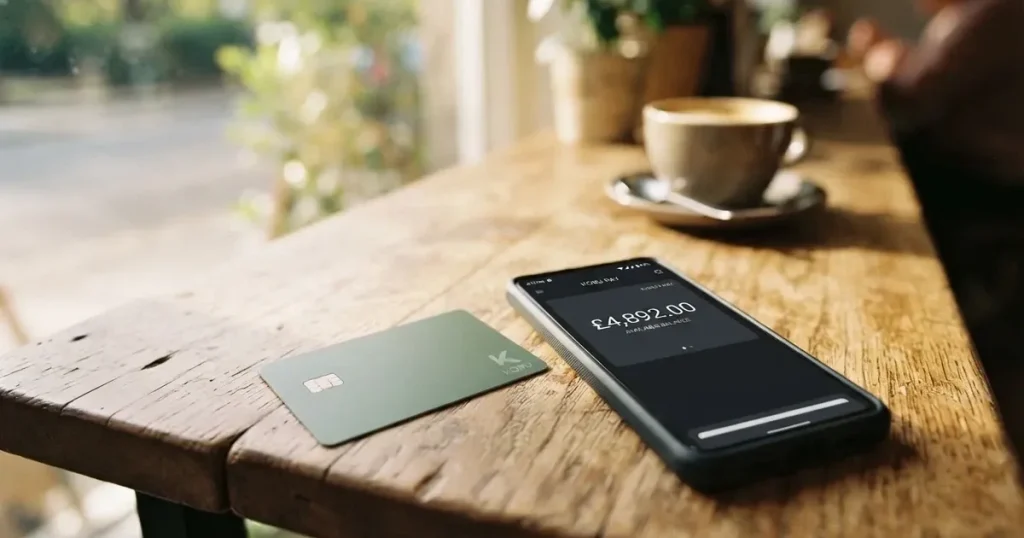
Tap is a card you load with money from crypto or from a bank account, then spend like an ordinary payment card in shops, online or at a cash machine. The company behind it, Tap Global Limited, is registered in Gibraltar and holds a licence there under the DLT Regulatory Framework; the card itself is issued through authorised partners rather than by Tap’s own banking licence. In October 2026 the company announced a new multi-currency Mastercard, replacing the euro-denominated card that came before.
I have read the card’s own public pages and the user reports that sit around them, and I am going to tell you what is written down, what is not, and where the two meet awkwardly. The short version: this is a card for people who already hold crypto or stablecoins and want to spend them without thinking about exchanges every time they buy coffee. It is a weaker choice if your main problem is that a normal bank card is hard to get in your country, and a poor choice if you care most about predictable fees, because the card’s own pages do not publish a fee schedule at all.
The conditions described here are current as of October 28, 2026.
Verdict: 5.6 out of 10
Tap scores 5.6 out of 10 in my reading. That is a middling score, and it is not the product’s fault so much as a disclosure problem: the card’s public pages are generous with claims like “Zero” and “80+ currencies” and quiet about the numbers that decide whether a card is good value.
| Criterion | Mark | Why |
|---|---|---|
| Who can get it | 6 / 10 | No country list is published; the site says only that services “may not be available in all jurisdictions” and tells you to verify eligibility in your region. The number of countries is not disclosed. |
| Cost | 6 / 10 | Officially undisclosed. Unofficial: monthly fee, issuance, top-up and ATM free, FX 1.5%; user reports of a $35 withdrawal fee and an inactivity fee. |
| Top-up options | 5 / 10 | No coin list published. Stablecoins, USDT, BTC, SOL and a bank/crypto on-off ramp are mentioned. Unofficial: crypto must be converted before it is loaded to the card. |
| Reliability and complaints | 4 / 10 | Tap Global Limited (Gibraltar), Gibraltar FSC DLT licence No. 25532, Moorwand Ltd as issuer for the new card; Trustpilot 3.4 out of 5, accounts frozen for days and weeks, withdrawal delays. |
| Everyday use | 7 / 10 | Physical and virtual Mastercard; unofficial: Apple Pay and Google Pay are listed, yet the same source lists “No Apple Pay” among the drawbacks; ATM free. |
Who this suits: you already hold crypto or stablecoins, you want a card that spends from that balance in ordinary shops, and you can live with a euro-centred account and with support that is nominally 24/7. Who it does not suit: you need a published fee schedule before you commit, you live somewhere the card will not be issued, you are planning to hold a large balance as if it were a bank deposit, or you want a card whose user base is not filing complaints about frozen accounts.
Will they give you the card?
Short answer: they will not tell you up front. The site carries no country list. What it does carry is a line saying “Services May Not Be Available In All Jurisdictions” and an instruction to verify eligibility in your region. That is the whole of the official position on geography.
Why this matters more than it sounds: a card issued in one country can look “foreign” to a merchant in another. Merchants look up the issuer identification number at the front of the card number and see which institution and country issued it, and some apply extra scrutiny — or decline the payment outright — when that country differs from the billing address. Address verification, which compares the street number and postcode the buyer typed against the issuer’s records, is mainly offered in the US, Canada and the UK and is generally unavailable for foreign-issued cards. So “can I get one” and “will it work where I shop” are two different questions, and the first one is the one Tap leaves open.
There is also the crypto-side rule. Licences are granted to companies, not to nationalities, but sanctions screening is applied to citizenship and country of birth as well as to the address, which is why residency and nationality lists at crypto card companies often differ. Nationality is recorded and screened separately from residence for exactly that reason. If your citizenship is on a restricted list at the partner bank, the answer can be no even from a country where residents are welcome.
One thing worth knowing: prepaid and debit cards are generally available to adults (18+), and some issuers set higher limits. Nothing on Tap’s pages confirms which rules its issuing partner applies in your region.
How to get it
The honest answer is that Tap does not publish a sign-up flow in detail, so here is what is actually documented.
- Identity verification: not stated on the card’s public pages. An unofficial source (cryptocards.so, 2026) describes the process as email, phone and identity document, and says proof of address and a selfie are not required. Treat that as a third-party description, not a promise from Tap.
- Cards: physical and virtual, Mastercard. The card shown on the site is a dark-finish Tap Mastercard. The card’s currency is not stated — until the October 2026 announcement, the existing card was euro-denominated and other currencies were converted at the point of sale.
- Delivery time: not stated.
- Verification tiers: not stated.
On the network, there is a contradiction you should know about. Tap’s own site shows a Mastercard. A third-party site (cryptocards.so, 2026) lists the network as Visa. If the network matters to you — it does at a few merchants, and it decides how the card behaves in card-accepting terminals — ask Tap directly in the app before you rely on either.
Fees: what a Tap payment really costs
Here is the uncomfortable part of this review. Tap’s public pages do not publish a fee schedule. Issuance cost, monthly fee, ATM cost and spending limits are not stated. There is no conversion figure and no FX figure anywhere in the official material. The card is silent, and the numbers that decide whether the card is cheap or expensive are exactly the ones it leaves out.
What circulates instead comes from cryptocards.so (2026, month not shown) and is not confirmed by Tap:
| Fee or limit | Value | Source |
|---|---|---|
| Monthly fee | Free | Unofficial (cryptocards.so, 2026) |
| Card issuance | Free | Unofficial (cryptocards.so, 2026) |
| Top-up | Free | Unofficial (cryptocards.so, 2026) |
| ATM withdrawal | Free and unlimited | Unofficial (cryptocards.so, 2026) |
| Decline fee | Free | Unofficial (cryptocards.so, 2026) |
| FX | 1.5% | Unofficial (cryptocards.so, 2026) |
| Crypto withdrawal | $35 reported by users | Unofficial, user reports |
| Inactivity or monthly fee draining balance | Reported by users | Unofficial, user reports |
| Daily spend | Listed as “Unlimited”; same source cites a 15,000 EUR daily cap | Unofficial, internally inconsistent |
| Cashback | Up to 8% on qualified purchases | Official, rate published |
Two of those rows contradict each other, and the contradiction is the point: a single unofficial page claims unlimited daily spending in one place and a 15,000 EUR cap in another. Nobody has published the cap on an official page, so you should assume one exists and find out its value before you need it.
Now three everyday payments, with the fees that would apply.
A €40 lunch in a eurozone city, paid from a euro balance. In the good case this is free: no monthly fee, no per-payment fee, no FX because there is no conversion. If your balance is not in euros, you hit either the 1.5% FX fee on the currency conversion at the point of sale, or the conversion spread when crypto is turned into euro before it is loaded — Tap’s own pages do not say which applies in which case, which is worth asking about.
A $30 online subscription paid from a euro balance. This is the payment where the 1.5% FX figure matters, because the merchant charges in dollars and the card converts. Unofficial, that is 1.5% — call it under a euro on a small purchase, more on a large one. Two other things can get in the way. Online card payments often run a 3-D Secure check, where the issuer either approves the payment silently or challenges you with a one-time code or a biometric prompt, and some merchants refuse prepaid or foreign-issued cards because the issuer lookup reveals what the card is.
A $60 cash withdrawal. Unofficial, free and unlimited. But a declined authorisation can leave a hold on your funds for several days — typically up to seven — and an ATM that declines your card may print a receipt you then need to argue about. Also, network fees on the crypto side are not the card’s business but your money’s: on-chain gas or bandwidth for your deposit is charged by the blockchain, not by Tap.
One more cost that has nothing to do with fees. If you fund the card from crypto and spend it, the tax treatment may treat each payment as a disposal of a digital asset, measured in your local currency at its value on the date of the transaction. I am not qualified to tell you what that means for you, and I am not going to guess — but you should read the section on taxes before assuming a 8% cashback is the interesting number.
Top up: how money gets onto the card
Tap does not publish a funding list or a list of networks. Its pages mention stablecoins, USDT, BTC and SOL with yields, and a Bitcoin on-off ramp. Fees and minimums are not stated. What the site does describe is dedicated IBANs to hold seven national currencies, and a bank-and-wallet to crypto on-off ramp.
The ramp itself is described as available anytime, between a bank account or wallet and crypto. Fees are not stated, and neither is what happens to your balance if you close the account.
What this means practically:
- From a bank account. The most ordinary route, and the one with the least crypto-specific risk, because SEPA-style transfers are reversible in the way blockchain transfers are not.
- From crypto or a stablecoin. The conversion step is the cost. Unofficial, and listed among that source’s drawbacks, crypto must be converted before it is loaded to the card — so you pay a spread at the moment you load, on top of whatever you paid to acquire the asset.
- Directly on-chain to the card. Not documented by Tap. Do not assume you can send USDT to a card address. A transfer sent on a network the provider does not support, or to an address belonging to a different network, can be lost or need manual support recovery with no guarantee — blockchain transfers are irreversible by design.
Two details about stablecoins that matter if you plan to fund this way. Fees on the Ethereum network are paid only in ETH, so a wallet holding USDT and no ETH cannot send anything. On Tron, fees are paid through bandwidth and energy resources, often by burning TRX. And stablecoins are not censorship-proof: Tether says it disables tokens in wallets on the OFAC sanctions list and has frozen funds tied to illicit activity. They are also, in the BIS’s word from July 2025, about 90% concentrated in USDT and USDC — and stablecoins are not necessarily stable, as TerraUSD’s collapse in May 2022 and USDC’s brief de-peg in March 2023 showed.
Paying with it every day
This is the part of Tap that works best, and the reason its everyday-use mark is the highest of the five.
- Both card forms. Physical and virtual Mastercard, so you can hold a card in hand and a number in your wallet for online shops.
- Mobile wallets, uncertainly. Unofficial: Apple Pay and Google Pay are marked as supported, but the same source’s list of drawbacks includes “No Apple Pay support”. I would not plan around either until you have added it yourself and seen it work.
- Cash machines. Unofficial: free and unlimited withdrawals.
- Cashback. Official: up to 8% cashback on qualified purchases. Unofficial: up to 8% with VIP tiers, entry level 0.5%. The payout asset, the tiers and any caps are not stated.
- The app. 4.5 out of 5 on the App Store from 25 ratings, version 3.8.8, iOS 15.6 and above, read on 2026-10-20. The Google Play listing (com.tapngo.tap) was not read, so I have no rating for you.
- Where you cannot spend. Blocked merchant categories are not stated. For context, gambling sits under merchant category code 7995, and many issuers block that code by policy rather than by law — but the blocked list differs by issuer, and Tap does not publish one.
On how the card actually spends: in the pre-loaded-balance model common to crypto cards, you convert or top up a fiat or stablecoin-denominated balance first, and the card spends only that balance, so it cannot overdraw. That is a real comfort compared with a credit line. It also means the money is gone the moment you spend it, and the asset you held is no longer yours.
One more mechanic worth understanding, because it explains a lot of decline complaints. If you add the card to Apple Pay, the card number is replaced by a device-specific number stored in the phone’s secure hardware, and every payment uses a one-time dynamic code — which is good. But the issuer can still restrict that tokenised number, for example blocking it on magnetic-stripe, phone or website payments, and that decision is the issuer’s, not yours.
What can go wrong
This is the section that pulls the score down, and it is mostly about trust rather than mechanics.
The company. Tap Global Limited, Gibraltar (No. 118724), Madison Building, Midtown, Line Wall Road, Gibraltar GX11 1AA. Licensed by the Gibraltar FSC under the DLT Regulatory Framework, licence No. 25532. Banking and e-money are provided by “Our Authorised Issuing Partners”; the specific provider is shown in the app and varies by region, currency and account type, and the issuer’s name is not stated on the site. Tap says plainly that it is “not a bank”. That is worth sitting with: your money sits with a partner e-money institution, not with a bank, and e-money funds must be safeguarded in dedicated accounts or insured, but that is not the same as a bank deposit and it is not covered by a deposit guarantee scheme.
The complaints. Tap’s own pages carry no complaints. User reports do. On Trustpilot the tap.global listing showed 3.4 out of 5 from 321 reviews, 36 of them in the last twelve months, read on 2026-10-20; a second Trustpilot UK listing showed 3.5 out of 5 from about 309 reviews, with individual reviews undated. What people describe: accounts frozen or locked for days to weeks (December 2025 to February 2026), deposits and withdrawals that did not arrive (January, June, September 2026), inactivity or monthly fees draining balances (April to June 2026), and slow support at weekends. One report describes an account frozen for 13 days without explanation, repeated KYC checks and a long onboarding, a revoked referral bonus, and a high crypto withdrawal fee. Tap’s response to the fee reports is that fees are in its terms.
Why frozen accounts are not a surprise. This is how the rules work. KYC obligations require regulated businesses to verify customers and assess risk as part of anti-money-laundering law, including ongoing monitoring and suspicious-activity reporting. In the EU, that due diligence covers name, address, date of birth, nationality, identity documentation, a sanctions check, the purpose of the relationship, and whether the customer is a politically exposed person. In the US, the customer identification programme requires name, date of birth, address and an identification number, and electronic systems validate proof-of-address documents against records. And where due diligence cannot be completed, EU rules require the institution to refrain from the transaction — and, where necessary, to end the relationship. A freeze is the system working as designed, even when it lands on you at the wrong moment.
Loss of access. Programme closures happen. Visa terminated its global agreements with FTX on 13 November 2022 and the FTX US debit card was wound down. WaveCrest, a Visa issuer that supplied crypto card brands, was suspended by Visa in Europe in 2018, closing all its Visa programmes. The typical sequence is a notice period, then spending and loading stop, then users are asked to withdraw remaining balances — and a secondary source reported one 2026 closure where new loads ended 8 July 2026 and spending stopped 8 August 2026. That last one is a single unconfirmed source, but the pattern is real.
The crypto side. If the provider holds your keys, you are trusting them with everything: control of crypto belongs to whoever holds the private key, and a seed phrase — typically 12 to 24 words — is an unencrypted key that anyone who obtains it can use to restore the wallet and spend the funds. There is no built-in recovery, because the network cannot freeze or return money. The history is not encouraging for anyone thinking of a custodian as a bank: Mt. Gox (about US$350 million reported stolen, 2011–2014), Coincheck (about US$400 million, 2018), Ronin Network (US$625 million, 2022).
Refunds and chargebacks. Not stated on Tap’s pages — the terms page did not load text when checked. In general a chargeback is a refund ordered by the issuer, with reason codes for fraud, duplicate billing or goods not received; US debit card reversal rights come from Regulation E and credit card rights from Regulation Z, and prepaid-card coverage varies and should not be assumed. Under 3-D Secure, liability for fraudulent online payments can shift from the merchant to your bank. If you plan to hold a meaningful balance, treat this as an open question to ask before you need it.
Regulatory direction. MiCA, the EU’s markets-in-crypto-assets regulation, took legal effect in June 2023; its rules on asset-referenced tokens and e-money tokens applied from 30 June 2024, and the remaining provisions including crypto-asset service provider rules from 30 December 2024. Under it, e-money tokens may be issued only by a credit institution or an electronic money institution. The transitional period lets providers already operating under national law continue only until 1 July 2026 or until they receive or are refused a MiCA authorisation, whichever comes first. ESMA maintains an interim register you can check. And note the split: the card is a payment service regulated separately under e-money and payment-services law, while MiCA covers the crypto side — so a crypto card often depends on two licences, in two frameworks, and a problem in either one shows up in your account.
Support. “Available 24/7” is what the site says; the channels are not named. App languages are English, French, Greek, Italian, Spanish and Swedish. Weekend slowness appears repeatedly in reviews.
Recent news, and what it implies. On 5 October 2026 Tap Global Group PLC appointed Moorwand Ltd as issuer and BIN sponsor for a new multi-currency Mastercard to replace the euro card; the CEO cites 400,000 customers. A change of issuer is normal growth, but it is also the moment when limits, fees and features get rewritten. That the new card is multi-currency is genuinely good news for anyone outside the eurozone who has been converting at the point of sale. Read the new card’s terms when they land rather than assuming the old ones carry over.
What to take instead
If any of the above makes you uneasy, there are three cards with published terms worth comparing. Here they are on the dimensions where the difference shows.
| RedotPay | Bitpanda | Wirex | |
|---|---|---|---|
| Score | 6.9 / 10 | 6.5 / 10 | 6.7 / 10 |
| Who it is for | Users who need the restricted-country lists in front of them | Euro-area residents spending from crypto, metals or EUR | Users who want a metal card and multi-currency accounts |
| Country rules | Two official lists, worded differently, with dates | Residence in a euro-area country; verified by “Bankident” cannot order | “Depends on your region”; worldwide on the homepage |
| Card | Virtual and physical; Visa debit in Singapore terms | Physical Visa debit, EUR only, one active at a time | Physical and virtual, one of each; metal Visa Signature |
| Card currency | USD and HKD cards | EUR only | Not stated |
| Issuance | 10.00 USD virtual, 100.00 USD physical (not refundable once paid) | First shipment free; reissue EUR 5.90 | Free in UK, EEA, APAC, SG, AU and “Other” |
| Monthly | Account maintenance waived; Pro tier 12.90 USD monthly or 129.00 USD annual | No account-opening or monthly cost | “No annual or foreign exchange fees” (marketing text) |
| Transaction fee | 1.00%; 1.20% in a non-default currency; some merchants 1.5% | Not stated; VISA mark-up fees apply outside EUR | Exchange fee varies by pair, shown in the app |
| Cashback | 5 USD welcome reward, spending only, 30 days | 1% stated, “up to 2%” in the summary; excludes fiat, stocks, metals, stablecoins | Cryptoback in WXT: 0.5% Standard, 3% Premium, up to 8% Elite |
RedotPay is the one to look at if Tap’s silence about countries is your main objection. It publishes two lists, worded differently: a KYC list that says citizens of the listed countries “will not be able to complete identity verification (KYC) or use RedotPay’s services”, with restrictions “based on local regulations and sanction policies—not on individuals”, and a card-issuance list dated 28 August 2026 covering 47 places, adding India, Indonesia, Morocco, Nepal, Singapore and Turkey as ineligible for both virtual and physical cards and unusable as billing addresses. Russia, Belarus, Ukraine and Serbia appear on both; Georgia, Armenia, Kazakhstan and the UAE on neither. The trade-off is cost: 1% per transaction, and a physical card that costs 100.00 USD and cannot be cancelled or refunded once paid — though account maintenance is waived.
Bitpanda is simpler by design, and the fee sheet is the cleanest of the three. You need a verified account and residence in a euro-area country; you spend from a chosen main asset — cryptocurrencies, precious metals or EUR — converted to EUR at the point of payment, with EUR 1 minimum. No account-opening or monthly fee, first card free, reissue EUR 5.90. What you give up is flexibility: EUR only, one active physical card, and no virtual card stated. The cashback figure is also worth reading twice, because the body says 1% on crypto spending and the summary says “up to 2%”, and those are not reconciled.
Wirex publishes fees by region — UK, EEA, APAC, Singapore, Australia and “Other” — and offers a metal Visa Signature card with “up to 8% back in WXT” against Standard 0.5% and Premium 3%. It also states exclusions explicitly, which is more than Tap does: ATM withdrawals, cash advances, crypto purchases, gambling and refunds do not earn, and a list of merchant category codes is excluded. Against that, availability “depends on your region”, cash withdrawals “are not permitted in Singapore”, and the fee page does not specify an FX amount — the rate is shown in the app before you confirm. One flat fee to know about: 30 GBP one-off administrative charge for accounts violating the general terms.
Tap is not the cheapest or the most transparent. It is, on the evidence, the one with a 400,000-customer claim and a licensed Gibraltar company moving a real product forward. Whether that matters more than published fees is your call.
Who I would recommend it to
I would recommend Tap to you if you are already holding USDT, BTC, SOL or a stablecoin; you want to spend it without a second exchange account and a spreadsheet; you live in a region where it actually issues cards, which you will have to confirm rather than read off the website; and you are comfortable treating the balance as spend money rather than savings. The free ATM withdrawals and the physical-plus-virtual card combination make it genuinely practical for daily life, and the new multi-currency Mastercard addresses the single worst thing about a euro-only card.
I would not recommend it to you if you are opening your first payment relationship and want to know what things cost, because you will not find that out from the site. I would not recommend it if your plan involves holding a large balance for months, or if a frozen account would strand money you need, or if you have had a bad experience with a crypto platform’s support desk — the Trustpilot pattern here is not reassuring. And if your main problem is that a normal bank card is unavailable to you, read the RedotPay country lists first, because they will tell you more in one paragraph than Tap will in a paragraph.
Before you commit, three questions worth asking in the app, in writing: what is my daily and monthly spending limit; what is the FX and crypto conversion rate I am actually paying; and what happens to my balance if I close the account. All three are unanswered on the public pages, and all three matter more than the cashback headline.
Frequently asked questions
What is the Tap card?
Tap is a payment card you load with money and then spend like an ordinary card. It comes in physical and virtual Mastercard form. What makes it a crypto card is where the balance comes from: Tap’s pages mention stablecoins, USDT, BTC and SOL, plus a Bitcoin on-off ramp and dedicated IBANs holding seven national currencies. The company behind it is Tap Global Limited in Gibraltar, licensed under the DLT Regulatory Framework, licence No. 25532.
How does the Tap card work?
In the pre-loaded-balance model, you convert or top up a fiat or stablecoin balance first, and the card spends only that balance — so it cannot overdraw. At payment, the card behaves like any Mastercard: the network routes the message, the issuing partner moves the money, and you get cashback on qualified purchases. Until the new card announced on 5 October 2026, the card was euro-denominated and other currencies were converted at the point of sale.
Is Tap a bank?
No, and Tap says so itself. Tap Global Limited is not a bank; banking and e-money are provided by its authorised issuing partners, whose name is shown in the app and varies by region, currency and account type. For the new multi-currency Mastercard, Moorwand Ltd is the issuer and BIN sponsor. E-money funds are safeguarded separately, but that is not the same as a bank deposit or deposit-guarantee cover.
Which countries can use the Tap card?
Nobody can tell you from the site. There is no country list — only “Services May Not Be Available In All Jurisdictions” and an instruction to check eligibility in your region. You need to confirm in the app before relying on it. Note that availability and usability differ: even if you are issued a card, merchants can decline foreign-issued or prepaid BINs.
Does the Tap card require KYC?
The card’s own pages do not say. KYC rules generally require a regulated business to verify identity, screen for sanctions, establish the purpose of the relationship and check whether you are a politically exposed person — and where that cannot be completed, EU rules require the institution to decline or end the relationship. That is why “frozen pending documents” is a normal outcome rather than a malfunction. An unofficial source describes Tap’s checks as email, phone and identity document.
Is the Tap card free?
Unofficial figures say monthly fee, issuance, top-up, ATM and decline fees are all free, with FX at 1.5%. Tap’s public pages publish none of this, and user reports mention a $35 crypto withdrawal fee and inactivity or monthly fees draining balances. Treat the free picture as plausible but unconfirmed, and ask in the app before you rely on it.
Can I add the Tap card to Apple Pay?
Unclear. A third-party source marks both Apple Pay and Google Pay as supported while the same source’s drawbacks list “No Apple Pay support”. Tap’s own pages do not mention either wallet. If it matters, add the card yourself and make a small test payment rather than planning around it.
Is Tap card safe to use, and what about frozen accounts?
The safeguards exist: instant freeze and account lock from the app, in-app PIN viewing, a Gibraltar FSC DLT licence, and support described as 24/7. Against that, Trustpilot showed 3.4 out of 5 from 321 reviews, 36 in the last year, with reports of accounts locked for days to weeks and withdrawals not arriving. Crypto on custodial platforms is also exposed to hack and insolvency risk, with no built-in recovery.
How do I top up the Tap card?
From a bank account, from a wallet, or through the on-off ramp described as available anytime between a bank account or wallet and crypto. Fees and minimums are not stated, and networks are not stated, so do not assume you can send a token straight to the card. Unofficial sources say crypto must be converted before loading. If you do send on-chain, check the network first: a wrong-network transfer can be lost.
Is the Tap card worth it?
Worth it if you already hold crypto and want it spendable, and if free ATM access and a physical-plus-virtual card matter to you. Not worth it if you want published fees, a country list, or a large parked balance. Compare RedotPay for clearer eligibility at the cost of 1% per transaction, Bitpanda for the cleanest euro-area fee sheet, or Wirex if a metal card and published regional fees matter.
App and neobank cards – cryptocardsranked
Content created by the «cryptocardsranked» team