
A virtual crypto card that publishes very few numbers, and asks you to take the rest on trust
 Available in US
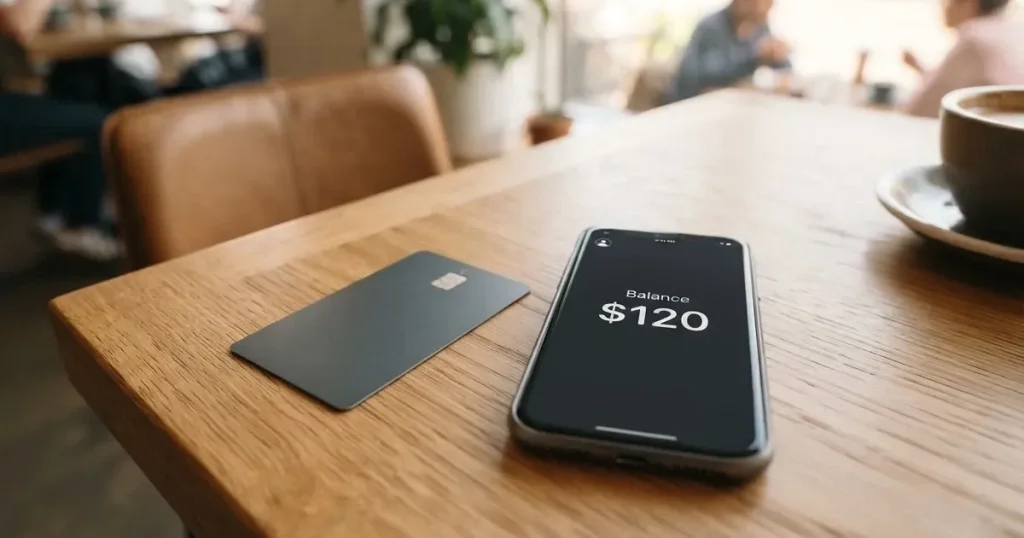
DigitalPurse is a virtual payment card that you fund with cryptocurrency and spend through Apple Pay, Google Pay or Samsung Pay. It is run by DECLASSIC TECHNOLOGIES LLC and describes itself as “a technology platform, not a bank”, with services “facilitated by third-party licensed financial institutions” whose names it does not publish. The pitch is straightforward: download the app, send crypto, get a card number on your phone. The reality, once you start reading the small print, is a product whose own website declines to state the most basic numbers — what it costs to issue, what it costs to load, what your daily limit is, and which countries it serves.
The conditions in this review are current as of October 28, 2026.
Verdict
DigitalPurse scores 5.8 out of 10. It is a virtual-only, crypto-funded card with broad token support, mobile wallet compatibility and a non-KYC option that you can buy at a higher price. Against that, the issuer is unnamed, the fee schedule is not published, country and citizenship rules are not stated, and the platform does not support chargebacks. If you already have crypto, want a quick virtual card, and do not mind a Trustpilot score built on a small pool of reviews, the basics are there. If you need published costs, a physical card, ATM access or any meaningful consumer protection, the gaps will hurt you.
| Criterion | Mark | Reason |
|---|---|---|
| Who can get it | 6 / 10 | The site does not name a country list, residency or citizenship rules, or a region of issue |
| Cost | 5 / 10 | Official fees appear in the app during card creation; the site publishes none of them, and the unofficial numbers contradict each other |
| Top-up options | 7 / 10 | BTC, LTC, XMR, ETH, USDT and USDC are accepted; networks are not published, and USDT/USDC carry no extra charge from the platform |
| Reliability and complaints | 6 / 10 | The issuer is unnamed and the platform is not a bank; chargebacks are not supported; Trustpilot is 4.8 out of 5 from 232 reviews, with complaints about declines at Google Cloud, Azure and DigitalOcean |
| Everyday use | 5 / 10 | Virtual only; Apple Pay, Google Pay and Samsung Pay are supported; ATM withdrawals are not permitted |
DigitalPurse is, in short, a quick anonymous-style virtual card funded with crypto. That is what it is built for, and within that narrow box it works. The moment you step outside the box — to a dispute, a blocked merchant, a question about your balance, a country check — the absence of published detail starts to matter.
Who they will issue the card to
The official site does not state which countries are served, which nationalities are excluded, or which region issues the card. That is the most important gap in the public information, and it is the first thing to check before you do anything else: a card you cannot legally use where you live is worthless.
What the site does say is general. The home page instructs you to download the app and “create an account”. Terms on the platform require you to be at least 18 and to hold only one account per individual. The platform reserves the right to apply Know Your Customer (KYC) checks “for some payments or products”, and the help center contains an article titled “Why is my KYC verification still pending?” that suggests requests do happen, even if they are not the default. Unverified users live under daily and monthly order caps, but those caps are not stated in any figure the public site publishes. Verified users get higher limits — also without numbers.
There is a non-KYC route, but it is more expensive, not less regulated. The platform offers “Non-KYC cards” at a higher price “because they offer greater privacy and flexibility”, and these sit alongside reloadable KYC cards as the lower-cost option. The same site does not publish what those price differences are.
For the reader, the practical consequence is that eligibility is something you only learn by trying. If your country or citizenship is on a sanctions list or excluded under the unnamed third-party issuer’s policy, you may pass the signup screen and fail later, when a payment is processed or a withdrawal is requested. The site also warns that it “may” run KYC for some payments, so the moment you try to do something with the balance is precisely when you can be asked for documents you were not told you would need.
There is one more thing worth flagging. The platform stores your data under “strict access controls” and “secure encryption”, but it is a custodial setup: your balance sits with the platform and its sub-issuers, and your card’s funds are not bank deposits. The card currency is US dollars — the FAQ says “FIAT is converted to USD the moment it’s loaded to the card” — which means a payment in euros, pounds or yen will go through an FX conversion whose spread the platform does not publish.
How to get it
Sign-up runs through the app, and the app is the only official download path. The site’s iOS and Android buttons point to digitalpurse.engineering/iphone and /android rather than to the Apple App Store or Google Play directly, although the apps do appear on those stores. Unofficial store data puts Android at around 4.6 out of 5 from roughly 170 reviews with 50,000+ installs, and iOS at 4.5–4.7 from over a thousand ratings; the official site does not display these numbers.
Once the app is installed, the steps run like this:
- Create an account with an email and a password.
- Choose a card type: reloadable KYC, reloadable non-KYC, or non-reloadable.
- For reloadable cards, top up the balance with crypto.
- The card is created “via app or Telegram bot” and is “available instantly”, although the site also says orders are processed right away and “may take up to 24 hours”.
There is no physical card. The card is virtual, and is spent in-store by adding it to Apple Pay, Google Pay or Samsung Pay. The card network and the card’s currency are not stated on the official pages, which is unusual for a payment product. If the network matters to you — for example, if a subscription you want to pay only accepts Visa — you should check the app before you fund the card.
Two details from the signup flow are worth thinking about before you commit any funds. The first is the gap between “available instantly” and “may take up to 24 hours”: if you need the card number in the next five minutes, treat 24 hours as your realistic upper bound. The second is that non-reloadable cards cannot be topped up after creation — you buy as many as you need. That makes the non-reloadable type a one-shot card for a single merchant or a single purchase, not a card you live out of.
Fees: what it really costs
This is the section where the published information is thinnest, and where you, the reader, are most likely to be surprised. DigitalPurse’s own pages do not list a fee schedule. The terms say purchases “may be subject to handling fees” and that amounts are “detailed in the specific terms of each product”, which the site does not link to. The only numbers appear inside the app, while you are creating a card, in what the platform calls “the card description”.

Two or three everyday scenarios make the gap obvious.
When you add USDC to a reloadable KYC card, the platform says creation and top-up fees “will be displayed in the card description during creation” and “scale with the amount” on privacy cards. There is no percentage and no dollar figure on the website. The platform’s own guidance is to fund with USDT, USDC, bank transfer or mobile money to “avoid extra charges”, while BTC, ETH, LTC and XMR “may cost more” because of volatility and processing — but again, without numbers.
When you spend at a local shop that uses a different currency, the FAQ states the balance is in US dollars and that “FIAT is converted to USD the moment it’s loaded to the card”, which means the conversion is on the way in, not on the way out. The site does not publish a spread or a flat fee for the load-time conversion, nor does it explain what happens if the merchant’s currency is not US dollars — there is no FX line in the published terms.
You want to take cash out at an ATM. You cannot. The terms list “Manual Cash Disbursements” and “Automated Cash Disbursements” among prohibited purchases, and a separate note says “ATM withdrawals are considered a ‘transfer of value’ and are not permitted.” A cash-equivalent need — paying a friend, settling a bill in cash — has to go through a different rail, and the published fees for that path are also not stated.
The unofficial numbers you may find elsewhere contradict each other. An App Store reviewer reports an extra $3 for a virtual card and a $6 minimum balance. The third-party site cryptocards.so lists issuance, top-up and a monthly fee as free, and it lists spending limits as “unlimited” while also noting that the platform itself publishes no limits. Neither of those is an official figure, and the platform has not confirmed either reading.
| Fee or limit | What the platform publishes |
|---|---|
| Card issuance | Not stated; shown in-app during creation |
| Monthly fee | Not stated |
| Top-up fee | Not stated; shown in-app during creation; “extra fees possible” for non-fiat methods |
| Conversion to USD on load | Not stated; the conversion happens but no spread or fee is published |
| Foreign currency payment | Not stated |
| ATM withdrawal | Not permitted; treated as a “transfer of value” |
| Card starting balance | “Up to $1,000 – $10,000” |
| Daily and monthly limits | Not stated; verified users get higher limits than unverified |
| Spending limits (third-party) | “Unlimited” per cryptocards.so, with the same site noting no official limits |
For the reader, the practical advice is: read the in-app card description before you tap “create”, and treat any figure from a review site, a Reddit thread or an app store comment as a data point rather than a fee schedule. If you cannot find a number you need on the official site, ask support before you load funds.
Top up: how to fund the card
DigitalPurse accepts six cryptocurrencies: BTC, LTC, XMR, ETH, USDT and USDC. The platform does not state which blockchain networks it supports for each token, which is a real problem on chains like USDT — Tether’s token is issued on Ethereum, Tron, Solana, Polygon, Avalanche and others, and sending USDT on a network the platform does not support is a common way to lose a deposit. Blockchain transfers are typically irreversible, so an address that looks correct but is for the wrong network can leave your funds sitting in a place where support may or may not be able to recover them.
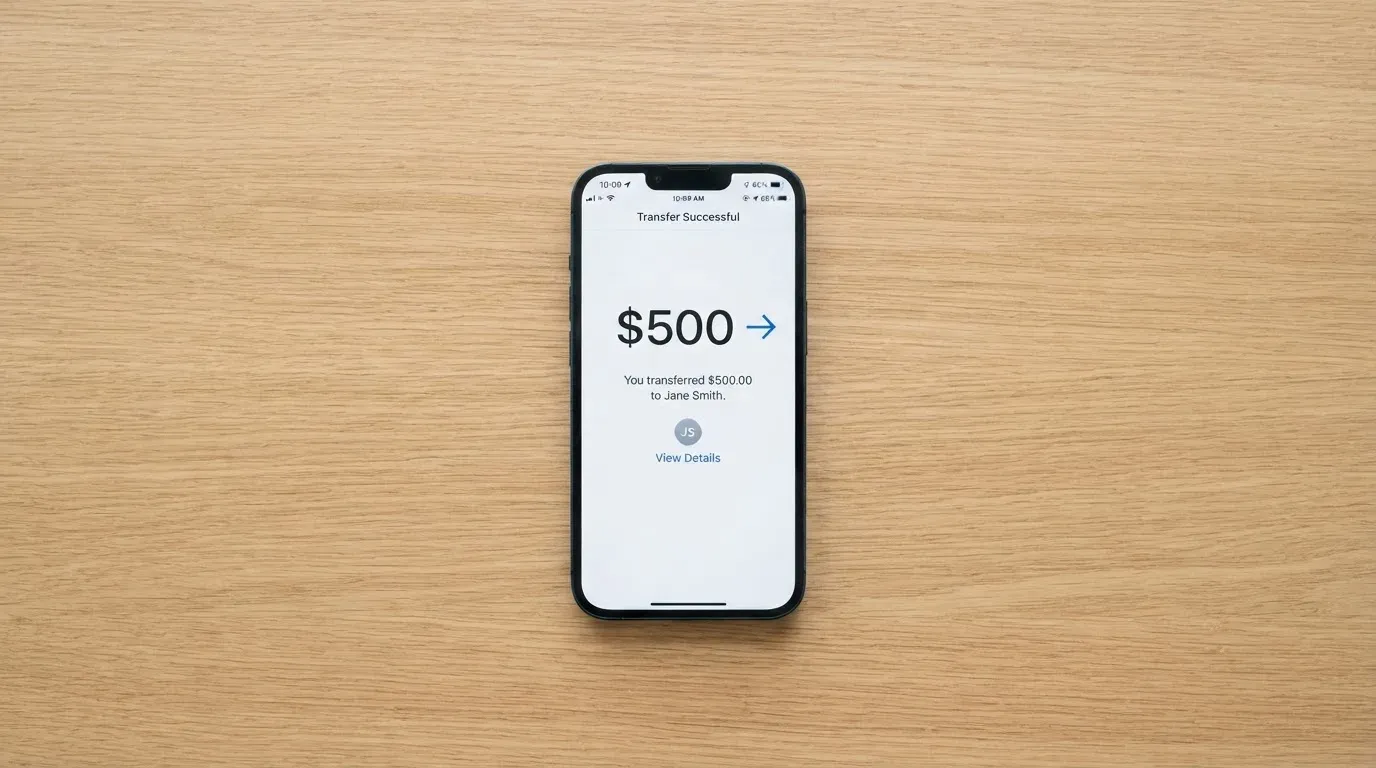
The in-app flow for a reloadable card is: select the card, tap “Add Funds”, send the chosen crypto to the address shown. For a non-reloadable card, there is no top-up: the card is loaded once, at creation, and the balance moves down with each spend until it is empty.
The fee rules at the top-up step are the same as the fee rules at the issuance step — shown in the app, not on the site. The platform’s own recommendation is to use USDT, USDC, bank transfer or mobile money if you want to “avoid extra charges”. BTC, ETH, LTC and XMR may attract extra fees for volatility and processing; XMR in particular is a privacy coin whose network is a different beast from the ERC-20 and TRC-20 tokens most readers are used to. None of this is published as a percentage.
You can also withdraw. The FAQ says “Yes, you can withdraw your funds. Terms and conditions apply.” The help center describes the path: select the active card, open More or Manage, choose “Withdraw Funds”. Fees, minimum amount, processing time and the destination options are not stated. ATM withdrawals are not permitted under any circumstances. The treatment of any balance left behind when you close your account is also not stated.
A quick mental model of the top-up options:
- USDT and USDC: the platform’s own preferred path; no extra platform charge stated, but you still pay the blockchain’s network fee (gas, bandwidth, energy) for your deposit.
- BTC, ETH, LTC: extra platform charges possible, on top of the blockchain’s network fee.
- XMR: extra platform charges possible, on top of a network whose fees and confirmation times are different from the ERC-20 standard most readers know.
- Bank transfer and mobile money: not stated as funding options on the card page, but referenced in the platform’s “avoid extra charges” advice, which suggests they exist somewhere in the app even if the website does not document them.
The single most important thing to verify before you send anything is the network. If the app shows an Ethereum-format address and you send USDT from a Tron wallet, your deposit is, in practical terms, gone. If you are unsure, ask support first.
Paying with it every day
Once the card is loaded, you spend the balance through Apple Pay, Google Pay or Samsung Pay at any contactless terminal, or by entering the card details at an online merchant. There is no physical card, and there are no spending controls published on the website — the platform says you can cap the amount loaded onto a card to limit your exposure, which is the closest thing to a spending limit you will find.
The published list of prohibited purchases is worth a careful read, because it sets the edges of the product:
- Betting and casino gambling
- Government-licensed online casinos
- Non-sport internet gaming
- Dating and escort services
- Security brokers and dealers
- Foreign and non-fiat currency
- Wires and money orders
- Manual and automated cash disbursements
The list is described as “not exhaustive”, so the platform reserves the right to block merchants outside that list as well. A few real-world consequences fall out of this. You cannot buy cryptocurrency with the card. You cannot move money from the card to a bank account by cash. You cannot fund a brokerage or trading account. You cannot pull cash from an ATM. If a category you want to pay is not on the prohibited list, it should work, but “should” is the strongest word available without an official merchant database.
On the protection side, the picture is thin. The platform says it “cannot support chargebacks”, citing “unsustainable fraud”, the finality of blockchain transactions and the privacy expectations of its non-KYC users, and adds that this rule also applies to sub-issuers. For regular purchases that means the dispute tools you would have with a Visa or Mastercard from a regular bank — a chargeback for goods not received, a refund for a defective item — are not available. The platform’s help center has articles on refunds not yet arrived, double charges and merchants who declined but took the money, but the resolution path in each case is the merchant’s, not the platform’s. For gift-code orders, returns and refunds are not available once the order is processed.
A small amount of indirect protection does come from the card network’s own rules. Online payments can be challenged through 3-D Secure — a one-time code, a biometric prompt or an in-app confirmation — which shifts liability away from you for fraudulent online transactions. The card network can also tokenise the card for mobile wallets: the device stores a one-time Device Account Number rather than your real card number, and the issuer can restrict where that token can be used. None of that replaces a chargeback you can initiate yourself.
There is no rewards or cashback programme published on the official pages, and there is no loyalty scheme mentioned. The site does not describe a sign-up bonus, a tier system, or a referral programme.
What can go wrong
The published incidents around DigitalPurse are small in number and concentrated in three places: declined cards at a small set of well-known merchants, support quality, and the structure of the product itself.
The most-cited complaint, on third-party sites and in app store reviews, is that cards get declined at Google Cloud, Microsoft Azure and DigitalOcean. The mechanism is a familiar one in the prepaid card world: the merchant looks up the card’s Bank Identification Number (BIN), sees that it is a prepaid card issued from a country the merchant does not want to do business with, and declines the transaction. This is a “prepaid BIN block”, and it is not specific to DigitalPurse — any prepaid virtual card can run into it — but DigitalPurse users report it more than users of mainstream bank-issued prepaid cards.
Trustpilot reads 4.8 out of 5 from 232 reviews as of 19 October 2026, with 60 reviews in the last twelve months. The reviews that are visible are mostly positive. The platform “hasn’t invited customers recently”, which means the ratings are organic rather than incentivised. A different Trustpilot domain, read earlier, had 4.5 from 192 reviews, which is the same product at a slightly different snapshot. The aggregator cryptocards.so reports a minority of older reviews calling the platform a scam, citing declined cards, slow support and high fees. None of this has been confirmed by DigitalPurse itself.
Support is open 24/7 through the app’s support system, a Telegram bot at t.me/digitalpurse_bot, a help center at helpcenter.digitalpurse.io/en (29 articles, English), and a dedicated email for failed purchases. Reviews describe both quick, helpful responses and slow ones. The Telegram bot is unusual for a regulated payments product and is the kind of detail that should make a careful reader pause.
The structural risks are more important than the Trustpilot story, because they are written into the product:
- The platform is “not a bank”. Funds are held by the platform and its sub-issuers, and are not bank deposits. They are not protected by a deposit guarantee scheme.
- The issuer is not named. The site says services “may be facilitated by third-party licensed financial institutions”, but does not say which ones or under which licence.
- Chargebacks are not supported. Once a payment is made, the dispute path is the merchant, not the platform.
- The licence and registration country of the operating entity are not stated on the public site, and there is no dated news or incident log on the official site or the help center.
- The platform is custodial. You do not hold the private keys to the funds that back your card. If the platform fails, you have a claim against an insolvency estate, not a self-custody wallet you can sweep.
- Non-KYC cards are sold at a premium and exist “because they offer greater privacy and flexibility”. A product whose privacy comes from the absence of identity checks is, by construction, attractive to people who want to move money without being seen — and that is also why banks and card networks sometimes decline to keep the programme open.
None of this means DigitalPurse is dishonest. It means the product is what it says it is, and what it says it is, in the official copy, is narrower than a bank card and wider on privacy than most regulated cards.
What to take instead
If any of the gaps above matter to you — published fees, a physical card, an ATM path, chargebacks, an identified issuer — there are other products in the same rough category. None of these is a like-for-like replacement, because DigitalPurse’s selling point is precisely the combination of virtual-only, non-KYC options, and crypto top-ups, but the three below cover different trade-offs.
| Card | Score | Type | Top-up | Cashback | KYC route |
|---|---|---|---|---|---|
| DigitalPurse | 5.8 / 10 | Virtual only | BTC, LTC, XMR, ETH, USDT, USDC | None published | KYC and non-KYC cards |
| Bitrefill | 6.8 / 10 | Virtual and physical Visa | BTC, Lightning, ETH, USDC, USDT, SOL, BASE, Polygon, Li.Finance, Apple Pay, Google Pay, Visa, Mastercard, SEPA | 2% total (1% on deposit, 1% on spend), no cap | Eligibility set by partners |
| UPay | 6.1 / 10 | Virtual and physical, personal and business | BTC, ETH, USDT, USDC | Not stated on card page | KYC partner, country-matched ID |
| Kemy | 6.0 / 10 | Unlimited virtual (Visa), one physical Mastercard | USDT, USDC, BTC, ETH, SOL, plus mobile money | Not stated | 190+ countries, with restrictions |
Bitrefill is the strongest of the three on published detail. The card page says it is free through the app, lists 2% cashback (1% on each crypto deposit and 1% on each purchase) with no cap, and accepts a long list of tokens. Terms add an inactivity fee after 12 months of no spending or cash-out, a 1.99% SEPA pay-in fee, and a deposit spread on the crypto-to-euro conversion. The country list and additional eligibility criteria are not stated on the page, with the terms noting that access is “subject to eligibility criteria” set by partners. Card currency is euros.
UPay supports 180+ countries, but the country list is not stated and the page warns that UPay does not serve residents of certain countries. The KYC partner accepts only ID documents issued by the same country as the user, which is a constraint for expats. The card is offered as virtual and physical, personal and business, with payments in USD, EUR, AED and others. Fees, top-up networks and a cashback programme on the card itself are not stated, although a separate “Earn While You Sleep” product appears on the home page.
Kemy publishes the most detailed fee schedule of the three. The virtual card is $15 to issue (valid 3 years) and $2 a month. The physical card is $250 with DHL Express included (valid 3 years, one per user) and $10 a month. Top-ups are $1.5 under $100 or 1.25% from $100 (minimum $5 for the virtual, $10 for the physical). The transaction fee is 3.5% plus $1, and a failed transaction is $0.80. Funding is USDT and USDC “on the main networks”, plus BTC, ETH and SOL via an on/off ramp, with fiat through mobile money and virtual bank accounts. The summary block on the same page shows a main-account deposit fee of 8%, while the section below shows 5% — a conflict worth noting.
In rough terms: choose Bitrefill if you want cashback and a long token list, UPay if you want a wider geographic footprint with KYC, and Kemy if you want the clearest published fee schedule and a physical card.
Who I would recommend it to
DigitalPurse is a fit for a specific kind of reader. If you have crypto in a self-custody wallet and want a virtual card number on your phone within minutes — to pay for a subscription, to test a service, to spend stablecoins at a contactless terminal — DigitalPurse does that, and it does it without forcing identity documents on you at the door. The non-KYC option exists precisely for that case, and the platform’s own price premium reflects the cost of that flexibility.
It is not a fit if you want a published fee schedule, a physical card, ATM access, chargeback rights, or a card whose issuer you can name. It is also not a fit if you want to fund the card with a token the platform does not list, or to use the card in a country the platform may not serve. The site does not tell you which countries those are, and the only way to find out is to sign up and try.
If you are between those two groups, the deciding question is whether you can accept “we will show you the fees in the app, and we will tell you the country rules when you try to use the card” as a workable answer. Some readers will be comfortable with that. Others will not, and for them one of the alternatives above is the more honest choice.
Frequently asked questions
What is the DigitalPurse card?
A virtual payment card issued through an app, funded with cryptocurrency and spent through Apple Pay, Google Pay or Samsung Pay. It is run by DECLASSIC TECHNOLOGIES LLC, which describes itself as “a technology platform, not a bank” and uses unnamed third-party licensed institutions to facilitate the card programme. The card is virtual only; there is no physical version.
How does the DigitalPurse card work?
You create an account in the iOS or Android app, choose a card type, send crypto to the address shown, and the card is generated for use inside a mobile wallet. Purchases are funded from the card’s US dollar balance, which is loaded in fiat-equivalent when the crypto is converted. Settled payments run through the standard card rails once the card is tokenised in a wallet.
Is DigitalPurse a bank?
No. The site says DigitalPurse is “a technology platform, not a bank”, and that services “may be facilitated by third-party licensed financial institutions”. The issuer and the licensing country are not named on the public pages. Funds held with the platform are not bank deposits and are not covered by a deposit guarantee scheme.
Who owns DigitalPurse?
The site footer carries a copyright line for “DECLASSIC TECHNOLOGIES LLC 2026”. Beyond the company name, no ownership structure, parent company, headquarters or registration country is published on the official pages.
Is the DigitalPurse card available in my country?
The official site does not publish a country list, and does not state which nationalities or residents it excludes. Eligibility is decided at signup and, in some cases, when a payment is processed. The practical answer is that you only find out by trying, and the platform “may” run a KYC check for some payments or products.
How do I get a DigitalPurse card?
Download the app, create an account, choose between a reloadable KYC, reloadable non-KYC, or non-reloadable card, and send crypto to the address shown. The card is “available instantly” through the app or the Telegram bot, although the site also says orders “may take up to 24 hours”. There is no physical card.
Does the DigitalPurse card require KYC?
Sometimes. The platform says KYC “may” be required for some payments or products. Unverified users have daily and monthly order caps (the amounts are not stated). Verified users get higher limits, also without published numbers. A “Non-KYC” card type is sold at a higher price for users who want to avoid identity documents at issuance.
How do I add the DigitalPurse card to Apple Wallet?
Once the card is created in the app, the in-app flow offers the standard mobile wallet add path: the card details are tokenised by the wallet provider (Apple, Google or Samsung) and a Device Account Number is stored on the device. The real card number is not shared with the merchant at the point of sale.
Is the DigitalPurse card safe?
The platform describes “secure encryption, minimal data collection, and strict access controls”, and offers in-app card freeze and 2FA. The funds are custodial — they sit with the platform and its sub-issuers — and the platform does not support chargebacks. As with any custodial crypto product, the practical safety question is the platform’s solvency and operational security, not the cryptography of the chain.
Is the DigitalPurse card worth it?
For a quick virtual card funded with stablecoins and used through a mobile wallet at mainstream merchants, it does the job and the 4.8/5 Trustpilot score suggests most users agree. For a long-term everyday card with published fees, a physical form factor, an ATM path, or chargeback rights, the missing detail on the official site will push you toward one of the alternatives above.
Virtual cards – cryptocardsranked
Content created by the «cryptocardsranked» team