
The cheap card with the thin public paperwork
 Available in US

Pintopay sells a simple idea: a Visa card that spends crypto. You send USDT (or another coin) to the card, it converts the value into ordinary currency, and then it behaves like any other card — in shops, online, at ATMs, and in Apple Pay. The pitch is aimed at people who have crypto but no usable bank card, and at people who move between countries. The card costs $35, top-ups carry a 2,5% fee, and the company claims payments in 180+ countries with no exclusion list.
Conditions are current as of October 28, 2026.
That is the good part. The problem is everything the card’s own public pages do not tell you. The card’s public pages leave open how much currency conversion costs, what your daily and monthly limits are, which networks and coins actually work for a top-up, who issues the card, and where the company is registered. Officially, the company is “Pintopay Inc.”; the terms add that the service is operated by a group including UANT Limited in Hong Kong, and that the plastic comes from an unnamed third-party licensed issuer. That anonymity is not automatically a scam signal, but it means you cannot check the licences yourself.
Read on if you are weighing this card against a few others, or if you already have one and want to know what you are exposed to.
Conditions stated on this page are current as of 20 October 2026.
The verdict
Pintopay scores 6.1 / 10. That is a middling card with two strong suits — reach and everyday usability — sitting on top of a very thin public document and a poor record of user complaints. If you hold USDT, want a card that works almost anywhere quickly, and are comfortable treating the balance as money you could lose access to at any moment, the card does its job. If you are choosing on cost alone, you cannot: the headline $35 is the only price the company publishes, and the fee that actually decides your bill — currency conversion — is described only as “competitive rates”, with no figure.
| Criterion | Mark | Why |
|---|---|---|
| Who can get it | 9 / 10 | Payments in 180+ countries, no exclusion list; services not available to persons in Hong Kong or citizens of Hong Kong |
| Cost | 4 / 10 | Card $35, top-up 2,5%; unofficial: issuance $10 and $35, $0.25 per transaction; official FX data is “competitive rates” with no number |
| Top-up options | 7 / 10 | USDT and other crypto; unofficial: BTC, ETH, USDT, BNB, TRX, top-up up to 12 hours; a review mentions USDT TRC-20 |
| Reliability and complaints | 3 / 10 | Issuer not named, operator UANT Limited (Hong Kong); Trustpilot 2.0 of 5 from 42 reviews: blocked balances, a $1,100 refund still pending |
| Everyday use | 8 / 10 | Virtual and physical Visa, Apple Pay, ATM; unofficial: Google Pay too |
Who it suits: someone already inside crypto who wants a card this week rather than after a bank review, who spends in a currency different from the one they hold, and who treats what they load as spending money rather than savings. Who it does not suit: anyone whose income depends on this card being there next month, anyone who needs a bank-grade answer to “which institution holds my money”, and anyone in a country where card handling rules and tax treatment of crypto disposals need to be clear.
Will they give you the card
On paper, eligibility is broad: the card advertises payments in 180+ countries with no exclusion list, and the only stated geographic limit is that the services are not available to persons located in, resident in, or citizens of Hong Kong.
That last point is the one people miss. It is not a soft warning. It is written into the terms: services are not available to people in Hong Kong, residents of Hong Kong, or citizens of Hong Kong — three separate categories, and a citizen of Hong Kong living in Madrid is covered by it.
What the card does *not* say is the thing most applicants actually want to know: whether it looks at your citizenship or only at where you live. Citizenship versus residence is not stated. This matters more than it sounds. Sanctions screening and issuer risk policy are applied to citizenship and country of birth as well as to country of address — that is standard practice in the industry, not a Pintopay quirk — so a card that “works in 180+ countries” can still decline you on the basis of a passport you hold. Expect to be asked, and expect the answer to be no explanation.
Prepaid and debit cards are generally available to adults (18+), and some issuers set higher limits. Pintopay does not publish its own age rule.
How to get it
Getting started runs through Telegram: the card’s own page says “Get Card with Telegram”, and the service includes a Telegram bot and mini-app alongside a mobile application.
That is the shortest answer to “how do I apply”, and it is also a warning sign in a different sense — the flow most people will meet first is a chat window, not a regulated onboarding page with published eligibility criteria.
Here is what the public pages list and what they leave out:
- Listed as security credentials: “KYC” and “ISO AML/KYC”.
- Not stated: which documents, proof of address, age requirement, or how many steps the process takes.
- Card form: virtual and physical, described as “Visa-powered debit cards”.
- Card currency: not stated.
- Delivery: not stated — countries, time, cost, replacement. The page does say “receive your card in just 2 minutes”, which for a physical card should be read as a claim about the virtual card, not about plastic arriving in an envelope.
- KYC levels, processing times, rejection reasons: not stated.
Here is the contradiction you should sit with before you apply. A third-party site (cryptocards.so, 2026, unofficial and not confirmed by the card) lists Pintopay as “No KYC” — email, phone, ID, address and selfie all “not required”. The card’s own pages say the opposite: KYC is listed as a credential, and the terms require verification, allow ongoing requests for information and documents, and allow suspension for failed KYC or AML. I would not treat “no KYC” as a selling point to bank on. If a provider markets a card as KYC-free, treat your ability to keep using it as the fragile thing, not the paperwork you skip. KYC rules require regulated businesses to verify customers and assess risk as part of anti-money-laundering law, including ongoing transaction monitoring and suspicious-activity reporting; where due diligence cannot be completed, EU rules require the institution to refrain from the transaction or relationship and, where necessary, to end existing relationships. That is why accounts close or freeze pending documents — it is the expected behaviour of a compliant provider, not a sign something went wrong.
The same third-party site also lists Mastercard for the Virtual Card, which conflicts with the official “Visa-powered debit cards” line. For the Virtual Card I would assume nothing and check at the point of use.
Fees and what a payment really costs
The card costs $35. Top-ups are charged “Just 2,5%”. Currency conversion is advertised only as “competitive rates”, with no figure published — which means the largest fee on most foreign-currency payments is the one you cannot see.
| Fee or limit | What the card publishes |
|---|---|
| Issuance | $35 |
| Monthly or annual fee | not stated |
| Top-up fee | Just 2,5% |
| Conversion / FX fee | “competitive rates”, no figures |
| ATM | The card says it works at ATMs; fee and allowance not stated |
| Daily and monthly limits | not stated |
| Withdrawal fee | not stated |
| Premium tier | A “Premium card” with VIP access is mentioned; no tier structure or differences stated |
Three ordinary payments, so the arithmetic has something to bite on.
A coffee in a shop that does not accept your crypto. If you pay in the card’s own currency, you are paying the top-up fee you already absorbed plus whatever the merchant’s own pricing does to crypto payments. If the coffee costs the equivalent of what you loaded, you are at 2,5% and whatever the network charged for the transfer itself.
A subscription billed in a currency you do not hold. This is where the missing FX number hurts. Every currency mismatch goes through “competitive rates”, and you have no published figure to compare against a bank’s rate. The unofficial listings help in a narrow way: one third-party site (cryptocards.so, 2026) lists FX as free on the PintoPay Card and 1% on the Virtual Card, and a $0.25 per-transaction charge among its cons. Another unofficial source (CryptoCardHub, updated February 2026) mentions withdrawal fees after $1,000 a month. Treat all of that as unofficial — it is not confirmed by the card — but it is a starting point for the questions to ask support.
A cash withdrawal at an ATM. The card’s page lists ATMs among the places it works, and stops there. The unofficial listing says ATM withdrawal is free on both cards with no withdrawal limit (cryptocards.so, 2026, month not shown). The official terms add something more useful than a number: fees may be debited from your Wallet balance, Vault balance, or Virtual Account balance, and fee schedules are published in the interfaces. That is where you will find the real figures — in the app, not on the site.
Two category facts matter for the top-up side. On-chain network fees (gas, bandwidth) for your deposit are charged by the blockchain, not by the card provider — Tron for instance prices fees through bandwidth and energy and often burns TRX. And a declined authorisation can leave a hold on your funds for several days, typically up to seven. A limit you did not know about plus a hold you did not ask for is how a small budget stops working.
Top up options
You top up with crypto — USDT is the coin the card names, and the terms describe crypto being “instantly converted to fiat” — but the official coin and network list is not published.
That last sentence is the practical problem. The card says “Spend USDT and other crypto”. One customer testimonial mentions USDT on TRC-20. A third-party site (cryptocards.so, 2026, unofficial) lists BTC, ETH, USDT, BNB and TRX across networks, and says top-ups can take up to 12 hours. Neither is a specification.
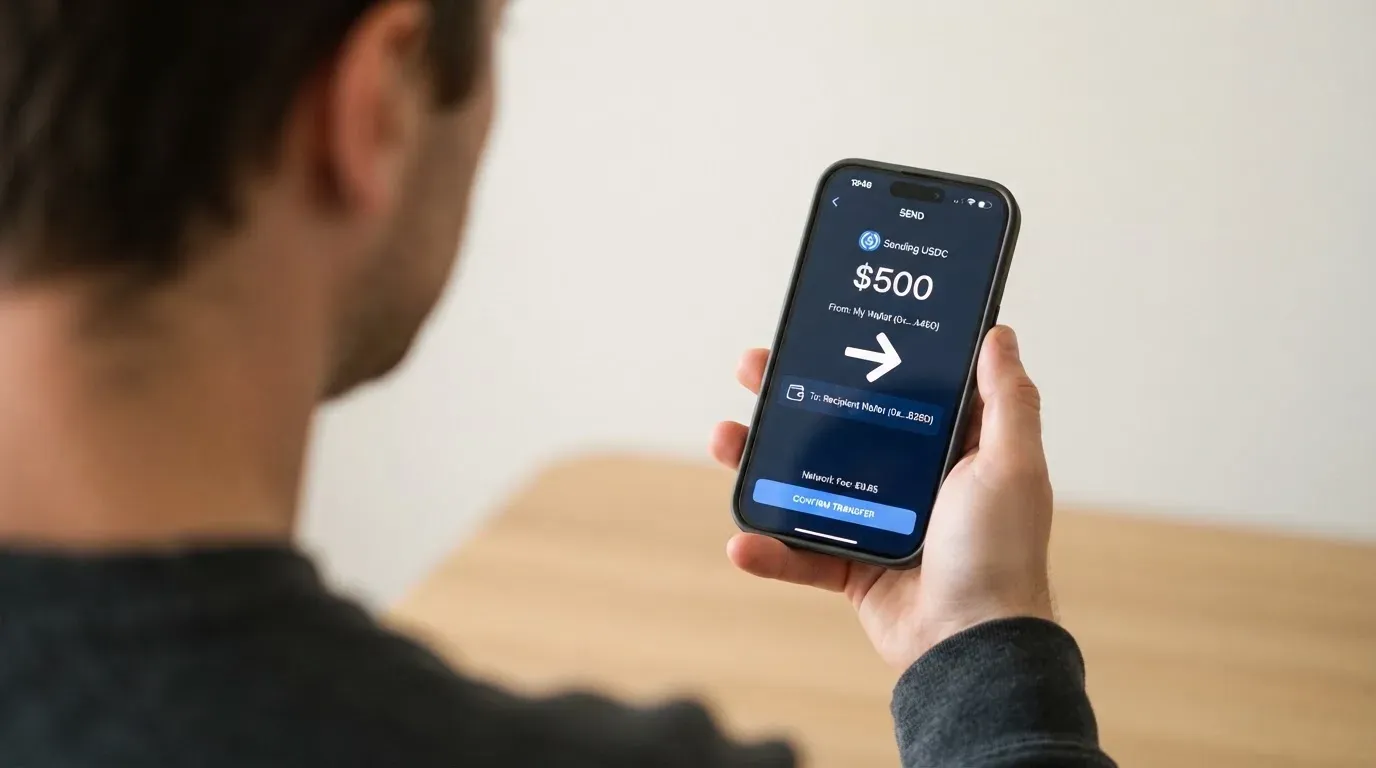
Why the network detail is not a technicality: a blockchain transfer is irreversible, so a deposit sent on a network the provider does not support, or to an address belonging to a different network, can be lost or need manual recovery with no guarantee. Getting the chain and the address right is the single most important thing you do when funding this card, and the card’s own pages do not tell you what “right” is. Also worth knowing before you plan: ERC-20 tokens are paid for in ETH, so a wallet holding USDT with no ETH cannot send; and Circle stopped supporting USDC on Tron in February 2024, so “USDC over TRC20” is not a native option. Minimum top-up is not stated. Whether you can add money by fiat at all is not stated — the card describes a crypto top-up only.
If you leave, the terms say you are entitled to the return of your remaining Wallet Balance, release of your Vault Balance, and withdrawal from your Virtual Account balance, subject to the terms. Pintopay may delay, refuse or reduce that return to cover amounts owed, and fees are non-refundable. The withdrawal fee itself is not stated. Read that clause as a real constraint on exit, not a formality.
Paying with it every day
Day to day, the card works like an ordinary Visa: virtual or physical, Apple Pay, ATMs, online and offline. That part is straightforward, and it is the card’s genuine strength.
The card is described as “Visa-powered debit cards”, in both virtual and physical form, and the page lists Apple Pay, ATMs, online and offline. Google Pay is not mentioned anywhere on the card’s own pages. An unofficial listing (cryptocards.so, 2026) marks both Apple Pay and Google Pay as supported on both cards. Blocked merchant category codes are not stated — and if gambling is your use case, know that many issuers block MCC 7995 by policy rather than by law, with the list varying by issuer.
Apple Pay is the reliable route. It replaces your card number with a device-specific account number stored in the phone’s secure hardware, never on Apple’s servers, and each payment carries a one-time code. Practical reasons payments get refused anyway: some merchants decline prepaid or foreign BINs because the BIN lookup reveals the card type and the issuer country, and the address verification service that would confirm your billing address is mainly available in the US, Canada and the UK and generally does not work for foreign-issued cards.
Rewards are thin and back-loaded. The card offers “$10 cashback instantly on your first purchase”, plus referral cashback on card activations and top-ups, described as lifetime. No regular cashback rate is stated. An unofficial listing adds that there is no regular cashback and that a $10 welcome bonus applies to the Virtual Card only, with referral bonuses of $10 and $10.5. Take the $10 as a one-time welcome, not a reason to route your spending.
Two things you should find before you need them. The card’s security claims are “Bank-grade security”, 3D Secure and “ISO AML/KYC”; the terms add that the card may be blocked after 45 days without a successful payment, and that a deposit of $2,000 or more followed by quick disposal of funds within 48 hours triggers an additional review that can delay or suspend withdrawals. Those two clauses decide whether a dormant card still works when you come back to it, and they decide whether a large top-up is immediate. Whether you can freeze the card in the app is not stated — and an instant freeze is one of the standard safeguards you would expect to find.
If a payment goes wrong. Disputes go through the interface or support, within payment-system or issuer deadlines; the review period runs up to 90 calendar days, and the outcome of a chargeback is decided solely by the issuer or card scheme, with no refund guaranteed. That last clause is worth reading twice: you can be right and still lose.
On taxes, one caution that applies to anyone paying with crypto. The IRS treats digital assets as property, so exchanging them for goods, services or dollars generally produces a taxable gain or loss, measured in local fiat currency at the value on the transaction date. Every card payment funded from crypto may be a separate disposal. That is a general principle of the category, not a rule specific to Pintopay, and what it means for you depends entirely on where you live — so take it to a professional in your own country, not from a card review.
What can go wrong
The card’s own pages publish no complaints, and a search for Pintopay complaints on Trustpilot and Reddit returned no Pintopay-specific results. The user reports are on Trustpilot, not on the company’s site, and they are not reassuring.
Trustpilot shows pintopay.me at 2.0 out of 5 from 42 reviews, 26 of them in the last twelve months, as read on 2026-10-20. What users describe:
- Frozen or blocked balances — August 2025, then January, February, March, April, June and July 2026, sums from $388 to $1.1k.
- A refund of $1,100 still pending — July–August 2026.
- Generic support replies — February to July 2026.
- Unexplained fees — July 2025 and January 2026.
The company’s replies attribute problems to migrations and partners. I would note two things about this pattern: it is concentrated in 2026, and the people it describes are describing access to money disappearing, not inconvenience.
Who you are actually trusting. The footer reads “© 2026 Pintopay Inc.”; registration country, issuer and licences are not stated there. The terms are version-dated 16 October 2026 and add the substance: the service is operated by a PTP group including UANT Limited (Hong Kong, company no. 77341227); cards are issued by unnamed third-party licensed issuers; Hong Kong law and HKIAC arbitration apply. That is a legitimate structure — this is how crypto cards generally work. Visa and Mastercard do not issue crypto cards to consumers themselves; they license issuers, and the crypto brand is often only a programme manager or a front end. But the result for you is that the institution holding your balance is not named on the card’s website, and Hong Kong arbitration is the remedy you would be signing up for.
If you want to check a provider rather than trust this one: ESMA keeps an interim register of authorised crypto-asset service providers, white papers and non-compliant entities, and you can look a provider up there. For reference, MiCA took legal effect in June 2023, its rules on asset-referenced tokens and e-money tokens applied from 30 June 2024, and the remaining provisions including crypto-asset service provider rules applied from 30 December 2024; the transitional period for providers already operating under national law ran until 1 July 2026 or until they received or were refused authorisation, whichever came first. A card is regulated separately from the crypto side, so a crypto card often depends on two licences.
Support. Help runs through the Telegram bot, a contacts form (Telegram or X), and the email [email protected]. The preferred channel is the in-service support system. Hours are not stated. Given the generic-reply complaints above, this is where I would test the card before loading it with money — ask one specific question in writing and see whether a person answers it.
The category risks that are not about this card. Custodial platforms have a real failure record: Mt. Gox (about US$350 million reported stolen, 2011–2014), Coincheck (about US$400 million, 2018), Ronin Network (US$625 million, 2022). Programmes can also be closed from above — Visa terminated its global agreements with FTX on 13 November 2022 and the FTX US debit card was wound down by its issuer; WaveCrest, a Visa issuer that supplied crypto card brands, was suspended by Visa in Europe in 2018, closing all WaveCrest-issued Visa programmes. Closures follow a pattern: a notice period, then spending and loading stop, then users are asked to withdraw remaining balances. Stablecoins can depeg too — TerraUSD collapsed in May 2022 and USDC temporarily lost its peg in March 2023. None of this is specific to Pintopay. It is the weather in this part of the sky.
What to take instead
There is no Pintopay equivalent that publishes more. What differs is the shape of the compromise, and the three alternatives below are the ones most people compare it with.
| Pintopay | Bitrefill | UPay | Kemy | |
|---|---|---|---|---|
| Score | 6.1 / 10 | 6.8 / 10 | 6.1 / 10 | 6.0 / 10 |
| Card | Virtual and physical Visa | Virtual and physical Visa | Virtual and physical; network not named | Unlimited virtual cards (Visa shown), one physical Mastercard |
| Price | $35 | Free through the app | not stated | Virtual $15 issuance, $2/month; physical $250 issuance with DHL Express, $10/month |
| Where | 180+ countries, no exclusion list | Country list not stated; access “subject to eligibility criteria” | Not stated; claims 180+ countries; some countries not served | 190+ countries; “a few restrictions apply” |
| Funding | USDT and other crypto; network list not published | Bitcoin, Lightning, Ethereum, USDC, USDT, Solana, BASE, Polygon, plus SEPA | BTC, ETH, USDT, USDC | USDT and USDC on main networks, plus BTC, ETH, SOL; fiat via mobile money and virtual bank accounts |
| Cashback | $10 first purchase, referral; no regular rate | 2% total, 1% per deposit and 1% per purchase, “no cap” | none stated on the card page | not mentioned |
Bitrefill is the one with the strongest published rewards and a free card, and the one whose conversion is framed around euros: card currency EUR is implied by the terms, and deposits are converted to euros. Its costs are also less visible — a deposit spread on crypto-to-euro conversion with no percentage stated, a SEPA pay-in fee of 1.99%, spread on top of spending by payment processors and ATM operators, and an inactivity fee after 12 months without spending or cash-out, amount not stated. Its eligibility language is vague: “subject to eligibility criteria” and “further eligibility requirements, established and verified by our partners, shall apply”. For someone who spends in euros and wants cashback, it is worth a look; for someone who needs to know the exact spread, it is not.
UPay scores the same 6.1 and is the closest in spirit, with a personal and business card option and currencies including USD, EUR and AED. Its card page says conversion may occur during payment depending on the network and settlement, and its KYC partner accepts only identity documents issued by the same country as the user’s — a real constraint if your passport and your address are in different countries, and one Pintopay does not state either way. Fees and price are not stated. No cashback on the card page.
Kemy is the expensive one and, on paper, the most explicit: a virtual card at $15 issuance valid three years plus $2 a month, and a physical Mastercard at $250 issuance with DHL Express included, $10 a month, one card per user. Its fee schedule is also the most detailed — virtual top-up $1.5 under $100 or 1.25% from $100 with a $5 minimum, transaction fee 3.5% plus $1, failed transaction $0.80, physical top-up minimum $10. One thing to watch: the main-account deposit fee appears as 8% in the summary and 5% in the section, which is a conflict on their own page. Its virtual cards are unlimited, which appeals if you want a fresh number per subscription.
The honest summary: at $35 with a 2,5% top-up, Pintopay is not the cheapest and not the most expensive of these, but it is the least transparent about what it charges you at the moment of payment. If your spending is mostly in one currency, that gap matters less than the fact that it does not tell you the currency.
Who I would recommend it to
I would recommend this card to a specific person: someone who already holds USDT, lives outside Hong Kong and outside its citizenship, needs a working Visa number in the next few days, and can afford to treat the balance as money they might have trouble getting back for a while.
The card does the simple thing well. Reach is genuinely wide, the daily mechanics are ordinary Visa and Apple Pay, and the $35 is a reasonable one-off. If your main worry is “I cannot open a normal bank card”, this solves that problem faster than a bank will.
I would not recommend it if any of these are true: your income arrives through this card; you need a published conversion rate to budget; you are planning to hold a balance on it rather than spend from it; or your country of citizenship is not one you would want checked against sanctions lists by an unnamed issuer. The 3 / 10 on reliability and complaints is the number I keep coming back to. A card is an instrument for reaching your money, and the reports describe people losing access to theirs — including a $1,100 refund that stayed pending across two months.
If you do proceed: read the fee schedule inside the app rather than the website, ask support in writing which networks are supported for your coin before you send anything, keep the balance low, and use the card rather than leaving it idle, because of the 45-day clause.
Frequently asked questions
What is Pintopay card?
Pintopay is a Visa debit card you fund with cryptocurrency rather than a bank account. You transfer crypto to the card, the value is converted into ordinary currency, and you spend that balance in shops, online, at ATMs or through Apple Pay. The company describes itself as Pintopay Inc. in the site footer, and its terms say the service is run by a group including UANT Limited in Hong Kong. Cards are issued by an unnamed third-party licensed issuer.
How does Pintopay card work?
You top up with crypto, the balance is converted to fiat, and the card spends it like a normal Visa. Both virtual and physical cards are offered. Top-ups are described as taking up to 12 hours on third-party sources, which are unofficial. The card’s public pages do not state the card’s own currency, so which conversion applies to a given payment is something you have to ask support.
Is Pintopay a bank?
No — the card’s public pages do not present it as a bank, and it does not name an issuer. The terms say cards come from unnamed third-party licensed issuers, and that Hong Kong law and HKIAC arbitration apply. This is how most crypto cards are built: Visa and Mastercard license issuers rather than issuing these cards themselves, and the crypto brand is usually a programme manager. Which institution actually holds your balance is not published.
Is Pintopay card safe?
It uses 3D Secure and the card describes “Bank-grade security” and “ISO AML/KYC”. Those are claims, not protections you can verify, because no issuer or licence is named. What is stated in the terms is worth knowing: the card can be blocked after 45 days without a successful payment, and a deposit of $2,000 or more quickly disposed of within 48 hours triggers extra review. Trustpilot shows 2.0 out of 5 from 42 reviews.
Does Pintopay card require KYC?
Officially, unclear and contested. The card’s pages list KYC and ISO AML/KYC as security credentials, and the terms require verification and allow suspension if it fails. A third-party site lists Pintopay as “No KYC”, which the card does not confirm. Do not treat skipping checks as a benefit: if verification cannot be completed, rules require the provider to hold off or close the relationship, which is what frozen balances look like.
Is Pintopay card free?
No. The card costs $35. There is no published monthly or annual fee. Top-ups are charged “Just 2,5%”, and conversion is advertised only as “competitive rates” with no figure. Unofficial listings mention issuance at $10 and $35 on different products, a free monthly fee, FX free or 1% depending on the card, and $0.25 per transaction — none of it confirmed by the card.
How to top up Pintopay card?
You send crypto, and USDT is the coin the card names. The official coin and network list is not published, which matters more than it sounds: transfers are irreversible, and funds sent on an unsupported network can be lost or need manual recovery. One customer testimonial mentions USDT on TRC-20, and a third-party site lists BTC, ETH, USDT, BNB and TRX. Confirm the network and address in writing before sending.
How do I add Pintopay card to Apple Wallet?
Apple Pay is listed on the card’s pages, alongside ATMs, online and offline use. Add the card in your wallet app the same way you would add any bank card, and the card number is replaced by a device-specific number stored in the phone’s secure hardware rather than on Apple’s servers. If the card is issued under a BIN your device or region rejects, Apple Pay may refuse it where the physical card works — worth checking before you rely on it.
What are Pintopay card limits?
Not stated. The card publishes no daily spend cap, no monthly cap and no ATM allowance. Unofficial figures circulating are a $25,000 daily spend on the physical card and $1,500 on the virtual card with no monthly limit, and separately up to $300,000 a month with withdrawal fees after $1,000 — contradictory numbers from different third-party sources. Read them as leads for a question, not as your actual limits.
How do I withdraw money from Pintopay?
Cash withdrawals at ATMs are listed as something the card supports, but no fee or allowance is published. If you close the account, the terms say you are entitled to return of your remaining Wallet Balance, release of Vault Balance, or withdrawal from Virtual Account balance, subject to the terms — and that Pintopay may delay, refuse or reduce the return to cover amounts owed, with fees non-refundable. The withdrawal fee itself is not stated anywhere public.
Virtual cards – cryptocardsranked
Content created by the «cryptocardsranked» team