
A collateral-backed Visa card built for spending crypto, not for US residents
 Available in US
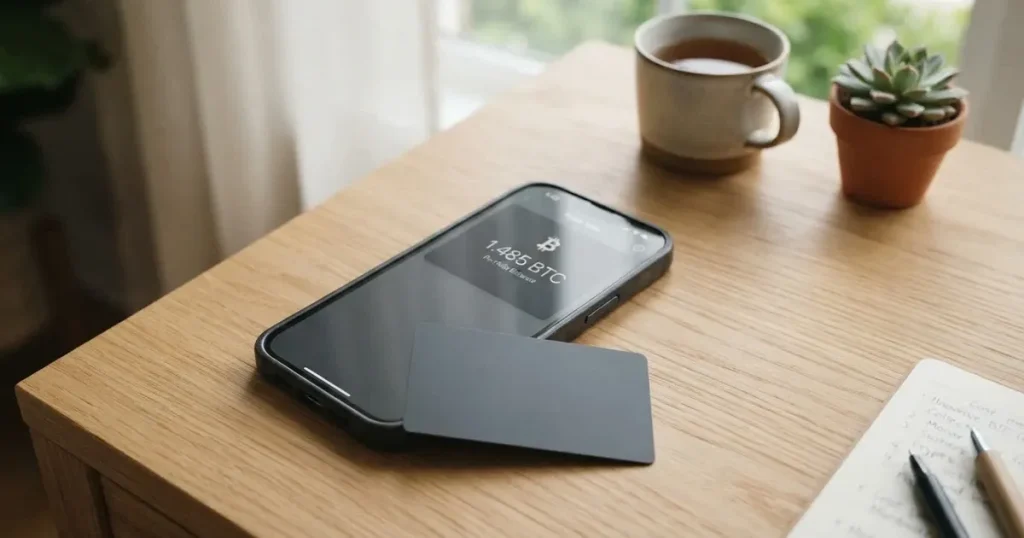
Lava is a Visa card you fund with crypto or stablecoins and spend like an ordinary payment card. It is aimed squarely at people outside the United States, and it is built around a collateral model: your balance backs your spending, so there is no credit line to run up and no debt spiral to fall into. That structure is the card’s main appeal and, in a few places, its main irritation, because you cannot spend what you have not already loaded, and your collateral sits exposed to the issuer’s rules.
Conditions are current as of October 28, 2026.
I gave it 7.1 out of 10. That is a solid card with a genuinely good fee structure and an unusually open geographic pitch, held back by a handful of things the public pages simply do not tell you — the issuance fee, the identification documents required, how long the card takes to arrive, and what the ATM cash limits are. Details below.
*Conditions checked as of 2026.*
Who gets a Lava card
Lava’s terms do not publish a country list. That is unusual in this category and cuts both ways: there is no whitelist to check yourself against, and no clear answer to give you if you are in a place where the crypto and card rules are unusually strict. What the terms do say is that you must attest that you are not a United States citizen and that you are not on a U.S. sanctions list. The card is intended for personal, family and household use, and it is explicitly positioned for people outside the US. A separate document of US terms exists, which tells you the US is handled differently rather than simply left out.
For you, practically speaking: whether you can get one depends on who you are, not where you live, at least on the face of the terms. If you hold US citizenship, you are out. If you are anywhere else in the world, you are in principle in scope — but you should still check the crypto and card rules where you live before you send anything, because Lava is not the only regulator in the transaction.
How to apply
The application flow is not described in detail on the public pages. The terms say you must provide true and complete information and must not be on a sanctions list, but they do not list identity documents, do not describe verification tiers, and do not give a processing time. So I cannot tell you what you will be asked for, or how long you will wait.
What is stated about the card itself:
- It is a Visa card, on the Lava platform.
- It is described as a secured card: it spends from your USD balance and, in Lava’s own words, does not offer unsecured credit. The terms also refer to it as a Visa credit card.
- Both virtual and physical versions are mentioned, though the card pages do not say which format you receive by default, or whether you can choose.
- It is accepted at merchants in 150+ countries, and Lava puts that as “150 million merchants”.
Replacement cards are issued through your Lava account, but the terms do not list the countries of delivery, the delivery time, the delivery cost, or a replacement fee. If you need a card working next week rather than next month, this is the first thing to ask support before you order.
Fees and limits: what a Lava payment really costs
This is where the card looks genuinely good. Lava states “no annual fees”, and — this is the part most crypto cards cannot match — no FX fees and no FX spread. Non-USD transactions are described as 0% FX fee, 0% cross-border fee, zero spread on the foreign currency. There is also no exchange fee or spread on Lava’s own Bitcoin buy/sell, per its pages. The card spends from a USD balance, which is why that holds: the conversion, if any happens, happens on Lava’s side rather than as a hidden margin at the point of sale.

The gaps are narrow but real. Here is what I could and could not find.
| Fee or limit | What Lava says |
|---|---|
| Annual fee | None — “no annual fees” |
| Issuance fee | Not stated on the public pages |
| Conversion fee | No exchange fee or spread on Bitcoin buy/sell; spend comes from a USD balance |
| FX fee | None — “no FX fees, and no FX spread” |
| Cross-border fee | 0% |
| ATM | 2% with a $1 minimum (International Terms); a Lava page also describes ATM withdrawal as fee-free in all 50 US states, which is the US context of that claim |
| Free ATM allowance | Not stated |
| Daily spending limit | No fixed limit — set by the USD value of your collateral or available balance, changeable, and reducible to $0 at any time |
| Monthly spending limit | No fixed limit; “no minimum spend” |
| Cash limit per ATM | Not stated |
| Multi-currency balances | Not stated |
Three ordinary payments, walked through:
Coffee abroad, local currency, say 8 euros on a card that holds dollars. The stated FX fee is 0% and the spread is zero, so the euro amount is converted without a currency markup. This is the case Lava is strongest at, and the reason its cost score is an 8 rather than something average.
A $30 online subscription in dollars. Straight from the USD balance, no conversion, no fee. The thing to watch is not the fee but the authorisation: a declined or reversed authorisation can leave a hold on the balance that persists for days.
A $60 cash withdrawal at an ATM. Here the 2% with a $1 minimum applies, so roughly $1.20 on $60, and there is no stated free allowance and no stated cap on how much you may take out. Because the ATM terms are the one fee that is clearly non-zero, this is the number I would test early with a small withdrawal rather than assume.
There are no paid tiers on the card pages. Rewards differ by place, which I cover below, and that difference matters more than the fee table.
How to top up
Topping up is the part of Lava with the most options, and also the part with the least specificity.

- Stablecoin transfer, described as instant and available 24/7.
- Bank transfer from a local bank account, and direct deposit.
- Local currency deposits, or stablecoins — the Global Money Movement section describes both.
- Borrowing USD against your bitcoin via BLOC, which runs under separate terms with fixed rates from 6.50% to 8.50%. That is a loan product sitting next to a payment card, and it changes the risk profile of the account.
- Lava says there are no hidden fees. It does not state the deposit fee or the minimum top-up amount.
- Your collateral wallet lives on one of the Supported Blockchain networks: Ethereum, Polygon, Optimism, Arbitrum.
Two warnings belong here rather than in the fine print. First, the specific coins accepted are not stated — the network list is public, the asset list is not, so you must confirm before sending. Second, blockchain transfers are irreversible. A deposit sent on a network Lava does not support, or to an address belonging to a different network, can simply be lost, with recovery depending on support and carrying no guarantee. This is the single largest practical risk in the top-up flow and it is entirely avoidable by verifying the network first.
Withdrawals are restricted in ways you should read. Cash advances and balance transfers are not available. The issuer may suspend or cancel the account at any time, and closing the account does not cancel your repayment obligations. Prepayment is allowed without penalty. And the collateral can be liquidated on a “Liquidation Event” — defined as a payment unpaid for one calendar day, or collateral falling below the charges owed against it. One missed day is the trigger. That is worth understanding before you load an amount you would mind losing.
Paying with it day to day
Everyday use is the weakest of the six areas at 6 out of 10, and the reasons are mostly missing information rather than bad performance. It is a Visa, virtual and physical versions are mentioned, and cash costs 2% at the ATM. Beyond that, Apple Pay and Google Pay support are not disclosed, and neither is the list of blocked merchant categories. If you live your life on a phone wallet, that is the first thing to ask about.
On rewards, the headline is “up to 5% back in bitcoin on every purchase”, which is where the everyday-use score comes from but also where the fine print matters:
- 5% bitcoin back at partner merchants
- 3% on other purchases for US cardholders
- 1% for non-US cardholders, per a Lava comparison article
So for you, as a non-US holder, the realistic number is 1% on ordinary purchases, not 5%, unless the merchant is a partner. Some merchants and categories are ineligible. Rewards are issued once a transaction settles, and redemption has a 100,000-satoshi minimum, per a Lava announcement. That threshold is small, but it does mean the reward accrues before you can touch it.
Visa benefits are included and are the quiet part of the offer: purchase protection up to $20,000, extended warranty up to $25,000, global auto rental insurance, travel accident insurance, and lost luggage insurance.
The app is on mobile and web. App Store and Google Play links are not on Lava’s site; a third-party aggregator (App Pricing Lab, data updated 2026-02-16) shows the listing “Lava: Secure Bitcoin Loans” at 4.8/5 from 132 reviews. Unofficial, and not something Lava itself confirms.
If something goes wrong with a payment, the dispute route is clear enough. Report a disputed charge within 60 days of it posting to your statement, try the merchant first, and chargebacks resolved in your favour are credited to a current or future statement. Card issues go to the issuer through the cardholder-agreement channels.
What can go wrong
Nobody complains about Lava because there is almost nothing to complain about in public — I found no official incidents and no user reports or news threads. That absence is mildly encouraging and mostly a sign of a young, low-profile programme. There is no Trustpilot page, no Reddit threads, and no card-specific complaints, and Lava’s own pages do not publish a complaints procedure.
The real exposures are these:
- Liquidation. Your collateral can be liquidated on a Liquidation Event — an unpaid payment after one calendar day, or collateral below charges. This is the sharpest edge on the card.
- Account suspension. The issuer may suspend or cancel the account at any time, and closing it does not extinguish repayment obligations.
- Programme risk. Lava is not a bank. The issuer named in the International Terms is Third National, under licence from Visa, at 2100 Southbridge Pkwy STE 650, Birmingham, AL 35209. Governing law is Puerto Rico and arbitration is in New York. Lava’s legal entity and licences are not named on its homepage.
- The network can act. Visa and Mastercard do not issue these cards themselves; they license issuers and can suspend a programme. WaveCrest was suspended by Visa in Europe in 2018, closing all its Visa programmes, and Visa terminated its global agreements with FTX on 13 November 2022, winding down the FTX US debit card. History says this is not theoretical.
- Custody. Lava says it does not rehypothecate — “We don’t trade, lend out, or otherwise use your funds” — and describes infrastructure that minimises trust and eliminates single points of failure. Passkeys, account controls and an app-set daily spending limit are in place. Insurance on your balance is not stated, which is the gap to ask about rather than the marketing line.
- Category and country restrictions. A merchant category code (MCC) is a four-digit classification of a business; MCC 7995 covers gambling, and many issuers block it by policy rather than by law, with the blocked list varying by issuer. Lava’s own blocked categories are not disclosed.
- Foreign BIN declines. Address Verification Service is mainly offered in the US, Canada and the UK and is generally unavailable for foreign-issued cards, which can cause declines. Some merchants decline prepaid or foreign BINs because the BIN lookup reveals the card type and issuer country. A card issued in one country can simply look “foreign” to a shop in another. If a decline happens, an authorisation hold can remain for days, typically up to seven.
- The BLOC loan. If you borrow USD against bitcoin, you are adding debt at 6.50% to 8.50% on top of everything above.
- Taxes. Nothing in this section is tax advice, but you should know the shape of it: the IRS treats digital assets as property, so exchanging them for goods or dollars generally produces a taxable gain or loss, and each card payment funded from crypto can be a separate disposal measured at the fair market value on the transaction date.
On the support side, Lava describes 24/7 US-based client services reachable at [email protected] or (347) 588-9745, “directly connected to a real human”, plus 24/7 Visa customer service. That is a genuine strength, and it is also the route for every question in the “not stated” gaps above.
What to take instead
Three alternatives come up constantly, and they are worth comparing honestly rather than dismissing.
Gemini — scored 4.9/10. A Mastercard World Elite credit card. No annual fee, no foreign transaction fees. Rewards: gas, EV and transit 4% on the first $300/month, dining 3%, groceries 2%, other 1%, paid instantly in Bitcoin or 50+ cryptos on Gemini and changeable anytime, plus 10% Vault Rewards at some merchants. Referral bonuses of $50 crypto each, $250 per five referrals, up to 50 per year. The difference that matters: this is credit, so you pay it off in fiat and the crypto conversion fee is not applicable. Who can get it is not stated on the card page, and the form and currency are not stated either.
Trastra — scored 4.1/10. A prepaid debit card accepted at Visa merchants worldwide, available in 31 listed countries including Germany, France and the UK, with the page saying it will be available for all residents of the EEA. For non-European residents: “Not at the moment.” Topped up using cryptocurrencies in your Mover wallet, though no coins or networks are named. Costs are not stated, and so are the rewards — batch notes describe crypto cashback but the page itself has none.
RedotPay — scored 6.9/10. The closest rival to Lava, and the one with the most transparent published pricing, including a fee table effective 1 December 2025. Virtual card 10.00 USD, physical 100.00 USD and non-refundable once paid, virtual replacement 5.00 USD first then 10.00 USD. No monthly or annual maintenance fee. Transaction fee 1.00% (the crypto conversion), waived in the default currency, 1.20% in a non-default currency; small authorisations of 1.00 USD or less are waived for the first five per card per month then 0.2 USD; declined transactions waived three times then 0.5 USD. Some merchants carry 1.5% with a 0.50 USD minimum. A paid Pro tier is 12.90 USD monthly or 129.00 USD annual. Onboarding is on-chain crypto deposit, or buying crypto by card in the app (ETH, USDC, USDT, region-dependent), with a 1 USDT minimum after network fees on USDT-TRC20. The catch is eligibility: its two official lists word the rule differently, one covering citizenship and the other excluding residents of 47 places (dated 28 August 2026) from both virtual and physical cards, with India, Indonesia, Morocco, Nepal, Singapore and Turkey added. Russia, Belarus, Ukraine and Serbia are on both lists; Georgia, Armenia, Kazakhstan and the UAE are on neither.
| Lava | Gemini | Trastra | RedotPay | |
|---|---|---|---|---|
| Score | 7.1 | 4.9 | 4.1 | 6.9 |
| Network | Visa, Third National as issuer | Mastercard World Elite | Visa (network named, form not) | Visa debit in the Singapore terms |
| Structure | Secured, spends from USD balance | Credit | Prepaid debit | Virtual and physical |
| Annual fee | None | None | Not stated | None |
| Currency/FX | 0% FX fee, zero spread | No foreign transaction fees | Not stated | 1.20% in a non-default currency |
| Crypto conversion fee | None stated on Bitcoin buy/sell | Not applicable | Not stated | 1.00% |
| Top-up | Stablecoin, local currency, bank transfer, direct deposit, or borrow USD against bitcoin at 6.50%–8.50% | Fiat, paid off monthly | Crypto in a Mover wallet | On-chain crypto, or crypto bought by card |
| Geography | Not a US citizen; no country list published | Not stated on the card page | 31 countries, EEA rollout, non-Europe excluded at present | Long citizenship and residence exclusion lists |
| Rewards | Up to 5% bitcoin back; 1% for non-US on other purchases | 4%/3%/2%/1% by category, paid in 50+ cryptos | Not stated | $5 welcome reward, valid 30 days, spending only |
Read that table as a choice between three different things. Lava is the only one of the four whose headline promise is that there is no currency markup on spending. Gemini is a rewards credit card for people already inside a crypto platform’s fiat rails. Trastra is a regional debit product with almost nothing published about its price. RedotPay publishes its prices in detail and then tells a large share of the world they cannot have one.
Who I would recommend it to
I would point this card at a specific person: someone outside the US who holds stablecoins or Bitcoin on Ethereum, Polygon, Optimism or Arbitrum, wants a Visa they can use at an ordinary shop without a currency spread eating the payment, and is comfortable with the collateral model — including the one-calendar-day liquidation trigger.
Before you commit, do four things. Confirm which assets and networks Lava actually accepts, because the asset list is not public. Ask what the issuance fee is. Ask how long the physical card takes to arrive where you are and what a replacement costs. And ask whether Apple Pay and Google Pay work, because if you tap with your phone every day, that gap matters more than any fee in the table above.
I would steer away if your spending depends on a phone wallet and you cannot get a straight answer; if you need credit and the idea of paying off a card is the point, because this one does not do that; if you hold US citizenship; or if the collateral arrangement makes you uneasy, since the liquidation trigger is unusually short.
One thing I could not settle: Lava’s own legal entity and licences are not named on its homepage. The issuer is named in the terms — Third National, under licence from Visa — but Lava itself says it is not a bank. Before you load a large balance, it is reasonable to ask for the entity behind the brand.
Frequently asked questions
What is the Lava card?
Lava is a Visa payment card you fund with crypto and spend from a stored balance. It is described as a secured card: spending comes out of your USD balance, and Lava states it does not offer unsecured credit. It runs on Visa, with the issuer named in its terms as Third National. Lava itself says it is not a bank.
How does the Lava card work?
You top up with stablecoins or local currency, or borrow USD against bitcoin, and the card spends that balance like an ordinary Visa. Spending draws on collateral you hold in a wallet on Ethereum, Polygon, Optimism or Arbitrum. Your available balance determines your spending limit, and there is no minimum spend.
Is Lava a bank?
No — Lava states plainly that it is not a bank. The issuer named in the International Terms is Third National, under licence from Visa, with an address in Birmingham, Alabama. Governing law is Puerto Rico and arbitration is in New York. Lava’s own legal entity and licences are not named on its homepage.
Who can get a Lava card?
Lava publishes no country list. Under its terms you must attest that you are not a United States citizen and are not on a U.S. sanctions list, and the card is intended for people outside the US. A separate US terms document exists. The terms also say use is personal, family and household.
Does Lava card require KYC?
The public pages do not say. The terms require true and complete information and exclude people on sanctions lists, but no identity documents, no verification tiers and no processing time are published. If you need to know what you will be asked for before you apply, you will have to ask.
What does it cost to use a Lava card?
Lava states there are no annual fees, no FX fees and no FX spread, and no exchange fee or spread on Bitcoin buy/sell. Non-USD transactions are described as 0% FX fee, 0% cross-border fee and zero spread. The one clear fee is ATM usage at 2% with a $1 minimum. The issuance fee is not stated.
What are the Lava card limits?
There is no fixed spending limit — your limit follows the USD value of your collateral or available balance, and it can be changed or reduced to $0 at any time. Lava states there is no minimum spend. Daily and monthly cash withdrawal limits are not published, and neither is a free ATM allowance.
How do I top up the Lava card?
Four ways are described: stablecoin transfer, instant and 24/7; bank transfer from a local bank account; direct deposit; or borrowing USD against bitcoin through BLOC at fixed rates from 6.50% to 8.50%. Lava says there are no hidden fees, but does not publish the deposit fee or minimum top-up. Check the network before sending — transfers are irreversible.
Is Lava card safe to use?
Treat it as a crypto product, not a bank deposit. Lava says it does not rehypothecate customer funds and offers passkeys and app-set spending limits, but insurance on your balance is not stated. Your collateral can be liquidated on a “Liquidation Event” — an unpaid payment after one calendar day, or collateral below charges. That single-day trigger is the thing to understand first.
Can I add the Lava card to Apple Wallet?
The public pages do not say. Apple Pay and Google Pay support are not disclosed, and neither is the list of blocked merchant categories. I would not assume it works. Ask Lava before you order, especially if phone payments are how you normally pay, and note that tokenised numbers can also be restricted by the issuer.
Credit and cashback cards – cryptocardsranked
Content created by the «cryptocardsranked» team