
The Exodus card, read closely: reach, fees, and the fine print
 Available in US

The Exodus card is a Mastercard that spends straight out of a crypto wallet instead of a bank account. That single sentence hides most of what you need to decide: where it works, what a swipe costs you, and who stands behind it. I went through the card’s own pages and terms, and I want to tell you plainly what I found — including the parts that are less comfortable than the marketing.
Conditions are current as of October 28, 2026.
The conditions described on this page are current as of October 2026.
Verdict: 6.8 out of 10
I score the Exodus card 6.8 / 10. It is a solid, ordinary-feeling crypto card with genuinely good top-up options, wrapped in a layer of corporate news that gives me pause. If you already keep your money in an Exodus wallet, live in one of the supported countries, and want a card that draws on that balance without fuss, it does its job. If you are choosing a crypto card for the first time and want the widest safety net, or you are outside the supported list, it is not the obvious first choice.
Let me show my working. Each criterion out of 10, with the reason:
| Criterion | Mark | Why |
|---|---|---|
| Who can get it | 7 / 10 | Supported in 42 countries: Europe, Canada, USA (except Vermont), Mexico, Brazil, Argentina, Colombia and others. |
| Cost | 7 / 10 | Free tier $0/year; use outside the holder’s country costs 1% on Free; ATM 2%; stablecoin in a currency that isn’t the holder’s 0.5%. |
| Top-up options | 9 / 10 | USDT and USDC on several networks — USDC on Solana, Ethereum, Arbitrum One, Base, BNB Smart Chain, Polygon; USDT on Arbitrum One, Solana, Ethereum, BNB Smart Chain, Polygon; plus a bank card and Apple Pay. |
| Reliability and complaints | 5 / 10 | Issuer Monavate Ltd (FCA), operator Baanx, both bought by Exodus on 1 May 2026; reportedly Monavate cannot issue cards to new customers in Europe, a 25% workforce cut; Trustpilot Exodus 4/5 with thousands of reviews. |
| Everyday use | 6 / 10 | Virtual and plastic (Metal), ATMs at a 2% rate; Apple Pay described for topping up, wallets for paying by card not spelled out, the card does not support a PIN. |
A note on who this is really for: Exodus wallet users in Europe and Latin America. That is the crowd the card is built around, and it shows in the good and the weak alike.
Who can get the Exodus card
The Exodus Card is supported in a long but clearly bounded list of countries. Exodus Pay itself works in most jurisdictions, but the card is not the same thing as the wallet, and the wallet’s reach does not carry the card along with it.
The Exodus Card is supported in: Andorra, Argentina, Austria, Belgium, Bosnia and Herzegovina, Brazil, Bulgaria, Canada, Colombia, Croatia, Cyprus, Denmark, Finland, France, Germany, Gibraltar, Greece, Guatemala, Hungary, Iceland, Ireland, Isle of Man, Italy, Jersey, Liechtenstein, Lithuania, Luxembourg, Malta, Mexico, Netherlands, Niger, Norway, Poland, Portugal, Romania, Slovakia, Slovenia, Spain, Sweden, Switzerland, USA (excluding Vermont), and Uruguay.
A few things worth pulling out of that list before you plan a trip around it. Vermont is carved out of the United States. Jersey, Guernsey-adjacent Isle of Man, Gibraltar and Liechtenstein appear as separate entries, which tells you the programme is built for a specific set of regulatory perimeters, not a blank cheque. And Niger is on the list — which may surprise you, but it is there in the card’s own country list, and I am not going to editorialize beyond what the card states.
The score for this criterion, 7 out of 10, reflects a broad but incomplete map. If you are in the list, the path is open. If you are not, no amount of wallet access will help you get the card.
How to get it
Getting the Exodus card means doing identity verification first. There is no way around that, and I would distrust any guide that told you otherwise.
Identity verification is required for the card, for cash deposits, and for redeeming points. The account needs a phone number that receives a code by WhatsApp or SMS; then you verify your email and complete an ID check inside the app. Former Spend Card users migrate without having to re-verify. A newer help article describes the same sequence: an ID check in the app, phone verification by WhatsApp or SMS, then email. The specific verification levels, how long each takes, and the reasons a check can be rejected are not stated on the pages I could read.
There is a gap I want to be upfront about. The details of what the physical card itself is — its network partner and manufacture beyond what is written below — are not stated on the public pages I could reach; the older Spend Card was described as a virtual, Mastercard-based product. What is clear is that the Exodus card is a debit card, not a credit card, usable wherever Mastercard is accepted. It comes in a virtual form and a physical Metal form. The issuer is Monavate Ltd, an FCA-authorised e-money issuer, and the programme manager is Baanx, per the EU and UK terms.
On delivery: the Metal tier’s physical card sits on a waitlist and is expected to arrive 6–8 weeks after purchase. A replacement Metal card costs $99. On the Free tier, replacement is not applicable. Countries covered for delivery are the same supported list above, and a virtual card is available alongside, so you are not stranded waiting for plastic.
My advice, if you are deciding whether to bother: open the app and start the verification early. Even though the card’s own pages do not commit to processing times, phone and email checks are quick in practice, and the ID review is the step that can take longest. Read the country list twice — once for eligibility, once for delivery.
Fees: what the Exodus card really costs you
This is where I want to be most careful, because the card’s own public pages are not fully transparent here, and several of the clearest numbers come from a terms document that may lag behind the newer product.

A few things about the Exodus card’s cost are not stated on its public pages. The purchase price of the card itself is not published there, the ATM fee is not published there, and the exact conversion fee amounts are not published there. What follows comes from the card’s “Exodus Card EU+UK Terms” — a Baanx-era PDF, file-dated 202509 and modified 30 April 2026 — which may not fully match the newer Exodus Pay card described above. I am flagging that mismatch rather than hiding it, because it is the single most important caveat in this review.
Here is the fee and limit picture as the terms set it out:
| Fee or limit | Free tier | Metal tier |
|---|---|---|
| Annual subscription | $0 | $199/year, auto-renews (cancel within 14 days for refund) |
| Purchase in another currency | Converted from USD at the card network and payment processor rate | Same, plus Metal carries no foreign transaction fee (fair use) |
| Purchase outside the holder’s country | 1% | No extra fee (fair use) |
| ATM withdrawal fee | 2% (operator may charge extra) | No ATM fee up to $1,200/month, then 2% |
| ATM limits | $1,000/transaction, $1,000/day | $1,000/transaction, $5,000/day |
| Card purchase limits | $10,000/transaction, $15,000/day | $20,000/transaction, $30,000/day |
| Card replacement | Not applicable (Free) | $99 |
| Stablecoin in a currency other than the holder’s / merchant’s country | 0.5% | 0.5% |
A few notes on that table. The Free tier’s daily card purchase limit is $9,500 globally and $15,000 in the United States, per the card’s help material — the $15,000/day Free figure in the table comes from the older terms. The terms also state UK figures in pounds: £1,000 per ATM withdrawal, £10,000 per purchase and £15,000 per day.
The conversion story in plain words: when you buy something priced in a currency other than your own, the amount is converted from USD at the card network and payment processor rate at the time of purchase. The terms are reassuring on one point — “neither Baanx nor Exodus will charge an additional currency conversion fee” — but the newer help article’s wording (“converted from USD at the network rate”) is looser, and the fee amounts are not stated either way. Treat the network rate as the cost of foreign spending, plus the 1% cross-border charge if you are on Free and shopping outside your country.
Two or three everyday payments, and what applies to each:
- A €40 lunch in Paris, Free tier. The merchant charges you in euros, so the amount is converted from USD at the network rate. Because you are outside your home country, the 1% cross-border fee on Free also applies. That is your cost on top of the exchange rate. On Metal, the foreign transaction fee is waived under fair use, so you pay only the network rate.
- A $60 withdrawal from an ATM, Free tier. 2% of $60 is $1.20, plus whatever the ATM operator charges on top — operators levy their own fees and the card does not cap that at the Free level. Metal gives you fee-free withdrawals up to $1,200 a month before the 2% starts.
- Paying $30 at a US online store, US cardholder. This is domestic, so no cross-border fee and no foreign conversion fee. The 3-D Secure check may appear online; the card network handles that, not Exodus. The 2% ATM rate does not touch card purchases at all.
Read the two percent numbers as the card’s own headline costs. For someone who mostly spends in their home currency, the Free tier’s real bill is the 1% cross-border charge. For someone who lives abroad, it is 2% at the ATM plus the network rate.
How to top up the Exodus card
Top-up is the strongest part of this card, and it earns its 9 out of 10 here. The reason is the number of networks, not the number of coins.
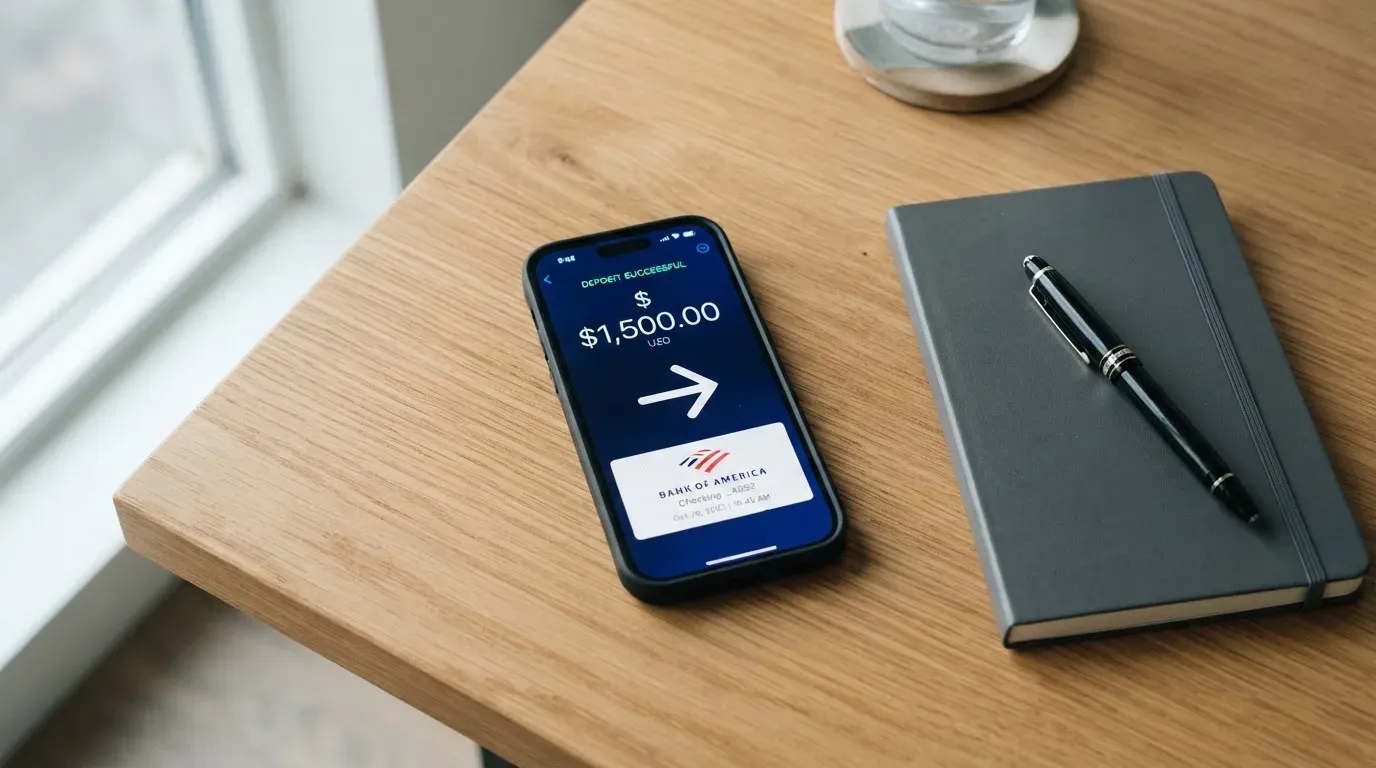
The card draws from the Exodus Pay balance on Solana, and it draws in a set order: USDT first, then USDC, then XO Cash. A single purchase must be covered by a single asset — that is a detail that catches people out when they hold a mix, so it is worth understanding before you rely on the card for a large payment.
For deposits, the supported options are wide:
- USDC on Solana, Ethereum, Arbitrum One, Base, BNB Smart Chain and Polygon.
- USDT on Arbitrum One, Solana, Ethereum, BNB Smart Chain and Polygon.
- A debit card and Apple Pay (on iOS).
The terms put the deposit fee as “no fee (no min. balance)”. There are a few conditional costs to know: a stablecoin in a currency that is not the cardholder’s or the merchant’s country costs 0.5%; DeFi or yield tokens are free up to $1,200 a month, then 0.5%; other cryptocurrencies (wETH, for example) cost 0.875%; and network gas is a small variable, typically around $0.01. The fees on the pay-side deposit options — the debit card and Apple Pay — are not stated.
One thing that trips people up on any card of this kind, and it is not Exodus-specific: send a stablecoin on the wrong network, or to an address belonging to a different network, and it can be lost. Blockchain transfers are irreversible. The supported networks above are your safe list; anything else is a support ticket, not a fix. The same applies to gas: on Ethereum you need a little ETH alongside a token like USDT to pay the network fee, so a USDT-only wallet cannot send there.
There is also a point of confusion about withdrawal. The Exodus card runs on a self-custody model, so your funds stay in the linked wallet — there is nothing to withdraw *from the card*. Refunds are credited to the Card Account and may be unavailable for up to five days. If you close the Card Account, you can request a check of its balance for a fee.
Paying with the Exodus card day to day
Day-to-day use is competent, with two genuine gaps you should plan around.
First, the card does not currently support a PIN. At terminals that ask for a PIN, you may be able to confirm without one. In practice this is fine at contactless terminals and at many staffed ones, but it is a real friction point at unattended card readers and at some point-of-sale terminals abroad. Plan for contactless-first spending.
Second, Apple Pay is described for adding money — that is, topping up — on iOS. The pages do not set out which mobile wallets, if any, you can add the *card itself* to for paying in stores. So the picture I can give is: a virtual card and a Metal physical card, a 2% ATM rate, and no PIN. That is a working everyday card, just not a feature-rich one.
What you can pay for directly: from 1 July 2026, Exodus Card holders in Argentina, Brazil, Mexico, Colombia and Uruguay can pay DGO and SKY+ subscriptions, and new customers in those countries could get a 25% cashback offer subject to terms. That is a regional launch press release, not a general rate, and the general cashback rate for ordinary spending is not stated there. On the Metal tier specifically, the terms give 3% cashback on the first $10,000 spent per year, then 1% — with the caveat, in the schedule, that the rewards programme may be paused or terminated.
One more everyday detail: refunds and disputed purchases are credited as credit to the Card Account, and may be unavailable for up to five days. Liability for unauthorised transactions is limited to the face amount plus fees. Disputes with the programme manager go to arbitration under Delaware law with a class waiver. The specific chargeback time frames are not stated.
The app itself scores well where I could read it: 4.6 out of 5 on the App Store from 38K ratings, on iPhone, iPad and Vision. I did not read the Google Play rating.
What can go wrong with the Exodus card
The card is usable, but it sits inside a corporate story with some sharp edges, and I would not want you to discover them after you have funded it.
The largest one is corporate. The issuer, Monavate Ltd (FCA-authorised, Cambridge UK), and the programme manager, Baanx Group Ltd, were both acquired by Exodus Movement on 1 May 2026 — shares acquired from receivers after a loan default, with $175M announced in November 2025. Q2 2026 results mention a 25% workforce cut. And the CEO reportedly said Monavate cannot issue cards for new European clients (this comes from a Bank of Lithuania inspection of Monavate UAB in late 2025). A newer help article also notes that new US card issuance is not currently open.
I have written those company-level points as reported, because that is how they reached me — some are from company results and inspection context, some are reported, not confirmed by the card’s own pages. What is confirmed by official sources is the 1 May 2026 acquisition and the FCA authorisation. The practical question for you is simple: a programme that is being reorganised underneath you is a programme where “will my card keep working” deserves a second thought, particularly for the cross-border 1% fee on Free, which is the tier most exposed to a change of issuer or programme manager.
The second risk is the one every prepaid-style crypto card carries: your balance is loaded, not insured like a bank deposit. When you use a self-custody card, the money stays in your own wallet until the moment of payment — which is genuinely good — but it also means you bear sole responsibility for key loss, phishing, and malware that swaps a copied address. Transfers are irreversible, and a stolen private key has no recovery path.
The third is the practical one: limits. Free tier caps you at $10,000 per transaction and $15,000 per day (the help material gives $9,500 daily globally), and ATM withdrawals at $1,000 a day. That is fine for daily life and tight for anything larger.
Let me put the complaint picture honestly. Trustpilot for Exodus sits at roughly 4 out of 5 from around 4,380 reviews, and the company replies to 93% of negative reviews. One review described a debit card validation failure that was fixed after escalation. There are recurring negative themes — blocked transactions, high fees, unresponsive support — but those read as *wallet* complaints, not card-specific ones. I found no card-specific complaint threads and no Reddit results. On the company’s own side, the one official change is that new US card issuance is not open.
Insurance and how the funds are safeguarded under the newer Exodus Pay product are not stated. Support contacts do exist: for Metal and replacement, the Exodus support email; for the issuer, the Monavate support email; and there is a toll-free number on the back of the card.
What to take instead
If Exodus is not your fit, these are the alternatives I would weigh, and I have scored them on the same scale as above for a fair comparison.
MetaMask — 7.1 / 10. Sign-up is open in 45 listed countries/territories; other regions join a waitlist, and proof of residency is required — “ineligible regions limit sign-ups, not spending”. US and UK sign-ups are temporarily closed per the FAQ. The card is Mastercard: a virtual card issued instantly, with Metal pre-orderable after virtual approval, one card per user, issuer Monavate, card provider Crypto Life. The virtual card is free with no annual or maintenance fee; Metal is $199/year. Fees are described as a “minimal fee for each transaction” and “no additional MetaMask fees”, with no foreign transaction fee and the Mastercard rate used — though the exact amounts are not stated on the pages I read. It spends directly from the connected wallet on Linea, Base, Monad and Solana, with tokens including mUSD, wETH, EURe, GBPe, USDC and USDT; Solana-only wallets cannot withdraw credit. Cashback is paid in mUSD: 1% on Virtual, and 3% on Metal limited by footnote to the first $10,000 spent then 1%, plus a $FLY bonus via the Blackbird dining app. The catch for many people: the same issuer, Monavate.
KAST — 6.1 / 10. Eligibility is residence-based, and the rules are unusually explicit: if you live in a supported country but hold an ID from a restricted region you may still fail KYC, dual citizens with an ID from a supported country may pass, only your own ID is accepted, and a VPN does not bypass it. You can create an account in an unsupported country but KYC stays locked. The card is Visa, virtual and physical, up to 10 cards per user, across Standard, Premium and Private tiers plus themed designs. Membership: Standard $0, Premium $1,000/year, Private $10,000/year, billed annually upfront; extra virtual card $2; Standard physical card has a $40 delivery fee; inactivity fee $1/month after 12 months. Fees are among the lowest here: stablecoin top-up 0%, USD spend 0%, transaction fee 0%, Apple/Google Pay 0%, non-USD FX 0.5%–1.75% depending on your country and the transaction’s, non-USD transactions under $25 cost $0.10, a declined transaction for insufficient balance costs $0.50. Funding is USDT, USDC, PYUSD and RLUSD on Ethereum, Solana, Polygon, Arbitrum and TRON. Cashback in USD: Standard 1.5% on the first $2,000/month, Premium 2% on $10,000, Private 3% on $40,000. The full country list is not published.
Zeal — 6.1 / 10. Spending is said to work in 150+ countries, though issuance depends on eligibility and regional availability. The live programme covers the EU, UK, Brazil, Colombia, Mexico, Japan, Singapore, Philippines, Indonesia and Thailand. It is a Visa card with a virtual card for online use, addable to Apple Pay, accounts in EUR, USD and GBP (via Gnosis Pay), with physical not stated. Zeal charges no additional FX fee — conversion is at the Visa wholesale rate — though Gnosis Pay fees such as ATM may still apply. Cashback is up to 4% paid in GNO on Gnosis Chain, which you must hold in the card Safe to qualify, and rates can change; the app also advertises up to 5% variable APY on EUR/USD balances. Neither a fee schedule nor physical-card details are published on zeal.app or the App Store.
How I would frame the choice in one paragraph: if your priority is the widest top-up network support, Exodus is hard to beat. If your priority is the lowest fees and the most explicit eligibility rules, KAST is worth a look. If you want cashback paid in a crypto token and broad spend reach, Zeal is interesting but thinly documented. MetaMask is the closest competitor to Exodus on structure and scores a little higher, though it shares the same issuer.
Who I would recommend the Exodus card to
I would recommend the Exodus card to three kinds of people. First, existing Exodus wallet users in Europe and Latin America who want to spend from a balance they already hold — that is the crowd this was built for, and the 9-out-of-10 top-up score is real. Second, anyone who wants a card that keeps their money in self-custody until the moment of payment, and who is comfortable with the responsibility that comes with it. Third, people in a supported country who want a free tier and do not expect to travel much with the card, since the 1% cross-border fee only bites when you do.
I would point elsewhere if you need a PIN at terminals, if you want to know your fees from a single up-to-date page (this card’s clearest numbers come from a document that may predate the current product), if you are outside the supported country list, or if a corporate reshuffle inside the issuer makes you uneasy. I would also look elsewhere if you plan to move large sums — the Free and Metal daily limits are modest — or if you rely on chargebacks with clear time frames, which this card does not publish.
My honest summary: a competent card with excellent funding options, weighed down by uncertainty about its issuer’s corporate situation and by fee information that is genuinely hard to find in one place. If that uncertainty is acceptable given your own setup, it will serve you well. If it is not, the alternatives above give you more of what you cannot get from Exodus.
Frequently asked questions
What is the Exodus card?
The Exodus card is a Mastercard debit card that spends directly from a crypto wallet balance rather than from a bank account. It comes in a virtual form and a physical Metal form, and it is usable wherever Mastercard is accepted. The card draws from the Exodus Pay balance on Solana, taking USDT first, then USDC, then XO Cash. Your funds stay in your linked self-custody wallet until the moment of payment, so there is no balance to withdraw from the card itself.
How does the Exodus card work?
When you tap or insert the card, the purchase is drawn from your Exodus Pay balance on Solana in a fixed order: USDT, then USDC, then XO Cash. A single purchase must be covered by one asset, so holding a mix does not automatically split a payment. Refunds come back as credit to the Card Account and may be unavailable for up to five days. The issuer is Monavate Ltd, an FCA-authorised e-money issuer, with Baanx as programme manager.
Is Exodus a bank?
No — Exodus is a crypto wallet company, Exodus Movement, not a bank. The card’s issuer, Monavate Ltd, is an FCA-authorised e-money institution, and e-money institutions can issue payment cards but cannot lend. Funds loaded onto a card of this type are safeguarded e-money rather than bank deposits, and you should not assume deposit-guarantee protection applies. Exodus Movement acquired Monavate and Baanx on 1 May 2026.
Is the Exodus card available in my country?
The card is supported in 42 listed countries, including most of Europe, Canada, the USA except Vermont, Mexico, Brazil, Argentina, Colombia and Uruguay, plus Andorra, Gibraltar, Jersey, Isle of Man, Liechtenstein, Guatemala and Niger. Exodus Pay itself works in most jurisdictions, but the card is narrower. If your country is not on the list, no amount of wallet access will get you the card — check the list before you plan around it.
How do I get the Exodus card?
Identity verification comes first and is required for the card, cash deposits and redeeming points. You need a phone number that receives a code by WhatsApp or SMS, then verify your email, then complete an ID check inside the app. Former Spend Card users migrate without re-verifying. The card’s own pages do not state verification levels, processing times or rejection reasons, so allow time and keep your documents ready.
How do I top up the Exodus card?
You can deposit USDC on Solana, Ethereum, Arbitrum One, Base, BNB Smart Chain and Polygon; USDT on Arbitrum One, Solana, Ethereum, BNB Smart Chain and Polygon; and you can also add money by debit card or Apple Pay on iOS. The terms put the deposit fee as no fee with no minimum balance, though a stablecoin in a currency other than the cardholder’s or merchant’s country costs 0.5%. Always send on a listed network — transfers are irreversible.
Is the Exodus card free?
The Free tier has a $0 annual subscription, so yes, at that level. The costs show up elsewhere: purchases outside the cardholder’s country cost 1% on Free, ATM withdrawals cost 2%, and foreign purchases convert from USD at the network rate. The Metal tier is $199/year, auto-renewing, with a $99 replacement card, higher limits, no foreign transaction fee under fair use, and no ATM fee up to $1,200 a month.
Does the Exodus card support Apple Pay and a PIN?
Apple Pay is described for adding money on iOS — that is, for topping up. The pages do not set out which mobile wallets the card itself can be added to for paying in stores. The card also does not currently support a PIN; at terminals that ask for one you may be able to confirm without it. That makes contactless-first spending the reliable path, with unattended readers abroad as the awkward cases.
Is the Exodus card safe?
Treat it as a self-custody card with a loaded balance, not a bank account. Your funds stay in your own wallet until payment, which is the safer custody model, but you bear sole responsibility for key loss, phishing and malware that swaps a copied address — and blockchain transfers cannot be reversed. For defence in depth, the terms describe spending limits, the ability to freeze the card in the dashboard, adding and removing linked wallets, and reporting a lost or stolen card immediately.
Is the Exodus card worth it?
For existing Exodus wallet users in Europe and Latin America who mostly spend in their home currency, I think so — the top-up network support is genuinely the best in this comparison. I would hesitate if you travel often and are on Free (1% per cross-border purchase), if you need a PIN, or if the corporate changes around the issuer make you uncomfortable. If you want the clearest fee schedule in one place, KAST publishes one; if you want a slightly higher overall score, MetaMask is close.
Wallet cards – cryptocardsranked
Content created by the «cryptocardsranked» team