
Busha card review — a narrow virtual Visa for three African markets
 Available in US
I went through Busha’s own pages, help-centre articles and the third-party reports that exist for this product, and the picture that came together is a very specific one: a virtual USD Visa, paid in stablecoin or US-dollar balance, marketed almost entirely to people in Nigeria, Kenya and Ghana, with almost no public detail on the fees, the issuer, the dispute process or the limits you’d want to know before loading real money onto it. That gap between what the card actually does and what a normal cardholder expects to be told is the thread running through this review.
The conditions in this article are current as of October 28, 2026.
My verdict on the Busha card
I’d give the Busha card 4.8 out of 10. That’s a card with genuinely low up-front costs, but the practical score is dragged down by the near-total absence of the public information that cardholders usually need: the supported countries aren’t stated, conversion and FX fees aren’t stated, spending limits aren’t stated, the card issuer and BIN sponsor aren’t named, and there’s no Apple Pay or Google Pay. For the person it’s actually built for, a Nigerian, Ghanaian or Kenyan resident spending USDT or USDC online, those gaps are smaller than they would be for someone in Europe or North America, but they don’t go away.
Here’s how the score breaks down by criterion:
| Criterion | Score | Why |
|---|---|---|
| Who can get it | 2 / 10 | Supported countries are not stated; Busha entities are in Nigeria, Kenya and Ghana; Naira payments are not supported. |
| Cost | 8 / 10 | $2 card creation, no funding or maintenance fees; conversion and FX not disclosed. |
| Top-up options | 5 / 10 | Spending from USD, USDT and USDC wallet balances; networks not stated. |
| Reliability and complaints | 6 / 10 | SEC Nigeria-licensed exchange; issuer not named; limited public feedback. |
| Everyday use | 2 / 10 | Virtual Visa only, no Apple Pay or Google Pay, no physical card. |
The card suits a narrow audience: if you’re in Nigeria, Kenya or Ghana, you already have a verified Busha exchange account, you want to spend stablecoins online rather than cash them out, and you don’t need a physical card or a mobile wallet, the $2 entry price is genuinely hard to beat. It does not suit anyone outside those three countries (at least as far as Busha says), and it does not suit anyone who treats a card as a primary payment tool with full disclosures and standard protections.
Who Busha will give the card to
The official Busha post on the card is unusually quiet about who qualifies. There’s no published list of supported or unsupported countries, no stated minimum age and no description of the documents you’ll be asked for. The application is gated by a set of “eligibility questions” you fill in inside the app, and the card terms sit behind a checkbox you have to accept. Beyond that, the only explicit geographic fact in the official material is that Naira payments are not supported, which is striking because Busha Digital Limited is itself a Nigerian-registered company (registration 1495049). The same parent also operates a Kenyan entity (Busha Digital Limited, PVT-GYUQJAEL) and a Ghanaian one (Busha Digital Ltd, CS-182631123), which gives you a strong hint about where the product is actually aimed.
A third-party review published in May 2026 by UEEX, which I am citing as unofficial and not confirmed by Busha, says the card is available to Nigeria, Ghana and Kenya applicants aged 18 and over with a verified Busha account. That matches the corporate footprint but it is not on bushadotio. If you’re in any other country, the official material gives you no way to find out whether you’re eligible other than by trying, and the help-centre page on identity verification describes a three-tier system (Level 1 deposit-only, Level 2 up to NGN 10,000,000 a month, Level 3 up to NGN 500,000,000 a month) for Nigeria only, without explaining which level the card needs or how the tiers are reached.
What that gap means for you, in practice: unless you are already a verified Busha customer in one of the three African markets the company operates in, the realistic answer to “will they give me the card” is “probably not, and there is no published way to confirm before you try.” For people inside those three countries, the answer is “almost certainly, after you complete the in-app KYC.”
How to get the Busha card
The signup path is described in general terms and then goes quiet. In the Busha app you answer a set of eligibility questions, accept the Card Terms and complete identity verification; the help centre refers to an AML and KYC policy and an “ID Verification” article, but those pages either redirect or were not accessible at the time of my check, so the exact document list (passport, national ID, proof of address, selfie, proof of funds) is not stated. The age minimum, the rejection criteria and the typical review time are also not stated.
Once you’re approved and the $2 fee is paid, the card is virtual only and is issued “within minutes” as a Visa denominated in US dollars. You can hold up to four cards at the same time and each one can be given a custom name and colour, which is a small personalisation touch you don’t see on most crypto cards. There is no physical card and no option to have one mailed out, so anything that requires a tap or a swipe at a physical terminal is off the table.
What to check first, before you sign up:
- Whether you actually need a virtual-only card. If you want Apple Pay, Google Pay or a physical card for in-person spending, the Busha card is not the product you’re looking for.
- Whether your existing Busha account is verified to a level that allows card spending. The Nigerian limit table in the help centre suggests Level 2 (NGN 10,000,000/month) as the practical minimum for spending, and the gap between Level 1 (deposits only) and Level 2 is the part that usually involves uploading documents.
- Whether the $2 issuance fee will be charged in naira, dollars or stablecoins. Busha says the card is paid in USDC, USDT or USD balance, so the most likely answer is “any of those” but it is not stated explicitly.
What the Busha card really costs
The headline numbers here are unusually clean, and that itself is worth pausing on. The card has a one-time $2 creation fee and, in the language of the official post, “no funding fees or maintenance fees.” That is the full list of fees Busha publishes. There is no monthly fee, no annual fee and no inactivity fee mentioned.
What Busha does not publish is the rest of what you’d want to know: conversion and FX fees are not stated, ATM fees are not stated (which is consistent with a virtual card that has no cash-access rails), and spending limits are not stated anywhere in the current post. The card is denominated in USD (“virtual USD Visa card”) and Busha says it works “wherever Visa supports international USD payments,” so the implicit question for any non-USD purchase is the FX markup, and Busha does not tell you what that markup is.
A third-party review (UEEX, May 2026, unofficial) describes a different Busha product — a USDC-funded Mastercard with up to 10 cards and no annual, monthly, transaction or foreign transaction fees, with only platform fees for buying USDC plus network fees. I am flagging this as conflicting with the official page, which describes a Visa, a $2 creation fee and a maximum of 4 cards. If you read that review, treat the fee schedule as describing a different product, not the one on the Busha site today. The same source confirms that the card is virtual-only and that there are no ATM withdrawals, cash advances or in-person POS payments.
Here is the cost picture as Busha actually publishes it:
| Fee or limit | Amount |
|---|---|
| Card creation (one-time) | $2 |
| Monthly fee | Not stated (none published) |
| Maintenance fee | Not stated (none published) |
| Funding / top-up fee | Not stated (none published) |
| Crypto conversion fee | Not stated |
| FX fee (non-USD) | Not stated |
| ATM fee | Not stated (card is virtual) |
| Daily spending limit | Not stated |
| Monthly spending limit | Not stated |
| Card currency | USD only |
| Physical card | Not offered |
For a sense of what this means in everyday spending, three quick examples:
- You load $200 of USDC, then spend $40 on a streaming subscription billed in USD. The subscription takes $40. There’s no published funding or maintenance fee, and the card is denominated in USD, so no FX layer applies. Your cost is the $40 plus the $2 you paid to create the card in the first place.
- You load $200 of USDC, then buy something for €35 on a European merchant. The card pays in USD, so Visa or the merchant converts euros to dollars and Busha takes its cut at some point in that chain. The size of that cut is not stated.
- You try to use the card at a physical shop. The card is virtual-only and there is no Apple Pay or Google Pay, so unless the merchant has a card-on-file flow that accepts manually-typed details, the transaction simply cannot happen.
The honest read is: the $2 is real, the “no funding or maintenance fee” line is real, and everything else you’d normally want a fee table for is left blank. If you’re the kind of person who can absorb a bit of opacity in exchange for a low fixed cost, that’s a workable trade. If you want to know the all-in cost of a $100 purchase in advance, this card does not give you that.
How to top up the Busha card
Topping up the card and topping up a Busha exchange account are essentially the same thing. Busha says the “Busha Card currently supports spending from USD, USDT, and USDC balances” held in your Busha wallet. The card is not a separate prepaid balance that you top up directly from your bank; it is a window onto the balances already in your Busha account. That has a few practical consequences worth being clear about.
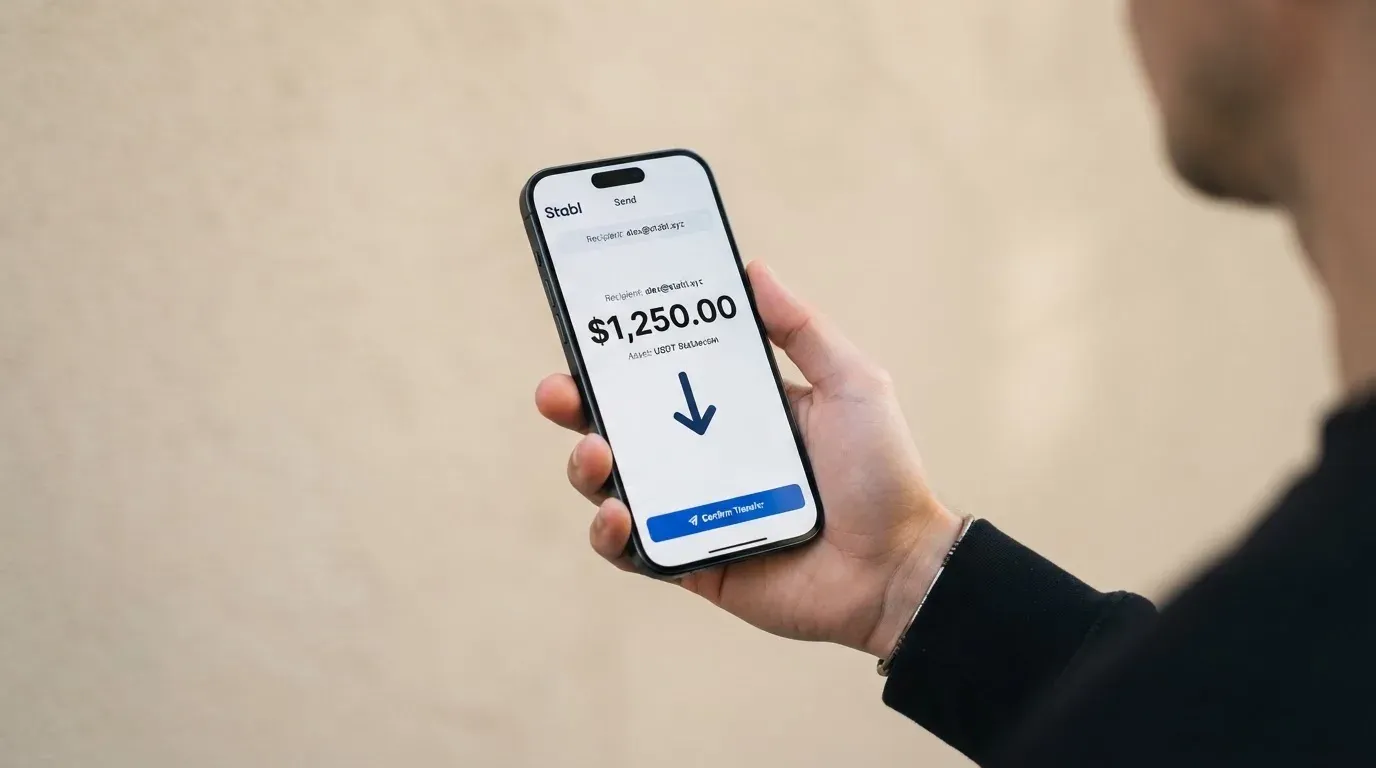
The good consequence is that you don’t need a separate funding step. If you already hold USDT or USDC in the Busha wallet, you can move that straight onto the card. The bad consequence is that you are loading from a custodial exchange wallet, not from your own self-custody address: Busha holds the private keys for the wallet that funds the card, and that is a counterparty decision, not just a card decision.
What Busha does not say is which networks the USDT and USDC balances are received on, what the minimum top-up is, what the network fees for a deposit are, or how to move the card balance back into spendable funds outside the card. A 2022 Busha blog post about an earlier USDC product mentioned a minimum of 2 USDC and a maximum of 5,000 USDC per funding, with a 10,000 USDC maximum held per card, but that was a different product (a Mastercard, up to 10 cards, “completely free”), and the current post does not confirm those numbers. Treat any number you see quoted from that older product as not confirmed for the card Busha sells today.
What to check first, before your first top-up:
- The network on which the deposit address is expecting funds. Crypto transfers are irreversible, and a deposit sent on a network the wallet does not support is the single most common way people lose money on cards like this. Busha does not publish the supported networks for the card, so the only safe move is to copy the address from inside the app and follow the network it tells you to use, not the network an exchange screen defaults to.
- The asset and the chain. Circle stopped supporting USDC on Tron (TRC-20) in February 2024, so “USDC over TRC-20” is not a native option anywhere; if the Busha app offers a Tron deposit address for USDC, that is a third-party bridge at best.
- The fee for getting the funds in. On-chain network fees are charged by the blockchain, not by Busha, but they are still a real cost on Ethereum and most layer-2 networks.
Paying with the Busha card every day
In daily use the Busha card is a virtual Visa, which means it works anywhere online that accepts Visa and asks for card details. The most important “doesn’t work” list comes straight from Busha: “Apple Pay and Google Pay are not currently supported.” There is no physical card, so any in-person scenario that relies on tapping a plastic card is out. Blocked merchant categories are not stated; the card is described as working “wherever Visa supports international USD payments,” which is broad but not unlimited.
There is no cashback, reward or points programme mentioned in the official material, and no detail on whether specific merchant categories (gambling, adult content, crypto purchases) are blocked. The app is available on iOS and Android; the App Store Nigeria listing for Busha sits at 4.6 out of 5 from about 5,400 ratings, the App Store figure Busha itself quotes is also 4.6 from over 5,000 ratings, and Google Play is 4.5 from about 11,000 ratings. Those are app-store ratings for the Busha exchange product as a whole, not the card specifically, and they are not a measure of cardholder satisfaction.
Disputes, chargebacks and refunds are not described in the post. There is no link to the Card Terms from the main card page, and the help centre does not appear to have a dedicated Busha Card collection. In practice that means if something goes wrong with a transaction, you are going to be navigating a help-centre tree that was built for an exchange product.
What this means in three everyday scenarios:
- Online shopping on a Visa-accepting store: works in principle, subject to the FX and conversion opacity discussed in the costs section.
- Subscriptions billed in USD: should work, and the recurring-payment angle is one of the more natural use cases for a virtual card that draws from a stablecoin balance.
- Paying at a supermarket, restaurant or petrol station: doesn’t work, because there is no physical card and no tokenised mobile wallet.
What can go wrong with the Busha card
The risks come in three layers, and only one of them is specific to this card. The other two are inherent to the category.
The card-specific layer. Busha does not name the card issuer or the BIN sponsor. That matters because a card payment is settled by an issuer bank or e-money institution, and the identity of that institution determines who is on the hook if a transaction goes wrong. The post also does not describe a dispute or chargeback process, does not link the Card Terms, and does not publish spending, daily or monthly limits. The help centre has a “Security” collection of 11 articles, but the current card post does not point you at any of them, and there is no mention of in-app card freeze, 2FA on card actions, or per-card spending controls in the official material.
The company layer. Busha Digital Limited is licensed by the Securities and Exchange Commission of Nigeria as a Digital Asset Exchange. That is a real licence for the exchange side of the business, not a card-issuing licence. The card programme is run on top of that exchange under a relationship with an unnamed issuer, and the card balance is funded from a custodial wallet inside the exchange. The corporate entities are registered in Nigeria (1495049), Kenya (PVT-GYUQJAEL) and Ghana (CS-182631123); data-protection registrations exist in Kenya (ODPC 15965), Ghana and Nigeria. A 2022 Busha blog post described an earlier card product (a USDC Mastercard, up to 10 cards, “completely free”) that is no longer the one on the site, and the date of the current Visa card post is not captured, which makes it hard to know how current the published details are.
The user-feedback layer. The official post does not link to any customer reviews, and a targeted search for Busha virtual USD card complaints on Reddit and Trustpilot did not surface a dedicated review page (the results turned up other crypto cards, not Busha). A third-party page (UEEX, May 2026, unofficial, not confirmed by Busha) says Busha’s Trustpilot score sits around 3.5 to 3.8 out of 5 from about 16–17 reviews, with recurring themes of slow or missing deposits and withdrawals, KYC delays and forced upgrades, unfavourable rates when selling crypto, and slow support. Google Play is reported at around 4.36. None of these third-party numbers is large enough to be a verdict, and 16–17 Trustpilot reviews is a thin sample, but the pattern (operational delays and a rate gap on the way out) is the kind of thing that disproportionately matters when the card draws from a custodial balance.
The category layer. A card balance that lives inside a custodial exchange is exposed to that exchange’s solvency and operational risk, and Busha is not a bank: there is no deposit guarantee scheme here, and no public insurance or safeguarding arrangement is described. The general background on crypto card failures — WaveCrest suspended by Visa in Europe in 2018, FTX’s card programme wound down in November 2022 — is a reminder that the card brand and the issuer are different companies, and only one of them needs to fail for the card to stop working.
What to take instead of the Busha card
The honest reason Busha scores low is not that it is uniquely bad at what it does; it is that what it does is narrow. If you are inside the target audience, the alternatives below broaden your options. If you are outside it, the alternatives are the only realistic answer.
RedotPay — 6.9 / 10. RedotPay is a more fully documented crypto card programme. It publishes an explicit list of unsupported countries (which Busha does not), a clear fee schedule (1% crypto conversion, 1.20% non-default currency, 1.5% on a small set of named merchants), and both virtual and physical cards. The trade-off is geography: RedotPay’s card-issuance list explicitly excludes residents of a 47-place list including India, Indonesia, Morocco, Nepal, Singapore and Turkey, and adds the United States to the KYC-restricted list. If you are in one of those places, RedotPay is not a fallback for Busha. Issuance is also more expensive than Busha’s $2: $10 for a virtual card and $100 for a physical card, both non-refundable. The upside is that you know what you are paying for.
Bitpanda — 6.5 / 10. Bitpanda is an Austrian-licensed platform that issues a physical Visa debit card in euros, which is a very different product from the Busha card. Eligibility is narrow — verified Bitpanda account, residence in a euro-area country, and not verified via “Bankident” — but if you are in that footprint you get a real card, free first shipment, a published reissue fee (EUR 5.90, or EUR 9.90 in the FAQ for lost/stolen) and a spending flow that auto-converts a chosen main asset (crypto, metals or euro) to euros at payment. The catch is the FX layer: the non-EUR FX fee is EUR 0 but “VISA mark-up fees apply,” and the crypto conversion spread is not stated. The card publishes a 1% cashback on crypto spending (with a page summary saying “up to 2%”; I am flagging that gap as unreconciled), and fiat, stocks, metals and stablecoins are excluded from the cashback.
Wirex — 6.7 / 10. Wirex is the broadest in geographic reach, with a published service area of “Worldwide (130+ countries)” and explicit fee schedules for the UK, EEA, APAC, Singapore, Australia and “Other.” The trade-off is in the small print: card availability “depends on your region,” Singapore users cannot withdraw cash, the FX fee is described as “market-leading exchange rates” rather than a number, and the rewards programme (0.5% Standard, 3% Premium, up to 8% Elite in WXT) excludes a long list of merchant categories. Issuance is free in the regions Wirex publishes fees for, and the metal card costs 45 GBP (or “only 45 EUR” elsewhere). If you are outside Nigeria, Kenya or Ghana and you want a single card brand that is at least somewhat likely to support your country, Wirex is the safer starting point than Busha.
The three above are not the only options, and the right one for you depends on which country you actually live in, which currencies you need to hold, and whether a virtual-only product is enough. The point of listing them is to show that the gap Busha leaves (no countries, no FX fee, no dispute process) is filled by competitors who publish that information.
Who I would recommend the Busha card to
Pulling the threads together, the Busha card is a competent tool for a very specific reader, and not a tool for anyone else.
I would recommend it to you if:
- You live in Nigeria, Kenya or Ghana and you already have a verified Busha exchange account, or you are happy to do the in-app KYC to get one.
- You hold USDT or USDC in the Busha wallet and you want to spend those balances online without first cashing out to a bank.
- You only need a virtual card for online and subscription payments, and you are comfortable that there is no physical card and no Apple Pay or Google Pay.
- You are comfortable with the level of public detail Busha publishes: the $2 creation fee, the absence of monthly or maintenance fees, and the silence on conversion, FX, limits, the issuer and disputes. You are loading modest amounts and you treat the card as a thin spending layer on top of a custodial balance you already understand.
I would not recommend it to you if:
- You live anywhere outside the three countries where Busha has a corporate presence. The official material gives you no way to confirm eligibility, and the unofficial source names the same three countries plus an 18+ age requirement.
- You want a card you can use in a physical shop, on public transport, or in any tap-to-pay flow. The card is virtual and has no tokenised wallet support.
- You need a clearly disclosed FX and conversion fee, a dispute and chargeback process, a named issuer and BIN sponsor, or published spending limits. Busha does not currently publish any of those.
- You need a cashback or rewards programme. There is no published cashback for the Busha card.
- You are not already comfortable with the counterparty risk of a custodial exchange. The card balance is a wallet balance, and the wallet is held by Busha.
If you are outside the target market, or you want a more fully disclosed product, the alternatives in the previous section are the better starting point. And if you are inside the target market but you want a card that is more than a thin spending layer — a card with a rewards programme, a published fee table or a physical form factor — Wirex, RedotPay and Bitpanda are the comparison points worth your time.
Frequently asked questions
What is the Busha card?
The Busha card is a virtual USD Visa debit card that draws on USD, USDT or USDC balances held in your Busha wallet. It is sold inside the Busha app and can be created for a one-time $2 fee, with up to four cards per account. There is no physical card, and the official Busha post does not list a card issuer, conversion fee, FX fee, dispute process or spending limits.
How does the Busha card work?
The card sits on top of an existing Busha exchange account. You fund the card by holding USD, USDT or USDC in the Busha wallet; when you pay, Busha converts the chosen balance and the Visa network settles the payment in US dollars. The card is virtual, so it is intended for online and subscription spending rather than for tap-to-pay or ATM use.
Is Busha a bank?
No. Busha is a cryptocurrency exchange. In Nigeria it operates as Busha Digital Limited, licensed by the Securities and Exchange Commission as a Digital Asset Exchange; it has separate entities in Kenya and Ghana. The card programme runs on top of the exchange, but the underlying card issuer and BIN sponsor are not named in the official material, and customer funds are not covered by a bank-style deposit guarantee scheme.
Who owns Busha?
Busha is operated by Busha Digital Limited in Nigeria (registration 1495049), with separate Busha entities in Kenya (PVT-GYUQJAEL) and Ghana (CS-182631123). The shareholder structure of those entities is not described in the official card material, and the help-centre pages I could reach do not list individual owners.
Is the Busha card available in my country?
Busha does not publish a list of supported countries. Its corporate entities are in Nigeria, Kenya and Ghana, and Naira payments are explicitly not supported, so the realistic answer is that the card is intended for residents of those three markets. A third-party review (UEEX, May 2026, unofficial) names Nigeria, Ghana and Kenya with an 18+ age requirement, but that is not confirmed by Busha. If you are anywhere else, the only way to find out is to try the in-app eligibility questions.
How do I get a Busha card?
You download the Busha app, complete identity verification, answer the in-app eligibility questions, accept the Card Terms, and pay the $2 creation fee. The card is then issued “within minutes” as a virtual Visa. The exact list of documents required for KYC, the age minimum and the typical review time are not stated in the official post.
Does the Busha card require KYC?
Yes. The help centre refers to an AML and KYC policy and an “ID Verification” article, and the Busha app has a “Verification Levels and Limits” page for Nigerian users with three tiers (Level 1 deposit-only, Level 2 up to NGN 10,000,000 per month, Level 3 up to NGN 500,000,000 per month). Which tier the card requires and which documents unlock which tier are not described in the card post.
How do I top up the Busha card?
The card is funded from the USD, USDT or USDC balance already held in your Busha wallet; there is no separate “top-up” flow described in the official post. Busha does not publish the deposit networks, the minimum top-up or the network fees for getting funds into the wallet, so the safe practice is to copy the deposit address from inside the app and use the network it tells you to use. Transfers on the wrong network are typically irreversible and may not be recoverable.
How do I add the Busha card to Apple Wallet or Google Pay?
You cannot, at least not today. The official Busha post states that “Apple Pay, and Google Pay are not currently supported,” and there is no physical card, so a tokenised mobile wallet is not part of the product. If Apple Pay or Google Pay is a hard requirement, this is not the card for you.
Is the Busha card safe?
Busha is a licensed exchange in Nigeria and has data-protection registrations in Kenya, Ghana and Nigeria, but the card’s specific safety features (in-app freeze, 2FA on card actions, per-card limits) are not described in the official post, the card issuer is not named, and the dispute and chargeback process is not documented. The card balance is a custodial wallet balance, so it carries the same counterparty and operational risk as the underlying exchange. Treat published user feedback as thin: a third-party page (UEEX, May 2026, unofficial) reports a Trustpilot score around 3.5–3.8 from 16–17 reviews, with recurring themes of slow withdrawals, KYC delays, and slow support, but that sample is small and is not from a Busha-controlled source.
App and neobank cards – cryptocardsranked
Content created by the «cryptocardsranked» team