
The CL card reviewed for people who already hold crypto on a Ledger device
 Available in US

The CL card is the payment card built around Ledger hardware. You already hold your crypto on a Ledger device; the card converts from that balance to fiat at the moment of payment, so it spends your coins without asking you to swap them into a bank account first. On that narrow promise it is unusually good: the virtual card is free, the monthly fee is zero, the card works in Apple Pay and Google Pay, and there is 1% cashback in BTC, USDC or USDT.
It is also a thin wrapper around an EU electronic-money licence and a US Visa programme, and the users who write about it on Trustpilot mostly write about one thing: accounts restricted without warning, withdrawals delayed, and support that does not answer quickly. If your reason for wanting a crypto card is that ordinary banking is awkward for you — and for many readers that is the real reason — then the complaints column matters more than the fees column.
My score is 6.9 out of 10. That is not a condemnation. It is a card that works well for its intended audience and asks a lot of patience from everyone else.
The conditions described on this page are current as of October 28, 2026.
The score in full
| Criterion | Mark | Why |
|---|---|---|
| Who can get it | 7 / 10 | Available in the EEA, the UK, the US, Canada, Switzerland, Colombia, Mexico and Brazil; excluded countries are not listed, and the citizenship-versus-residence rule is not stated |
| Cost | 7 / 10 | Virtual card free, EUR 0 maintenance, 0% on paying in a foreign currency, EUR 5 to replace a card, EUR 3 + 1.5% at an ATM outside the UK; unofficially conversion 1.75% and FX 1.75% |
| Top-up options | 7 / 10 | BTC, ETH, SOL, stablecoins and more, from a Ledger signing device; networks not named |
| Reliability and complaints | 5 / 10 | Baanx programme, Ledger SAS brand, issuers UAB Monavate, Monavate Ltd and Cross River Bank named; Trustpilot 3.0/5 from 263 reviews, 35% of them one-star, restrictions without warning |
| Everyday use | 9 / 10 | Free virtual card, Apple Pay and Google Pay, cash withdrawal at ATMs worldwide; unofficially a physical card on request |
| Total | 6.9 / 10 | Strong for the hardware-wallet crowd, thin on assurance where it matters most |
The everyday-use mark is the highest of the five and the reliability mark is the lowest, and that gap is the whole story of this card. If your spending is ordinary and you already keep everything on a Ledger, the friction is close to zero. If something goes wrong with the account, the same design that makes it clean also means there is no human on the other end of it.
Who will be offered the card
CL is “currently available in the EEA, the UK, the US, Canada, Switzerland, Colombia, Mexico, and Brazil”. That list is the whole of what the card’s public pages state about eligibility. The excluded countries are not stated, and neither is the rule on whether you need citizenship or residence in one of those places — if you hold a passport from somewhere else but live in, say, Germany, the public pages do not tell you which of the two they check. That is a real gap, and it is the kind of gap that only matters once, at the sign-up step, when a refusal gives you no appeal route.
The general rule for this category is worth knowing before you try: nationality is recorded and screened separately from residence, because sanctions screening and issuer risk policy apply to citizenship and country of birth as well as to the address you live at. In the EU, customer due diligence covers name, address, date of birth, nationality and identity documentation, a sanctions check, and whether you count as a politically exposed person. If that due diligence cannot be completed, EU rules require the institution to hold off, and where necessary end the relationship. So a closure is not always a judgement about you — but it is also not always something you can talk your way out of.
Age is another one the card does not state. Across this category, prepaid and debit cards are generally available to adults 18 and over, and some issuers set higher limits; expect to be asked for a birth date and nothing more exotic.
For you personally, the practical question is whether you are in one of the listed regions in the sense the provider means, and whether you are willing to treat that as something you find out by trying rather than by reading. If your situation is a residency permit, a second nationality, or a business account rather than a personal one, go in knowing the answer may be no.
Signing up: what actually happens
The card page does not describe the identity checks at all — the KYC level is not stated, and the US account-opening disclosures and the cardholder terms were not available to me to read. What the public pages do say is about the card itself: there is a free virtual card, and in the US it is described as a Visa debit card. In other regions the network is not specified, so do not assume Visa or Mastercard outside the US. Crypto is converted to fiat at the moment of purchase.
Delivery is where the picture gets thin in one direction and concrete in another. The Fee Information Document is explicit about money: issuing a debit card is EUR 0.00, replacing a debit card is EUR 5.00, and cancelling a card is EUR 3.50 if you cancel within the first 14 days after ordering it. Which countries the physical card ships to, and how long it takes, are not stated. The card page itself mentions only the free virtual card — which, unofficially, is the whole of what most people ever get. A third-party site describes a physical Visa-branded card as “Available upon request” and says the virtual card is issued instantly through Ledger Live; that is unofficial reporting, and nothing in the official pages contradicts it, but it is not the card’s own statement.
On identity checking, again unofficial: a company reply on Trustpilot and a one-star reviewer both say verification is handled by Veriff. Whether you need documents beyond photo ID is not stated. What is documented, by reviewers rather than by the provider, is that in October 2026 people were being asked for utility bills and tax returns after their accounts were already restricted. That sequence is the thing to hold in mind — it does not appear to be a sign-up requirement, it appears to be what happens afterwards.
If you are signing up, the honest summary is: you will not find the verification requirements, the delivery times or the acceptance rules written down in one place before you start. You find out as you go.
Fees: what it really costs
Here is the honest version, and it has a wrinkle. The card page itself does not list fees — it points you to the fee documents at withcl.com/legal. The Fee Information Document for UAB Monavate, dated 03/11/2023, is the most concrete official source I found, and it reads like a very cheap card. Third-party sites report conversion and currency fees that the official document does not show. Both are set out below, with the unofficial rows marked as such.
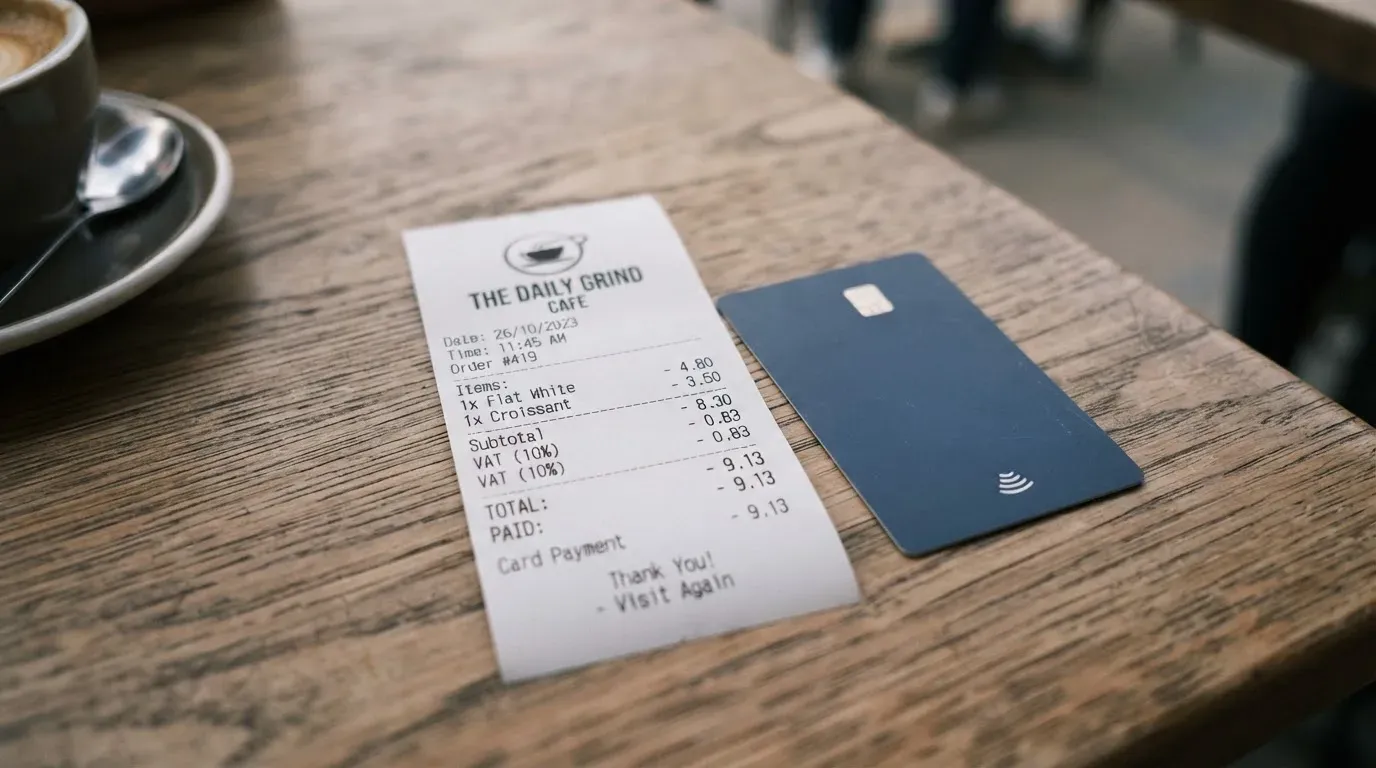
| Fee or limit | Amount | Source |
|---|---|---|
| Issuing a debit card | EUR 0.00 | Fee Information Document |
| Monthly maintenance | EUR 0.00 | Fee Information Document |
| Debit card payment in a foreign currency | EUR 0.00 plus 0% of the transaction value | Fee Information Document |
| Debit card payment in pounds | EUR 0.00 (the document mixes pound and euro wording) | Fee Information Document |
| Replacement debit card | EUR 5.00 | Fee Information Document |
| Card cancellation within 14 days of ordering | EUR 3.50 | Fee Information Document |
| Cash withdrawal in pounds in the UK | EUR 2.50 per withdrawal | Fee Information Document |
| Cash withdrawal in foreign currency outside the UK | EUR 3.00 plus 1.5% of the transaction value | Fee Information Document |
| ATM balance enquiry | EUR 0.35 | Fee Information Document |
| Crypto-to-fiat conversion, manual | 1.75% | Unofficial, third-party site dated 3 Aug 2026 |
| Crypto-funded card spend | 2% | Unofficial, third-party site dated 3 Aug 2026 |
| FX on non-base-currency transactions | 1.75% | Unofficial, third-party site dated 3 Aug 2026; another aggregator lists 1.5% |
| ATM fee, flat reading | 1.5% | Unofficial, another aggregator; conflicts with the 1.5% + EUR 3 line above |
| Limits | Not stated on the card pages | — |
The unofficial numbers are the ones most people will actually experience, and they point the other way from the official table. The 2023 document shows 0% on foreign-currency payments; a 2026 third-party site describes 1.75% FX plus a 2% crypto-funded spend fee. Those cannot both describe the same product today. My read is that the official document is the one you can rely on legally and the newer figures are closer to what a customer is actually charged, but I cannot prove the newer figures, and the card’s own pages do not confirm them.
Where the sources genuinely agree is on the shape of the costs: no monthly fee, no card issuance fee, a small fixed charge to replace a card, and a per-withdrawal charge that is meaningfully higher outside the UK. There is one tier only. There is no paid version of this card, no metal option, nothing to upgrade to — which makes it easier to reason about than most cards in this category.
Three ordinary payments, priced
The three below are illustrative, not billed by me: what the official figures imply, and where the unofficial figures would change the answer. Take them as the shape of the thing, not as a quote.
Coffee in your own country, EUR 4. Under the official document: nothing. The card is a debit card spending a balance you have already converted, and the payment is in the card’s own currency, so the EUR 0.00 plus 0% line applies and there is no percentage. Under the unofficial reading, this is where the 2% crypto-funded spend fee would land, turning EUR 4 into about EUR 4.08. Small, but it is the difference between a card that is free to use and a card that is nearly free.
A EUR 60 subscription billed in USD. Official: EUR 0.00 plus 0%. Unofficial: 1.75% FX on top, so roughly EUR 1.05 more. This is the case where the 2023 document and current third-party reporting disagree most sharply, and the gap is not symbolic — it is the whole reason to double-check the live fee page before you rely on either.
A EUR 200 withdrawal at an ATM in a non-UK country. Official: EUR 3.00 plus 1.5%, so about EUR 6.00. Unofficial reporting agrees on EUR 3.00 plus 1.5% for foreign withdrawals, though one site instead lists a flat 1.5%. Either way this is the most expensive thing you will routinely do with the card, and it is worth knowing that the UK rate is a flat EUR 2.50 — if you need cash, taking it in the UK is cheaper than taking it on holiday.
Where you can hold an amount in mind: an ATM enquiry costs EUR 0.35, which is pure waste, and the card-cancellation fee of EUR 3.50 only applies if you cancel within 14 days of ordering.
One category fact worth carrying into any decision about spending abroad: merchants can look at the issuer identification number at the front of the card number and see which institution and country issued it, and some apply extra scrutiny when the issuer country differs from the billing address. That is why a card issued in one country can look “foreign” to a shop in another, and it is the practical reason a crypto card can be declined at a terminal that would happily take your local one. Address verification, which compares the numeric parts of the billing address you type against the issuer’s records, is mainly offered in the US, Canada and UK and is generally unavailable for foreign-issued cards — another source of declines that has nothing to do with you.
Top up: how the balance gets there
CL is funded from a Ledger signer via the Ledger Wallet app, with “BTC, ETH, SOL, stablecoins and more”. Which networks are supported is not stated, and that omission matters more here than it does for a normal bank card. The Fee Information Document’s “Receiving money” lines say “Not applicable” — which tells you the banking rails this document covers are not the rails you will use — and the crypto top-up fee and minimum top-up are not stated either.
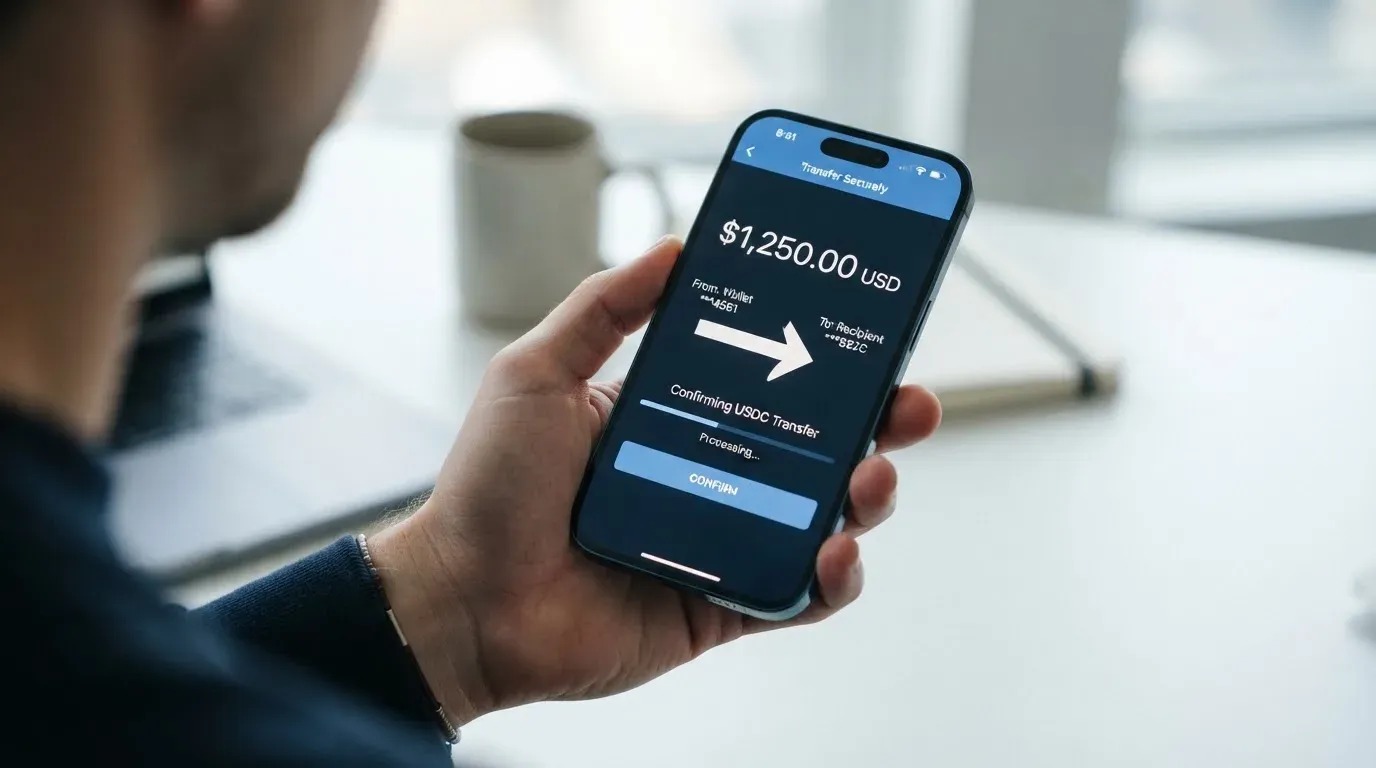
So the honest description of the top-up is: you transfer from your own wallet, through your own hardware device, and the card converts on the way in. You are never handing your coins to a platform to sit in an account, which is the structural advantage of this design. The corresponding risk is on your side of the transfer. Blockchain transfers are irreversible: a deposit sent on a network the provider does not support, or to an address belonging to a different network, can be lost outright or need manual support recovery with no guarantee of outcome.
Two network details that catch people out in this category generally. On Ethereum, fees are paid in ETH, so a wallet holding USDT with no ETH cannot send. On Tron, fees are paid through bandwidth and energy, often by burning TRX — and Circle stopped supporting USDC on Tron in February 2024, so “USDC over TRC20” is not a native option. Both are reasons to check the supported network and the required token before you press send, not after.
Withdrawal works in the other direction only in the way a payment card’s does: “Withdraw local currencies at ATMs worldwide”. A bank or crypto withdrawal of the balance is not stated, the fee for closing and paying out is not stated, and the monthly maintenance line again reads EUR 0.00.
Limits on funding and spending are not stated on the official pages at all. Third-party sites give numbers that disagree with each other: one says monthly spending of $15,000 and ATM withdrawals of $500 a day; another review site says default daily point-of-sale spend of EUR 15,000, daily ATM of EUR 2,000, an initial cap of EUR or $1,000 until extra proof of funds is approved, and manual review for single top-ups or withdrawals of EUR 10,000 or more. I would plan for the more conservative of those rather than the friendlier one, and I would not be surprised if your real limits differ again.
Paying with it every day
This is where the card is strongest, and the score of 9 out of 10 is not a rounding error. Apple Pay and Google Pay are supported. The free virtual card is issued without waiting. Cash can be taken out at ATMs worldwide, at the fees set out above. The card is managed entirely inside the Ledger Wallet app, whose supported platforms and store ratings are not stated on the card page.
The reward is simple and, unusually, paid in the asset you already hold: “1% cashback in BTC or USDC in the US and 1% cashback in BTC or USDT, in other countries”, calculated monthly on total card transactions. One per cent on everything, monthly, in crypto. If you spend in a country where USDT is the practical dollar token rather than USDC, that is exactly the version you get.
The gaps in everyday use are all “not stated” rather than “not available”. Which merchant categories are blocked is not stated. Whether you can freeze the card instantly, or set two-factor authentication on the app, is not stated — those are the standard safeguards for this kind of card and their absence from the page is notable. Self-custody is not stated as a feature either, even though the funds side of it clearly works that way: the page says crypto is “protected by the industry’s leading hardware and software” when used with a Ledger signer. How disputes work, whether you can charge something back, and what happens if a merchant takes your money and delivers nothing, is not stated in the pages I read.
The category rule that follows from this: a declined authorisation can leave a hold on your funds for several days, typically up to seven. That is not a CL feature, it is how card networks work, but it matters more on a card where your balance is your crypto.
What can go wrong
This is the weakest part of the card, and I have given it 5 out of 10 for that reason. It is worth separating what the company says from what users report, because the first is reassuring and the second is specific.
On the official side: I found no confirmed record of regulatory incidents against the card programme itself. The card is provided by Baanx. The brand belongs to Ledger SAS, in Paris, France. In the EU the cards are operated by UAB Monavate, in the UK by Monavate Ltd, and in the US it is a Visa debit card issued with Cross River Bank, Member FDIC. There is a help-centre article for the CL card and general Ledger support behind it, though languages and opening hours are not stated.
On the user side, Trustpilot shows CL Card at 3.0 out of 5 from 263 reviews, with 35% of them one-star. That number is itself a statement about consistency. The themes repeat across months:
- Accounts disabled or restricted without warning, followed by document requests. September and October 2026, one case unresolved for about two months; May 2026, funds held for weeks.
- Withdrawals delayed. April to June 2026, from 15 hours to a week. October 2026, about 1,990 USDT unavailable after a “maintenance” notice, later received.
- Card and app failures, and UK customers unable to get replacement cards in September and October 2026.
- Slow, templated support from May to October 2026. The company replied to 31% of negative reviews.
- A loss of 15,300 XRP in July 2026 from a memo or tag error.
On Ledger’s own Trustpilot page, which shows roughly 3.5 to 4 out of 5 from 247 to 256 reviews, the mix differs slightly: slow support, declined transactions, and frozen or unreturned funds — including a reviewer who could not withdraw XRP after a month of emails. The Baanx page sits at 2.5 out of 5 from 6 reviews, one of which is a declined purchase of a Ledger device, which is a useful reminder that a crypto card can be refused at the checkout of the hardware wallet company’s own store. People in the r/ledgerwallet community have said Baanx can block a card balance.
Two claims need to be handled carefully rather than repeated as fact. Reviewers have made insolvency allegations about Baanx, which is unverified. Separately, a single Chinese-language aggregator has claimed Baanx and Monavate entered insolvency proceedings in April and May 2026; that is one uncorroborated source, and a third-party site dated 3 Aug 2026 shows no insolvency or enforcement news. I would not treat either as established, and I would not treat their absence as reassurance. The lesson is narrower and more useful: check a provider’s regulatory status yourself before you fund it, and expect to find that ESMA maintains an interim register of authorised crypto-asset service providers, white papers and non-compliant entities that you can consult directly.
Now the category-level risk that sits underneath all of this. Custodial platforms have a genuine record of failure — Mt. Gox with around US$350 million reported stolen between 2011 and 2014, Coincheck with about US$400 million in 2018, Ronin Network with US$625 million in 2022. And programmes close: Visa terminated its global agreements with FTX on 13 November 2022, WaveCrest’s Visa programmes in Europe were suspended in 2018 closing everything it had issued, and a closure typically means a notice period, then spending and loading stop, then you are asked to withdraw what is left. If you take one thing from this section, take this: a card balance you can withdraw quickly is worth more than a slightly better fee schedule.
One regulatory point worth understanding, because it explains an apparent contradiction. A card is a payment service, regulated under e-money and payments law, separately from MiCA, which is the EU’s crypto-asset regulation and took legal effect in June 2023, with the stablecoin and e-money-token rules applying from 30 June 2024 and the crypto-asset service provider rules from 30 December 2024. A crypto card often depends on two licences at once. Which is why an EMI can issue e-money and cards but cannot lend — and why e-money funds must be safeguarded, in segregated accounts or insured, in a way that is not the same as a bank deposit and may not be covered by a deposit guarantee scheme. If “protected” in the card’s marketing is doing quiet work for you, this is where you would want to look at the safeguarding terms.
And a closing thought on tax, flagged rather than explained. This is not advice, and you should check it where you live — but the mechanics are simple enough to know in advance. Digital assets are generally treated as property, so exchanging them for goods, services or dollars generally produces a taxable gain or loss, measured in your local currency at the value on the date of the transaction. Every card payment funded from crypto can therefore be a separate disposal for you.
What to take instead
I compare the alternatives here on the same axes, not on marketing. Scores are from the same review set, so they are comparable to the 6.9 above.
| Card | Score | Card and cost | Funding and fees | Who it suits |
|---|---|---|---|---|
| CL | 6.9 / 10 | Free virtual card; EUR 0 maintenance; no tiers | BTC, ETH, SOL, stablecoins and more from a Ledger device; unofficial 2% spend, 1.75% conversion, 1.75% FX; networks not stated | People who already keep crypto on a Ledger and want to spend it directly |
| MetaMask | 7.1 / 10 | Mastercard virtual card free, no annual or maintenance fee; metal $199/year | Spends straight from the connected wallet on Linea, Base, Monad, Solana; “minimal fee per transaction”, amount not stated, no additional MetaMask fees, no foreign transaction fee | Users who want a MetaMask wallet to be spendable without the Ledger dependency |
| KAST | 6.1 / 10 | Virtual and physical, up to 10 cards; Visa Standard free, Premium 1,000 USD/year, Private 10,000 USD/year, billed annually upfront | Stablecoins USDT, USDC, PYUSD, RLUSD on Ethereum, Solana, Polygon, Arbitrum, TRON; top-up 0%, USD spend 0%, non-USD FX 0.5%–1.75% | People who want more cards and clear cashback tiers, and can meet an ID-based eligibility test |
| Zeal | 6.1 / 10 | Visa virtual card for online use, addable to Apple Pay; EUR, USD and GBP accounts; physical not stated; no fee schedule published | Balances held in the card Safe on Gnosis Chain and Celo; no additional FX fee, conversion at Visa wholesale rate; coins not stated | Users who want a plain Visa and do not mind that the fee page is empty |
MetaMask is the closest thing to a like-for-like alternative with a slightly higher score. It signs up in 45 listed countries and territories, requires proof of residency, and ineligible regions limit sign-ups rather than spending; US and UK sign-ups were temporarily closed at the time of reading. It issues a Mastercard, virtual first and instantly, with a metal card pre-orderable after approval, one card per user, issued by Monovate with Crypto Life as card provider. Cashback is 1% on the virtual card in mUSD, and 3% on metal with the footnote that it applies to the first $10,000 spent and 1% after that. The catch is structural: it needs a connected wallet, and Solana-only wallets cannot withdraw the credit.
KAST is the most feature-rich and the most complicated. Eligibility is shown at KYC rather than published, which is honest and unhelpful in equal measure — and its citizenship rule is stricter than its residence list suggests, since living in a supported country while holding an ID from a restricted region may still fail verification, a VPN will not help, and only the account holder’s own ID counts. It then charges accordingly: 0% to top up, 0% to spend in USD, a 0.5%–1.75% FX fee depending on where you live, 0.10 USD on non-USD transactions under 25 USD, and 0.50 USD for a declined payment from insufficient balance. Cashback is 1.5% to 3% USD on tiered monthly spend caps. Its terms say acceptable tokens are “currently USDT and USDC”, which conflicts with PYUSD and RLUSD appearing in the app.
Zeal is the one to pick if you want a Visa and nothing more complicated. It advertises spending in 150+ countries with the card programme live in the EU, UK, Brazil, Colombia, Mexico, Japan, Singapore, the Philippines, Indonesia and Thailand, up to 4% cashback paid in GNO on Gnosis Chain provided you hold GNO in the card Safe, and no additional FX fee because it converts at Visa’s wholesale rate. Against that: no fee schedule is published at all, the physical card is not mentioned, and the exact coins are not stated.
My order of preference for most people reading this: MetaMask first if you want the same simplicity without the hardware-wallet requirement, CL second if you are already all-in on Ledger and accept the support risk, Zeal if a plain Visa is the goal, and KAST only if you genuinely want multiple cards and will read the eligibility rules twice.
Who I would recommend it to
I would recommend CL to exactly three kinds of person.
The first is the one it was built for: you keep BTC, ETH, SOL or stablecoins on a Ledger device, you would rather spend that than move it to an exchange, and you are comfortable with 1% cashback and a card whose entire financial life is visible in one app. For that person the product is close to ideal and I struggle to find a better option.
The second is someone whose ordinary banking is genuinely difficult — no conventional account, or an account they cannot use where they live or spend — and who has decided that a card reading from a self-held wallet is the most reliable route they have. Read the risks section again before you decide, because for you the account-restriction pattern is not a side note, it is the main risk of the whole arrangement.
The third is a user in the US or in one of the Latin American markets listed, comfortable with cashback paid in USDC or USDT and with the card being a Visa debit issued with a Member FDIC bank.
I would not recommend it to anyone who needs predictable customer support, who holds a large balance they would hate to have frozen for a fortnight, who needs a published and current fee schedule before committing, or who cannot tolerate a physical card existing only on request. I would also be careful if you are in a listed region only by residence and hold citizenship elsewhere, because the public pages will not tell you which the provider checks.
The score of 6.9 is an average of those two realities, and when a card’s weaknesses and strengths are this sharply split by who is holding it, the average is less useful than the split. Know which half you are in.
Frequently asked questions
What is the CL card?
The CL card is a payment card from Ledger that spends directly from crypto held on your own Ledger device rather than from a bank account. When you pay, the crypto is converted to fiat at the moment of purchase and the card spends the resulting balance. The virtual card is free, the monthly fee is EUR 0.00, and the card works in Apple Pay and Google Pay. You keep custody of the coins.
How does the CL card work day to day?
You fund the card from BTC, ETH, SOL, stablecoins and more, through the Ledger Wallet app using your Ledger device as the signing device. At each payment the crypto is converted to fiat and the card spends that balance, so there is no separate bank transfer in between. Everything is managed inside the Ledger app. Supported networks are not stated on the card pages, which is worth confirming before a large transfer.
Is CL a bank, and who actually issues the card?
No, CL is not a bank. The brand belongs to Ledger SAS in Paris, the card programme is provided by Baanx, EU cards are operated by UAB Monavate and UK cards by Monavate Ltd, and in the US it is a Visa debit card issued with Cross River Bank, Member FDIC. Visa and Mastercard do not issue crypto cards to consumers themselves; they license issuers. That structure is why your funds sit with a licensed e-money institution rather than a deposit-taking bank.
Does the CL card require KYC, and how far does it go?
The card’s public pages do not state the identity checks at all. Unofficially, verification is handled by Veriff, according to a company reply on Trustpilot and to reviewers. Reviewers in October 2026 report being asked for utility bills and tax returns — but only after their accounts were already restricted, not during sign-up. In the EU, due diligence normally covers identity documents, address, nationality, a sanctions check and politically-exposed-person status.
Is the CL card free, and what does it cost to use?
The virtual card is free and monthly maintenance is EUR 0.00, per the Fee Information Document dated 03/11/2023. That document also shows EUR 0.00 plus 0% on paying in a foreign currency, EUR 5.00 to replace a card, and ATM charges of EUR 2.50 in the UK or EUR 3.00 plus 1.5% abroad. Third-party sites dated 2026 report conversion at 1.75%, a 2% crypto-funded spend fee and 1.75% FX, which the official document does not show.
How do I top up the card, and which coins work?
You top up from your own wallet through the Ledger Wallet app, signing with your Ledger device, using BTC, ETH, SOL, stablecoins and more. The crypto top-up fee and any minimum are not stated. Networks are not named either, and that matters: on Ethereum fees are paid in ETH, so a wallet with USDT but no ETH cannot send, and Circle stopped supporting USDC on Tron in February 2024. Check the supported network before you send.
Can I withdraw money, and can I use Apple Pay?
Cash withdrawals work at ATMs worldwide: EUR 2.50 per withdrawal in the UK, EUR 3.00 plus 1.5% of the transaction value outside it, and EUR 0.35 for a balance enquiry. A bank or crypto withdrawal of the balance is not stated. Apple Pay and Google Pay are both supported, and a virtual card is issued instantly. Unofficially, a physical Visa-branded card is available on request; the card page itself mentions only the free virtual card.
Is the CL card safe, and who do I trust with my money?
Your crypto stays in your own wallet until the moment of payment, so you hold the keys and you bear the loss risk — irreversible transfers, phishing, a wrong network, and a seed phrase that must never leave the device. On the card side, the funds sit with a licensed e-money institution that must safeguard them, which is not the same as a bank deposit guarantee. The card pages do not state self-custody as a feature, nor do they mention card freeze or two-factor authentication, both of which are standard safeguards elsewhere.
Why do reviews mention frozen accounts and delayed withdrawals?
Trustpilot shows CL Card at 3.0 out of 5 from 263 reviews, 35% of them one-star. Reported themes from April to October 2026 include accounts disabled or restricted without warning followed by document requests, withdrawals delayed from 15 hours to a week, about 1,990 USDT held during “maintenance”, UK customers unable to get replacement cards, and slow templated support, with the company replying to 31% of negative reviews. Separate insolvency claims by reviewers and from one aggregator are unverified.
Is CL worth it compared with MetaMask, KAST or Zeal?
MetaMask scores 7.1 against CL’s 6.9, gives a free Mastercard virtual card, and spends straight from a connected wallet, but needs a wallet and cannot withdraw credit from Solana-only wallets. KAST scores 6.1 with more cards and tiered cashback but charges up to 1,000 or 10,000 USD a year and enforces a strict ID-based eligibility test. Zeal scores 6.1 with a plain Visa and no added FX fee, but publishes no fee schedule. CL wins when you already hold everything on a Ledger.
Wallet cards – cryptocardsranked
Content created by the «cryptocardsranked» team