
I scored the Coinspot card 6.2 out of 10 — here's exactly why
 Available in US
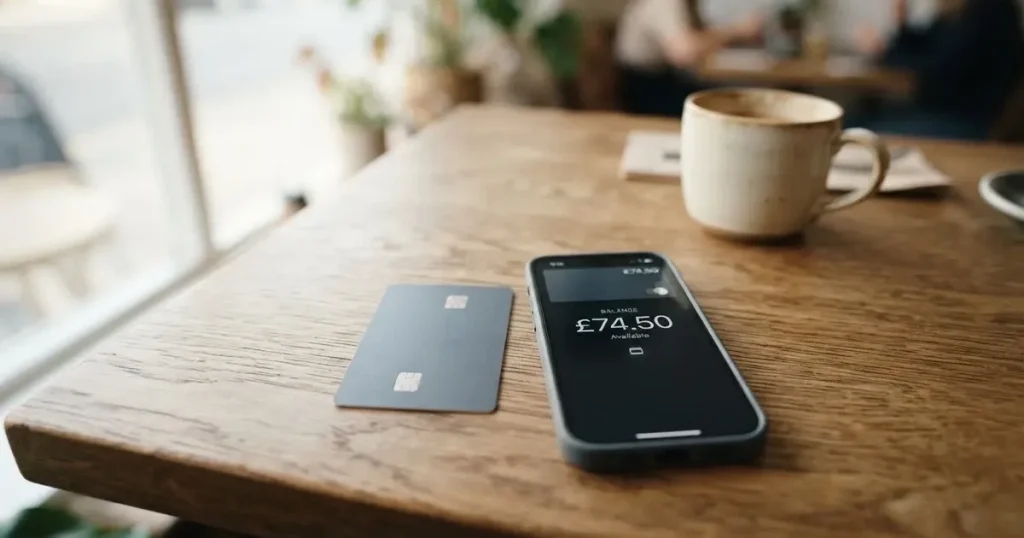
The Coinspot card is a prepaid, reloadable Mastercard that draws on crypto held in your CoinSpot wallets and converts it to Australian dollars at the point of sale. On my scoring it comes out at 6.2 out of 10. That is a middle-of-the-road score, and the reason is not that the card is bad — it’s that it is narrow. It is built for one job, for one country, and it does that job without any of the extras you might be hoping for.
Who it suits: an Australian resident who already has a fully verified CoinSpot account with two-factor authentication enabled, holds crypto they want to spend directly, and is comfortable with a digital-only card in AUD that carries no fee for opening or keeping. Who it does not suit: anyone outside Australia, anyone who needs a physical plastic card in the post, anyone who wants cash from an ATM, and anyone shopping for cashback tiers or metal cards — there is one tier and it is digital.
The conditions described here are current as of October 28, 2026.
Verdict: 6.2 / 10, and the reason is reach, not quality
The single biggest thing to understand before you read further is that this is an Australian product aimed at Australian residents spending crypto from CoinSpot wallets. The score below is not a judgement on whether the card works — it works within its lane. It reflects how narrow that lane is compared with what you might expect from a crypto card in 2026.
Here is the criterion-by-criterion breakdown I worked from, with my own short reasoning for each:
| Criterion | Mark | Why |
|---|---|---|
| Who can get it | 3 / 10 | The page points to AUD and Australian licensing and needs a fully verified CoinSpot account with 2FA; unofficial sources say Australian customers only. A low reach score. |
| Cost | 8 / 10 | No startup or annual fees and no lock-in periods; unofficial sources cite a 1% conversion fee. Strong value if you use it. |
| Top-up options | 7 / 10 | Any cryptocurrency listed on CoinSpot, up to five linked wallets drawn in your chosen order, 470+ coins; the networks themselves are not named. Broad but not fully specified. |
| Reliability and complaints | 8 / 10 | Issued by EML Payment Solutions Limited (AFSL 404131) and distributed by Casey Block Services Pty Ltd; the exchange scores 4.3/5 on Trustpilot from 2,823 reviews, with complaints about account restrictions. Solid issuer, some account friction. |
| Everyday use | 5 / 10 | A prepaid Mastercard with Apple Pay and Google Pay; the physical card is not mentioned and unofficial sources say digital-only with no ATM. Fine for phone taps, thin everywhere else. |
| Total | 6.2 / 10 | A capable but narrow Australian digital prepaid card. |
Read the “everyday use” row again if you are hesitating: a 5 out of 10 is not a complaint that the card is broken. It is the arithmetic of a digital-only, AUD, no-ATM card in a world where plenty of people still want a piece of plastic and a cash-out option. If phone taps are your normal way to pay, that row matters far less to you.
Will they give you the card? Only with a verified CoinSpot account, and it reads Australian
There is no country list on the card’s public pages. What the page does say is that it refers to AUD and to Australian licensing. The practical requirement is a fully verified CoinSpot account — individual verification — with two-factor authentication enabled.
Third-party sources (unofficial, not confirmed by the card itself, per Finder in September 2024) say it is available to Australian customers with a verified CoinSpot account. That is consistent with the Australian licensing the page points to. If you are reading this somewhere else in the world, the honest reading is: this is an Australian product, and the eligibility is tied to being an Australian customer of the exchange.
A few of the usual eligibility details are simply not stated on the public pages — the specific documents required, the age threshold, the tier levels, how long verification takes, and the reasons a verification might be rejected. I am not going to fill those gaps with guesses. If exact document requirements matter to your situation, check them with CoinSpot’s own Help Centre before you start.
There is a general point worth pausing on, because it applies well beyond this card. Identity rules are not arbitrary. Regulated businesses are required to verify customers and assess risk as part of anti-money-laundering and counter-terrorism-financing law, including ongoing monitoring and reporting of suspicious activity. In the EU, customer due diligence covers name, address, date of birth, nationality and identity documents, a sanctions check, and whether you are a politically exposed person. In the US, the customer identification programme requires name, date of birth, address and an identification number. If due diligence cannot be completed, rules require the institution to hold off on the relationship — which is exactly why accounts get frozen pending documents. Nationality is also screened separately from residence, because sanctions rules are usually applied to citizenship and country of birth as well as your address. None of this is a trick to be worked around; it is simply why eligibility reads the way it does, and why a card tied to one country’s licensing reaches one country’s customers.
How to get it
Getting the card follows from the eligibility above: you need a fully verified CoinSpot individual account and 2FA switched on, and that is the gate. The card itself is a prepaid, reloadable debit Mastercard. The page describes using it with Apple Pay and Google Pay. The card currency is AUD.
One thing the page does not mention is a physical card. Third-party reporting (Finder, September 2024) says physical cards are not available. So the realistic picture is a digital card you add to your phone’s wallet and tap. If you have been picturing plastic arriving in the post, that picture is wrong for this product.
Verification details — tier levels, processing time, rejection reasons — are not stated on the card pages, so treat any timeline you hear as unconfirmed until CoinSpot confirms it for your account.
What it really costs: Fees
This is the strongest part of the card, and the reason the cost score is an 8 out of 10. The page states plainly: no startup or annual fees, and no lock-in periods. There is no monthly charge to keep the card and nothing to cancel.

On the spending side, the card converts your crypto to AUD in real time at the point of transaction, at what the page calls “CoinSpot’s best exchange rates”. The page itself does not quote a margin figure or an FX fee. Third-party coverage (unofficial, from Savings.com.au and Accountants Daily launch coverage, and Finder in September 2024) puts a 1% conversion fee in place, with no annual or activation fee; Finder describes the 1% as applying to buys, sells and swaps. Treat that 1% as a good working assumption, not a figure the card has published.
Here is what I could confirm, and what I could not:
| Fee or limit | What the card’s public pages say |
|---|---|
| Issuance / startup | No startup fee |
| Monthly or annual fee | No annual fee; no monthly charge stated |
| Conversion | Crypto converted to AUD in real time at transaction, at “CoinSpot’s best exchange rates”; no margin figure published. Unofficial: 1% conversion fee. |
| FX / foreign-currency fee | Not stated |
| ATM fee | Not stated; unofficial: no ATM withdrawals described at all |
| Daily spending limit | Not stated on the card page; unofficial (Finder, Sep 2024): $4,999 daily |
| Monthly limit | Not stated |
| Lock-in period | None |
| Card currency | AUD |
To make this concrete, here are a few ordinary payments and which fees actually touch them:
- Paying a shop in Australia with your phone. This is the clean case. Your crypto is converted to AUD at the point of sale. There is no startup or annual fee riding on it, and the conversion happens at the exchange rate shown. The unofficial 1% conversion fee is the main thing to price in.
- Paying online in a foreign currency. Here the page is silent on any FX fee. Because your card currency is AUD and the card is AUD-denominated, a foreign-currency purchase is the case where an unstated FX or network-rate cost would show up. Since the page does not quote one, I cannot promise it is zero — check the current terms before you rely on it.
- Taking money out at an ATM. Not described by the card at all, and unofficial reporting says the card is digital-only with no ATM withdrawals. So this is not a fee question — it is a “not available” question. Budget around not being able to do it.
A refund returns the AUD value to your CoinSpot account, but the coins that were spent are not given back — you get the fiat value, not the crypto. Worth knowing before you assume a reversal restores your position.
How to top it up: Top up
The card is funded by spending crypto from up to five linked CoinSpot wallets, drawn in an order you choose. The card page puts the number of available cryptocurrencies at over 470 — in practice, anything listed on the exchange. The order matters: if you link several wallets, the card spends from the first one first, then the next, so you can control which coins get used.
The specific networks are not stated on the card page, and neither are a top-up fee, a minimum top-up, or the network fees for the transfers. I want to flag this honestly, because network choice is exactly where crypto transfers go wrong. A blockchain transfer is irreversible: a deposit sent on a network the provider does not support, or sent to an address belonging to a different network, can be lost or need manual support recovery with no guarantee. And the on-chain network fee for a deposit is charged by the blockchain, not by CoinSpot. If you are moving funds in from another wallet, confirm the supported network and address with CoinSpot before you send — I cannot confirm either from the public pages.
One related point that is confirmed and useful: the CoinSpot fees page lists card (AUD) deposits to the exchange as free. And the card page describes no direct AUD payment method for funding the card itself — the route described is crypto out of your CoinSpot wallets, not topping the card up from your bank. That is the design of a crypto-spending card: it spends crypto.
Balancing the design: the card is single-tier. One prepaid reloadable Mastercard, no tiers, no metal card. So there is no higher-spender version to climb towards.
Paying with it every day
Day-to-day, you tap with your phone. Apple Pay and Google Pay are both supported, and the CoinSpot app on iOS and Android is where the card is managed — balances and transactions live there. The iOS app rating reads 4.8/5 from 46K ratings (as read on 2026-10-20, version 3.11.14); the Google Play rating was not readable at the time.
Rewards and cashback are not mentioned on the card page, and third-party reporting (Finder, September 2024) says there are no rewards or cashback. Blocked merchant category codes are not stated. Dispute handling is not stated on the card page either — the PDS/TMD is referenced but not linked there — so if you need to know the chargeback route before you rely on this card, ask support directly rather than assuming the exchange’s complaints process covers the card automatically.
A note on how mobile taps behave under the hood, because it affects how much you should worry: when you pay with Apple Pay, the real card number is replaced by a device-specific number stored in the phone’s secure chip, never on Apple’s servers, and each payment uses a one-time dynamic code. That is a meaningful security property. But it does not make the underlying card undeclinable — a card issuer can still restrict a tokenised number for certain channels, and some merchants decline prepaid or foreign-issued cards because the issuer lookup reveals the card type and country. Budget for the occasional tap that does not work at a smaller shop, and know that a declined authorisation can leave a hold on your funds for several days.
What can go wrong
The honest risk picture here splits into two halves: the card itself, and the exchange underneath it.
On the card. The issuer is EML Payment Solutions Limited (AFSL 404131), and Casey Block Services Pty Ltd, trading as CoinSpot, promotes and distributes it. That is a licensed issuer, which is reassuring. But there is no mention on the card page of insurance, and freeze and spending controls are handled in the app — unofficial reporting (Infochoice.com.au, date not shown) says the app can freeze the card, set spending limits, and switch the card on and off, which is a good set of controls to have but a non-official description of them.
On the exchange. This is where the real complaints live, and it matters that they are about the exchange, not the card. Official card-specific complaints: none found. But user reports about CoinSpot the exchange — from an aggregator citing ProductReview and Trustpilot — describe accounts frozen for “security review” when a withdrawal starts, with funds held. No card-specific complaints or Reddit threads were found.
The Trustpilot picture, read on 2026-10-20: coinspot.com.au has a TrustScore of 4.3 from 2,823 reviews, of which 278 were in the last 12 months, and 7% are 1-star. None of the reviews mention the card. The themes are accounts and transfers restricted without a clear explanation (September–October 2026), withdrawal and 2FA difficulties (October 2026), and slow support with repetitive replies (September–October 2026). CoinSpot replies to 89% of negative reviews.
The pattern to take away is not “this card is dangerous” — it is that the exchange’s account-restriction behaviour is the thing most likely to interrupt you, and it is the same behaviour that anti-money-laundering rules make mandatory in many cases. If being frozen mid-withdrawal would hurt you, that is worth weighing honestly, especially if the balance on the exchange is money you cannot easily replace.
There is also a category-level risk that applies to every custodial exchange, not just this one. Holding funds with a custodian means trusting them completely, because the provider holds the credentials. The record is not reassuring: Mt. Gox (about US$350 million reported stolen, 2011–2014), Coincheck (about US$400 million, 2018) and the Ronin Network (US$625 million, 2022) are the standard examples. Stablecoins are not a perfect hedge either — they can and have lost their peg, as TerraUSD did in May 2022 and USDC briefly did in March 2023.
What to take instead
If the Coinspot card does not fit — you are not in Australia, you want a physical card, you want cash, you want cashback — the honest comparison is with cards that do offer those things. Here is how the main alternatives stack up against this one, with the same kind of honesty about gaps.
Bybit Card — 6.0 / 10. Broader reach than Coinspot: the help centre lists card regions including Argentina, AIFC (Kazakhstan), Georgia, Kazakhstan, Australia, Mexico, Brazil, Peru and Asia Pacific. But it is explicit that it is not for European Economic Area customers and that all EEA participation is prohibited, so if you are in Europe it is not an option either. Virtual issuance is free “until further notice”; physical issuance is priced per region (for example 29.99 USD in Australia, 5 USD/USDT in Argentina and Asia Pacific, none in Brazil and Mexico), with VIP holders of certain physical cards exempt. The card draws on your Funding Account, converts crypto at a stated 0.9% conversion fee over the One-Click Sell rate in most regions, and charges an FX fee on top of the network rate (2% in the Australia/Asia-Pacific/Georgia/Mexico group, 7% in Argentina, 1.5% in Brazil). It also has a real rewards structure — cashback tiers from 2% up to 10% — but only on crypto-funded transactions, from 2026-10-05. More to choose from, more complexity, and clearly not for EEA residents.
Coinbase Card — 6.4 / 10. The simplest of the three to understand, but strictly US-only: available in all US states except Hawaii. It is a Visa prepaid debit card, virtual or physical, and it spends either your cash balance or your crypto, converting all crypto to US dollars. Zero spending fees and no annual fees; the cost is instead a spread applied when Coinbase converts the crypto at payment. It also offers optional crypto rewards on every purchase, US Card users only, at a variable rate shown in the app. If you are in the US and want something plain, this is the plain option.
OKX — 6.2 / 10. A euro-denominated virtual Mastercard linked to OKX Pay, aimed at the EU plus Norway (launched 28 January 2026; Iceland and Liechtenstein excluded). No card fee, no transaction fee, no OKX FX fee; the explainer quoted a 0.1% conversion spread as of May 2026, though the launch release cited a 0.4% market spread — a conflict, with the newer explainer being the one to lean on. It is funded from USDC or USDG held in OKX Pay, so other coins must be converted first, there is no auto top-up, and a payment is declined if the balance is insufficient. Cashback applies only to USDG purchases, in EUR, with caps rising by VIP tier. Good for euro holders who live in stablecoins; not a general-purpose card.
Set against the Coinspot card, the pattern is clear. Coinspot is the narrowest of the four — one country, one digital tier, no ATM, no rewards — but it is also among the cheapest to hold and among the simplest to understand, with no startup or annual fee. Every alternative buys you reach or extras at the cost of more moving parts.
| Card | Score | Reach | Card form | Cost to hold | Rewards |
|---|---|---|---|---|---|
| Coinspot | 6.2 / 10 | Australian customers | Digital prepaid Mastercard | No startup or annual fee | None mentioned |
| Bybit | 6.0 / 10 | Many regions; not EEA | Virtual and physical | Virtual free; physical priced per region | Cashback tiers, crypto-funded only |
| Coinbase | 6.4 / 10 | US states except Hawaii | Virtual or physical Visa debit | Zero spending and annual fees | Optional crypto rewards, US only |
| OKX | 6.2 / 10 | EU plus Norway; not Iceland/Liechtenstein | Virtual Mastercard (euro) | No card or transaction fee | Cashback on USDG only |
Who I would recommend it to
I would recommend the Coinspot card in a fairly specific situation, and I would steer you away from it in a fairly specific one.
Recommend it if you are an Australian resident, you already use CoinSpot and trust it enough to keep money on a custodial exchange, you have crypto you actually want to spend day to day, and you are happy paying by phone with Apple Pay or Google Pay. In that case the card does one thing cleanly: it turns your crypto into everyday AUD spending at the point of sale, with no fee to open it and no fee to keep it, and with a conversion at the exchange’s own rate.
Steer away if any of these are true: you live outside Australia; you need a physical card in the post; you need to withdraw cash at an ATM; you want cashback or rewards; you are considering moving a large balance onto the exchange to use the card, given the account-restriction complaints above; or you want a card that holds multiple currencies. This is a single-purpose, single-country, digital-only prepaid card, and outside that brief it is the wrong tool.
One last piece of general context that belongs in any decision like this, not as advice but as something to know: a crypto payment funded from crypto can be a taxable event. Digital assets are generally treated as property, so exchanging them for goods, services or dollars produces a taxable gain or loss, measured in your local fiat currency using the value on the date of the transaction. Each card payment funded from crypto may therefore be a separate disposal. How that applies to you depends on your own situation and your local rules — treat this as a flag to check with a qualified professional in your country, not as an answer, and not as tax or legal advice from me.
Frequently asked questions
What is the Coinspot card?
The Coinspot card is a prepaid, reloadable debit Mastercard that spends cryptocurrency directly from your CoinSpot wallets. When you pay, your crypto is converted to Australian dollars in real time at the point of transaction, at what the page calls CoinSpot’s best exchange rates. It is a digital-first, AUD-denominated card built for Australian customers, and it is marketed by Casey Block Services Pty Ltd, trading as CoinSpot, with the card issued by EML Payment Solutions Limited.
How does the Coinspot card work in practice?
You link up to five CoinSpot wallets in the order you choose, and the card spends from them in that sequence, drawing on over 470 listed cryptocurrencies. At each payment the crypto is converted to AUD right then, and the card is added to Apple Pay or Google Pay for phone taps. A refund returns the AUD value to your CoinSpot account, but the coins that were spent are not returned to you.
Do I need KYC to get the Coinspot card?
Yes — a fully verified CoinSpot individual account with two-factor authentication enabled is required. The specific documents, age threshold, verification tiers, processing time and rejection reasons are not stated on the card’s public pages, so check them with CoinSpot’s Help Centre. Identity checks like this are standard regulatory practice in financial services, not an obstacle to work around.
Who can get the Coinspot card?
There is no country list on the public pages, but the page refers to AUD and Australian licensing, and third-party sources (Finder, September 2024, unofficial) say it is for Australian customers with a verified CoinSpot account. In practice, this is an Australian product for Australian residents, so if you are reading this elsewhere, expect it not to be available to you.
Is the Coinspot card free?
Yes as far as holding it goes: the page states no startup fee and no annual fee, and there are no lock-in periods. Spending costs come from conversion — the card converts at the exchange rate shown, and unofficial third-party coverage cites a 1% conversion fee. There is no published FX fee figure, so treat foreign-currency spending as the case where an unstated cost might appear.
Can I use the Coinspot card in Apple Wallet?
Yes — Apple Pay is supported, and Google Pay too, which is how you would actually pay day to day since no physical card is mentioned. When you pay with Apple Pay, the card number is replaced by a device-specific number stored in the phone’s secure chip, and each payment uses a one-time code. That is a genuine security benefit, though some smaller merchants may still decline a prepaid or foreign-issued card.
Can I get cash from an ATM with the Coinspot card?
Probably not, and I want to be straight about this rather than list a fee I cannot confirm. No ATM withdrawals are described on the card page, and third-party reporting (Finder, September 2024) says the card is digital-only with no ATM access and that ATM fees are not mentioned. The ATM fee itself is not stated anywhere I could find. If cash withdrawal matters to you, this is the wrong card.
How do I top up the Coinspot card?
You fund it by spending crypto from up to five linked CoinSpot wallets, drawn in the order you set, from over 470 listed coins. The card page describes no direct AUD payment route for funding the card, and top-up fees, minimums and supported networks are not stated. Since blockchain transfers are irreversible and a wrong network can lose funds, confirm the network and address with CoinSpot before sending anything in from another wallet.
Is the Coinspot card safe?
The issuer is a licensed one — EML Payment Solutions Limited (AFSL 404131) — and the card supports app-based controls like freezing and spending limits (unofficial reporting describes these). The bigger risk sits with the custodial exchange underneath: Trustpilot shows the exchange at 4.3/5 from 2,823 reviews, with complaints about accounts and withdrawals being restricted without clear explanation. No card-specific complaints were found. Holding crypto on a custodial exchange also carries the well-documented counterparty risk of the industry.
Is CoinSpot a bank, and who owns the card programme?
CoinSpot is not a bank — it is a cryptocurrency exchange, and its card is issued by a separate licensed payments company, EML Payment Solutions Limited (AFSL 404131), with Casey Block Services Pty Ltd trading as CoinSpot promoting and distributing it. That structure is normal for the industry: the card network routes payments, the licensed issuer holds the programme, and the crypto brand is the front end. It is also why the card depends on both a payments licence and the exchange’s own standing.
Exchange cards – cryptocardsranked
Content created by the «cryptocardsranked» team