
CoinZoom card, walked through the way you would actually use it
 Available in US

CoinZoom is one of the better-known US-based crypto exchanges, and the CoinZoom Visa is its payment card. On paper the offer is generous: no annual fee, free ATM withdrawals, up to 5% crypto back, and a tier system that lifts your daily limits and rewards as you hold more of the platform’s own ZOOM token. In practice the card comes with a set of smaller catches that only show up once you start moving money in and out. This review walks through the card the way you would actually use it, from the first identity check to the moment your coffee is paid for, and flags where the fine print matters.
Conditions are current as of October 28, 2026.
Verdict
I rate the CoinZoom card 5.9 out of 10. It is a competent Visa debit if you are already inside the CoinZoom ecosystem, particularly if you hold ZOOM and want tiered crypto rewards. For anyone who simply wants to spend crypto in a shop, the friction is heavier than the better-known alternatives and the regulatory footprint is shakier than it looks.
Score breakdown
| Criterion | Mark | Why |
|---|---|---|
| Who can get it | 7 / 10 | 169 countries stated, but the open list and US state coverage are uneven; some big markets are off-limits |
| Cost | 5 / 10 | No annual fee and no CoinZoom FX fee, but 3.99% to fund by debit card, a crypto liquidation fee, and inactivity charges bite later |
| Top-up options | 7 / 10 | Any wallet asset converts to USD at point of sale; the choice of networks is narrower than the marketing suggests |
| Reliability and complaints | 3 / 10 | Issuer not publicly named; a recent licence surrender in Washington; a Trustpilot profile heavy on one-star reviews |
| Everyday use | 8 / 10 | Virtual card on approval, free physical card from Silver, free in-app ATM withdrawals at 1M+ ATMs, Google Pay works |
| Total | 5.9 / 10 |
The audience the card is built around is holders of ZOOM who want tiered crypto rewards. If that is not you, the card is harder to love.
Will they give you the card
The short version: the card is available in 169 countries according to the company-level statement on the home page. That number is generous, but the actual list is not published, and third-party reporting (unofficial, not confirmed by CoinZoom) puts the real available list closer to 123 countries with 81 restricted, including Canada, Australia, the UK, France and Germany. If you live in any of those, the card is not on the table even though the home page counts them in. The same source says “European Union residents cannot order the card” while the card continues to work inside the EU, which is the kind of inconsistency worth checking before you sign up.
In the US the card is available in 48 states, but not in New York or Washington (unofficial, August 2026). On 9 February 2026 CoinZoom surrendered its Washington money-transmitter licence, with a bar on resuming money transmission in the state before 9 February 2029 and a fine of $150,000 with $50,000 stayed. The card page itself names the company as a FinCEN-registered money services business and a licensed money transmitter “in applicable jurisdictions”, but the issuer or BIN sponsor is not publicly named; third-party reporting (unofficial) says Zenus Bank is the card-issuing bank, with CoinZoom Inc. as the programme manager, Cross River Bank holding fiat in non-money-transmitter states, and BitGo providing wallet technology, under NMLS 1735216.
What this means for you: the country question is the first thing to verify, not the last. If you live in a country or US state that is publicly known to be restricted, the application will fail; if you live somewhere quietly excluded, you may only find out after KYC. Treat “169 countries” as the ceiling, not the floor.
How to get it
You apply inside the CoinZoom app. Identity verification is required in the app before the card is issued. The card page does not spell out which documents are needed, the age threshold, or what counts as proof of address; third-party reporting (unofficial, August 2026) describes the standard stack: legal name, date of birth, tax or national ID, phone, government photo ID, plus a liveness or biometric check, with possible follow-ups for occupation, source of funds, sanctions information and re-verification later on. None of that has been confirmed by the card’s own pages, so take it as a guide, not a promise.
What you get on approval is a Visa debit card. A virtual card is issued immediately. A physical card is shipped free of charge from the Silver tier and above, which in practice means anyone who holds at least 10,000 ZOOM; below that, a $5 standard shipping fee applies to the Non-Prime tier per the help-centre table, with expedited options at $12 in the US and $60 internationally (unofficial). Delivery time and replacement cost are not stated on the card’s own pages.
The card is denominated in USD. The app converts whatever asset you hold in your CoinZoom wallet to USD at the point of sale, so from the merchant’s point of view it is an ordinary US-dollar Visa debit.
The verification levels, processing time, and the exact reasons the company may reject an application are not stated publicly. If you need a fast yes-or-no, that is something to weigh against a card whose approval process is fully documented.
Fees: what it really costs
The headline numbers are the kind that catch the eye. There is no annual fee on any tier. There is no CoinZoom foreign transaction fee; the card page adds the usual qualifier that “standard network conversion rates may apply”, which is the network’s spread, not a CoinZoom charge. ATM withdrawals are free of CoinZoom fees at “1 million+ ATM locations”. On a card with no monthly cost and no per-swipe cost, it is easy to assume the card is essentially free.
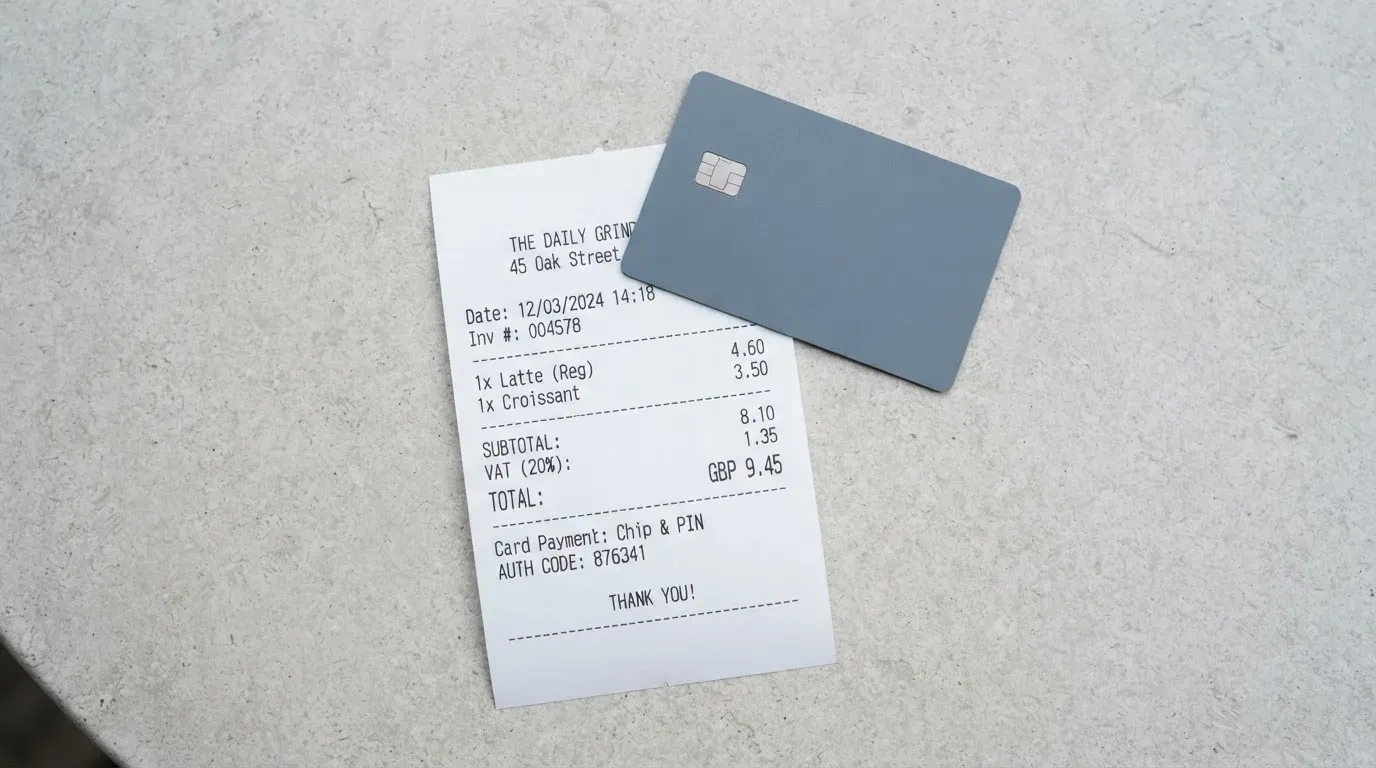
The everyday picture is more textured. Crypto liquidation carries a fee that the card’s own pages do not state; third-party reporting (unofficial) puts it at 1.49%, applied as a market-order sale to USD. Funding the card from a debit card costs 3.99% with a $1.99 minimum on every tier except Black, where it drops to 2.99% (Black requires 300,000 ZOOM). A wire deposit costs $12, free on Black. If you ever stop using the card, the unofficial schedule lists an inactivity fee of $4.99 per month after six months and $9.99 per month after twelve, and a $100 closure fee if the account has been inactive for 36 months. None of those inactivity numbers are confirmed on the card’s pages.
There is no native multi-currency balance. The card lives in USD, and the app does the conversion for you. The card currency and the merchant’s currency are different things: if you pay in euros, the Visa or Mastercard rate applies and a small network spread is layered on. The card page does not give that spread a number.
Costs at a glance
| Fee or limit | Value |
|---|---|
| Issuance | Not stated |
| Annual fee | $0 (all tiers) |
| Conversion to USD at point of sale | Not stated officially; unofficial 1.49% |
| Foreign transaction (CoinZoom) | None |
| ATM withdrawal (CoinZoom) | None at 1M+ ATMs |
| Top-up by debit card | 3.99% ($1.99 min); Black 2.99% |
| Top-up by wire | $12; Black free |
| Wire withdrawal | $35 US / $50 international; Black free |
| Inactivity (unofficial) | $4.99/month after 6 months; $9.99/month after 12 months; $100 closure fee at 36 months |
| Standard shipping (Non-Prime) | $5 (help-centre table) |
| Shipping (Silver and above) | Free |
Daily and ATM limits by tier
The limits below are from the official Prime-tiers help-centre table. Monthly caps are not stated.
| Tier | ZOOM held | Daily purchase | Daily ATM | Per-transaction ATM | Daily ZoomMe |
|---|---|---|---|---|---|
| Non-Prime | 0 | $700 | $100 | $200 | $500 |
| Silver | 10,000 | $1,500 | $250 | $250 | $1,000 |
| Gold | 50,000 | $2,500 | $250 | $250 | $2,500 |
| Diamond | 150,000 | $5,000 | $500 | $1,000 | $5,000 |
| Black | 300,000 | $10,000 | $1,000 | $2,000 | $10,000 |
Trading-fee discounts of 10%, 20%, 30% and 50% kick in from Silver, Gold, Diamond and Black respectively. All tiers are listed as having 200 ATM withdrawals counted against the limits.
Three everyday payments, three fee outcomes
A $50 lunch in a US restaurant, paid from BTC held in your CoinZoom wallet. Your BTC is sold to USD at a market rate, the unofficial 1.49% liquidation fee is taken, the Visa network processes a domestic authorisation. The card itself charges nothing on top; the 1.49% is the practical cost of using crypto rather than dollars.
A €40 train ticket in Paris, paid from USDC. The app converts USDC to USD (unofficial 1.49%), the network converts USD to euros at the Visa rate, and you wear the network spread, which is not a CoinZoom fee. There is no CoinZoom foreign-transaction fee layered on top.
A $200 cash withdrawal at an in-network ATM in the US, funded from a stablecoin balance. There is no CoinZoom ATM fee, but the liquidation spread (unofficial 1.49%) is still applied at conversion. The ATM operator may charge its own fee, and that is the ATM, not CoinZoom.
The pattern is the same in each case: the card’s own fees stay low, and the cost you actually pay depends on how the money gets in and how the conversion is done.
Top up: how to fund the card
The card does not have a balance you “load” in the conventional sense. It spends any asset in your CoinZoom wallet, converted to USD at the point of sale. In other words, the top-up is the conversion, not a transfer.
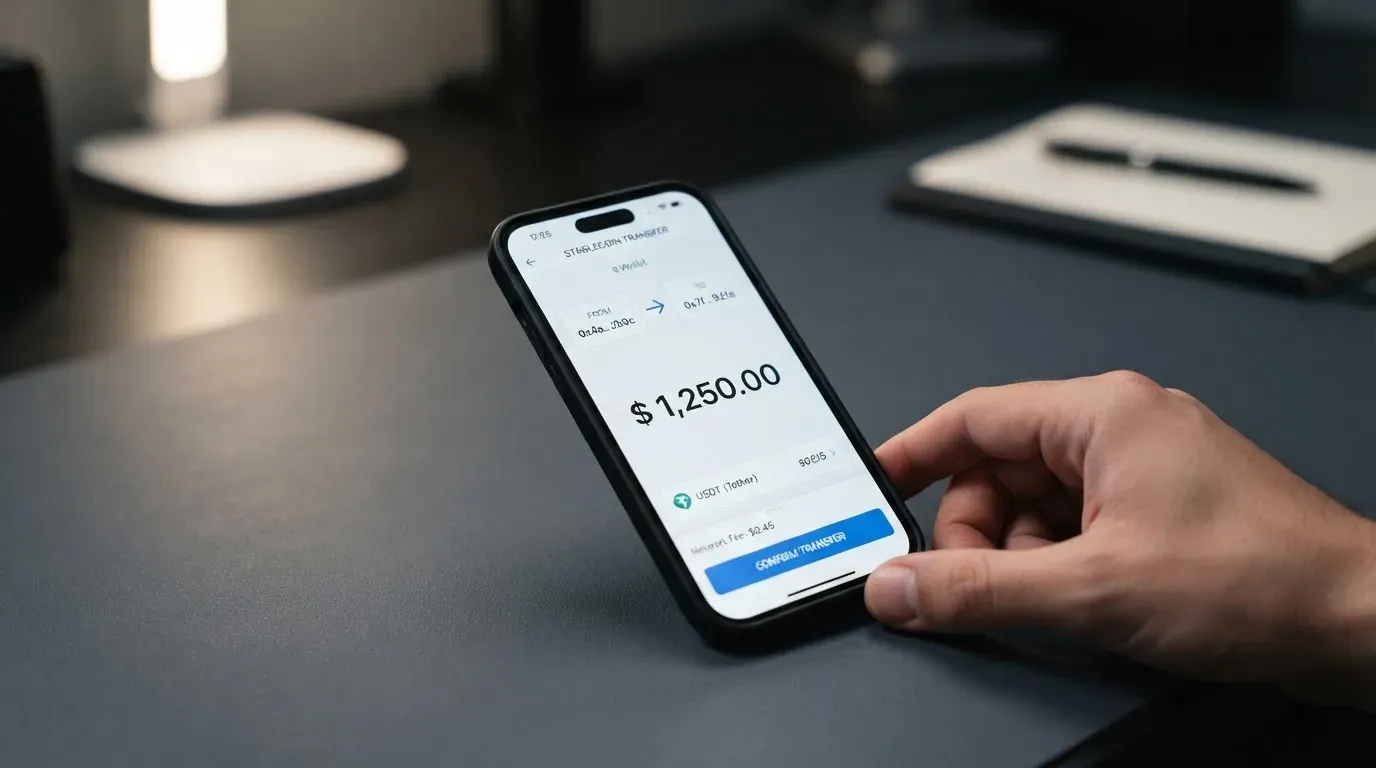
The card page does not list which coins or networks the wallet accepts. Third-party reporting (unofficial) says USDT deposits work on ERC-20 and TRC-20, and that the ZOOM token itself cannot be spent on the card, which is an important note for anyone planning to use token holdings to pay for coffee. Multi-currency balances and direct stablecoin balances on the card are not stated.
The funding methods that are stated are the ones that hit your CoinZoom account, not the card:
- Debit-card deposit, 3.99% with a $1.99 minimum on every tier except Black (2.99% with a $1.99 minimum).
- Wire deposit, $12, free on Black.
- Crypto deposit, network fees paid by you to the blockchain (unofficial: ERC-20 and TRC-20 supported for USDT).
- US wire withdrawals cost $35 and require Gold or above; international wire withdrawals cost $50, free on Black.
- ACH withdrawal is free with a $1 minimum and a $40,000 maximum (unofficial).
The “who pays the network fee” question for crypto deposits is not stated officially. With ERC-20 you will need ETH in the same wallet to pay gas; with TRC-20 the network uses bandwidth and energy, often burning TRX. If you send USDT on a network CoinZoom does not support, or to an address for a different network, the transfer is irreversible; recovery is manual and not guaranteed. That is a category-level risk rather than a CoinZoom-specific one, but it is the single most common way people lose money on cards like this.
If you fund by debit card, the 3.99% is in practice the largest fee on the card. A $100 top-up costs $103.99 before any card-side charges. For larger balances, a wire deposit (or a stablecoin transfer on a cheap network, with the network fee on you) is the cheaper route.
Paying with it every day
The virtual card is on your phone the moment you are approved; the physical card is a free ship from Silver and above. The card runs on the Visa network, which means it works at any merchant that takes Visa debit, online and offline, contactless and chip-and-PIN. ATM withdrawals are free of CoinZoom fees at 1M+ in-network ATMs, though operator fees may apply.
The card’s own pages do not say whether Apple Pay or Google Pay are supported. Third-party reporting (unofficial) says Google Pay works on active cards and Apple Pay support is not clearly confirmed. That is worth testing with a small payment before you rely on either. Blocked merchant categories are not listed, so if gambling, crypto purchases, or other restricted MCCs matter to you, that is something to ask support about before you sign up.
Rewards are the part of the card that scales visibly. Card spending earns crypto back, at a rate that climbs with the tier:
| Tier | Reward on card spend |
|---|---|
| Non-Prime | 0.5% |
| Silver | 1% |
| Gold | 2% |
| Diamond | 3% |
| Black | 5% |
The payout is in crypto, and the specific coin is not stated; “rewards program terms apply” is the closest the card page comes to spelling it out. Trading-fee discounts stack on top of the cashback once you reach Silver.
The app is what you use to get the card, lock and unlock it, and check the spend. The card page does not publish app-store ratings; third-party reporting (unofficial) puts the Apple App Store rating at 4.7 from around 774 ratings for the wider exchange app, and the Google Play rating at about 3.9 from 479 reviews with 100,000+ downloads. Those numbers are for the exchange app as a whole, not the card feature.
For disputes, the card page is unusually thin: there is no formal dispute process beyond reporting unauthorised or fraudulent charges to support “promptly”, and the time frames for doing so are not stated. Under US debit-card reversal rules, prompt reporting is the difference between a refund and an absorption of the loss; the card does not give you a number to work with.
What can go wrong
The first thing to keep in mind is structural. The card is a Visa debit, but the issuer is not publicly named; third-party reporting (unofficial) puts it at Zenus Bank, with Cross River Bank holding the fiat side in some states. The card page itself only describes CoinZoom, Inc. as a FinCEN-registered MSB and a licensed money transmitter “in applicable jurisdictions”. That distinction matters: if a programme is shut down, the brand can rebrand while the issuer closes the underlying card product on a fixed schedule, and the user is the one left moving balances. The standard pattern is a notice period, then new loads stop, then spending stops, then a deadline to withdraw; one secondary source in 2026 reported new loads ending on 8 July 2026 and spending stopping on 8 August 2026 (single source, unconfirmed).
The second thing is the regulatory footprint. On 9 February 2026, CoinZoom surrendered its Washington money-transmitter licence, was barred from resuming money transmission in the state before 9 February 2029, and was fined $150,000 with $50,000 stayed. That decision is not described on the card’s own pages; it is summarised by a third-party tracker updated 11 August 2026 and not read from the DFI directly. For Washington residents it is the reason the card is unavailable; for everyone else it is a signal that the company has lost at least one state licence in the last twelve months.
The third is the user feedback. The Trustpilot profile for CoinZoom sits at 2.5 out of 5 from 66 reviews as of 20 October 2026, with 61% of reviewers giving it one star and 29% giving it five. The themes that come up repeatedly are funds withheld or sent to a closed account (June to September 2026, some unresolved for months), support tickets that reach a bot and never reach a human (May to August 2026), deposits that did not arrive (July to August 2026), registration and verification stuck (May 2026, July 2025), and fees higher than advertised (5%, November 2025). CoinZoom replies to roughly 70% of negative reviews, which is more than many smaller exchanges; the substance of those replies is harder to evaluate. No Reddit threads were found for the card. No official incidents were found in the card’s own pages.
The fourth is the everyday payment surface. Authorisation holds can sit on a balance for several days, typically up to seven. 3-D Secure may challenge you on a payment; address verification is mostly a US, Canada and UK system, and foreign-issued cards are more likely to be declined by merchants who do extra BIN-based screening. None of these are CoinZoom-specific risks, but on a card with thin dispute language and no stated reporting window, they land harder.
The fifth is the account hygiene angle. The unofficial inactivity schedule ($4.99 per month after six months, $9.99 after twelve, $100 closure fee at 36 months) is a slow bleed, not a one-off charge. If you stop using the card and forget about it, those numbers add up.
What to do first if something feels off: lock the card in the app under the Spend tab, then call cardholder support on 1-866-286-8054 or open a ticket through support.coinzoom.com. The card page does not give a time limit for reporting unauthorised transactions, so treat “promptly” as the operative word.
What to take instead
CoinZoom sits in a small group of cards that are Visa debit, USD-denominated, and built around a crypto exchange rather than a payments specialist. If the card’s main use for you is to spend a stablecoin balance with low friction, two cards in the same rough category make the comparison easier, and one sits in a different region but is worth knowing about for the rewards structure.
Bybit Card
The Bybit Card scores 6.0 out of 10. Its country list is published and much narrower: Argentina, AIFC (Kazakhstan), Georgia, Kazakhstan, Australia, Mexico, Brazil, Peru, and Asia Pacific. EEA customers are explicitly excluded from the card, and several fiat-service restricted countries sit elsewhere on Bybit’s list. The card exists in both virtual and physical form in most of those regions, with the network and currency set per region: Mastercard prepaid in Argentina, Mastercard credit in AIFC, Georgia, Kazakhstan, Australia and Mexico, and Visa prepaid in Brazil and Peru, and Visa credit in Asia Pacific. The card currency is fixed by country: USD for AIFC, Georgia, Kazakhstan, Australia, Asia Pacific; ARS in Argentina; MXN in Mexico; BRL in Brazil; and PEN or USD in Peru. The headline cost is similar to CoinZoom: virtual issuance is free “until further notice” in every region, and there are no annual or cancellation fees listed, but physical issuance and replacement carry a fee of around 29.99 USD/USDT in most regions, with VIPs and some regions waived. Foreign-transaction fees of 2% apply in several regions on top of the network rate, and Argentina carries VAT, a 30% tax on foreign transactions, and provincial gross-income tax, which is a separate set of considerations.
The funding model is the key difference. The Bybit card has no balance of its own; it draws on the Funding Account and the Flexible Easy Earn balance, fiat first. If the fiat is short, crypto is sold at the One-Click Sell rate plus a 0.9% crypto conversion fee (0.5% in Argentina). Supported assets are BTC, ETH, XRP, USDT, USDC, GRAM, with USDT as the default. The rewards structure runs from Base at 2% up to Infinite at 10%, with monthly caps in USDT, monthly spend thresholds, and a points system where points × 0.002 equals the cashback; from 5 October 2026 only crypto-funded transactions earn points or cashback, so fiat-funded spending no longer qualifies.
Coinbase Card
The Coinbase Card scores 6.4 out of 10 and is the cleanest US-only comparison. It is a Visa prepaid debit available in every US state except Hawaii, opened under standard USA PATRIOT Act identity rules. The card is virtual or physical, spends cash or crypto, and converts all crypto to US dollars at the moment of purchase or ATM withdrawal. The fees are simple: “Zero spending fees and no annual fees”, with a spread applied when Coinbase buys, sells or trades crypto. Funding is a linked bank account, a paycheck deposit into Coinbase, or any crypto balance held on the platform. Optional crypto rewards are US-card-only, with a variable rate shown in the app and a rotating menu of coins.
OKX
OKX scores 6.2 out of 10 and is the European alternative. It launched in the EU plus Norway on 28 January 2026, with Iceland and Liechtenstein excluded and the card issued by an unnamed European licensed payment provider as a euro-denominated Mastercard virtual debit linked to OKX Pay. There is no card fee, no transaction fee, and no OKX FX fee; the conversion spread is the trade-off (0.1% per the May 2026 explainer, against 0.4% in the launch press release, with the explainer being the newer figure). The card holds USDC or USDG in OKX Pay, other coins must be converted first, and there is no auto top-up, so a payment fails if the balance is short. Cashback is on USDG only (USDC earns none), with monthly EUR caps that scale with VIP tier; a 30-day launch promo ran up to 20% for VIPs and 15% for regular users.
How the four compare
| Card | Where | Issuer / programme | Card currency | Annual fee | FX fee | Reward ceiling | Distinctive feature |
|---|---|---|---|---|---|---|---|
| CoinZoom | 169 stated, ~123 effective | Unnamed officially; unofficial Zenus Bank | USD | $0 | None (CoinZoom) | Up to 5% (Black) | Five Prime tiers by ZOOM holdings |
| Bybit | 9 regions, no EEA | Bybit, regional issuers | USD/ARS/MXN/BRL/PEN per region | $0 | 0%–2% by region | 10% (Infinite) | Fiat-first spend, crypto as fallback |
| Coinbase | US (excl. Hawaii) | Coinbase, US Bank (unofficial) | USD | $0 | None | Variable, rotating | Largest US crypto card by familiarity |
| OKX | EU + Norway | Unnamed European EMI | EUR | $0 | None | 5%–10% by VIP | Euro-denominated, OKX Pay balance |
The honest summary is that none of these is a slam-dunk. Bybit has the most aggressive rewards but a more limited country list and a fiat-first model. Coinbase is the most boring and the most familiar. OKX is the cleanest European option if you live in the EEA. CoinZoom rewards ZOOM holders; everyone else is paying for a tier they will not reach.
Who I would recommend it to
I would recommend the CoinZoom card to someone who is already on CoinZoom, holds enough ZOOM to clear at least Silver (10,000 ZOOM), and wants a Visa debit that earns tiered crypto back without an annual fee. The card also makes sense for someone who likes the idea of ATM access at 1M+ machines with no CoinZoom fee, and who is willing to fund by wire (or stablecoin transfer) to avoid the 3.99% debit-card top-up.
I would not recommend it to someone who lives in a country or US state where the card is quietly restricted, who cannot afford to lock up enough ZOOM to reach Silver, or who plans to fund by debit card every month; the 3.99% compounds quickly. I would also pause if the support experience matters to you: the dispute language on the card page is thin, the public review profile is heavy on one-star complaints about funds held and bots looping, and the issuer is not publicly named. For a casual user, a US-based Coinbase Card is the easier default; for a European user, OKX is the cleaner Euro option. If the main draw is rewards, Bybit’s tiered structure is more transparent, even if the country list is shorter.
Frequently asked questions
What is the CoinZoom card?
It is a Visa debit card issued through the CoinZoom exchange, available as a virtual card on approval and as a free physical card from the Silver tier. It spends any asset in your CoinZoom wallet, converted to US dollars at the point of sale.
How does the CoinZoom card work?
The app converts the asset you hold in your CoinZoom wallet to USD at the moment of payment, and the card runs as an ordinary USD Visa debit. There is no separate card balance to top up; the top-up is the conversion, and the rest is the standard Visa authorisation flow.
Is CoinZoom a bank?
No. CoinZoom, Inc. describes itself as a FinCEN-registered money services business and a licensed money transmitter “in applicable jurisdictions”. The card issuer is not publicly named; third-party reporting (unofficial) puts it at Zenus Bank, with Cross River Bank holding fiat in some states and BitGo providing wallet technology.
Who owns CoinZoom?
The card’s own pages do not give an ownership breakdown. Third-party trackers describe CoinZoom, Inc. as the programme manager of the card. The information is not on the card’s pages, so treat ownership detail as unofficial.
Is the CoinZoom card available in my country?
CoinZoom says 169 countries; third-party reporting (unofficial) puts the available list closer to 123 with 81 restricted, including Canada, Australia, the UK, France and Germany, and “European Union residents cannot order the card” although it works in the EU. In the US the card is in 48 states, not New York or Washington. The country list itself is not published, so this is the question to ask support before signing up.
Can I use the CoinZoom card in my country?
The card works at any merchant that takes Visa debit, and at 1M+ in-network ATMs. Where the card is unavailable for ordering, it is also unavailable for use as a domestic product. Travel use is constrained by country restrictions, so check support before relying on it abroad.
How do I get the CoinZoom card?
You apply in the CoinZoom app. Identity verification is required in the app before the card is issued. The documents needed, the age threshold, and the processing time are not stated on the card’s pages; third-party reporting (unofficial) lists standard KYC documents plus a liveness check.
Does the CoinZoom card require KYC?
Yes. Identity verification in the app is required before the card is issued. The exact documents and the verification levels are not stated on the card’s pages; third-party reporting (unofficial) describes the standard stack of legal name, date of birth, ID, phone, and a biometric or liveness check.
How do I top up the CoinZoom card?
There is no separate balance to load. The app converts any wallet asset to USD at the point of sale. To fund the wallet, the stated options are debit-card deposit at 3.99% (Black 2.99%) with a $1.99 minimum, and wire deposit at $12 (Black free). Crypto deposits are supported on networks the wallet lists; third-party reporting (unofficial) names ERC-20 and TRC-20 for USDT, and notes that the ZOOM token cannot be spent on the card.
Is the CoinZoom card safe?
The card page points to the standard safeguards: app-based freeze, Visa’s Zero Liability Policy for unauthorised transactions reported promptly, and the company’s FinCEN registration. The dispute language is thin, with no time window given for reporting, and the Trustpilot profile is heavy on complaints about held funds and support delays. Treat the card as safe in the sense of having standard controls, not in the sense of being insulated from platform-level issues.
Exchange cards – cryptocardsranked
Content created by the «cryptocardsranked» team