
A Mastercard debit card that spends your Krak Everyday balance with no monthly fee, and what to check before you order one
 Available in US
Krak is the consumer app from the Kraken crypto exchange, and the Krak card is a Mastercard debit that draws from your Krak Everyday account. You fund the account in the app, set the order in which your crypto balances are spent, and the card pays in fiat at the till. If that sounds straightforward, it mostly is: the card is free to order, has no monthly or annual fee, and the issuer says it adds no transaction, FX or ATM charges. The catch is that eligibility is narrow, the spread on crypto-to-fiat conversion is not published, and the customer experience on third-party review sites is mixed. This review walks through who can get the card, what it really costs, how funding works, what daily use looks like, and where the product has stumbled, so you can decide whether it fits your situation.
Conditions are current as of October 28, 2026.
Verdict
Krak scores 7.1 out of 10 in my assessment. That is a solid middle-of-the-pack result for a crypto card, held back mainly by geographic restrictions and limited transparency around the conversion spread, and lifted by a genuinely low-cost structure and the backing of an established exchange. The breakdown below shows where the card earns and loses marks.
| Criterion | Mark | Why |
|---|---|---|
| Who can get it | 5/10 | UK and EU residents only for now, with more countries promised later; a help article also lists the US, which contradicts the card page. |
| Cost | 9/10 | Free to order, no monthly or annual fees, no stated transaction, FX or ATM fees; a variable spread applies on crypto-to-fiat conversion. |
| Top-up options | 7/10 | Draws on the Krak Everyday balance across 600+ assets, with spend order set in the app; specific networks and chains are not named. |
| Reliability and complaints | 5/10 | Issued by a UK-regulated e-money institution and a Lithuanian-licensed entity; third-party reviews are polarised between a 3.8 and a 1.9 out of 5 on Trustpilot, with common complaints about account restrictions after transfers. |
| Everyday use | 10/10 | Virtual card available immediately, physical and metal options, Mastercard acceptance, Apple Pay and Google Pay, ATM access in 190+ countries with no Krak fee. |
The card suits UK and EU residents who already hold a Krak or Kraken account, want to spend crypto without selling it on an exchange first, and value a no-monthly-fee structure over flashy rewards. If you live outside the UK and EU, want a published conversion spread, or expect fast, personalised customer support when something goes wrong, this is probably not the card for you.
Will they give you the card
Krak describes the card as currently available to residents of the UK and the EU, with more countries coming soon. A footnote adds that geographic restrictions apply, which is the issuer’s way of saying that even within those regions, individual cases can be refused. The rule is residence-based, so what matters is where you live, not where you hold citizenship.
A Krak help article, however, mentions that personal accounts can be opened by residents of the UK, the EEA and the United States. That is a wider set of countries than the card page advertises, and the two pages do not reconcile the difference. If you are a US resident, the practical answer today is that the card page is the stricter of the two and probably the one to trust until the help article is updated.
UK and EU coverage means a large but not universal market. If you live in the UK, Ireland, France, Germany, the Netherlands, Spain, Italy, the Nordics, or most other EU member states, you are in the target audience. If you live in Switzerland, Norway, Iceland, Liechtenstein, or anywhere in the Americas, Asia, Africa or the Middle East, the card is not yet available to you, and the “more countries coming soon” line gives no timeline.
There is also a wider filter at work. Because the issuer is a regulated electronic money institution, it has to run identity and sanctions checks regardless of where you live. Nationality is screened separately from residence, and being a citizen of a sanctioned country, even if you live in London or Berlin, can cause your application to be refused or your account to be frozen. The card page does not list excluded nationalities, so this is something to check with support before you order if you think it might apply to you.
How to get it
Getting the card follows three steps in the Krak app: open a Krak account, complete KYC, and order the card. The KYC requirement is non-negotiable: you must have a verified Krak account with completed identity verification before Monavate, the card issuer, will issue a card to you. The applicant must be at least 18. Krak does not state which documents it asks for, how long verification takes, or what counts as proof of address, so the realistic expectation is the standard pattern: a government photo ID, a selfie or live check, and sometimes a utility bill or bank statement.
Once your account is verified, you can order a virtual card in minutes. The virtual card is a Mastercard debit that you can add to a mobile wallet and use for online purchases straight away. A physical card, in orange or black, is shipped free, but only to UK and EEA delivery addresses; the issuer does not state how long delivery takes, and a third-party guide suggests plastic cards normally arrive within 14 business days, though this is not confirmed by Krak.
A metal card in stainless steel, weighing 16 grams, is also available. The metal tier is not sold for a fee; it requires an average of GBP or EUR 50,000 in combined assets across Krak, Kraken and Kraken Pro. That puts it firmly in the high-balance bracket rather than a product most people will order.
Replacement of a physical card costs $4.99, or the equivalent in the card’s currency, charged by Monavate. A third-party source puts the metal card replacement fee at GBP or EUR 60, which is a large jump from the standard plastic replacement and worth confirming with support before you commit. Virtual and physical cards are cancelled separately, so freezing one does not affect the other.
Fees
The cost section is where Krak makes its strongest pitch. The card is free to order, there are no monthly or annual fees, and Krak states there are zero transaction fees, zero FX fees and zero ATM withdrawal fees on your spend. That is unusually generous wording for a crypto card, and the practical effect is that the only charge you should see on a normal spending statement is the spread applied when you convert crypto to fiat at the point of sale.
The size of that spread is not published. Krak describes it as a “variable spread” that applies “when spending across assets.” Variable means it changes with market conditions, and “across assets” means it is the margin baked into the exchange rate you see when your crypto is converted to the card’s primary currency (GBP for UK cards, EUR for EEA cards). Without a published number, the only way to judge it is to compare the rate shown in the app against the spot rate on a major exchange at the moment of the transaction.
The card currency is set by your region: GBP if you live in the UK, EUR if you live in the EEA. Card payments settle in that primary currency, and FX on foreign-currency purchases is passed through at the Mastercard rate with no Krak markup. If you spend in a currency your card does not hold, you still pay a spread on the sell side when the underlying crypto is sold to fund the payment, plus the network’s FX rate.
ATM withdrawals are available in over 190 countries with no Krak fee, though third-party ATM operators may charge their own fee, which is usually shown on-screen before you confirm the withdrawal. Free withdrawal allowances, the number of free withdrawals per month, and any minimum amounts are not stated.
| Fee or limit | Value |
|---|---|
| Card issuance | Free |
| Monthly fee | None |
| Annual fee | None |
| Transaction fee | None stated |
| FX fee | None stated (Mastercard rate passed through) |
| ATM fee (Krak) | None |
| ATM fee (third party) | May apply, shown before withdrawal |
| Card replacement | $4.99 (or equivalent) for plastic; GBP/EUR 60 for metal (third-party, unconfirmed) |
| Crypto-to-fiat spread | Variable, not published |
| Daily, weekly, monthly limits | Apply; vary by region, shown in app |
Limits deserve their own note. Krak states that daily, weekly and monthly limits apply to both card spending and ATM withdrawals, and that limits vary by region and are shown in the app. Terms add that counts and amounts “may be limited” and that hotels and car rentals may pre-authorise an extra 10 to 20 percent, with the unused portion taking up to seven days to clear. A third-party source reports contactless limits of GBP 300 in the UK and a cumulative EUR 150 in the EEA before PIN is required, a cap of two active virtual and two active physical cards, and a limit of three new virtual cards per rolling 30 days, none of which is confirmed by Krak’s own pages.
To translate that into everyday numbers, here are three typical payments and the fees that apply:
- Buying a GBP 4.50 coffee with USDC in the UK. No transaction fee, no FX fee (GBP is the card’s primary currency), no Krak ATM fee. You pay the spread on USDC-to-GBP conversion, which is the only cost on the card side. The merchant pays whatever its acquirer charges; that is not passed to you.
- Paying a restaurant bill in Germany with Bitcoin. No transaction fee, no FX fee (EUR is the card’s primary currency). You pay the spread on BTC-to-EUR conversion at the time the transaction is processed.
- Withdrawing GBP 100 from a cash machine in Spain. No Krak ATM fee. The Spanish operator may charge its own fee, typically GBP 1.50 to GBP 3, which the ATM discloses before you confirm. The amount you receive is converted from your chosen crypto at the current spread.
Top up
Krak does not use the word “top up” in the same way many prepaid cards do. The card has no balance of its own; it draws on your Krak Everyday account. The Everyday account holds the assets you have on Krak, including crypto and any fiat balance you have added, and when you pay, the app sells the right asset in the order you have set.
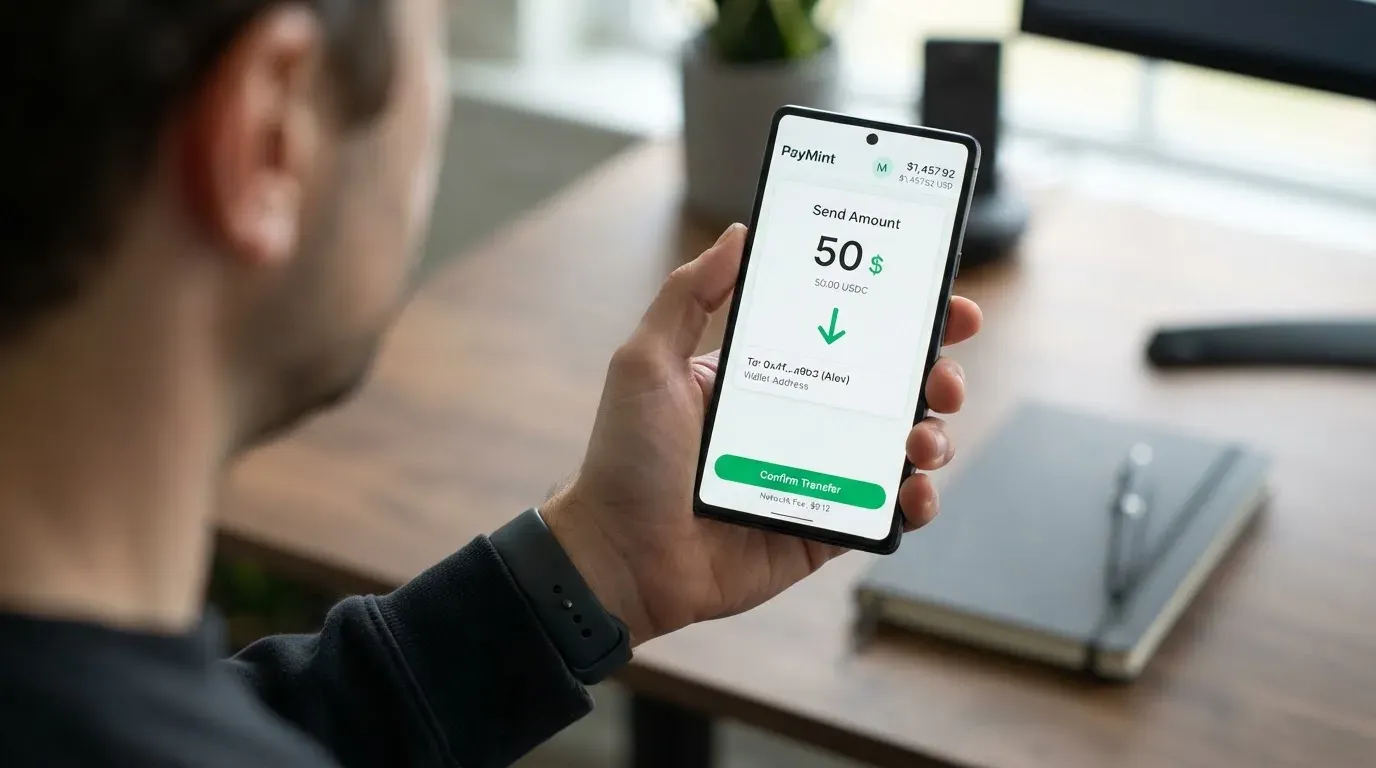
That order is called the Spend Order, and you control it. Krak offers more than 600 assets, but not all of them are spendable through the card. Assets that are not supported show “Unavailable” when you try to add them to the Spend Order. Fiat balances can be spent directly, so if you convert part of your crypto to GBP or EUR in advance, that portion of a payment is not subject to a spread at the moment of sale.
Funding the Everyday account itself is where the on-chain and off-chain work happens. You can deposit at any time through the app, and the help centre lists articles for fiat deposits via Plaid (in EUR and GBP) and via PayPal. Some deposit methods carry a three-day withdrawal hold, meaning the funds are available to spend but cannot be withdrawn back out for three days. Krak does not state the deposit fee or the minimum deposit on the pages reviewed; a third-party source claims near-instant card deposits cost GBP or EUR 0.25 plus 3.75 percent, but this is not confirmed by Krak.
Specific coins and networks for crypto deposits are not named on the card pages. Because depositing on the wrong network is a common way to lose funds, and because some stablecoins exist on many chains, the safe approach is to deposit only after confirming the supported network in the app for that specific asset.
Withdrawing from the card back to a bank or crypto wallet is not described in the card FAQ. Cancelling the card means contacting Krak Support, and there may be a fee if the card agreement is ended within six months of opening. Closing the underlying Kraken E-Wallet also terminates the Monavate card agreement, which is worth knowing if you are thinking of leaving Kraken entirely. The terms governing redemption sit in the Kraken user agreement, which I have not read in full.
Paying with it every day
For everyday spending, the Krak card behaves like a standard Mastercard debit. You can add it to Apple Pay and Google Pay, which means a phone or watch tap at the till works the same as for any bank card. The card supports contactless and online payments, and it spends in more than 600 currencies at the Mastercard rate.
Block merchant categories are not stated, and users cannot block specific merchant categories from the app. They can, however, control which assets are used to fund payments and which currencies are spent, which is a softer form of control: if you do not want a particular coin spent, remove it from the Spend Order. Krak also lets you freeze, unfreeze or replace a physical card instantly in the app, which is the standard safety control for any modern card.
Cashback is where the card attempts to differentiate. Krak advertises “up to 2% cashback in cash or crypto” depending on the average assets you hold with Krak, Kraken or Kraken Pro, and “up to 4% on travel booked via Krak Concierge.” The exact rate for a given user is shown in the app and depends on the asset tier, so the headline 2% is a ceiling rather than a default. Cashback is paid in cash or crypto at the user’s choice.
The app is available on iOS through the App Store and on Android through Google Play. App ratings are not stated on Krak’s own pages, so the usual caveats apply: read recent reviews on the store before installing, and check that the publisher is Kraken or Krak rather than an imitator.
Disputes and refunds follow a defined process. To raise a problem, you open the transaction in the app and tap “Get help with this transaction.” Refunds return to the Everyday account in the card’s primary currency, and crypto is not automatically converted back; if a refund is issued in euros but the payment was funded by USDC, you end up with a euro balance, not USDC. The complaint timeline is regulated: in the UK, complaints are acknowledged within 24 hours and a final response is given within 15 business days, extendable by 20; in the EEA, the target is 15 business days, or 35 if delayed. A 14-day cooling-off refund of fees is available. A Kraken help article notes that dispute resolution itself may take 45 to 60 days, which is the same range as many traditional banks.
What can go wrong
Krak is the consumer brand of Kraken, one of the longer-established crypto exchanges, and that pedigree matters. The card is issued by Monavate in the UK, which holds FCA registration with reference number 901097 and is incorporated under company number 12472532. In the EEA, the issuer is Monavate UAB, authorised in Lithuania under licence number 92. Both are real regulated entities, and that gives the card a clearer regulatory standing than many crypto cards in the market.
The Krak E-Wallet itself, however, is an e-money account issued by Kraken, not by Monavate, which means the safeguarding of the funds sitting in the Everyday balance is governed by Kraken’s e-money terms rather than the card terms. E-money funds are typically held in segregated accounts at regulated institutions, and a third-party source notes that UK e-money is not covered by the Financial Services Compensation Scheme and the EEA wallet has no deposit-guarantee coverage. That is standard for the category, but it is worth understanding: if the e-money institution fails, you are an unsecured creditor of that institution, not a depositor with a guaranteed claim.
The most visible risk in the public record is around account restrictions. Third-party reviewers on Trustpilot report accounts being restricted after a bank transfer or deposit, with funds becoming inaccessible. The reviews also describe generic replies to escalation requests without a clear timeline, an 11-day security review in July 2026 during which deposits, withdrawals and card use were suspended, and at least one delayed refund after a cardholder’s terminal asked for a signature instead of a PIN. Trustpilot scores for krak.app are inconsistent across sources: one dataset shows 3.8 out of 5 from 34 reviews, another shows 1.9 out of 5 from 126 reviews, and the gap between the two suggests either a different time window or different filtering.
A third-party aggregator also reports two short card-payment outages in the UK and EEA, and instances of accounts being auto-frozen after small transfers from sanctioned addresses, which the platform attributes to its automated monitoring. The same source mentions a Bank of Lithuania fine or warning for Monavate UAB related to AML and safeguarding. The original page is undated and unverified, so the detail should be treated as a flag rather than a fact.
Security features on the card itself are standard for the category: real-time transaction monitoring, data encryption, and instant freeze, unfreeze or replacement of the physical card in the app. Two-factor authentication is not stated explicitly, and the e-wallet terms cover the security of the underlying funds rather than the card’s app. Support is offered 24/7 in-app, with a Support Center, but languages, email and phone are not stated on the public pages.
The underlying category risks also apply. Crypto held with Krak is custodial, so the user trusts Krak to hold the private keys. Crypto transfers are irreversible, so a deposit sent to a wrong address or on a wrong network is generally lost. Stablecoins are not immune: Tether has frozen funds tied to illicit activity, and stablecoins have depegged in the past. The card does not remove these risks; it just changes the user interface from an exchange withdrawal to a point-of-sale payment.
What to take instead
If the geographic restriction is the problem, the right comparison is a card that operates where you live. If the spread or customer experience is the problem, the comparison is a card with a published rate and a more transparent fee structure. The three alternatives below are the closest in the same category, each with a different trade-off.
- Bybit Card, 6.0/10. Bybit offers cards across a wider footprint, including Argentina, AIFC/Kazakhstan, Georgia, Australia, Mexico, Brazil, Peru and Asia Pacific. The card has no balance of its own; it draws on a Funding Account and a Flexible Easy Earn balance, with fiat spent first and crypto converted at the One-Click Sell rate plus a 0.5 to 0.9 percent conversion fee depending on region. Rewards are generous on paper (up to 10 percent at the top tier, with monthly spend thresholds to unlock), but from October 2026 only crypto-funded transactions earn anything, and EEA customers are explicitly excluded. FX fees range from 0 to 2 percent plus padding up to 5 percent in Argentina, so the cost depends heavily on where you live.
- Coinbase Card, 6.4/10. The Coinbase Card is a Visa prepaid debit, available in all US states except Hawaii, and spends any crypto on Coinbase by converting it to US dollars at the point of sale. There are no spending fees and no annual fees, and a spread applies when Coinbase converts the crypto, which is the same model as Krak. Optional crypto rewards on every purchase are available to US cardholders, with the rate shown in the app. The catch is geography: it is a US-only product, so it is not a substitute for a European reader.
- OKX, 6.2/10. OKX launched a Mastercard debit in the EU plus Norway in January 2026, with Iceland and Liechtenstein excluded. The card is euro-denominated, virtual-only on the public materials I read, and issued through an unnamed European licensed payment provider. There is no transaction fee and no OKX FX fee, but a 0.1 percent conversion spread is applied to USDC or USDG held in OKX Pay; other coins must be converted first. Cashback is paid only on USDG purchases, with rates from 2 percent for regular users to 10 percent for the top VIP tier, subject to monthly caps.
Each alternative has a narrower geographic focus than its headline suggests, and the conversion spread is the variable that most affects the real cost. Krak’s edge is the breadth of spendable assets (more than 600) and the simplicity of its fee language; its weakness is the unpublished spread and the limited footprint.
Who I would recommend it to
I would recommend the Krak card to a UK or EU resident who already has a Krak or Kraken account, holds some crypto they are happy to spend, and wants a no-monthly-fee way to convert that crypto to fiat at the till. The card is a good fit if you plan to spend in your home currency most of the time, value Apple Pay and Google Pay support, and are comfortable that the conversion spread is the only real cost, and that the spread is not published in advance. The metal tier and the up-to-2-percent cashback make it more attractive at higher asset balances, but they are bonuses rather than the reason to choose it.
I would steer clear of the Krak card if you live outside the UK and EU, because the card simply is not available to you yet. I would also be cautious if your main concern is customer support: the third-party reviews on Trustpilot are polarised, account restrictions after transfers are a recurring theme, and dispute resolution can take the better part of two months. If your priority is a published conversion spread you can calculate against, look elsewhere; Krak does not give you that.
For anyone on the fence, the practical pre-flight check is simple. Verify your account and complete KYC first, because the card is only the last step. Then add a small amount of a stablecoin to the Everyday account, set it as the first asset in the Spend Order, and make one or two small test payments before loading the card with anything significant. That way you see the spread, the settlement time, and the app’s behaviour in the real world before you commit.
Frequently asked questions
What is the Krak card?
The Krak card is a Mastercard debit card issued by Monavate and Monavate UAB that draws on a Krak Everyday account, which is the multi-asset balance in the Krak app, Kraken’s consumer product. The card is available as a virtual card issued in minutes, a free physical card in orange or black, and a metal card for users with an average of GBP or EUR 50,000 across Krak, Kraken and Kraken Pro.
Is Krak a bank?
Krak is not a bank. It is the consumer app of Kraken, a crypto exchange. The Krak Everyday account is an e-money account issued by Kraken, and the card itself is issued by Monavate in the UK and Monavate UAB in Lithuania, both of which are licensed electronic money institutions. Funds in the e-money account are not covered by deposit guarantee schemes.
Who owns Krak?
Krak is owned by Kraken, one of the longer-established cryptocurrency exchanges. The Krak app is Kraken’s consumer-facing product, separate from Kraken Pro, which is the exchange interface. The card programme is operated by Krak but issued by Monavate and Monavate UAB.
Is the Krak card available in my country?
The card page says the card is currently available to residents of the UK and the EU, with more countries coming soon. A Krak help article also lists US residents for personal accounts, which conflicts with the card page. If you live outside the UK and the EU, the practical answer today is that the card is not yet available, and there is no published timeline for additional countries.
Does the Krak card require KYC?
Yes. Krak requires a verified account with completed identity verification before Monavate will issue a card. The applicant must be at least 18. The specific documents asked for, the verification levels and the typical processing time are not stated on the public pages reviewed, but the standard pattern is a government photo ID and a selfie or live check, sometimes with proof of address.
How do I top up the Krak card?
You fund the Krak Everyday account, not the card directly. You can deposit at any time in the app, either in fiat (with Plaid articles for EUR and GBP and PayPal articles) or by sending crypto from another wallet. The card then spends from that balance in the order you set in the Spend Order. Some deposit methods carry a three-day withdrawal hold, and the deposit fee and minimum are not stated on the pages reviewed.
How do I add the Krak card to Apple Wallet or Google Pay?
The card can be added to both Apple Pay and Google Pay once it has been issued. The standard flow is to open the Krak app, go to the card section, and follow the prompt to add the card to the mobile wallet. The card number is replaced by a device-specific token, so the actual PAN is not stored on Apple or Google’s servers.
Is the Krak card free?
The card is free to order, with no monthly or annual fees, no transaction fees, no FX fees and no Krak ATM fees stated. A variable spread applies when you spend across assets, and that spread is the main real-world cost; its size is not published. Card replacement costs $4.99 for the plastic version, with a higher fee reported for the metal version by a third-party source.
Is the Krak card safe?
The card is issued by regulated electronic money institutions in the UK and Lithuania, and the app supports instant freeze and replacement of the physical card. The underlying crypto is custodial with Kraken, which carries counterparty and hack risk; the fiat in the e-money account is held under Kraken’s e-money terms, not covered by deposit guarantee schemes. Third-party reviews on Trustpilot are polarised, and account restrictions after transfers are a recurring complaint, so the safety story depends on how you weight regulatory backing against user-reported experience.
How do I close my Krak account?
Closing the underlying Kraken E-Wallet terminates the Monavate card agreement, and a fee may apply if the card agreement is ended within six months of opening. The card itself can be cancelled by contacting Krak Support; virtual and physical cards are cancelled separately. Refunds of any remaining balance are governed by Kraken’s user terms, which I have not read in full.
Exchange cards – cryptocardsranked
Content created by the «cryptocardsranked» team