
A virtual Visa you can only fill with USDT
 Available in US
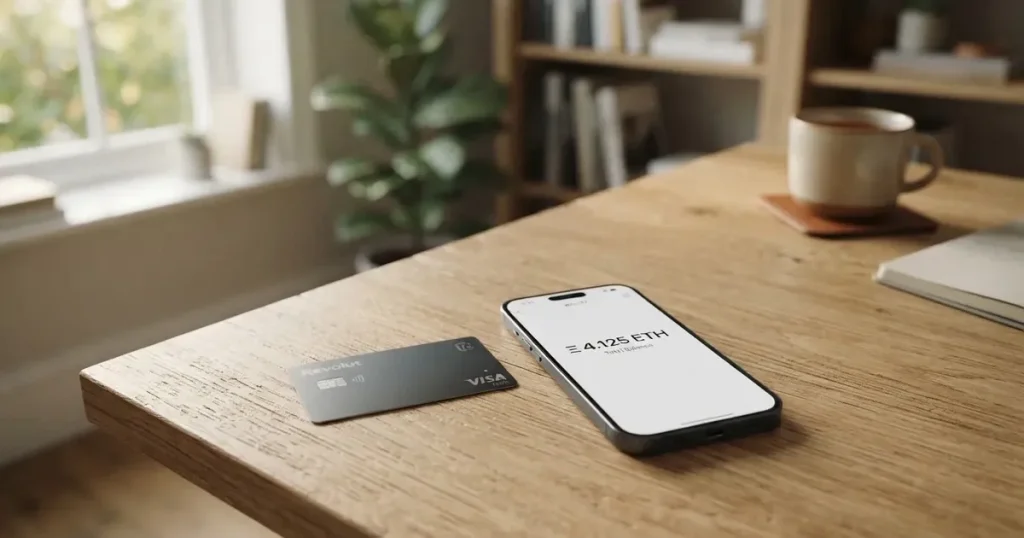
The MEXC Card is not a bank account with a crypto wrapper. It is a virtual Visa Platinum card, issued into an ecosystem run by a crypto exchange, and it can only be loaded with USDT. That single design decision shapes almost everything else — who can hold it, where it works, what happens when the exchange freezes an account, and whether the cashback that made it interesting in August 2026 is still free money or just a tier score.
Conditions are current as of October 28, 2026.
I went through the card’s own pages with the same care I would give a bank product, because when your spending balance sits with a counterparty rather than with a bank, marketing language deserves extra weight rather than less. My score is 5.6 out of 10. That is not a rejection, but it is not a recommendation either: the card is competent where it can be checked, and unusually vague where it cannot.
The conditions described here are current as of 20 October 2026.
Verdict: 5.6 out of 10
Here is how the score breaks down, criterion by criterion, with my reason for each mark.
| Criterion | Mark | Why |
|---|---|---|
| Who can get it | 8 / 10 | Closed to residents of 69 countries and territories; everyone else admitted on the country of their proof of address. Unofficial listings say 110 countries in the DefiLlama catalogue. |
| Cost | 7 / 10 | Global Card: issuance 20 USD (temporarily waived), annual fee and top-up 0, crypto conversion 0 %, currency at the Visa rate with no markup, 1 % transaction fee from 1 October 2026 |
| Top-up options | 4 / 10 | USDT only: you transfer to the Fiat account, then to the card; networks not named |
| Reliability and complaints | 3 / 10 | Issuer not named, balance held at the exchange; on Trustpilot the exchange has no score, 88 % one-star, with freezes and delayed withdrawals; unofficial: on the Hong Kong SFC’s suspicious-platforms list |
| Everyday use | 4 / 10 | Virtual Visa Platinum only; Apple Pay and Google Pay are there, but there is no physical card and no ATM |
The reader this card suits is narrow and specific: someone already holding USDT, based in Asia or another eligible region, who wants to spend that balance without selling it back to fiat first, and who is comfortable leaving the money with an exchange rather than in a wallet they hold the keys to. The rewards structure reinforces that: cashback tiers tied to an M-Score, which is the exchange’s own credit-scoring mechanism, not a card-network feature.
The reader this card does not suit is everyone who needs a physical card, an ATM, more than one way of funding, or a named issuer behind the programme. It is also a poor fit if your priority is predictable cashback — the 1 % spending fee that applies from 1 October 2026 quietly consumes a chunk of the 4 % Standard tier rate, and the cards run on an exchange balance that can be frozen.
Who can get the MEXC Card
You can apply if your country of residence is not on the blacklist and you have a proof of address from a country the card accepts. The card page names “The Philippines, Taiwan, Thailand…” alongside a Details link, so the full list is behind that link rather than printed on the page I could read. Eligibility follows the country of the proof of address, not citizenship as such. As of August 2026 the application blacklist includes the United States, China, India, Indonesia, Turkey and Russia among others; the Philippines, Taiwan, Vietnam and Thailand are not blacklisted. The list changes, so treat any country check as a snapshot rather than a promise.
Two of the three headline regions are the ones people actually ask about. In Europe there is a separate product, the APAC Card, described as serving selected Asia-Pacific markets — that is the one to look at if you are reading this from the EU, not the Global Card.
| Region | Product | Where it is offered | Notes |
|---|---|---|---|
| Global | MEXC Global Card | Closed to residents of 69 countries and territories; others admitted on the country of proof of address | Virtual Visa Platinum, launched 31 Aug 2026 |
| Asia-Pacific | MEXC Card | Selected Asia-Pacific markets | Google Pay only; no Apple Pay listed |
The counts here conflict, and it is worth understanding why rather than picking whichever number suits you. Unofficial sources — DefiLlama lists the card in 110 countries, and SpendNode (2026) describes the Global Card as covering Southeast Asia, Latin America, Africa, the Caribbean, the Gulf and Central Asia, plus Japan, South Korea, New Zealand and Israel — put the reach far wider than the official blacklist implies. Those figures come from third-party catalogues, not from the card itself. The official list also excludes Russia and Turkey, which both unofficial lists would otherwise include. When the card’s own page and a third-party index disagree, the card’s page is the one that decides your application.
How to get it
You need Advanced KYC before you can apply: a government ID plus face verification, and a proof of address issued in an eligible country. No income proof is required. The stated steps are: complete Advanced KYC, apply on the My MEXC Card page, then transfer USDT to your Fiat account and fund the card from there.
Two things the card’s pages do not say, and which you will otherwise discover late. The age requirement is not stated anywhere I could find — the general rule for prepaid and debit cards is 18+, and some issuers set higher limits, but the MEXC page does not confirm a figure. Nor is the processing time or the list of rejection reasons published. The card is virtual only; physical cards are described as “not yet available” on the card page, and delivery is therefore not applicable. The network is Visa, in the Platinum virtual variant, and the card currency is USD — a fact that matters more than it sounds, because it decides what you pay when you spend outside the United States.
Fees: what the MEXC Card really costs
The headline on this card is genuinely good, and it is worth reading precisely rather than approximately. On the Global Card, crypto conversion is 0 %, foreign currency converts at the Visa rate with no MEXC markup, top-ups are free, the annual fee is 0, and there is no inactivity or termination fee. The catch is a 1 % transaction fee on spending, waived from launch on 31 August to 30 September 2026 and applied from 1 October. The APAC Card is different again: issuance 0, transaction fee 0 %, but 1 % crypto conversion and 1 % added on non-USD purchases on top of the Visa rate.
The issuer page also states the Visa spread is usually 0.1 % to 0.3 %, so even “no markup” is not zero.
| Fee or limit | Global Card | APAC Card |
|---|---|---|
| Issuance | 20 USD standard, waived for a limited time (as of Aug 2026) | 0 |
| Annual fee | 0 | Not stated with a value |
| Crypto conversion | 0 % | 1 % |
| FX / currency | Visa rate, no MEXC markup | Visa rate plus 1 % on non-USD purchases |
| Spending fee | 1 % from 1 Oct 2026 (a 100 USD purchase deducts 101 USDT) | 0 % |
| Top-up | 0 | 0 |
| Inactivity / termination | 0 | 0 |
| ATM withdrawal | Not applicable to virtual cards — there is no ATM | Not applicable to virtual cards |
| Per transaction | 80,000 USD | 50,000 USD |
| Per day | 1,000,000 USD | 50,000 USD |
| Per month | No cap listed | 1,000,000 USD per year |
| Transaction count | 100 per day, 2,500 monthly, 25,000 annually | 50 per day, 1,040 per year |
Not stated on the card pages: a monthly fee, ATM fees (silently irrelevant without a physical card), and the daily and monthly limits — the page points to a separate fee-and-limits guide that was not reachable when I checked. Both cards are USD-denominated and funded in USDT; other currencies are converted by Visa. Multi-currency balances are not offered.
Three everyday payments, and what each one actually costs. Buying lunch for 20 USD on the Global Card from 1 October deducts 20.20 USDT once the 1 % fee applies — a small amount that scales. A 200 USD online purchase deducts 202 USDT, and if you pay a merchant in euros or baht the amount is first converted by Visa at its rate, so the 1 % sits on top of the converted figure. Under the old 0 % conversion-fee structure a 100 USD purchase cost 100 USDT; the same purchase costs 101 USDT now, which is the single clearest way to see the October change.
How to Top up the card
Topping up is USDT only, and it is a two-step move: you transfer USDT to your Fiat account on the exchange, then add it to the card on the My MEXC Card page. There is no top-up fee, and moving USDT into the Fiat account is free. Each top-up runs from 1 to 1,000,000 USDT per the Global Card guide — though an older MEXC post cites a 100 USDT minimum, so the two published figures conflict and the newer guide is the better guide.
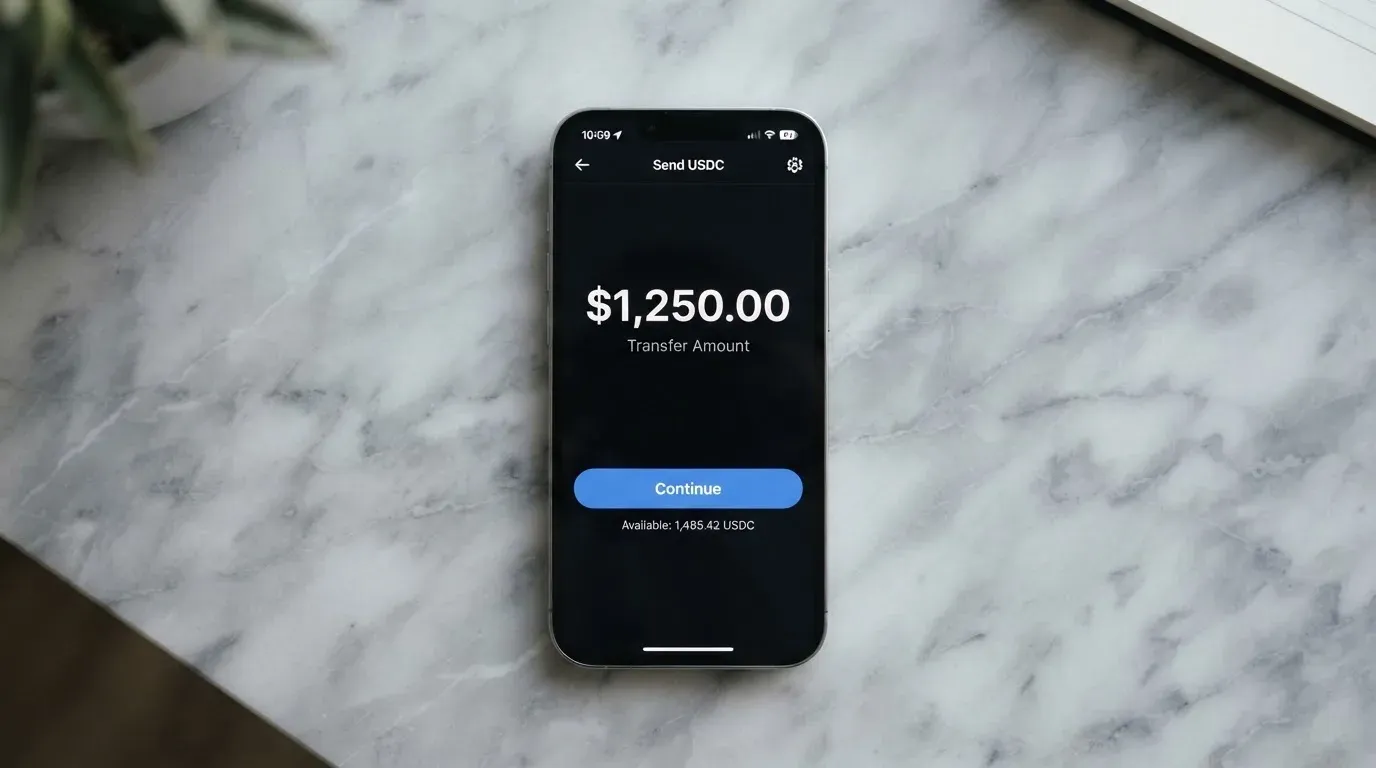
The networks are not stated, and that omission has teeth. A blockchain transfer is irreversible, and a deposit sent on a network the card provider does not support, or to an address belonging to a different network, can be lost or need manual support recovery with no guarantee of success. USDT exists on several chains — among them Ethereum, Tron, Solana, Polygon and Avalanche — and choosing wrongly is exactly the mistake people make. Ask support which network to use before your first transfer rather than after it. Note also that on Ethereum the fee is paid in ETH, so a wallet holding USDT but no ETH cannot send it at all.
| Top-up route | Fee | Minimum | Notes |
|---|---|---|---|
| USDT to Fiat account, then to card | 0 | 1 to 1,000,000 USDT per the Global Card guide (an older post says 100 USDT) | Networks not stated |
| Fiat top-up | Not stated | Not stated | The card pages do not describe it |
Getting the balance back off the card is the part I would test before I trusted it with money I need. The termination fee is 0 and there is no inactivity fee, but the process for moving the remaining balance back to the exchange account, and what happens on closure, is not stated. On the exchange as a whole, deletion of an account is hard, and one review on Trustpilot describes a $0.50 fee on a declined Apple Pay transaction — small money, but a sign of where friction lives.
Paying with it every day
Day-to-day, the card behaves like a prepaid Visa: you add USDT, you spend the balance, and there is no overdraft. Apple Pay and Google Pay are supported on the Global Card; the APAC Card supports Google Pay only. The card’s pages do not list blocked merchants, which is one of the things you learn by being declined — gambling (MCC 7995) in particular is blocked by policy on many issuers rather than by law, and prepaid or foreign-issued cards attract extra scrutiny at some merchants because the BIN lookup reveals the card type and issuer country.
Cashback is the reason many people would look at this card, so here are the numbers as published. Cashback depends on your M-Score tier and is paid by the 15th of the next month. Referral is 20 USDT for the referrer and 10 USDT for the referee. Standard/Premier/Elite change only the cashback rate and the monthly cap — there is no metal tier and no physical tier, because the card is virtual only.
| Tier (M-Score) | Cashback | Monthly cap |
|---|---|---|
| Standard | 4 % | 100 USDT/month |
| Premier (600–799) | 6 % | 300 |
| Elite (800+) | 10 % | 800 |
If a purchase is refunded, the cashback on it is deducted. That is the clause to keep in mind when you weigh the tiers: a refund is not just the money coming back, it is the reward coming off too.
When something goes wrong with a payment, the published path is: contact the merchant first, then MEXC Customer Service with the reason and your evidence. The windows are 90 days for duplicate charges and 120 days for suspected fraud, goods not received, or goods not as described. Filing a dispute is free, though a review fee may apply if it is rejected for incomplete evidence. Refunds usually land in 1–7 days and travel refunds can take up to 30; a 0.50 USD charge per refund applies only if the refund rate is excessively high.
Security on the card itself is reasonable and standard. You can freeze the card in Card Management if it is lost, then contact Customer Service for a replacement. 3-D Secure sends a one-time code by email — valid for four minutes — or in the MEXC app. The important warning is this: repeated failed payments can trigger a risk review and card termination. If you are mis-typed on a hotel booking or a car rental and the payment fails twice, the card can be closed.
What can go wrong
The biggest thing that can go wrong is not a declined payment. It is that the money is not really in your hands. This card is custodial: the exchange holds the spending balance, and I found no statement about safeguarding or insurance of those funds. The issuer is not named on the page either. That is not a scandal on its own — plenty of legitimate e-money programmes work exactly this way — but it means you are taking counterparty risk that you would not take with a bank, and card-network rules will not help you if the programme manager stops answering.
On the exchange itself, the picture is not reassuring. On Trustpilot, as read on 2026-10-20, MEXC has 1,368 reviews, 88 % of them one-star, and no usable score because the page shows a breach-of-guidelines notice after fake reviews were removed. The themes in those reviews recur: accounts flagged “risk” without a stated reason, withdrawals frozen or delayed for months, generic support replies, and difficulty deleting an account. A separate analysis reported a 1.8/5 score with one-star reviews about frozen or withheld funds and withdrawal friction; FinTelegram also states that MEXC appeared on the Hong Kong SFC’s list of suspicious platforms. None of this is official reporting about the card product, and third-party catalogues contradict each other — DefiLlama describes a Visa card in 110 countries, while CryptoCardHub describes a Mastercard EUR card restricted to internal test users as of February 2026.
Support is a practical concern too. You raise a ticket from the platform, and the help centre and learning pages exist in a Russian version, but live chat hours for the card are not stated on the pages I checked. A problem with a frozen balance is precisely the problem you need answered quickly.
Some of this is generic to crypto cards rather than specific to MEXC, and it is worth knowing as background. Visa and Mastercard do not issue crypto cards to consumers themselves; they license issuers, and they can suspend a programme — Visa terminated its agreements with FTX on 13 November 2022, and WaveCrest, a Visa issuer that supplied several crypto card brands, was suspended in Europe in 2018, closing all its Visa programmes. Programme closures typically mean a notice period, then spending and loading stop, then users are asked to withdraw remaining balances. Custodial platforms have a real record of failure: Mt. Gox (about US$350 million reported stolen, 2011–2014), Coincheck (about US$400 million, 2018) and the Ronin Network (US$625 million, 2022). Blockchain transfers are irreversible, and Tether says it disables tokens in wallets on the OFAC sanctions list, so stablecoins are not censorship-proof in either direction.
What is not stated, so you should ask: whether the issuer is licensed and where; how your balance is safeguarded, if at all; the support hours for card issues; and the age requirement.
What to take instead
If your money is already in crypto and you want a card to spend it, the alternatives below are worth reading before you commit. Each of these is a different trade: more regions, a physical card, or a named regulatory regime. Note that the following are other products’ facts, not MEXC’s — the marks are theirs.
| Alternative | Score | Where | Card type | Main fees |
|---|---|---|---|---|
| Bybit Card | 6.0 / 10 | Argentina, AIFC (Kazakhstan), Georgia, Kazakhstan, Australia, Mexico, Brazil, Peru, Asia Pacific | Virtual and physical; Mastercard or Visa by region | Crypto conversion 0.9 % over the One-Click Sell rate (0.5 % Argentina); FX 2 % on top of the network rate in most regions |
| Coinbase Card | 6.4 / 10 | All US states except Hawaii | Visa prepaid debit, virtual or physical | Zero spending fees, no annual fees; a crypto spread applies when converting |
| OKX | 6.2 / 10 | EU plus Norway (launched 28 January 2026); Iceland and Liechtenstein excluded | Mastercard, euro-denominated virtual debit via OKX Pay | No transaction fee, no OKX FX fee; conversion spread 0.1 % per the explainer, 0.4 % per the launch release |
Bybit is the closest thing to a like-for-like comparison, and it is also the one with real physical-card availability and a wider funding mix — the card draws on the Funding Account and can sell BTC, ETH, XRP, USDT, USDC or GRAM if the fiat balance runs short. Its catch is its fee structure: 2 % FX on top of the network rate in several regions, and Argentina carries VAT 21 % on foreign digital services plus a 30 % tax on foreign transactions and provincial gross-income tax of 1 %–13.2 %. Its rewards changed recently in a way worth noting — from 2026-10-05 only crypto-funded transactions earn points or cashback; fiat-funded spending does not.
Coinbase is the simplest to understand and by far the most restricted: all US states except Hawaii, nothing else. In exchange it charges zero spending fees and no annual fee, you can spend either cash or crypto, and all crypto is converted to US dollars for purchases. Its rewards are US-only too.
OKX is the one with the clearest regulatory frame — the EU plus Norway, with MiCAR’s transitional period having run to 1 July 2026 and the rule being that an EEA user is served by OKX Europe Ltd. It is a virtual euro Mastercard only, funded with USDC or USDG held in OKX Pay, with no auto top-up and a declined payment if the balance is insufficient. One inconsistency to flag: the explainer lists a 0.1 % conversion spread as of May 2026 while the launch press release said 0.4 %, and the cashback table for VIP4+ is internally inconsistent (text says 2–5 %, table says 10 %).
If none of these fit, the honest comparison is with a plain bank debit card — assuming you can open one. The advantage of a crypto card is funding from a balance you already hold; the cost is that you are holding that money with a company that can restrict your access to it.
Who I would recommend it to
I would recommend the MEXC Card to a specific person: someone in an eligible country who keeps a meaningful USDT balance on the exchange anyway, pays mostly online or in a phone wallet, wants to avoid selling crypto back to fiat at each purchase, and is comfortable that the money sits with a counterparty rather than with them. If that is you, the economics are competitive — 0 % conversion, no markup on the currency, no annual fee, and cashback by M-Score tier — and 0 % spending fee was worth more than the October change costs you.
I would steer everyone else toward something else. If you need a physical card or an ATM, this one cannot help you today. If you want to fund from more than USDT, or from a bank account, it cannot help you either. If you are in a blacklisted country — and that includes the United States, China, India, Indonesia, Turkey and Russia — the card is not available to you at all, and no workaround changes that. If you are in the EU, look at the European products instead. And if your reason for wanting this card is the cashback, do the arithmetic first: from 1 October the 1 % spending fee comes straight out of a 4 % Standard return, and the tiers depend on a score the exchange assigns you.
Before you put meaningful money on it, check three things with support: which network to transfer USDT on, what the issuer is, and how you get the balance back off the card. Those are the questions I would want answered before I trusted it with my own funds.
Frequently asked questions
What is the MEXC Card?
The MEXC Card is a payment card from the MEXC crypto exchange, not a bank account. There are two products: the Global Card, a virtual Visa Platinum launched on 31 August 2026, and an APAC Card for selected Asia-Pacific markets. The Global Card is funded only in USDT, which you transfer to your Fiat account before adding it to the card. It is virtual only — physical cards are described as “not yet available”.
How does the MEXC Card work?
It works like a prepaid card. You convert or deposit a balance first, and the card spends only that balance, so it cannot overdraw. The card network (Visa) routes the payment, the issuer holds the card programme, and MEXC is the front end you apply through. The card’s pages do not name the issuer. Everything you load sits with the exchange as custodian.
Is MEXC a bank, and who owns it?
No, MEXC is a cryptocurrency exchange, not a bank, and it operates under a different regulatory frame. A card is a payment service regulated separately from crypto custody, so a crypto card often depends on two licences. Under the EU’s MiCA rules, e-money tokens may only be issued by a credit institution or an electronic money institution.
Can I get the MEXC Card in my country?
Possibly, if your country is not blacklisted. As of August 2026 the application blacklist includes the United States, China, India, Indonesia, Turkey and Russia among others, while the Philippines, Taiwan, Vietnam and Thailand are not listed. Eligibility follows the country of your proof of address, not your citizenship, and the list changes — check the current Details link before applying.
Does the MEXC Card require KYC?
Yes, Advanced KYC is required before you apply: a government ID plus face verification, and a proof of address from an eligible country. No income proof is needed. What the pages do not state is the age requirement, the processing time, or the reasons an application might be rejected, so if any of those matter to you, ask support first.
What does it cost to use the MEXC Card?
On the Global Card, crypto conversion is 0 % and currency conversion uses the Visa rate with no MEXC markup, though the Visa spread is usually 0.1 % to 0.3 %. Issuance is 20 USD, waived for a limited time as of August 2026, and there is no annual, top-up, inactivity or termination fee. From 1 October 2026 a 1 % spending fee applies, so a 100 USD purchase deducts 101 USDT.
How do I top up the MEXC Card?
You transfer USDT to your Fiat account on the exchange, then add it to the card from the My MEXC Card page. There is no top-up fee, and each top-up runs from 1 to 1,000,000 USDT per the Global Card guide, though an older post cites a 100 USDT minimum. The networks are not stated, and a transfer on the wrong network can be lost, so confirm the network before you send.
Is the MEXC Card safe?
The card itself uses standard safeguards: instant freeze in Card Management, 3-D Secure with a one-time code by email or in the app, and Apple Pay and Google Pay tokenisation. The balance is custodial — the exchange holds it — and no safeguarding or insurance statement was found, while the issuer is not named. That is the risk to weigh, not the card technology.
What is the MEXC Card cashback and how do I get it?
Cashback depends on your M-Score tier and is paid by the 15th of the next month: Standard 4 % capped at 100 USDT a month, Premier (600–799) 6 % capped at 300, Elite (800+) 10 % capped at 800. Referral pays 20 USDT to the referrer and 10 USDT to the referee. If a purchase is refunded, the cashback on it is deducted.
Why should I not choose the MEXC Card?
The main reasons are structural, not cosmetic. There is no physical card and no ATM, funding is USDT only, and the networks for top-ups are not published. From 1 October 2026 a 1 % spending fee applies. The balance is held at an exchange whose Trustpilot page showed 1,368 reviews with 88 % one-star as read on 2026-10-20, and the issuer behind the programme is not named.
Exchange cards – cryptocardsranked
Content created by the «cryptocardsranked» team