
A USDT-only virtual card that fits a narrow audience
 Available in US
Pionex is best known as a crypto exchange with built-in trading bots, so the card sits inside that world: it spends a USDT balance, not a bank account, and it only comes as a virtual card for the time being. That single design choice, USDT in, virtual card out, is the reason the score lands where it does. The Pionex card is not a general replacement for a debit card. It is a way to move a USDT balance you already hold on Pionex into everyday spending, and that is a much narrower proposition than the marketing suggests.
Conditions and figures in this review are current as of October 28, 2026.
Verdict
I gave the Pionex card 4.8 out of 10 after weighting six criteria drawn directly from the card’s published terms and from user reports through October 2026. The score is not a verdict on Pionex as an exchange; it is a verdict on the card product, judged against what someone shopping for a crypto payment card actually needs.
The card fits a specific reader: someone who already keeps USDT on Pionex from bot trading, who spends mostly online, who does not need an ATM card right now and who is comfortable with the platform’s restricted-region rules. If that is you, the card does a clean job. If you want a card that works like a normal bank card, including a physical card, ATM access and broad merchant acceptance, this is not it.
| Criterion | Score | Why it scored this way |
|---|---|---|
| Who can get it | 6 / 10 | Card type depends on the country you pass KYC in; no public list of countries; restricted regions include France, Netherlands and Spain; some EU countries are not served; users in Pionex-restricted regions cannot apply at all. |
| Cost | 6 / 10 | Annual fee and inactivity fee are zero; Visa charges 1% per transaction with free fiat-to-crypto conversion; Mastercard charges “up to 3.5%” with no separate FX markup; issuance fee is not listed on either fee schedule. |
| Top-up options | 4 / 10 | USDT only, from a Pionex main account or an external wallet; supported networks are not named; no fiat top-up, no IBAN, no debit from a bank account. |
| Reliability and complaints | 3 / 10 | The issuing bank is not named; the platform cancelled inactive cards in batches during August and September 2026; the exchange has a 2.5/5 Trustpilot score with reports of frozen withdrawals after profitable trades. |
| Everyday use | 4 / 10 | Only virtual cards are being issued right now; Apple Pay and Google Pay work for contactless; the physical Visa is being rolled out in phases and the Mastercard has no ATM access at all. |
| Total | 4.8 / 10 | The card does the one thing it sets out to do, spend USDT, but limits, region rules and a thin record of reliability hold it back. |
The audience that makes the most of the Pionex card is the Pionex trading-bot user who has built up a USDT balance and wants to spend it without first cashing out to a bank. For that reader, the 1% Visa fee and the 5% APY on the card balance can make sense. For anyone else, the same fees and limits look restrictive next to alternatives.
Will they give you the card
The first thing to understand is that Pionex does not publish a country list. The card type you are offered depends on the country or region associated with your completed KYC, and that country is shown on the application page inside the app. The rule is about where you pass KYC, not your citizenship. If you are a citizen of a country Pionex does not serve but you live in a country it does, the card is decided by your KYC country. Users in regions Pionex restricts cannot apply at all.
Beyond that, the spend side has its own rules. Transactions are declined at merchants registered in or operating from Afghanistan, Venezuela, Russia, Myanmar, Ukraine, North Korea, Iran and Belarus. So even if your KYC country is supported, the card will refuse a payment at a merchant that sits in one of those jurisdictions. Since 14 August 2026, new Visa applications from Belarus have been stopped, and Belarus-verified applicants are steered to Mastercard instead.
A third-party country page, not confirmed by Pionex itself, lists the card as available in the UAE, South Africa, Malaysia, Nigeria and Australia, and as not open in the United States and Canada. The same source flags “not available in some EU countries,” and Pionex’s own terms list France, the Netherlands and Spain as restricted jurisdictions. That last point is worth pausing on, because France and Spain also appear in the merchant decline list, which makes the picture genuinely inconsistent. The practical takeaway is that you should not assume eligibility from your nationality or where you live; you only know for sure once you start the application in the app and the card type is shown.
How to get it
You apply inside the Pionex app under Wallet > Card > Apply Now, enter the cardholder details, confirm and wait. Reviews usually come back within an hour, which is fast compared to most bank-issued cards. To be eligible you need KYC Level 2 and account assets above a threshold that the app shows you, this is an eligibility check, not a fee. Your cardholder name is capped at 25 characters and you can hold one card network per user. The minimum age is not stated anywhere on the card pages I could read.
Visa and Mastercard behave differently at the application step. A Visa application needs an address; a Mastercard application does not. In most regions the card you are offered is Visa, with Mastercard available where Visa is not open. A third-party test account reported being issued a virtual Mastercard even though the application screen showed Visa artwork, which suggests the exact card assigned depends on your account and region. The pages confirm that only one network can be active per user at a time.
Both products are virtual-only for now. A physical Visa is being rolled out in phases; the Mastercard product line has no physical card and no ATM access. Card validity runs to five years for Visa and two years for Mastercard. The card holds USDT only, and the billing is treated as USD on a 1:1 basis with USDT. Delivery countries, delivery time, the cost of a replacement card and what happens if a card is lost in the post are all not stated on the public card pages.
If your application is rejected, the card-specific reasons are not stated either. The general KYC2 rules for what each level unlocks are not stated in the card articles, so the only way to find out why you were turned down is to ask support.
What it really costs: Fees
The fee schedules are the strongest part of the Pionex card offering. The headline numbers are zero: no annual fee, no inactivity fee and no issuance fee listed on either network’s fee schedule. What you pay for is per-transaction and at the ATM.

| Fee or limit | Visa | Mastercard |
|---|---|---|
| Issuance fee | not stated | not stated |
| Annual fee | free | free |
| Inactivity fee | free | free |
| Transaction fee | 1% | up to 3.5% |
| Fiat-to-crypto conversion | free (USD/USDT 1:1) | Mastercard converts at its own rate |
| Small payment (≤ 5 USD) | first per month free, then 0.2 USDT | not stated |
| Failed payment | first free, then 0.5 USDT | not stated |
| ATM withdrawal | 2% on physical card | no ATM |
| Default per transaction | 10,000 USDT | 20,000 USD |
| Default per day | 10,000 USDT | 20,000 USD |
| Default per month | 50,000 USDT | 100,000 USD |
| Temporary raise | 80,000 USDT per tx / 500,000 USDT daily and monthly for 14 days, balance ≥ 16,000 USDT, 30-day cooldown | no increases |
| FX markup | none listed | none listed |
Three everyday payments show how the numbers play out in practice.
A 100 USD grocery shop on Visa in USD costs you 1 USD (1%). The same shop on Mastercard would cost up to 3.50 USD, depending on the merchant and currency path. If the merchant is in Europe and the card is denominated in euros, the Visa fee is still 1% and the fiat-to-crypto conversion is free; the Mastercard path includes the network’s own conversion, and the 3.5% cap is set against that.
A 4 USD coffee on Visa is your free small payment for the month, so it costs nothing. The next one costs 0.2 USDT, which is roughly 0.2 USD at the 1:1 billing. On a low-spend month that is genuinely useful. A failed payment, the kind where a hotel puts a hold that later releases, is free the first time and 0.5 USDT after that.
ATM cash on a Visa physical card carries a 2% fee, on top of whatever the ATM operator charges. The daily limit is 3,000 USDT and the monthly limit is 7,000 USDT, and neither is adjustable. The Mastercard has no ATM access at all, so if cash matters, the choice of network is the choice itself.
The card earns 5% APY on its USDT balance, credited hourly, and that yield runs whether or not you use the card. It also earns 1% cashback on local-currency and general USD purchases, with 0% on excluded merchant-category and country combinations and on ATM withdrawals. There is no published cap on the cashback. The 1% cashback is credited in real time.
How to top it up: Top up options
The card account is a separate balance inside your Pionex account, and it only holds USDT. There is no way to load it with dollars, euros or any other fiat, and there is no bank account or IBAN attached to it. The card is a debit instrument that draws on this stored balance, so it cannot overdraw and you cannot spend what you have not first moved into the card account.
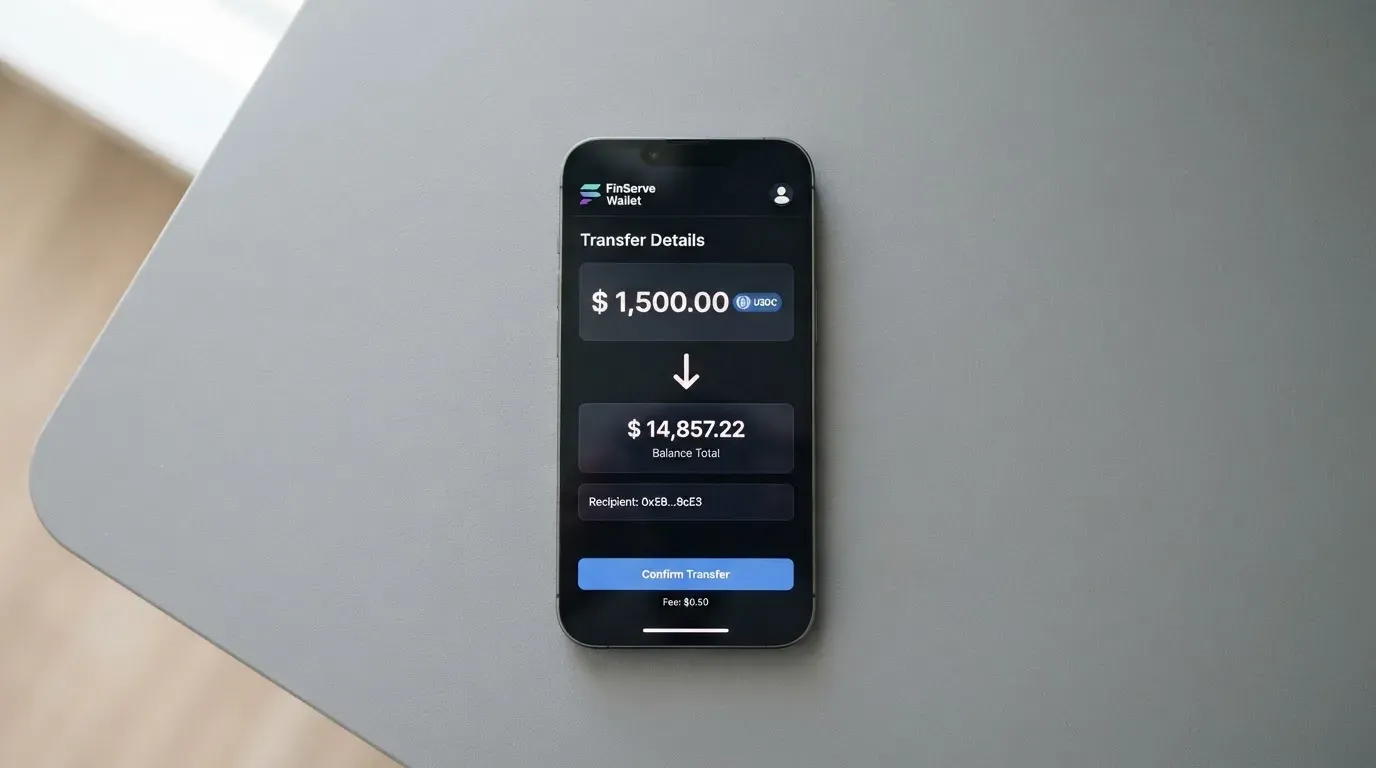
Funding works in two ways. The first is an internal transfer from your main Pionex account, in the app under Wallet > Card > Deposit > Transfer, or on web under Card > Personal Card > Transfer, with the source set to the Primary Account. The second is an external USDT deposit from a wallet you control, sent into the card account. Pionex does not name the blockchain networks it accepts for the external deposit, and there is no minimum top-up and no deposit fee listed on the Visa fee schedule or the Mastercard article. Network fees for the deposit itself, the gas, are paid on the blockchain, not by Pionex, and the rate depends on the network and the time of day.
The reverse path is just as important. You cannot send crypto on-chain from the card or to another bank card; the funds have to go back to your Primary Account first, through the same transfer screen. From there you withdraw the way you normally would from Pionex. The fee for the card-to-Primary transfer is not stated. Some balances cannot be moved into the card at all, including the principal of the Growth Fund and any Futures Bonus, so the card does not give you a way to spend those balances directly.
There is one consequence that catches people out. If the card account goes negative, for example because a merchant finalises a higher amount than the authorisation, the platform restricts crypto withdrawals from your main account until the card balance is repaid. The card itself is a debit card, so in normal use the balance cannot go negative, but holds and timing differences make it possible.
If a card is closed or sits inactive, the balance stays in the card account and is moved by the same transfer guide. Deletion and reapplication are handled through a form, not automatically.
Paying with it every day
In the wallet, the card behaves like any tokenised debit card. Apple Pay and Google Pay are supported, so you can add the virtual card to a phone and pay contactless where the merchant takes either wallet. Samsung Pay is not supported. There are restricted-merchant notices for both Visa and Mastercard, though the exact merchant categories blocked on the Pionex card are not listed in the public card pages, and whether gambling (MCC 7995) is blocked is not stated.
Inside the Pionex app the card lives under Wallet > Card, and on web the same screens are mirrored. The app store ratings and the platforms supported are not stated on the card pages, so I cannot tell you whether the app itself has a strong or weak record with users.
When something goes wrong, the disputes process is the same as a bank-issued card, with two Pionex-specific twists. A normal refund clears in 3 to 30 days, is released automatically and support cannot speed it up. A pre-authorisation hold, the kind a hotel or rental car places, releases within 7 business days after the merchant finalises. VAT refunds on cross-border shopping take 3 to 5 business days, occasionally a few weeks. The transaction fee is returned only when the refund status is “Payment Reversal”, not on every refund.
The Visa dispute path is more expensive than a normal chargeback. Filing an appeal costs 50 USDT per case, paid regardless of the outcome. If Pionex loses the arbitration it adds 600 USDT, and at least 650 USDT has to be available in the main account as a temporary deposit while the case is open. If a payment shows as failed but you were still charged, the right move is to ask the merchant for a refund first and then hand Pionex support the acquirer reference number, or ARN.
You can freeze the card in the app, under More > Freeze, and the freeze is immediate. The same screen unfreezes it. A freeze triggered by risk control can only be lifted by Customer Support. Security Authentication is required to view card details in the app and at checkout, and you can switch payment SMS codes to in-app authorisation. Freezing the card does not cancel subscriptions that already have your card details, so recurring payments you no longer want need to be cancelled at the merchant.
What can go wrong
The card is custodial. The funds sit in a card account inside the Pionex exchange account, which means you are trusting the platform with your USDT until the moment you spend. If Pionex has a bad day, your card balance goes with it.
The biggest concrete issue is reliability. Pionex cancelled inactive or rarely used cards in batches between August and September 2026, in some cases without notice. Once cancelled, the cards cannot be reactivated and you cannot reapply; the balance stays in the card account and is moved back through the same transfer guide. The official reasoning was non-use, but the practical effect is that the platform decided, on its own, that your card was not worth keeping open.
The exchange itself has a weak public record. On Trustpilot, Pionex sits at 2.5/5 from about 600 reviews, with 124 of those written in the last 12 months. The themes are frozen withdrawals after profitable trades, account closure with refunds scheduled months out, and cards that were charged for transactions the merchant later declined with no refund. Pionex’s company replies point users at the risk team, which is the same team that would handle a card freeze. Coin Bureau reviewed the platform at 2.3/5 in August 2025 and listed the same withdrawal complaints. These are user reports, not findings, and they apply to the exchange more than to the card, but the card sits on top of the exchange.
The issuer bank is not named. Pionex describes the Mastercard programme as a BIN programme, and help articles refer some Mastercards to a “Dogpay channel (BIN 5371)” with a note that those cards cannot pay merchants in South Africa. Pionex’s company registration, jurisdiction and the licences it holds are not stated in the card articles, which is unusual for a card product. A third-party review reached the same conclusion: the issuer bank and licences are not named, and the only sources I could find are aggregator pages, not Pionex itself.
Security is the usual exchange-account fare: instant freeze, app-based 2FA, 3-D Secure at checkout, tokenised wallets. There is no published insurance or safeguarding scheme, and the help pages do not list a 2FA app specifically. If the platform is hacked, there is no fund-protection backstop to claim against.
Help is named only as “Pionex Customer Support”. The card articles do not list chat, email or hours. The help center itself is available in English, German, Russian, Simplified Chinese, Spanish and Traditional Chinese, so a Russian-language help center does exist if that matters to you.
What to take instead
The Pionex card is not the only USDT-funded card on the market, and three alternatives do parts of what it does better, depending on what you care about.
Bybit Card (6.0/10) is the closest comparison. It draws on a Funding Account and a Flexible Easy Earn balance, fiat first, and tops up with crypto if fiat runs out. Supported coins include USDT, USDC, BTC, ETH, XRP and a token called GRAM, with a default priority order you can change. Cashback tiers go from 2% (Base) to 10% (Infinite), and from 5 October 2026 only crypto-funded transactions earn the points or cashback; fiat-funded spending does not. Regions are listed: Argentina, AIFC (Kazakhstan), Georgia, Kazakhstan, Australia, Mexico, Brazil, Peru and Asia Pacific. The card page says “This product is not meant for European Economic Area customers. All European Economic Area customer participation is strictly prohibited.” If you are in Latin America or Central Asia, Bybit covers more of what the Pionex card does not.
Coinbase Card (6.4/10) is the US-only option. It is available in all US states except Hawaii, runs on Visa, and spends either cash or crypto with the conversion done at the point of payment. There are no Coinbase transaction fees and no annual fees, though a spread applies at conversion. Optional crypto rewards are US-only and the rate is shown in the app. The Coinbase Card is a fit for US residents who want a card tied to a US-regulated exchange, and is unavailable elsewhere.
OKX (6.2/10) takes a different approach with a euro Mastercard debit card linked to OKX Pay, launched in the EU plus Norway at the end of January 2026, with Iceland and Liechtenstein excluded. Conversion is to euro at the point of purchase, and the only supported balances are USDC and USDG. Cashback is paid only on USDG purchases; USDC earns none. The conversion spread is 0.1% per a May 2026 explainer, against 0.4% in the launch press release, which means the fee is genuinely in flux. If you are in the EU and hold stablecoins, OKX is the most directly comparable product.
A side-by-side at a glance:
| Card | Score | Networks | Region | Currencies | Top-up model |
|---|---|---|---|---|---|
| Pionex | 4.8/10 | Visa or Mastercard | KYC country, no public list | USDT only | Internal transfer or external USDT |
| Bybit | 6.0/10 | Mastercard and Visa, varies by region | Listed regions, EEA not served | USD, ARS, MXN, BRL, PEN and more | Funding Account and Easy Earn, fiat first |
| Coinbase | 6.4/10 | Visa | US only, all states except Hawaii | USD | Bank link or Coinbase crypto balance |
| OKX | 6.2/10 | Mastercard | EU plus Norway, Iceland and Liechtenstein excluded | USDC and USDG | OKX Pay balance |
Who I would recommend it to
The Pionex card is worth the time it takes to apply if you tick a short list of boxes. You already keep USDT on Pionex from bot trading or from sitting in the 5% APY balance. You are happy with a virtual card and you can add it to Apple Pay or Google Pay for in-store spend. You do not need a physical card today, or you are content to wait for the Visa rollout to reach your region. You do not need an ATM, or you are on Visa and can live with a 2% fee. You are not trying to spend at merchants in the eight declined jurisdictions. You are inside one of the regions where Pionex actually serves customers, and you have confirmed that on the application screen.
If you tick those boxes, the card is a clean way to spend a USDT balance: 1% on Visa, 0% on fiat-to-crypto conversion, 1% cashback on eligible purchases, 5% APY on the idle balance, and no annual or inactivity fees.
If you do not tick those boxes, the card is the wrong tool. The Pionex card is a poor choice if you live in a restricted region, if you need a physical card today, if you rely on ATM cash, if you want a normal debit experience that is not tied to a USDT balance, or if the platform’s reliability record makes you uneasy. In any of those cases, a fiat-funded card from a larger exchange, or a non-crypto debit card, is the simpler answer.
The honest summary is that the Pionex card does one thing well and several things not at all, and the 4.8 score reflects that mix.
Frequently asked questions
What is the Pionex card?
The Pionex card is a virtual Visa or Mastercard debit card that spends a USDT balance held inside your Pionex account. It is issued by a bank Pionex does not name, and for the moment only virtual cards are being issued, with the physical Visa being rolled out in phases.
How does the Pionex card work?
You move USDT from your main Pionex account to the card account, and the card spends that balance as USD on a 1:1 basis with USDT. At payment time, the card charges you 1% on Visa or up to 3.5% on Mastercard, and the cashback is credited in real time at 1% on eligible purchases.
Is Pionex a bank?
Pionex is a crypto exchange, not a bank. It runs a card programme through an unnamed issuer bank, which is a different role from being a bank itself, and the platform’s own articles do not list the licences Pionex itself holds.
Who owns Pionex?
Pionex’s ownership, company registration and licences are not stated on the card pages or the public articles I could read. Third-party pages repeat the same gap, so there is no public answer from Pionex itself.
Is the Pionex card available in my country?
Availability is decided by the country you pass KYC in, and Pionex does not publish a country list. The application page inside the app shows your KYC country and the card type you are offered, which is the only reliable check; aggregator pages suggest availability in the UAE, South Africa, Malaysia, Nigeria and Australia, with the US and Canada not open.
How do I get a Pionex card?
You apply in the app under Wallet > Card > Apply Now, complete KYC Level 2, hold account assets above the threshold shown on the page, and wait for the review, which usually comes back within an hour.
Does the Pionex card require KYC?
Yes. The card needs KYC Level 2 in addition to the application itself; the eligibility threshold is shown on the application page and is a check, not a fee.
How do I top up the Pionex card?
You transfer USDT from your main Pionex account to the card account in the app under Wallet > Card > Deposit > Transfer, or deposit USDT from an external wallet. Fiat top-up is not supported, and the supported blockchain networks for external deposits are not named on the card pages.
How do I add the Pionex card to Apple Wallet?
You add the virtual card through the Pionex app to Apple Pay or Google Pay, and the wallet tokenises the card so you can pay contactless in stores. Samsung Pay is not supported, and the physical card is rolling out in phases, separately from the wallet tokenisation.
Is the Pionex card safe?
The card is custodial, so the USDT sits with Pionex until you spend it, and the exchange has a weak public record with frozen withdrawals reported on Trustpilot. The platform also cancelled inactive cards in batches in August and September 2026, and the issuing bank is not named, which means there is no third-party backstop to claim against if the platform has a bad day.
Exchange cards – cryptocardsranked
Content created by the «cryptocardsranked» team