
SharPay review: a Mastercard with Apple Pay, priced on the expensive side
 Available in US
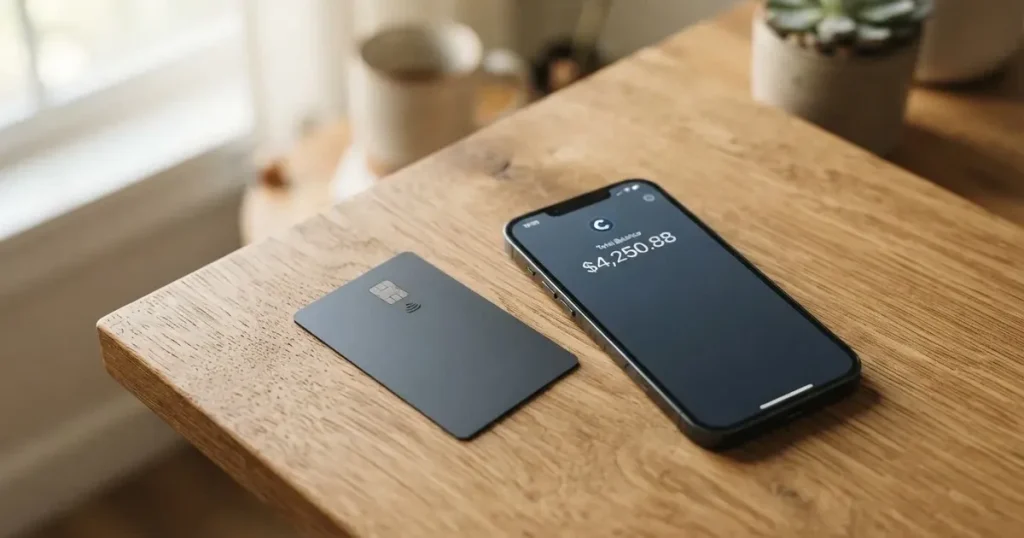
The SharPay card is a Mastercard debit card that spends from a balance you load yourself — in euros or in crypto such as USDT, USDC, BTC, ETH, XRP, LTC and BCH, and the card’s public pages also list DAI and TUSD as available assets. It comes as a virtual card you get the moment you order and as a plastic one that arrives in about 15 working days, it works with Google Pay and Apple Pay, and it can be used for contactless payments and ATM withdrawals. Behind it sit three named companies: GTM Exchange Ltd designs and operates the site and app from Cyprus, the card itself is issued by UAB Walletto in Lithuania under Bank of Lithuania e-money licence no. 33, and payments run through SPEKA Payments Corp in Canada under FINTRAC MSB M22046940.
Here is the blunt version: this is not the cheapest card in the category, and it is not aimed at EU residents. It scores 5.9 out of 10. It is aimed at non-EU residents who want a Mastercard that works with Apple Pay and want to spend from a crypto balance. If your problem is “I cannot get an ordinary bank card and I want something that works in shops”, this is a plausible answer to look at. If your problem is “I want the cheapest way to hold euros”, it is not.
*Conditions described here are current as of October 28, 2026.*
Verdict: 5.9 out of 10
| Criterion | Mark | Why |
|---|---|---|
| Who can get it | 5 / 10 | The rule is by residence, restricted and prohibited countries are closed off, and crypto services are not for EU residents; the number of countries covered is not disclosed |
| Cost | 3 / 10 | Opening a payment account costs 10 EUR, issuing the card 1 EUR, card service 3 EUR; loading the card is 2.00 EUR plus 1.99%, and the FX mark-up is 2.99% |
| Top-up options | 6 / 10 | EUR, USDT, USDC, BTC, ETH, XRP, LTC, BCH, also DAI and TUSD; networks are not named in the FAQ; topping up USDC through Mastercard/VISA costs 4% |
| Reliability and complaints | 8 / 10 | The card is issued by UAB Walletto (Lithuania, Bank of Lithuania licence no. 33) and payments are processed by SPEKA Payments Corp (FINTRAC MSB M22046940); no complaints or reviews were found |
| Everyday use | 9 / 10 | Virtual card available immediately after ordering, physical card in 15 working days, Google Pay and Apple Pay, ATM withdrawals possible |
| Total | 5.9 / 10 |
The single heaviest mark is Cost, at 3 out of 10, and it is hard to argue around. Every card has an opening or issuance fee somewhere in this category; SharPay stacks a payment-account opening charge of 10 EUR, a 1 EUR card issuing fee and 3 EUR of card service on top. Load the card and you pay 2.00 EUR plus 1.99%. Spend in a currency other than euros and you pay a 2.99% mark-up. Those are the published numbers and they add up quickly for someone who pays for coffee.
Reliability scores well at 8, which surprises people who have never heard of the brand. The reason is structural rather than a track record: the card is issued by an institution that holds a Bank of Lithuania e-money licence, and the payments side is a company registered as a FINTRAC money services business. There is no pile of user reviews here either way — I looked for complaints and found none, which is a weak signal rather than a strong one, and I will come back to that below.
Everyday use is the strongest score at 9. Virtual card on order, plastic in about 15 working days, both wallets, contactless, ATM. For the reader who is choosing between “a card that technically exists” and “a card I can hand over at a shop tomorrow”, this scores well because the answer is the first one.
Top-up options sit in the middle at 6. The asset list is broad and includes the majors, but the FAQ does not name the networks, which matters more than it sounds — networks are where mistakes cost money — and buying USDC with a card through Mastercard/VISA costs 4%.
Who can get it, at 5, is where the card’s real audience shows through: residents of restricted and prohibited countries are excluded, crypto services are not for EU residents, and the number of countries actually served is not disclosed. So the reader this is built for is a non-EU resident who wants a Mastercard with Apple Pay.
Who they will give the card to
The rule is by residence, and the wording is unusually direct: you must not be a resident of a restricted or prohibited country. The prohibited list — it comes from a SPEKA Payments Corp PDF, not from the marketing pages — includes Russia and Belarus, and also Crimea, DNR, LNR, Kherson, Zaporizhzhia, Iran, Cuba and Syria among others. On top of that, crypto services are not to EU residents.
That last point is the one that surprises people who arrive from a search for “best crypto card in Europe”. EU residents cannot use the crypto side here. You can read the eligibility section in the way that makes sense for you: it is not a European retail offer, and if you live in the EU you should stop reading and look elsewhere.
Documentation depends on your citizenship rather than only on where you live. Citizens of countries outside the EU must verify with a foreign passport. EU citizens can use a passport or an identity card. There is no separate citizenship rule stated beyond that.
One thing that is not stated, and that I would want to know before spending an hour on the form: how many countries SharPay actually serves. The material in front of me says the number is not disclosed. That is not the same as “most countries”, and if you are outside Europe, North America and the usual crypto-friendly jurisdictions, you are left guessing until you try.
How to get it
The application is a three-part path, and the second part is where the waiting happens.
First you register with a phone number, email and password. Then you do identity verification at level 1 or level 2. Level 1 comes after the standard verification. Level 2 is the one you need for fiat accounts and cards, and it involves an additional check that takes up to 5 days. Document review runs from 1 to 72 hours.
The documents are more demanding than the phrase “verification” suggests. You need a passport — full page, good quality, and cropped copies are rejected. You need bank statements in English. There is a questionnaire covering turnover, the source of your funds, and any PEP or US-person links. And there is a video selfie.
The video selfie is where a surprising number of applications die, so it is worth reading the rejection triggers. A video selfie taken with poor light, with a hat, with glasses or with filters is a reason for rejection, and so are cropped copies and documents that are not a passport. All four are avoidable and all four are common.
Then you order the card in the app. You can have up to 5 cards per account. Age is not stated on the pages in front of me, which is unusual but not unusual enough to worry about — the general rule in this category is that prepaid and debit cards go to adults.
The virtual card is active immediately after ordering. The plastic card is typically shipped within 15 working days, though the times vary by destination. Countries served and delivery cost are not stated. If the virtual card is lost, replacement is 1.00 EUR; what a physical replacement costs is not stated.
The card is a Mastercard debit, described as a “Flex Mastercard Debit card” issued by UAB Walletto. Its currency is EUR — the fee schedule is in euros — and there are no tiers or plans: pricing is listed per product rather than as packages.
Fees: what it really costs
Here is every fee I could find on the card’s own pricing pages.
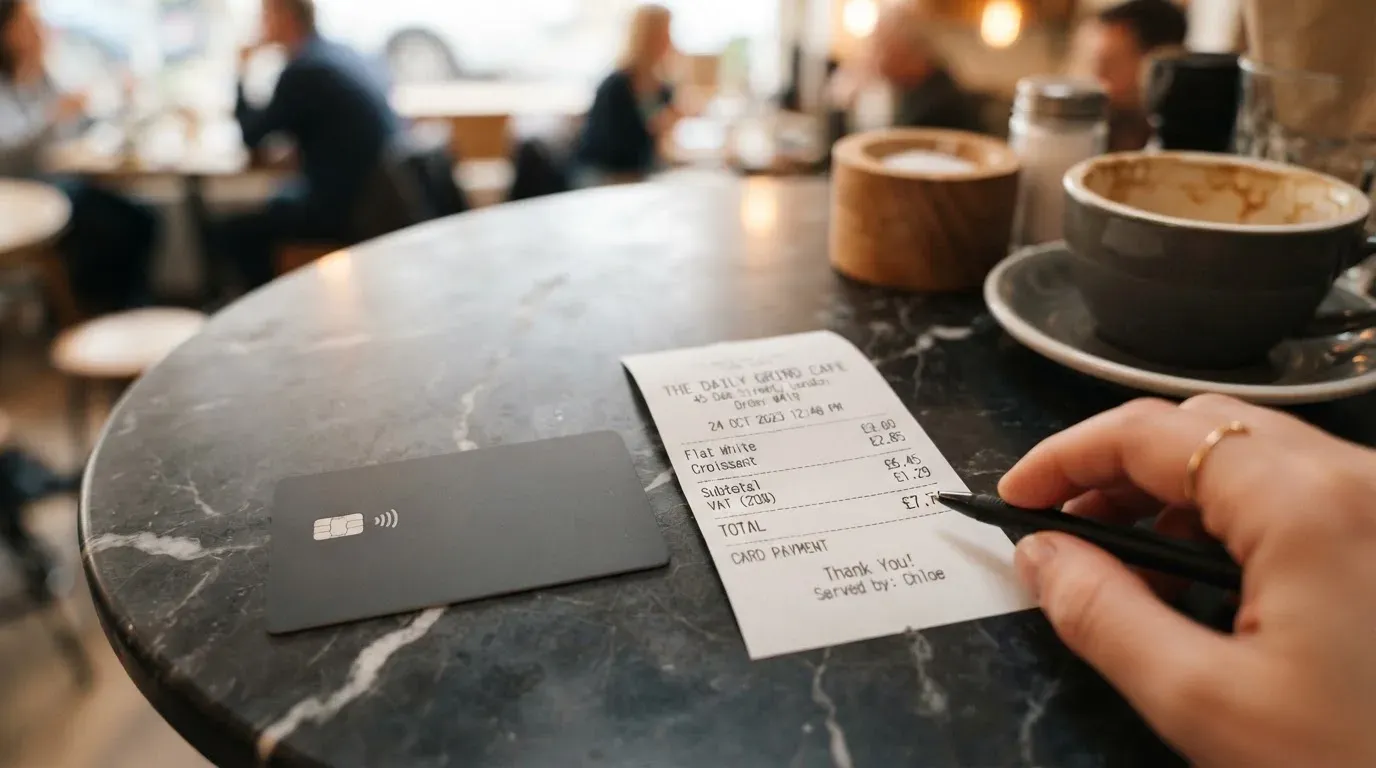
| Fee or limit | Value |
|---|---|
| Payment account opening | 10 EUR |
| Crypto account | Free |
| Card issuing | 1.00 EUR |
| Card service | 3.00 EUR per card per month |
| Virtual card replacement | 1.00 EUR |
| Chargeback handling | 40 EUR |
| Card load (card-to-card) | 2.00 EUR + 1.99% |
| FX mark-up on a personal card | 2.99% (1.00% on payments) |
| Purchase fees | shown as “-” |
| USDC deposit via Mastercard/VISA | 4% |
| USDC withdrawal via Mastercard/VISA | 3% |
| Other coins | “network fee” |
| Card POS and e-commerce limit | 10,000 EUR daily, 30,000 EUR monthly |
| SEPA crypto transactions | max 14,500 EUR/day |
| Crypto purchases by card | monthly limits, amounts shown in the app |
ATM withdrawals are possible — the card materials say as much — but no ATM fee or cash allowance is listed on the fee page. Treat the cost of getting cash as unknown rather than as zero.
Two details deserve a second look. The first is that the FX mark-up is stated as 2.99% on a personal card and 1.00% on payments; the wording does not cleanly separate two products, and if you live outside the euro area that ambiguity is the difference between a 3% cost and a 1% cost on every foreign purchase. The second is the purchase-fee line showing as “-”, which reads like “nothing here” rather than like a described rule. For non-euro spending beyond the stated mark-up, the spread is not stated.
Now, three everyday payments, with the published numbers attached.
A coffee in your own country, say 4 EUR, on a card funded from euros: nothing in the fee table points at a per-payment charge on the euro side. The load fee is what you paid to get the balance there in the first place — 2.00 EUR plus 1.99% — so that cost is amortised across everything you spend, and it is paid once per load.
A 30 EUR purchase in a shop in a non-euro country: the 2.99% mark-up applies, which is roughly 0.90 EUR on that purchase, on top of whatever spread sits inside the conversion rate. The spread is not stated.
A 200 EUR online purchase in a currency your balance does not hold: the same 2.99% mark-up plus the same unstated spread. If the purchase is declined, note that a declined authorisation can leave a hold on funds that stays for several days — up to seven is typical in this category — so a failed payment can tie up money that was already yours.
The monthly 3 EUR card service fee is the quiet one. It applies per card, and if you take the card’s own claim of up to 5 cards per account seriously, that is 15 EUR a month in card service alone, before a single transaction. Nobody needs five cards; the point is that the fee is per card, not per account.
How to Top up the card
Supported currencies are EUR, USDT, USDC, BTC, ETH, XRP, LTC and BCH. The price page also lists DAI and TUSD. What the FAQ does not do is name the networks — it tells you to select the currency and network, and leaves the choice to you. That is the single most consequential gap in this section of the card’s documentation, for reasons I will come back to under risks.
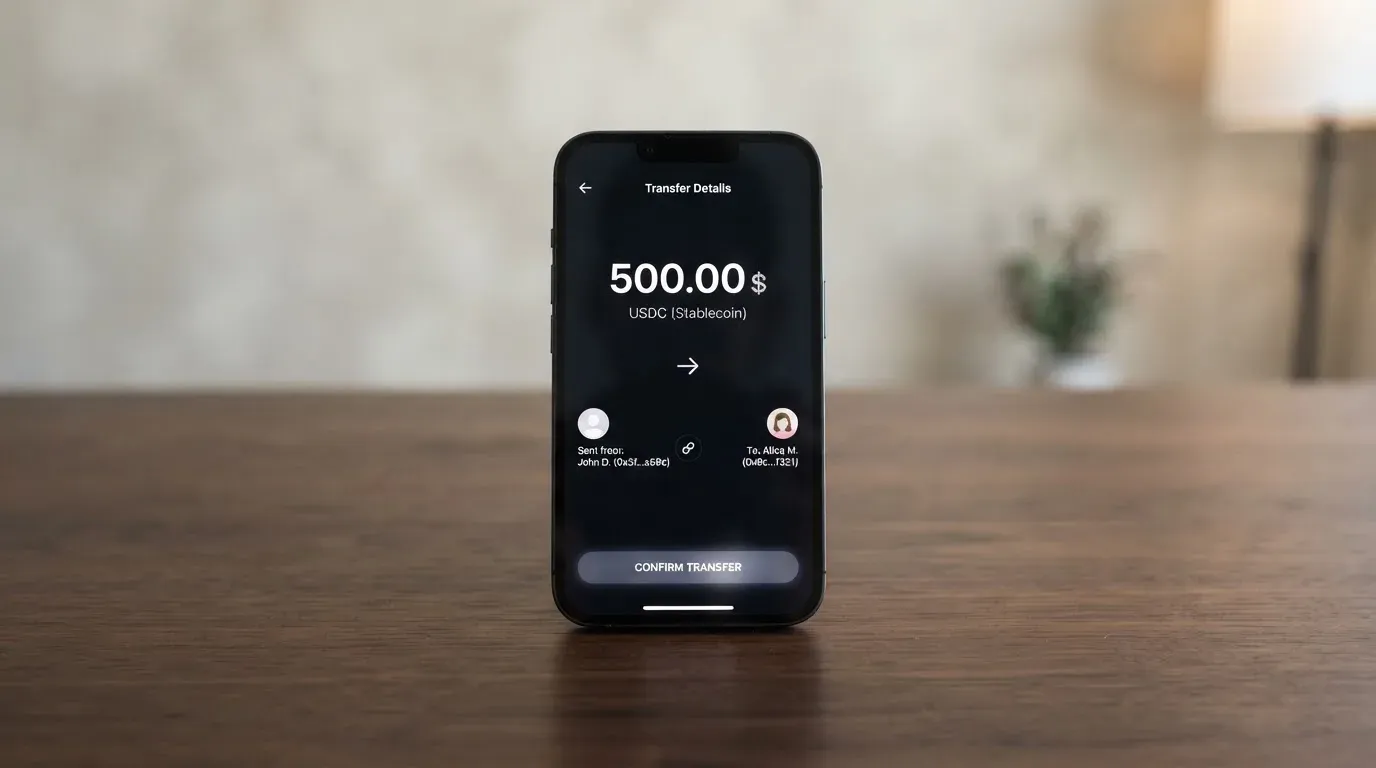
XRP and Stellar transfers need a memo or tag. Get that wrong and the deposit may not credit.
The minimum top-up amount is not listed on the page; you are told to read it in the minimum top-up amount input field in the app. That is a reasonable design, honestly — a live figure beats a static one — but it does mean the answer only exists after you sign up.
Loading the card card-to-card costs 2.00 EUR plus 1.99%. Crypto in another currency is “automatically exchanged at the system exchange rate”, which is the sort of phrase that deserves a second look: the rate itself is not stated on the pages in front of me.
Withdrawals go out to SEPA, to cards, to e-wallets and to crypto, processed “from 1 to 60 minutes”. Card transfers only work if the card was previously topped up, which is a deliberate anti-money-laundering pattern rather than an obstacle. Closing the account costs 25.00 EUR for personal accounts and 100.00 EUR for business accounts, and what happens to the remaining balance on closure is not stated.
Paying with it every day
Contactless works. Google Pay and Apple Pay both work. The card currency is EUR, but the card’s own line is that it opens in EUR and you can purchase in any currency you wish.
Merchant categories are restricted. The SPEKA prohibited-activities list covers illegal gambling services — including illegal online casinos and sports betting — adult content and similar categories. Gambling in general sits under MCC 7995, and many issuers block specific categories on specific cards by policy rather than by law, with the blocked list differing by issuer. If gambling is part of what you want the card for, this is a place where it will not work.
Apple Pay deserves a note because it is one of the reasons to pick this card. When you add the card to Apple Wallet, the card number is replaced by a device-specific Device Account Number held in the Secure Element on your phone, never on Apple’s servers, and each payment uses a one-time dynamic security code. The issuer can restrict that tokenised number — blocking it on magnetic stripe, phone or website use — so losing your phone is not the same as losing the card number.
There are no rewards on the pages I read. No cashback rate is stated, and the same is true of most cards in this category, so nobody is disadvantaged here; I mention it only because people ask.
The app is the SharPay Wallet, on Google Play and the Apple App Store. Store ratings and the number of ratings were not shown in the text I read on 2026-10-20, so I cannot give you a rating. The homepage claims “15k +” users, which is a marketing figure with no date attached and no obvious way to verify it.
If a payment goes wrong: chargeback handling costs 40 EUR, which is steep enough that you would think twice about disputing a small purchase. A duplicate debit during a payment is refunded automatically, according to the card’s materials. A refund policy PDF is linked from the site but the time frames in it are not stated on the page itself.
What can go wrong
The first thing to understand is what kind of wallet this is. SharPay is custodial — the payment and e-money account sits with the provider, which holds the credentials. That is the model nearly every card in this category uses, and it comes with a specific set of risks: you must trust the provider completely, because control of the crypto belongs to whoever holds the private key. If someone obtains a seed phrase — typically 12 to 24 words, unencrypted, and enough to restore a wallet and spend its funds — there is no built-in recovery, because crypto transfers are essentially irreversible and no network can freeze or return them.
Custodial platforms have a real record of failure: Mt. Gox with about US$350 million reported stolen between 2011 and 2014, Coincheck with about US$400 million in 2018, and Ronin Network with US$625 million in 2022. Holding funds with a custodian carries counterparty risk and hack risk, and that is a statement about the category, not an accusation about this provider.
The SharPay-specific risks are these.
Network confusion is the one I would watch. The FAQ does not name the networks, and blockchain transfers are irreversible. A deposit sent on a network the provider does not support, or to an address belonging to another network, can be lost entirely, or need manual support recovery with no guarantee of success. A related trap: ERC-20 fees are paid only in ETH, so a wallet holding USDT with no ETH cannot send it. Tron fees are paid through bandwidth and energy resources, often burning TRX. And “USDC over TRC20” is not a native option, because Circle stopped supporting USDC on Tron in February 2024 — a piece of knowledge that could save you a transfer fee’s worth of confusion.
Wrong-amount tops-ups are not mentioned as a risk because the card simply does not publish the minimum. That is fine until you send a small amount.
Stablecoin de-pegging is a category risk you inherit. Stablecoins aim to hold a stable value, but despite the name, stablecoins are not necessarily stable: TerraUSD collapsed in May 2022, and USDC temporarily lost its peg in March 2023 during the US banking crisis. USDT and USDC are the two that dominate — the BIS put about 90% of stablecoin market capitalisation in these two as of July 2025 — but dominance is not stability.
Card acceptance can be rougher than expected. Merchants can look up the BIN and see which institution and country issued the card, and may apply extra scrutiny when the issuer country differs from the billing address; this is why a card issued in one country can look foreign to a shop in another. Some merchants decline prepaid or foreign BINs for exactly that reason. Address Verification Service, which compares the numeric parts of the billing address you type with issuer records, is mainly offered in the US, Canada and the UK and is generally unavailable for foreign-issued cards, which can cause declines. A declined authorisation may also leave a hold on funds for several days.
Compliance risk is the quiet one. The card materials say proof of funds may be requested, and that is a normal thing for a regulated business to do, but it can arrive after you have started relying on the card. The same is true of sanctions screening: nationality is recorded and screened separately from residence because sanctions screening and issuer risk policy often apply to citizenship and country of birth as well as country of address. If your circumstances change, your access can change with them.
Account closure is priced at 25.00 EUR personal, 100.00 EUR business, with the balance treatment not stated. That is worth knowing before you ever need it.
What is genuinely absent is a complaints record — and I want to be precise about why. There are no complaints or reviews to be had: a Trustpilot search on 2026-10-20 returned only Shieldpay and b-sharpe, no SharPay page, and a dedicated complaints search returned only unrelated brands like Shop Pay and OnePay. No complaint themes were found, and no dated regulatory events were found. That is an absence of data, not a clean bill of health. A card with no users posting complaints usually means the user base is small, not that nothing goes wrong.
The wider category has a history worth knowing about: Visa terminated its global agreements with FTX in November 2022 and the FTX US debit card programme was wound down; WaveCrest, a Visa issuer that supplied crypto card brands, was suspended by Visa in Europe in 2018, closing all WaveCrest-issued programmes. Programme closures typically give notice, then stop spending and loading, then ask users to withdraw remaining balances. So the practical point is to keep only what you need on a crypto card, and to know that your balance is a claim on a company, not a deposit in a bank.
Which brings up the regulation, briefly. The card is issued by UAB Walletto under Bank of Lithuania e-money licence no. 33, and crypto services run under SPEKA Payments Corp, FINTRAC MSB M22046940, outside the EU and not to EU residents. An EU e-money institution can issue e-money, payment cards and wallets but cannot lend, and it may serve the whole EU/EEA from a licence granted in one member state — a model this card does not operate under. E-money institutions must safeguard customer funds by segregating them in dedicated accounts or insuring them, and such funds are not bank deposits and may not be covered by deposit guarantee schemes. Safeguarding or insurance here is not stated, so I would not assume any. If you are in the EU and MiCA matters to you: the regulation took legal effect in June 2023, its rules on stablecoins applied from 30 June 2024 and the remaining provisions from 30 December 2024, the transitional period for existing providers runs until 1 July 2026 or until a MiCA authorisation is granted or refused, and ESMA keeps an interim register of authorised CASPs you can check. A card is a payment service regulated separately from the crypto side, so a crypto card often rests on two licences at once.
One more thing about safety, since it comes up in every search: a chargeback is a refund ordered by the issuer to settle a dispute, with reason codes such as fraud, duplicate billing or goods not received. Under 3-D Secure, liability for fraudulent online payments can shift from the merchant to your bank — or, per critics, to you. SharPay supports 3-D Secure 2.0, and OTP or 2FA codes arrive at login, with cards blockable and unblockable in the app. Those are the standard safeguards, and they are the same safeguards everyone in this category offers.
What to take instead
All four cards below spend from a balance you load, and all four publish their fees. I have included them because the SharPay cost score of 3 out of 10 is the number most worth arguing with, and you cannot argue with it well while holding only one card in your head.
RedotPay scores 6.9 out of 10. It runs Visa debit, with a USD card and an HKD card. Its restriction lists are worded more bluntly than SharPay’s: KYC is refused for citizens of listed countries including Russia, Belarus, Ukraine, Serbia, Croatia, Cuba, Iran, Syria, North Korea, mainland China and the United States, with the stated rationale that restrictions are “based on local regulations and sanction policies—not on individuals”. A separate card-issuance list dated August 28, 2026, covering 47 places, adds India, Indonesia, Morocco, Nepal, Singapore and Turkey, and says residents of those areas are ineligible for both virtual and physical cards and cannot be billing addresses. Georgia, Armenia, Kazakhstan and the UAE are on neither list. Costs: virtual card application 10.00 USD, physical 100.00 USD and not refundable once paid, virtual replacement 5.00 USD first then 10.00 USD, and account maintenance waived with no monthly or annual fee and no inactivity fee mentioned. A paid tier, RedotPay Pro, is 12.90 USD monthly or 129.00 USD annual. Transaction fee is 1.00%, waived on default-currency transactions, 1.20% on non-default currency, with small-authorisation and declined-transaction charges after free allowances. Funding is on-chain crypto deposit or buying crypto by credit card in the app; USDT-TRC20 minimum deposit is 1 USDT after network fees; deposit to card balance is free. There is a 5 USD welcome reward usable only on spending, valid 30 days, and it cannot be used toward the issuance fee. SharPay is cheaper to open and more expensive to use; RedotPay is the reverse, and the US being on its KYC list disqualifies a large group of readers outright.
Wirex scores 6.7 out of 10. Availability of physical and virtual cards depends on your region, with fees published for the UK, EEA, APAC, Singapore, Australia and “Other”, and delivery fees listed for the UK, EEA, Hong Kong, Singapore, Australia, New Zealand, the Philippines and Taiwan; the homepage claims a service area of “Worldwide (130+ countries)”. Cards are Visa or Mastercard depending on region — the Singapore terms say Visa — with one physical and one virtual card at a time, and a metal Visa Signature debit card at an order fee of 45 GBP on the UK page with free DHL Express, “only 45 EUR” as a delivery fee elsewhere. Card issuance is free in the listed regions, and the card page claims no annual or foreign exchange fees, while the fee page says the exchange rate varies by pair and liquidity and is shown in the app before you confirm. A one-off 30 GBP administrative fee applies to accounts violating the General Terms. Top-up is free by SEPA for euros, Faster Payments for sterling, ACH for the US and PIX for Brazil. Rewards are the strongest in this group: cryptoback in WXT at Standard 0.5%, Premium 3% and Elite up to 8%, excluding ATM withdrawals, cash advances, crypto purchases, gambling and refunds. Singapore terms state that cash withdrawals are not permitted there.
Bitpanda scores 6.5 out of 10. It is the narrowest: a verified Bitpanda account and residence in a euro-area country are required, and users verified via “Bankident” cannot order. The card is a physical Visa debit in EUR, one active card at a time, with account opening and monthly costs free and the first shipment free; reissue is EUR 5.90, or EUR 9.90 for lost or stolen per the FAQ, and each additional physical card is EUR 10. The non-euro FX fee is EUR 0 but “VISA mark-up fees apply”, and the crypto conversion spread is not stated. Spending draws on a chosen main asset and optional fallback — listed cryptocurrencies, precious metals or EUR — converted to EUR at payment, with a minimum payment of EUR 1 and Crypto Indices excluded. Cashback is stated inconsistently: the body text says 1% on crypto spending while the page summary says “up to 2%”, and fiat, stocks, metals and stablecoins are excluded. For a euro-area reader with a Bitpanda account, it is the obvious pick; for everyone else it is not.
Where that leaves the comparison in practical terms:
- Cheapest to open: SharPay at 10 EUR plus 1 EUR issuance beats RedotPay’s 100 USD physical card fee, and Wirex’s issuance is free in its listed regions.
- Cheapest to spend repeatedly: Wirex, with no foreign exchange fee claimed and cryptoback on top.
- Cheapest to hold euros with a card already in hand: Bitpanda, where the monthly cost is zero.
- Most flexible crypto funding: SharPay’s asset list is the broadest of the four, at nine named currencies including EUR, with RedotPay close behind on-chain.
- Hardest eligibility: RedotPay, whose citizenship list removes the US, UK-adjacent jurisdictions and mainland China from the running.
Who I would recommend it to
I would recommend this card to a non-EU resident, outside the restricted and prohibited countries, who wants a Mastercard with Apple Pay and Google Pay, who already has crypto or stablecoins to convert from, and who is not going to be hurt by a 3 EUR monthly fee plus a 2.99% mark-up because their spending is mostly in one currency or modest in volume. The licensing structure gives you something to point at, the app does the ordinary things well, and the virtual card is usable the day you order it.
I would not recommend it as a first card if you are in the EU — the crypto side is closed to EU residents, and if you need euros with a card, Bitpanda or a plain bank account in your own country is a shorter path.
I would not recommend it to someone whose main worry is getting the cheapest possible use of euros. The cost mark of 3 out of 10 is honest, and if you are paying monthly in more than one currency the 2.99% mark-up does real work against you.
And I would not recommend it to anyone who intends to hold a balance on it for months. Custody means you are trusting a provider with money you cannot withdraw without their permission, the fee to close an account is 25 EUR personal, and the class of product has a documented history of programmes ending.
If you want a card built around spending from crypto, read the network question first. Ask which networks are supported for the asset you intend to send, and get a written answer before you transfer. On a card where the FAQ says “select the currency and network” without naming them, that one question is worth more than every fee on the schedule.
Frequently asked questions
What is the SharPay card?
It is a Mastercard debit card that spends from a balance you load yourself, in euros or from crypto. You get a virtual card immediately after ordering and a plastic card shipped in about 15 working days. The card is issued by UAB Walletto in Lithuania under Bank of Lithuania e-money licence no. 33, with payments processed by SPEKA Payments Corp in Canada. Contactless, Google Pay, Apple Pay and ATM withdrawals are supported.
Who owns SharPay?
Three companies are named on the card’s own pages. GTM Exchange Ltd, based in Cyprus, designs and operates the sharpay website and app. UAB Walletto, in Lithuania, issues the card under e-money licence no. 33. SPEKA Payments Corp, in Canada, handles payments under FINTRAC MSB M22046940. The brand sits on top of a licensed issuer rather than being a bank itself.
Is SharPay a bank?
No, not on the evidence of its public pages. An electronic money institution can issue e-money, payment cards and wallets but cannot lend, and e-money funds must be safeguarded by segregation or insurance rather than held as bank deposits. SharPay describes a payment account and an e-money licence at the issuer level. Whether your balance is covered by a deposit guarantee scheme is not stated, so do not assume it is.
Which countries can I use it in?
Residence is the rule. You must not be a resident of a restricted or prohibited country, and the prohibited list includes Russia, Belarus, Iran, Cuba and Syria among others, along with several Ukrainian regions. Crypto services are not to EU residents. Citizens of non-EU countries verify with a foreign passport; EU citizens with a passport or ID card. How many countries are actually served is not disclosed.
How much does the SharPay card cost?
Opening the payment account is 10 EUR, the crypto account is free, issuing the card is 1.00 EUR and card service is 3.00 EUR per card per month. Loading the card is 2.00 EUR plus 1.99%. The FX mark-up is 2.99% on a personal card, with 1.00% stated for payments. A virtual card replacement is 1.00 EUR and chargeback handling is 40 EUR. Closing the account is 25.00 EUR personal.
How do I top up the SharPay card?
You can load it in EUR, USDT, USDC, BTC, ETH, XRP, LTC or BCH, and the price page also lists DAI and TUSD. XRP and Stellar transfers need a memo or tag. Crypto in another currency is exchanged automatically at the system exchange rate. Transfers out go to SEPA, cards, e-wallets or crypto, processed from 1 to 60 minutes, with card transfers only possible after a previous top-up.
Does SharPay require KYC, and what do I need?
Yes. You need a passport — full page, good quality, no cropped copies — plus bank statements in English, a questionnaire covering turnover and source of funds and any PEP or US-person links, and a video selfie. Level 1 verification is followed by Level 2 for fiat accounts and cards, which involves an extra check of up to 5 days. Document review runs from 1 to 72 hours. Poor lighting, a hat, glasses or filters in the selfie are stated rejection reasons.
Is the SharPay card safe, and is it worth it?
Safe enough is not a claim I would make. It is custodial, with OTP or 2FA at login, cards blockable in the app and 3-D Secure 2.0 — standard safeguards. But your balance is a claim on a provider, not a deposit, safeguarding is not stated, and crypto transfers cannot be reversed. On value: it earns nothing back and costs 3 EUR a month, so it is worth it for access and Apple Pay, not for economics.
Can I use the SharPay card with Apple Pay?
Yes. The card materials state that Google Pay and Apple Pay both work. When you add the card to Apple Wallet, the card number is replaced by a device-specific number stored in the phone’s Secure Element rather than on Apple’s servers, and each payment uses a one-time dynamic code. The issuer can still restrict that token, for example blocking it on websites or magnetic stripe.
What are the limits and what is blocked?
POS and e-commerce purchases are capped at 10,000 EUR daily and 30,000 EUR monthly, SEPA crypto transactions at 14,500 EUR per day, and crypto purchases by card have monthly limits whose amounts appear in the app. ATM withdrawals are possible but no fee or allowance is listed. Blocked categories include illegal gambling services and adult content, under the SPEKA prohibited-activities list.
App and neobank cards – cryptocardsranked
Content created by the «cryptocardsranked» team