
SolCard scored 5.6 out of 10 — solid for Solana users spending a stable balance, risky as your only card
 Available in US
SolCard is a crypto-funded payment card in the USD, offered in two shapes: a virtual card you use by hand for online payments, and a Platinum physical card with contactless and mobile wallets. On paper it is aimed at people who hold stablecoins or crypto, want to spend that balance without touching an exchange, and — in the company’s own framing of who it serves — at Solana users topping up a dollar card from their own wallet. In practice the interesting question is not whether the card works, but what it costs you relative to what you give up: a 5% top-up fee on the virtual card, an unnamed issuing institution, and a public complaint record that includes cards closed while the balance was still inside.
I give it 5.6 out of 10. That is not a verdict on whether it is honest — it is a judgement about how much of the risk sits with you.
The conditions described here are current as of October 28, 2026.
Verdict: 5.6 out of 10
Here is how the score breaks down, criterion by criterion, and why.
| Criterion | Mark | Short reason |
|---|---|---|
| Who can get it | 8 / 10 | Accepted worldwide with “eligibility may vary by region”, but Hong Kong residents and sanctioned jurisdictions are excluded |
| Cost | 4 / 10 | Virtual card charges 5% plus USD 10 per new card; FX 1-2%. Platinum has 0% top-up and 0-1.5% FX, no subscription, but 10% of balance per month after 90 days idle |
| Top-up options | 6 / 10 | Stablecoins and crypto including SOL, USDC, ETH, BTC from any wallet; the networks themselves are not named |
| Reliability and complaints | 3 / 10 | Issuer not named; SC PAYMENTS LIMITED in Hong Kong is only the programme manager; Trustpilot 3.1 out of 5 with reports of stuck withdrawals and cards closed with funds |
| Everyday use | 7 / 10 | Virtual and physical Platinum cards, Apple Pay and Google Pay on Platinum only, ATM terms undisclosed; unofficially, physical cards are not being issued at the moment |
| Total | 5.6 / 10 | Weighted across the five criteria above |
The one criterion that pulls the score down hardest is reliability, and it is worth being blunt about why: when you cannot see who issued your card, you cannot easily tell who stands behind your balance when something goes wrong. The company named in the terms is a Hong Kong programme manager and describes itself as “not a bank”. The actual issuer is an unnamed licensed financial or e-money institution operating under a Visa licence. So the chain is: your money sits with SolCard, the card runs on a Visa licence held by someone whose name the public pages do not disclose, and the company you deal with is a Hong Kong entity.
Who this suits: you already hold stablecoins or crypto, mainly on Solana, you want to convert that into everyday spending without going through a bank, and you can treat the card as one instrument among several rather than your only way to pay.
Who it does not suit: anyone whose income arrives in fiat and depends on a card being reliably accepted every week; anyone whose country’s regulators or banks restrict crypto; anyone who cannot comfortably absorb a 5% top-up fee on small amounts; and anyone with very little money to lose while a withdrawal is stuck.
Will they give you the card?
Broadly yes. SolCard states acceptance worldwide and adds the caveat “eligibility may vary by region” — a phrase that does the work of leaving room without naming the regions. The terms draw two explicit lines: Hong Kong residents, domiciled or located users are excluded, and so are residents of countries under comprehensive UN, US, EU or UK sanctions, along with listed persons.
That exclusion list matters more than it looks. Sanctions screening in this industry is not only about where you live. Nationality and country of birth are frequently screened separately from your address, because that is what sanctions lists are built from. A card that accepts “worldwide” may still refuse you on a citizenship ground that has nothing to do with your address.
The company behind the terms is SC PAYMENTS LIMITED, Hong Kong, business registration number 78350827, at Unit 1603, 16/F, The L. Plaza, 367-375 Queen’s Road Central. Its role is programme manager and technology platform, and it says outright that it is “not a bank”. The issuer is described only as an unnamed licensed financial or e-money institution under a Visa licence.
How to get it
Two products sit under one name.
- Virtual card — for online use, with card details entered manually. Priced from USD 10 per new card, with a 5% plus USD 10 top-up fee, a USD 5,000 monthly spending limit, standard support, and no Apple Pay or Google Pay.
- Platinum — a physical card with contactless and Apple Pay and Google Pay included, a 0% top-up fee, no stated spending limit, FX 0-1.5%, and priority support.
On verification: the terms say identity verification “may be required for certain card tiers, features, or spending limits”. Documents, proof of address and an age requirement of 18+ appear; nothing beyond that is detailed. The tiers are not defined, and processing times and grounds for rejection are not stated either.
One more detail: the card currency is USD, implied by the pricing rather than stated outright. A foreign-exchange spread may apply when you spend in other currencies — that is the mechanism behind the FX percentages in the costs section below.
What the help centre and third-party reporting add, offered as unofficial and not confirmed by the card’s own pages: as of 11 August 2026 a help centre page said no physical cards are available “for now”, and that the virtual card is issued in about 18 seconds after a first deposit confirms. That contradicts the product page, which still advertises a Platinum physical card. The same unofficial source describes the virtual card as marketed without KYC and Platinum as requiring identity verification, and a Trustpilot review from July 2025 described physical cards with Apple Pay and Google Pay as requiring KYC. Treat that last one as a complaint from a customer, not as policy.
Fees: what SolCard really costs
The number that decides most cases is the virtual card’s top-up fee: 5% plus USD 10 for each new card. Add 1-2% on currency conversion and you are paying, at minimum, six percent of the amount plus a flat ten dollars every time you load the card. For small, frequent top-ups that ten dollars dominates.
Platinum is the cheaper half of the product on fees alone: 0% to top up, FX 0-1.5%, no stated limit, priority support. If you move meaningful amounts and want to pay by phone, Platinum is the version the pricing points at.
And then there is the dormancy line, which sits underneath both: no monthly fee while the account is active, but 10% of the balance per month after 90 days of inactivity.
| Item | Virtual | Platinum |
|---|---|---|
| Issuance / per new card | From USD 10 | Not stated separately |
| Top-up fee | 5% + USD 10 per new card | 0% |
| Monthly fee | None for active accounts | None for active accounts |
| FX rate / spread | 1-2% | 0-1.5% |
| Dormancy | 10% of balance per month after 90 days inactive | Same |
| Spending limit | USD 5,000 monthly | No limit stated |
| Apple Pay / Google Pay | Not available | Included |
| Support | Standard | Priority |
Two everyday payments, and which fees apply to each.
- A USD 40 online subscription on the virtual card. The 5% plus USD 10 top-up fee is charged on funding, not on the purchase, but it lands on you either way — so the effective cost of that USD 40 purchase is well above USD 40. The FX fee does not apply if the merchant charges in dollars.
- A EUR 25 café bill on Platinum. Here the 0-1.5% FX figure is what you pay, plus whatever network fee the card network or issuer adds. Nothing in the card’s public pages quantifies an ATM fee or a per-transaction handling charge — that piece is simply not stated.
On top-ups with digital assets, fees and a conversion spread apply. And note what is missing: ATM fees, per-transaction fees, and daily limits are not published on the pages I checked. The app is the place to look, and the app is not something I can read for you.
How to Top up
SolCard takes stablecoins and crypto — SOL, USDC, ETH and BTC are named — with “instant top-ups from any wallet”. The card’s own pages do not say which networks. That gap is worth sitting with for a second, because sending on the wrong chain is one of the few ways to lose money outright in this product: blockchain transfers are irreversible, and a deposit sent on a network the provider does not support, or to an address belonging to another network, can be lost or need manual recovery with no guarantee of success.
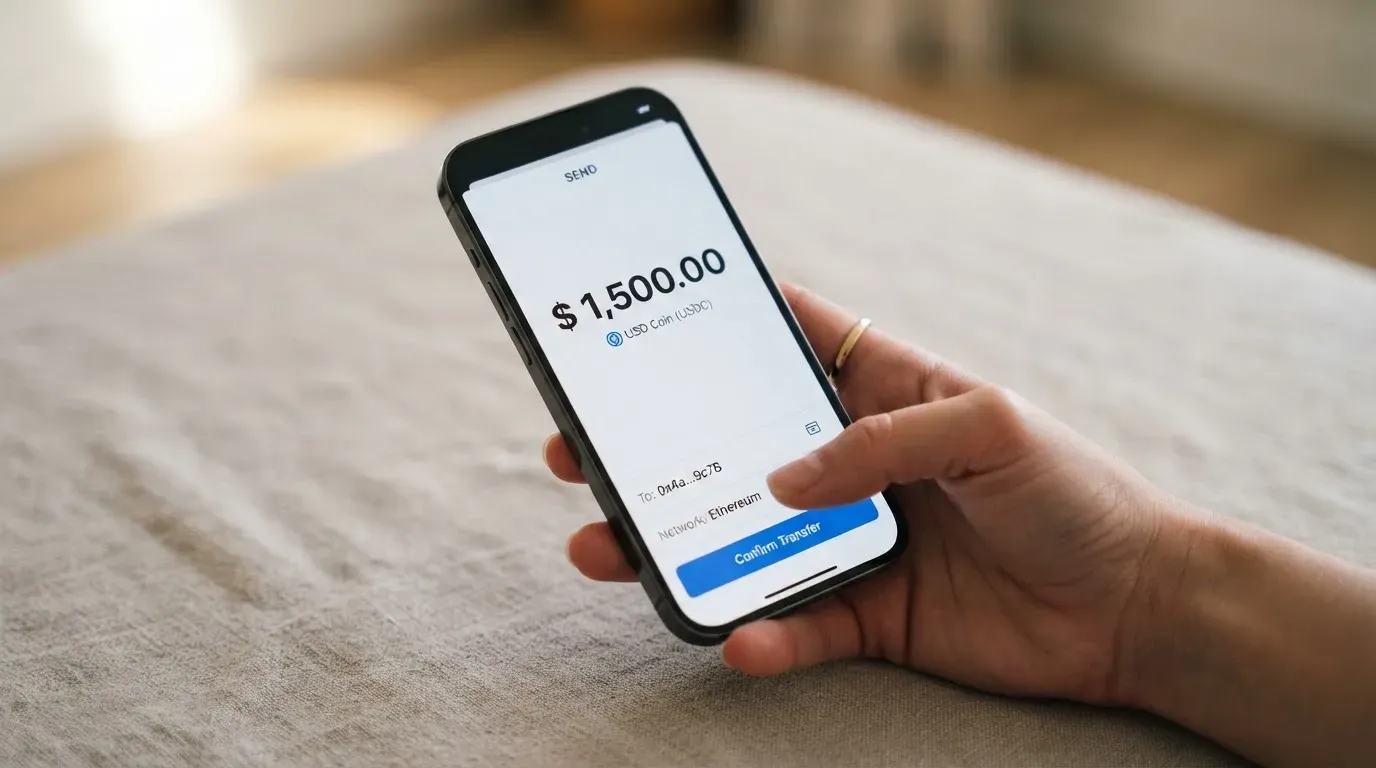
How the credit actually works: minimum top-up amounts are published in the app and differ by card type. A crypto top-up is credited in USD only after blockchain confirmation, valued at the price at that moment, less the displayed top-up fees and the conversion spread. So the amount that lands is not the amount you sent — it depends on when the chain confirms and on the spread at that instant. Fiat top-up options are not stated.
Getting money back out: unused balance can be withdrawn subject to minimums, verification and processing windows shown in the app. If you cancel, a balance at or above the published minimum refundable amount is returned; below that amount it is forfeited. On termination, eligible balances can be withdrawn except where holds, disputes, chargebacks or legal restrictions apply. The dormancy fee of 10% per month after 90 days applies here too — which means money parked on a card you have stopped using is not idle, it is draining.
A small, specific change worth knowing about, because it shows where the pressure has been: in October 2026 the company told Trustpilot it has removed the USD 20 minimum withdrawal, reworked withdrawals and transfers, fixed a deposit hold, and attributes card declines to stricter card-issuer rules.
Paying with it every day
Day to day, the card behaves like a prepaid card in the truest sense: you load a balance, and it spends that balance. It cannot overdraw, which is a genuine comfort. It also cannot be topped up from a normal bank account in any way the public pages describe, so your spending ability is bounded by what you have already converted.
The mobile wallet situation is the sharpest daily-use split. Apple Pay and Google Pay are not available on the virtual card and are included with Platinum. If you pay by phone — and in many places that is now how you pay — the virtual card leaves you typing card numbers into a checkout form, with none of the tokenisation protection that a device wallet provides.
There is no published list of blocked merchants. The card’s terms note that merchants restricted by the issuer or the card network may be declined, which is the standard escape clause rather than a promise. No cashback is mentioned anywhere on the card’s own pages; unofficially, a third-party source reports no card cashback at all, with eligible spending instead earning entries into a non-transferable prize draw.
The app is not described beyond a “Dashboard”; platform details and store ratings were not found. And there is no stated ATM arrangement, which for a card meant to be a daily instrument is a large blank. If you plan to take cash out, you are relying on whatever the app tells you at the time.
One more thing about declined payments: a declined authorisation can leave a hold on funds that stays for several days, typically up to seven. On a card that spends a fixed balance, a hold is a real bite.
What can go wrong
This is where the score drops to 3 out of 10, so I want to be specific rather than vague about worry.
Trustpilot, read on 20 October 2026: 3.1 out of 5 across 29 reviews, of which 22 fall in the last 12 months — 38% five-star, 52% one-star. Trustpilot also displays a notice that the company “may be associated with high-risk investments”. A Tradersunion trust score of 2.1 out of 5 appears on the news side, though it is marked as automated and I would weight it accordingly.
The recurring themes, each attached to a date in the user reports:
- Withdrawals and transfers stuck — September 2025, August 2026, October 2026
- Declined payments — October 2026
- Unauthorised or disputed charges — June and July 2026
- Support unresponsive or bot-like — March, August and October 2026
- Card cancelled with funds still on it — September 2025
Read those as individual experiences rather than a proven pattern, and they are still uncomfortable: three separate reports of a card being cancelled or a balance frozen while money was inside. If that happens to you, your recourse is the app’s withdrawal process and, ultimately, the dispute terms — which give no time frames at all. Contract disputes go to HKIAC arbitration in Hong Kong, in English, before a single arbitrator. That is a real forum, but it is not a complaints department that resolves things in a week.
The company has been responding on Trustpilot since July 2026, which is a change in behaviour rather than a change in history. One flag worth clearing up so it does not follow you around: phishing warnings attached to this name concern a look-alike domain, solcards.cc, not solcard.cc.
On custody itself: your balance is custodial — held by SolCard, converted to USD on the way in. That is the design of every prepaid-style crypto card, and it is also the design that carries counterparty risk. Custodial platforms have a history: Mt. Gox (about US$350 million reported stolen, 2011-2014), Coincheck (about US$400 million, 2018), Ronin Network (US$625 million, 2022). Irreversibility is the other half — a stolen key has no recovery path, because the network cannot freeze or return funds.
Two-D Secure and freezing, insurance and 2FA are not stated. The terms do say you must protect the card number, CVV and PIN, report loss promptly, and are liable for unauthorised use as the law allows; and that withdrawals may be delayed for security review. A handling fee may be charged where there are disproportionately many declines, reversals or disputes — which is worth noting because a card that gets declined often is exactly the situation in which that fee would land.
And the acceptance risk nobody advertises: a card issued in one country can look foreign to a shop in another, because merchants can look up the issuer identification number at the start of the card number and apply extra scrutiny when it does not match the billing address. Address verification services are mainly offered in the US, Canada and the UK, and are generally unavailable for foreign-issued cards, which causes declines. Some merchants decline prepaid or foreign-issued cards outright. None of that is SolCard’s fault, but it lands on you at the till.
One background point that explains the “stricter card-issuer rules” the company keeps citing: Visa does not issue crypto cards to consumers. It licenses issuers, and it can suspend a programme. In November 2022 Visa terminated its global agreements with FTX and the FTX US debit card was wound down. In 2018 Visa suspended WaveCrest in Europe, closing all WaveCrest-issued Visa programmes. Programme closures tend to follow a pattern — notice, then loading and spending stop, then you are asked to withdraw what remains. If the issuer behind SolCard changes, that is the shape of what can happen to your balance.
What to take instead
The honest framing is that every alternative here trades different risks. What changes is which cost you accept.
| SolCard | Bitrefill | UPay | Kemy | |
|---|---|---|---|---|
| Score | 5.6 / 10 | 6.8 / 10 | 6.1 / 10 | 6.0 / 10 |
| Country access | Worldwide, regional eligibility varies; Hong Kong and sanctioned countries excluded | Not listed; “subject to eligibility criteria” set by partners | Not listed; certain countries not served, list may change; claims 180+ countries | “190+ countries”, some restrictions |
| Card | Virtual + Platinum physical, Visa | Virtual & physical Visa | Virtual and physical, personal and business | Unlimited virtual (Visa shown) + one physical Mastercard |
| Cost | Virtual 5% + USD 10 per new card; Platinum 0% top-up; dormancy 10%/month after 90 days | Free through the app; amounts not stated; inactivity fee after 12 months | Not stated | Virtual USD 15 issuance + USD 2/month; physical USD 250 + USD 10/month |
| Top-up | SOL, USDC, ETH, BTC from any wallet; networks not named | BTC, Lightning, ETH, USDC, USDT, Solana, plus SEPA and cards | BTC, ETH, USDT, USDC; networks not stated | USDT, USDC, BTC, ETH, SOL; mobile money and bank accounts |
| Rewards | None stated | 2% cashback, 1% on deposits + 1% on purchases | No cashback stated | Not mentioned |
Bitrefill scores highest of the four, and the reason is mostly the rewards and the price. The card is described as free through the app, and 2% total cashback — 1% on each crypto deposit, 1% on each purchase, with no cap — goes a long way toward neutralising SolCard’s 5% top-up fee. It accepts more funding types, including SEPA and Apple Pay or Google Pay in the “buy with” list. Against it: the country list is not stated, eligibility is delegated to partners, fees are vaguer still (a deposit spread with no percentage, SEPA pay-in 1.99%), and an inactivity fee applies after 12 months.
UPay sits in the middle on transparency — it is the only one of the four that names its currencies (payments convert to USD, EUR, AED and others) and that says conversion may happen during payment depending on network and settlement. But its fees are not stated anywhere, and its KYC partner accepts only identity documents issued in the same country as the user, which is a real constraint for anyone whose passport and residence are in different countries.
Kemy is the outlier on pricing, and the reason to look at it is the flat monthly structure rather than the percentages. Virtual is USD 15 issuance valid three years at USD 2 a month; the physical Mastercard is USD 250 with DHL Express included, one per user, at USD 10 a month. But transaction fees run 3.5% plus USD 1 on the virtual card, failed transactions cost USD 0.80, and there is an internal conflict in its own summary — the main-account deposit fee is shown as 8% in one place and 5% in another. An undocumented conflict in a pricing page is not a small thing when you are trying to work out what a card will cost.
What none of the alternatives fix: all four are custodial or semi-custodial, all four depend on a licensed issuer you do not choose, and none of them makes a foreign-issued prepaid card look domestic to a merchant. And if you are in the EU, remember that a crypto asset on one side of a card and a payment service on the other are regulated separately — under MiCA, which took legal effect in June 2023 with its stablecoin rules applying from 30 June 2024 and the remaining provisions from 30 December 2024, a crypto card often rests on two separate licences, and a transitional period running to 1 July 2026 has been applying to providers already operating under national law.
Who I would recommend it to
If you are holding stablecoins or SOL, you want a card that spends in dollars, you mostly shop online or pay in USD so the FX spread barely registers, and you can live with the virtual card’s 5% plus USD 10 top-up fee, then this card does what it says. The stated audience — Solana users topping up a dollar card — is the honest one, and for them the choice of asset is natural rather than a stretch.
If any of the following is true of you, I would not put this card on your critical path:
- A card you rely on weekly for wages, rent or groceries. A 3-out-of-10 reliability mark with reports of cards closed alongside balances is not a foundation.
- You are in Hong Kong, or in a sanctioned jurisdiction, or hold citizenship the screening may catch. The exclusion is written into the terms.
- You are a business. There is no business product here, no separated pricing, and a card that can be cancelled with funds inside is a bad instrument for anything invoiced.
- You intend to hold a balance for months. Dormancy takes 10% per month after 90 days idle, and that is before you touch the withdrawals question.
- You need cash from ATMs. The card’s pages do not say what ATM arrangements exist.
- You want to know exactly which institution holds your money. The issuer is unnamed in the public terms.
What I would actually suggest, whichever card you end up choosing: check the provider’s status in your own regulator’s register before you fund it, and read the withdrawal and dormancy terms twice, because those are the two places the money actually leaves.
Frequently asked questions
What is SolCard card?
SolCard is a crypto-funded payment card that spends a dollar balance rather than a bank account. You load it with stablecoins or crypto, it converts them to USD, and the balance pays for purchases like any prepaid card. It comes in two forms: a virtual card for online use with manual card details, and a Platinum physical card with contactless and Apple Pay and Google Pay.
How does SolCard card work?
You top up from any wallet with crypto such as SOL, USDC, ETH or BTC. The card credits USD only after the blockchain confirms, at the price at that moment, minus displayed top-up fees and the conversion spread. The balance sits with SolCard rather than in your own wallet, and the card then spends it as a prepaid balance, so it cannot overdraw.
Is SolCard a bank?
No. SC PAYMENTS LIMITED, the Hong Kong company behind it, describes itself as a programme manager and technology platform and says it is “not a bank”. The actual card runs under a Visa licence held by an unnamed licensed financial or e-money institution. So two companies stand behind your balance, and the public terms do not tell you which institution issues the card.
Does SolCard card require KYC?
The terms say identity verification may be required for certain card tiers, features or spending limits, with an age requirement of 18+, but the tiers and the documents are not defined. Unofficially, third-party reporting from August 2026 describes the virtual card as marketed without KYC and Platinum as requiring verification. Treat that as reported, not as confirmed policy.
Is SolCard card free?
Not quite. The Platinum has no monthly fee while active, but the virtual card charges 5% plus USD 10 for each new card as a top-up fee, with FX at 1-2%. There is also a dormancy fee of 10% of the balance per month after 90 days of inactivity, on both products. So “free to hold” is true; “free to use” is not.
How do I top up SolCard card?
You send supported crypto from any wallet — SOL, USDC, ETH and BTC are named — and the USD is credited once the chain confirms. Minimum top-up amounts are published in the app and vary by card type. The card’s own pages do not name which blockchain networks it accepts, so check the app before sending, since transfers are irreversible.
Is SolCard card safe?
That depends on what you mean by safe, and on how much money you leave on it. The balance is custodial, so it carries counterparty and hack risk of the kind that Mt. Gox, Coincheck and Ronin all demonstrated. Trustpilot showed 3.1 out of 5 across 29 reviews when I checked, including reports of stuck withdrawals and cards cancelled with funds. Two-factor authentication, card freezing and insurance are not stated.
Can I use SolCard card in my country?
SolCard states worldwide acceptance with “eligibility may vary by region”. The terms exclude Hong Kong residents and people in countries under comprehensive UN, US, EU or UK sanctions, plus listed persons. Because citizenship and country of birth are often screened separately from your address, a nationality-based refusal is possible even where the card is nominally available.
Why was my SolCard payment declined?
The card’s own pages publish no list of blocked merchants, so a decline can come from the issuer, the card network, or the merchant. The company attributed declines to stricter card-issuer rules in October 2026. Two other things cause declines that are not SolCard’s fault: foreign-issued cards can fail address verification, which is mainly offered in the US, Canada and the UK, and merchants may refuse prepaid or foreign BINs.
Is SolCard worth it?
For someone already holding stablecoins or SOL who wants to spend in dollars without an exchange, occasionally, it can be worth the 5% plus USD 10 virtual top-up fee. As a primary or only card, no — the reliability mark of 3 out of 10, the unnamed issuer, the dormancy fee and the complaint history put too much on you. A card with published cashback, like Bitrefill’s 2%, offsets the cost better.
Virtual cards – cryptocardsranked
Content created by the «cryptocardsranked» team