
Tevau promises a virtual or metal card funded straight from USDT, and pays it well. The pages that describe it are mostly not Tevau's own.
 Available in US
I went through the Tevau card page by page, fee by fee, and then went looking for the things a fee page never tells you: who issues the card, where the company sits, what happens when you send crypto down the wrong network, and whether anyone outside the company has written an independent word about any of it. My verdict is 6.0 out of 10, and the shape of that number matters more than the number itself: this is a card with a genuinely attractive everyday-use profile sitting on top of a documentation and track-record problem that no amount of good UX fixes.
So who is it for? In my view, the person this fits is already holding USDT, wants to spend it like ordinary money, and does not mind managing a small balance in an app rather than having a bank account attached to a card. That is the audience note the material gave me, and it holds up under pressure. It is not for someone whose first question is whether their money is protected by a deposit guarantee scheme, because nothing in the public pages says it is. Nor is it for someone who needs to know, in advance and in writing, exactly which countries are refused — the card claims 200+ countries with availability that varies by region, and the list of exceptions is not published.
The conditions described here are current as of October 28, 2026.
| Criterion | Mark | Why |
|---|---|---|
| Who can get it | 9 / 10 | Pages claim 200+ countries, availability varies by region; country list and exclusions not published |
| Cost | 4 / 10 | Virtual 20 USD, plastic 100 USD; top-up 1%, non-USD payment 1.2%, ATM 1.9%; monthly fee $0, then $3 after 90 days of inactivity |
| Top-up options | 4 / 10 | USDT only, app shows the network, networks not named on the page; no fiat route disclosed |
| Reliability and complaints | 4 / 10 | Hong Kong office, issuer not named, claimed Bank of Canada registration unverified; no complaints or independent reviews found |
| Everyday use | 9 / 10 | Virtual, plastic, metal and 24K Gold; Apple Pay and Google Pay on all types; ATMs on physical cards |
| Total | 6.0 / 10 | Strong use, thin evidence |
That table is the whole review in miniature. The two nines are real: broad claimed reach and a good-looking card range with mobile wallets everywhere. The two fours are equally real, and they are the ones that should decide whether you put money in.
Will they give you the card
Yes, most likely, but on their terms rather than yours. The card page says 200+ countries with availability that “varies by region” — and it does not publish which countries, or which are excluded. One thing you should know before you start: almost nothing specific about eligibility comes from Tevau’s own pages. It comes from tevau.co, which describes itself in its FAQ section as an independent information site and not Tevau itself, even though the card page sits on the same domain. I have flagged that throughout this review. Where I say a fact is unofficial, that is exactly what it is: a third-party statement I could not confirm against Tevau itself.
That caveat is not pedantry. It decides what you do with the information. If Tevau’s own site confirmed “200+ countries”, you could plan around it. If an unaffiliated-looking page says so, you find out at the sign-up screen, and by then you have already typed your details into a form.
How to get it
The path is short: download the app, pass one identity check, and a virtual card appears in the app immediately. The KYC is mandatory — the safety FAQ says so — and it is a single flow with no tiers. One government ID (passport, driving licence or national ID) plus a selfie in the app, 18 and over, no tiers to climb. Blurry photos are the usual reason a submission bounces back.
What is not stated is nearly as interesting as what is. Proof of address is not mentioned. The processing time is not given as a policy. And again, all of this sits on the same third-party source rather than on a page I can attribute to Tevau.
The card itself is Visa, in four versions: Virtual, Plastic, Metal and 24K Gold. The card currency is not stated. Virtual cards are issued instantly in the app; card shipping and replacement are said to be free, but the countries they ship to are not specified, and no delivery time is published. The advice on the page is practical enough: if a card has not arrived within 14 days, check the tracking code, then contact in-app support.
One more thing worth knowing before you pay for anything: the metal and gold cards are where the shipping promise actually matters, and the third-party material does not tell you which countries they reach. If you are outside Europe, the North American corridor, or the usual crypto-friendly jurisdictions, that is the question to ask in support before you click buy.
Fees: what it really costs
The headline numbers look fine until you stack them. The monthly fee is $0, which is genuinely unusual, and there is no annual fee stated. But top-up costs 1%, a payment in USD costs approximately $0.20 plus 0.5% (unofficial and not confirmed by the card), a payment in anything other than USD costs 1.2%, and an ATM withdrawal costs 1.9%. Then the small print bites: inactivity costs $3 after 90 days without a transaction, and $1 every 30 days after that. Closing a card costs $2. Cards are valid for three years.
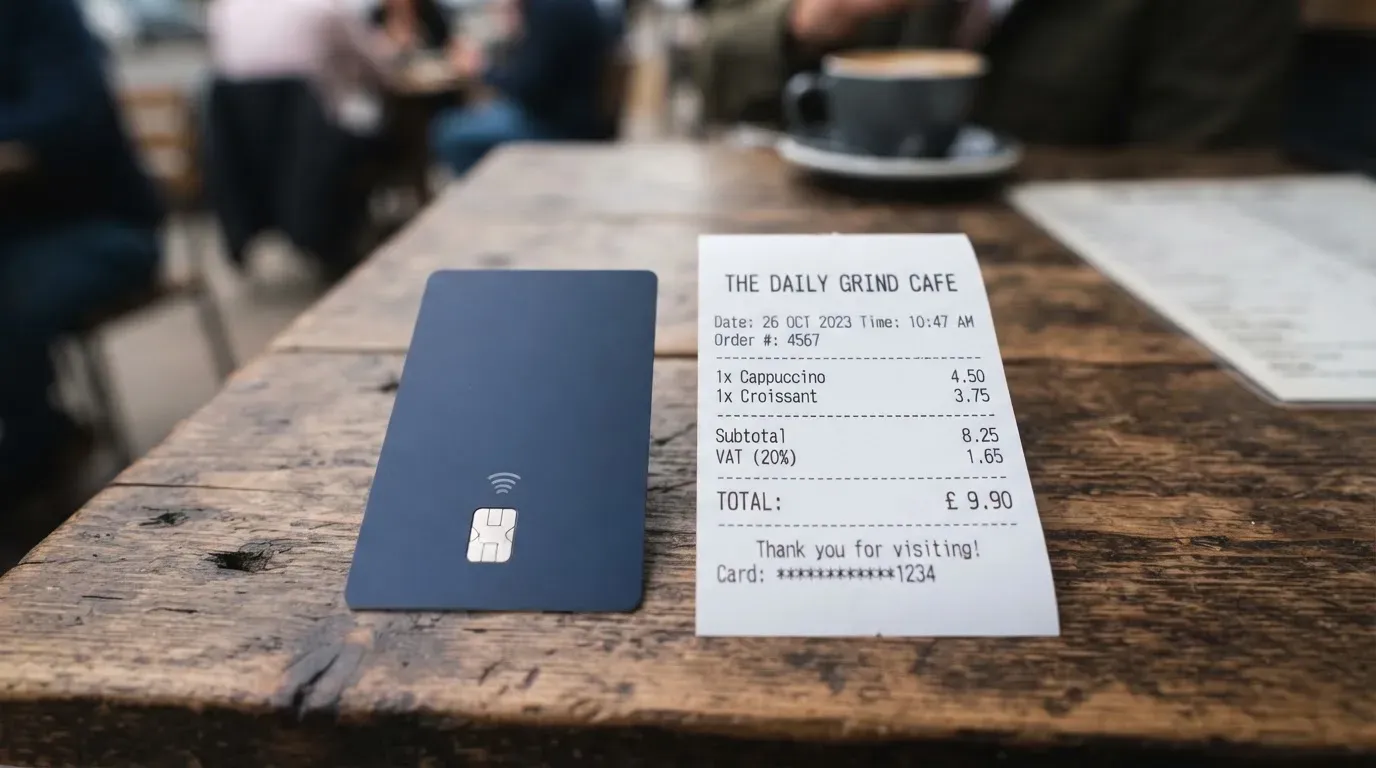
One fee is described only by its shape and not its size: the FX rate spread on overseas spending is mentioned but not quantified. That is the one number I would want before I travel with this card, because a spread you are not told the size of is a spread you cannot budget for.
| Fee or limit | Value |
|---|---|
| Virtual card | 20 USD |
| Plastic card | 100 USD |
| Metal card | 199 USD (unofficial and not confirmed by the card) |
| 24K Gold card | 499 USD (unofficial and not confirmed by the card) |
| Monthly fee | $0 |
| Inactivity | $3 after 90 days without a transaction, then $1 every 30 days |
| Close card | $2 |
| Card validity | 3 years |
| Top-up | 1% |
| USD payment | $0.20 + 0.5% (unofficial and not confirmed by the card) |
| Non-USD payment | 1.2% |
| ATM | 1.9% |
| Small authorisation (up to $3) | first 5 per month free, then $0.20 (unofficial and not confirmed by the card) |
| Declined transaction | first 3 per month free, then $0.50 (unofficial and not confirmed by the card) |
| FX spread on overseas spending | not quantified |
| Per-transaction limit | 3,000,000 USD (virtual, plastic); 80,000 USD (metal, gold) (unofficial and not confirmed by the card) |
| Daily and monthly spend limit | 3,000,000 USD (unofficial and not confirmed by the card) |
Two of those rows deserve a flag rather than a shrug. The inactivity charge applies after 90 days, and there is a virtual card that closes itself after four consecutive months with no transactions — so an unused card does not sit there politely for a year. And the small-authorisation and declined-transaction fees are the sort of thing that never appears in a comparison table and then adds up over a year of coffee.
Now, three everyday payments, with the actual fees applied.
Coffee in your own country, paid in USD. The small authorisation rule bites here. Up to $3, the first five a month are free, then $0.20 each (unofficial and not confirmed by the card). That is the friendly case, and the fee only exists because card networks pre-authorise and then release the hold.
A supermarket run in a country that does not use dollars. This is the 1.2% non-USD payment fee, and your spending is converted to the merchant’s currency at checkout. On a $60 basket that is $0.72 — small, but it is the fee you pay every single time, unlike the one-off $20 card price.
Withdrawing cash at an ATM. 1.9%, and only on the physical cards: the virtual card does not work in ATMs. USD ATM withdrawals have no FX fee of their own, but the local bank’s rate applies instead, and operator fees may apply on top. The physical card limits are $3,000 a day (unofficial and not confirmed by the card) and $10,000 a month, three withdrawals a day and thirty a month.
The card prices themselves deserve one honest note. The pages list the Virtual card at 20 USD. A Product Hunt listing by the maker from 2026 puts it at 10 USD. And the fee page says fees “can differ by card type, campaign, and region” — so treat every price here as indicative and check the app, which shows the price where you actually buy.
Top up
You fund it with USDT. That is the whole answer, and it is narrower than it should be for a card aimed at people who want ordinary spending.
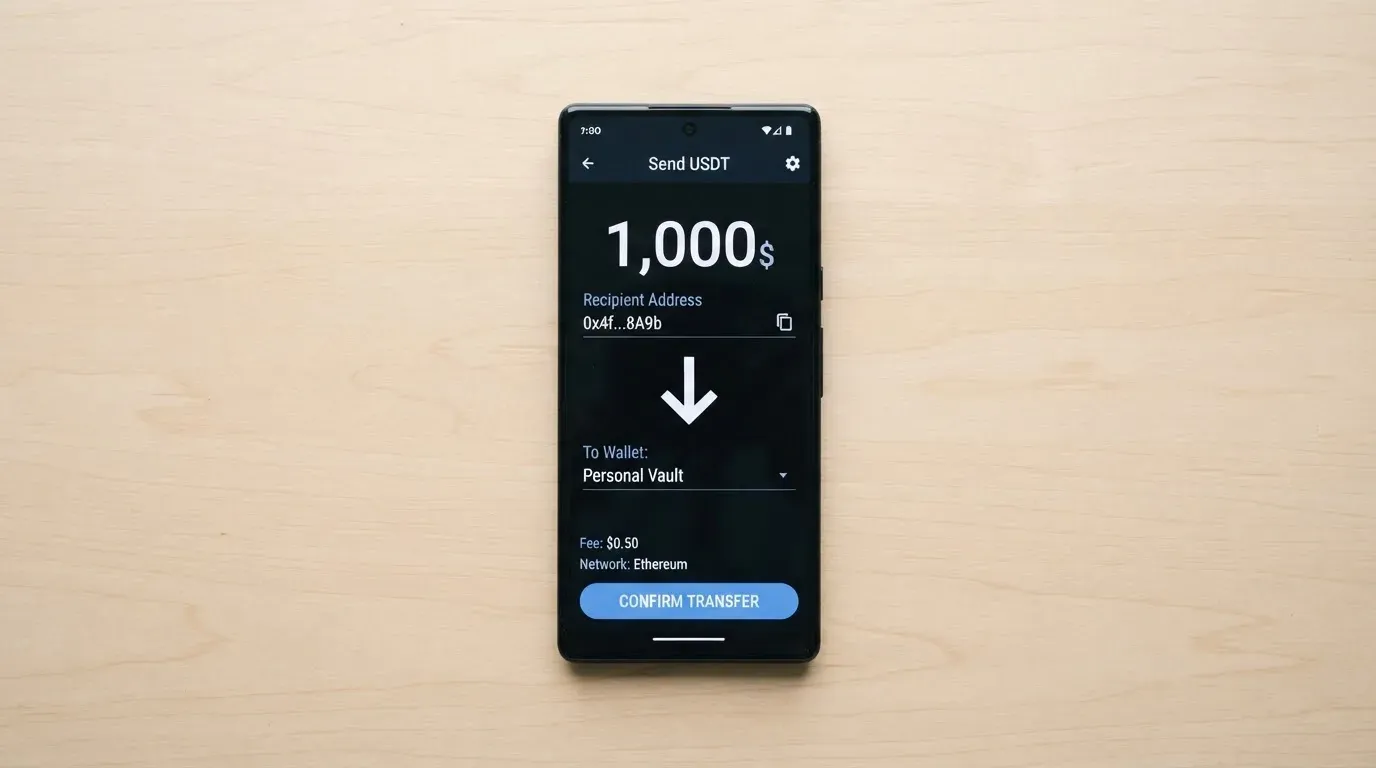
The mechanics are sensible: the app shows you which network to send on, you transfer, the balance arrives. Deposits from an internal wallet are free. A 1% top-up fee applies, with the 24K Gold card at 0.5% on up to five top-ups a month (unofficial and not confirmed by the card) — though here the pages contradict themselves, because the card table says five waivers per month and the fee table says a 50% discount on up to five top-ups. Fiat top-up is not stated. There is a guide linked about withdrawing to a bank, with Indonesian rupiah support mentioned, and no details.
The minimum top-up is not stated. The networks are not named on the page — the app shows you, which is the right design, but it means you are relying on an interface rather than a published list. And the warning that matters most: funds sent on the wrong network are not recoverable. That is not a hypothetical. USDT exists on Ethereum, Tron, Solana, Polygon, Avalanche and others, and picking the wrong one means writing support a message and hoping.
Getting money back out is deliberately narrow. USDT can be withdrawn from the wallet to an address the app shows you. Once a balance has been moved to the card, that balance can only be spent or withdrawn at an ATM — there is no route back to the wallet. Closing a card returns the remaining balance to the wallet, costs $2, cannot be undone, and does not refund the application fee.
So the design choice to sit with: the card balance is a one-way street. Treat it as spending money, not as money in transit.
Paying with it every day
This is where the card is genuinely good, and it is worth saying plainly before I get back to the risks.
There are four tiers to choose from — Virtual, Plastic, Metal and 24K Gold — and the premium one comes with 2 virtual plus 5 physical cards and a refund after you have spent $100,000 within three months (unofficial and not confirmed by the card), which tells you the kind of customer the company is aiming at. Apple Pay and Google Pay work on all card types, which means you can leave the physical card in a drawer and use your phone. Cashback is not mentioned anywhere, so do not model it into your budget.
The mobile apps exist on both platforms. On iOS, the Tevau app by Tevau Technology Limited showed 4.4 out of 5 from seven ratings when I looked, with the latest version 2.0.010 dated 11 September. Seven ratings is not a review history; treat it as a number with no weight behind it. An Android listing exists, with no rating shown.
Where everyday use gets its friction is the same place every crypto card gets it. Merchants who block prepaid or crypto-funded cards will decline this one, because the BIN lookup reveals the card type and issuer country — that is how a card issued in one place looks foreign to a shop in another. OpenAI billing is not supported. Address verification, which many online merchants rely on, is generally unavailable for foreign-issued cards and is a common cause of declines. Declines and refunds can occasionally be delayed, and a declined authorisation can leave a hold on your funds for several days.
None of this is unusual. It is the tax you pay for being early to crypto cards, and the practical response is to keep a second card in the same wallet for the cases that get declined.
What can go wrong
Here the card’s scores drop, and here is why.
The issuer is not named. Tevau describes itself as a Hong Kong-based platform, launched 2024, with an office in Hong Kong. The card programme sits on top of somebody else’s balance sheet, and the pages do not say whose. That is not automatically a problem — plenty of legitimate programmes run through licensed partners — but it is a question I would want answered, and it is the question that stops me recommending this to anyone with real money at stake.
The registration claim is unverified. The site says its Payment Service Provider registration with the Bank of Canada was approved in August 2026. I have not independently verified that. Treat it as a claim made on the site, and draw your own conclusion about what it would and would not mean even if it is accurate.
There is no independent track record. No complaints found, no Trustpilot page, no Reddit thread, no independent review. The official record of incidents is not stated either. In this category, silence is not reassuring — custodial platforms have a documented history of failure, and the card’s own page says Tevau is not a bank licensed in Japan, the US or the EU, and that home-country deposit protection may not apply. That last sentence is the one to sit with. It is on their site.
Your crypto is custodial. The FAQ says assets are “stored with licensed custodians”, with cold and hot wallet separation claimed. Two-factor authentication and insurance are not stated. If the account is frozen, you re-verify personally through support. A security update on suspicious transactions and risk-control upgrades was published on 21 August 2026. If the card is stolen or leaked, lock it in the app, then close it.
Transfers are irreversible. Blockchain transfers do not reverse, and a stolen key has no recovery path — the network cannot freeze or return the funds. In this category specifically, custodial platforms have failed before at serious scale: Mt. Gox, Coincheck, Ronin Network. I am not saying Tevau is any of those things. I am saying the failure mode exists, and that you are trusting a company you have no independent track record for.
Support is in-app chat, with a bot first and a live agent on request during “business hours” — undefined. There is a Help Center, a Telegram community, an account on X, and a website offered in 17 languages including Russian, though the support channel languages are not confirmed. For a card marketed across 200+ countries, that is thin, and the bot-first design is exactly what you do not want when your balance is stuck.
What to take instead
None of these is dramatically better. They are differently shaped, and in some cases better documented.
Bitrefill scores 6.8 here — the highest of the four. Its advantages are concrete: a deposit spread on crypto-to-euro conversion, a SEPA pay-in fee of 1.99%, and 2% total cashback with no cap, split as 1% on each crypto deposit and 1% on each purchase. It accepts Bitcoin, Lightning, Ethereum, USDC, USDT, Solana, BASE, Polygon, Li.Finance, Apple Pay, Google Pay, Visa and MasterCard on the “Buy with” list, plus SEPA. Weaknesses: it presents as free through the app without stating issuance or monthly amounts, it charges an inactivity fee after 12 months without spending or cash-out at an unstated amount, the country list is not stated, and access is “subject to eligibility criteria” set by partners. If cashback matters to you, this is the one to look at first.
| Alternative | Score | Card | Funding | Stated costs |
|---|---|---|---|---|
| Tevau | 6.0 / 10 | Visa: virtual, plastic, metal, 24K Gold | USDT only | Top-up 1%; non-USD payment 1.2%; ATM 1.9%; $0 monthly |
| Bitrefill | 6.8 / 10 | Virtual and physical Visa | BTC, Lightning, ETH, USDC, USDT, SOL, BASE, Polygon, SEPA | Deposit spread not stated; SEPA pay-in 1.99%; 2% cashback |
| UPay | 6.1 / 10 | Virtual and physical, personal and business; network not named | BTC, ETH, USDT, USDC | Not stated; payments convert to USD, EUR, AED and others |
| Kemy | 6.0 / 10 | Unlimited virtual cards, one physical Mastercard | USDT, USDC, BTC, ETH, SOL; mobile money and virtual bank accounts | Virtual $15 issue + $2/month; physical $250 issue + $10/month; transaction fee 3.5% + $1 |
UPay scores 6.1. It claims support in 180+ countries, offers personal and business cards in virtual and physical form, converts payments to USD, EUR, AED and others, and its KYC partner accepts only ID documents issued by the same country as the user — which is a real constraint worth checking. But its costs are not stated at all, the network is not named, and its country list is not published either, with the note that it does not serve residents of certain countries and that the list may change with regulatory or issuer policies.
Kemy scores 6.0, the same as Tevau, and its pricing is the most transparent of the three — which is itself informative. A virtual card is $15 to issue, valid three years, at $2 a month; a physical Mastercard is $250 with DHL Express included, one per user, at $10 a month. It claims 190+ countries with “a few restrictions”. Its transaction fee is 3.5% plus $1 on the virtual card, top-up is $1.5 under $100 or 1.25% from $100, and a failed transaction costs $0.80. One conflict to note: the main-account deposit fee shows as 8% in one place and 5% in another.
| Tevau | Bitrefill | UPay | Kemy | |
|---|---|---|---|---|
| Score | 6.0 | 6.8 | 6.1 | 6.0 |
| Card network | Visa | Visa | not named | Visa (virtual), Mastercard (physical) |
| Fiat funding disclosed | no | SEPA | not stated | mobile money, virtual bank accounts |
| Rewards stated | none | 2% cashback, no cap | none on card page | none |
| Card pricing stated | yes | free, amounts not stated | no | yes |
| Published country exclusions | no | no | partial | no |
Who I would recommend it to
I would recommend it to someone who already holds USDT, already understands that a crypto transfer cannot be undone, and wants a card that shows up in Apple Pay without a bank relationship. Someone who has been declined by ordinary cards, or who travels in places where a foreign BIN gets treated with suspicion, has a genuine reason to look here — the 200-plus-country claim is exactly what that person needs, if the regional exclusions turn out to be generous.
I would not recommend it as the card that holds your savings, your salary, or the money your rent depends on. The reasons are the ones above: the issuer is not named, the Bank of Canada registration is a claim on a site rather than something verified, no independent review exists, the page itself says home-country deposit protection may not apply, and a card balance cannot get back to the wallet except by spending it or using an ATM.
The honest summary is this. Tevau is a well-designed, generously-featured card on top of a company with a thin public record. The features are real; the reassurance is not there yet. Keep the balance small enough that losing access to it would annoy you rather than devastate you, and check the two things nobody publishes for you before you commit: whether your country is on the allowed list, and who the issuer is.
Frequently asked questions
What is the Tevau card?
Tevau is a Visa payment card funded from USDT rather than a bank account. You load a balance, and the card spends that balance, so it behaves like a prepaid card and cannot overdraw. Four versions exist: Virtual, Plastic, Metal and 24K Gold. Everything I could verify about the product comes from third-party pages that describe themselves as independent of Tevau, not from Tevau’s own site.
How does the Tevau card work?
You convert or transfer USDT into the card’s balance, then pay with it like any Visa card, including by phone through Apple Pay and Google Pay. Spending is converted to the merchant’s currency at checkout. A payment in USD costs $0.20 plus 0.5% (unofficial and not confirmed by the card), and one in another currency costs 1.2%. Once money reaches the card balance it can only be spent or withdrawn at an ATM.
Is Tevau a bank?
No, and the card’s own pages say so: Tevau states it is not a bank licensed in Japan, the US or the EU, and that home-country deposit protection may not apply. It describes itself as a Hong Kong-based platform launched in 2024. The card issuer is not named, and the site’s claim about Bank of Canada payment service provider registration in August 2026 is a claim I could not independently verify.
How much does the Tevau card cost?
The Virtual card is listed at 20 USD, Plastic at 100 USD, Metal at 199 USD and 24K Gold at 499 USD, as one-time fees (all figures unofficial and not confirmed by the card). The monthly fee is $0 and no annual fee is stated. Closing a card costs $2. A separate 2026 maker listing puts the virtual card at 10 USD, so treat prices as indicative and check the app, where fees can vary by card type, campaign and region.
What are Tevau’s fees?
Top-up is 1%. Payments cost $0.20 plus 0.5% in USD and 1.2% in other currencies (unofficial and not confirmed by the card). ATM withdrawals cost 1.9% and only work on physical cards, with limits of $3,000 a day and $10,000 a month. Inactivity costs $3 after 90 days without a transaction, then $1 every 30 days. The FX spread on overseas spending is mentioned but never quantified.
How do I top up the Tevau card?
You send USDT to an address in the app, which shows you which network to use; the specific networks are not published. Deposits from an internal wallet are free, and the top-up fee is 1%, or 0.5% on up to five top-ups a month for the Gold card (unofficial and not confirmed by the card). There is no stated minimum and no disclosed fiat route. Funds sent on the wrong network are not recoverable, so read the network shown in the app carefully.
Does the Tevau card require KYC?
Yes, KYC is mandatory. There is one flow with no tiers: a government ID — passport, driving licence or national ID — plus a selfie in the app, at 18 and over. Blurry photos are the usual reason a submission is sent back. Proof of address and processing times are not officially confirmed.
Can I use Apple Pay and Google Pay with Tevau?
Yes, both are supported on all card types, virtual and physical, which is one of the card’s stronger features. Apple Pay replaces the card number with a device-specific number stored on your phone’s secure hardware and uses a one-time code per payment. The card can also be locked in the app and closed if lost, and prepaid or crypto-funded cards are sometimes declined by merchants regardless of wallet.
Is the Tevau card safe?
That depends on what you mean by safe. The pages say assets are held with licensed custodians with cold and hot wallet separation, and a security update was published on 21 August 2026. Two-factor authentication and insurance are not stated, funds held by a custodian carry counterparty risk, and transfers cannot be reversed. The company is young, the issuer unnamed, and I found no independent reviews or complaint history at all.
Where can I use the Tevau card?
The pages claim 200+ countries with availability varying by region, but no country list and no list of exclusions is published, and the claim comes from a third-party source rather than Tevau. In practice merchants may decline it, because prepaid and foreign-issued cards are identifiable through the BIN lookup. OpenAI billing is not supported, address verification is often unavailable for foreign-issued cards, and a declined authorisation can leave a hold on your funds for several days.
Virtual cards – cryptocardsranked
Content created by the «cryptocardsranked» team