
Cheap to hold, awkward to reach: what the Trustee Plus card actually does
 Available in US
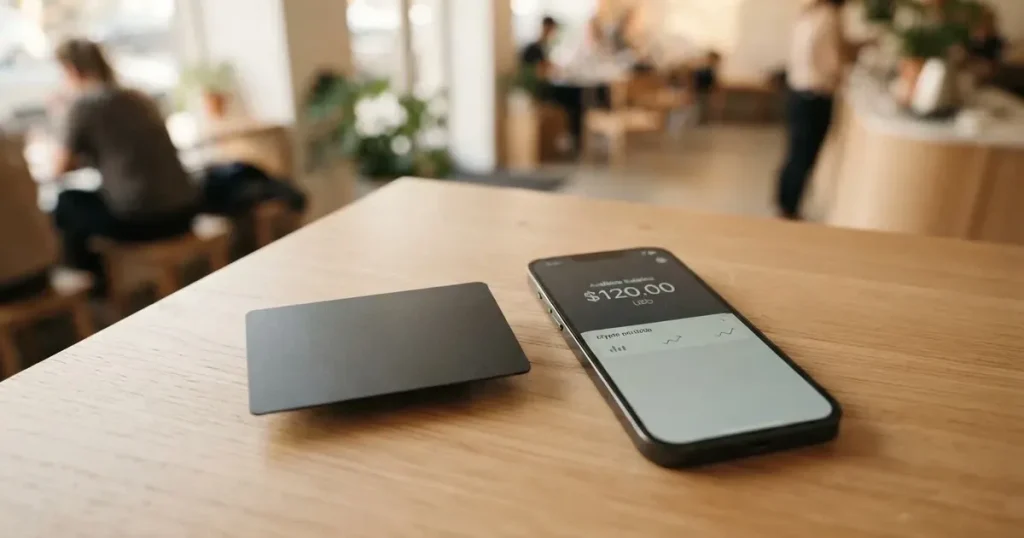
The Trustee Plus card is not really a bank card. It is a virtual Visa Prepaid card that spends from a balance you load yourself, mostly with stablecoins, and the only card you can get today is the one that exists inside your phone. On paper it is one of the cheapest crypto cards on the market: 10 USD to open the virtual card, nothing to keep it alive, 0% on payments, 0.5% to top the card balance up. It supports Apple Pay and Google Pay, and it accepts a wide range of coins and networks. That part is genuinely good.
And yet I scored it 5.7 out of 10, and the reason is not the fees. It is the combination of things around the card: the eligibility rule is written in a way the card never completes for you, the physical card sits behind a waitlist, the cash machine is off, the company structure is split between a Panamanian operator and an English issuer, and there is a regulatory action on record in Ukraine that stopped new registrations there. In other words, this is a cheap card attached to a thin and slightly shaky platform. It suits one kind of person very well, and I will tell you who that is before anything else. If that person is you, you will find the price hard to argue with. If it is not you, the low fees will not save you.
The conditions described on this page are current as of October 28, 2026.
The score, criterion by criterion
| Criterion | Mark | Why |
|---|---|---|
| Who can get it | 3 / 10 | Ukrainians can get it regardless of where they live, but the Terms require residence in a list of supported countries and the card never publishes that list. Unofficial sources say EEA residents, which contradicts the official page. |
| Cost | 8 / 10 | 10 USD to open the virtual card, 0 USD a month, 0% on payments, 0.5% to top up the card balance. The Visa conversion rate applies and any markup on top is not disclosed. After a year of no transactions the wallet charges 20 USDT a month. |
| Top-up options | 9 / 10 | Wallet in USDC and USDT, 30+ coins and networks including TRC20, ERC20, SOL and NEAR, plus fiat through Smart P2P and a personal IBAN. |
| Reliability and complaints | 5 / 10 | The card is issued by Wirex Limited (England, company no. 09334596) and the operator is MIKEPAY INC. (Panama). Ukraine’s central bank banned the operator from payment services in September 2025, and reviews report funds frozen after source-of-funds checks. |
| Everyday use | 4 / 10 | Apple Pay and Google Pay work, but the physical card is unavailable behind a waitlist and there is no ATM access. |
| Total | 5.7 / 10 |
The audience this suits, plainly: a Ukrainian who wants to put stablecoins onto a virtual USD card and spend them from a phone, and who does not need cash or a plastic card. For everyone else, and especially for anyone whose main problem is that a normal bank card is hard to get, this card does not solve the problem. It replaces a bank account with a smaller, more closed system.
Will they give you the card
The short answer is: if you are a Ukrainian, probably yes; if you are anyone else, you are reading a rule the card does not finish for you.
Here is the awkward part, and it is the single biggest reason for the 3 out of 10 on this criterion. The card’s own FAQ, on its Ukrainian page, says that Ukrainians can get the card regardless of country of residence. Good. But the Terms then say something narrower: you must reside or be incorporated “in countries and territories We support”, and you must not be a citizen or resident of a country on a sanctions list. The rule covers both citizenship and residence, so a sanctioned nationality can disqualify you wherever you live. And then the phrase “countries We support” points to a list that I could not find on the public pages. Not stated. There is no list to read.
So the practical shape of it is this: you are told you need to be in a supported country, the card does not say which countries those are, and the FAQ’s promise to Ukrainians is doing a lot of quiet work. If you are a Ukrainian living in, say, Germany or Poland, the Terms sentence about supported countries arguably applies to you too, and you cannot check it. That is not me being pessimistic; it is the gap as it stands on the pages.
Two further wrinkles. The English card page carries no eligibility FAQ at all, so if you read in English you get even less. And a third-party site, cryptocardhub.com, as updated in February 2026, describes the card as offered to EEA residents. That is unofficial, the card does not confirm it, and it directly contradicts the official Ukrainian-language FAQ. I would not plan around it.
There is also the regulatory shadow over the eligibility question. In September 2025 the National Bank of Ukraine barred the Lithuanian operator behind the card from providing payment services in Ukraine; the operator’s director said existing clients were unaffected and new registrations in Ukraine were halted, and reporting in August 2026 from kurs.com.ua said availability for residents of Ukraine was “still being checked”. Nothing in this page should be read as a way around that. It is context for why the answer to “is Trustee Plus available in my country” is not always a clean yes.
How to get it
The path is short, and that is the good news. You install the Trustee Plus app, you complete identity verification inside the app, the virtual card is issued to you in the app, and you top it up. That is the whole sequence.
On the identity check: KYC happens in the app before you order the card, run through a partner called Kycaid. A Trustee guide describes what you will be asked for as a photo of your passport or ID card plus a selfie. One thing that is not stated anywhere on the card’s public pages is proof of address, so I cannot tell you whether you will need it or not. The Terms set the age floor at 18 or the legal age in your country.
Worth knowing before you start: it is a single KYC step, one check rather than a ladder of levels, but the card does not publish how long it takes, what the tiers are, or what gets a rejection. Those blank spaces matter more than they sound, because a rejection with no stated reason is a bad afternoon rather than a bad week.
What you end up holding, today:
| Thing | What the card says |
|---|---|
| Virtual card | Available, orderable in the app |
| Physical card | Unavailable, on a waitlist |
| Network and type | Visa Prepaid |
| Base currency | USD |
| Validity | 3 years |
| Balance | Separate card balance |
The physical card is the disappointment. It is not described as coming soon with a date; it is on a waitlist, and the card says nothing about which countries it would be delivered to, how long delivery takes, what it costs, or what a replacement costs. Not stated. If your plan depends on handing a plastic card to someone, this is not that card right now.
Fees: what it really costs
This is where Trustee Plus is genuinely attractive, and I want to be fair about it before I list the caveats. There is no monthly fee, no annual fee, no percentage on payments, and a single flat 0.5% to move money from the wallet onto the card balance. That is a hard thing to beat in this category.

| Fee or limit | Value |
|---|---|
| Virtual card opening | 10 USD |
| Physical card price | Not shown |
| Card maintenance | 0 USD |
| Payments | 0% |
| Card balance top-up | 0.5% (Ukrainian page) |
| Conversion of local-currency payments | Automatic at the Visa rate; markup not stated |
| Cash withdrawal | Currently unavailable; fee and allowance not stated |
| Monthly limit | 30,000 USD (table); FAQ says 30,000 USDC for monthly operations |
| Per-transaction and daily limits | Not stated |
| Wallet inactivity fee | 20 USDT equivalent per month after one year without transactions |
Two details in that table deserve a second look, because they are where the good headline number leaks.
The first is the conversion line. Paying in dollars costs you nothing on top. Paying in euros, zloty or pounds is converted automatically at the Visa rate. The card says nothing about whether it adds its own margin on top of that rate, so the true cost of a non-dollar payment is, as far as the public pages go, unknown. Not stated. That matters most for exactly the person this card is for: a Ukrainian with zloty or hryvnia costs and a dollar balance.
The second is the language between the Ukrainian and English pages. The Ukrainian page lists 0.5% for topping up the card balance. The English page says “0% fees on transactions” and lists no other fees. I would plan on the Ukrainian figure, because it is the specific one.
And the sleeper: the Terms carry a wallet inactivity fee of 20 USDT equivalent per month after a full year with no transactions. If you use this card seasonally, or you stop for a while and come back, that is 20 USDT a month waiting for you. The Terms also say the Payment Card service “may be subject to fees”, which is the sort of sentence that costs nothing until the day it does.
Let me run three ordinary payments through it, because that is where the fee structure actually becomes concrete:
- A 40 USD subscription in dollars. The card charges 0% on the payment. If you funded the balance from your wallet, the 0.5% top-up fee on that 40 USD is the only fee on the path. Total: the 40 USD plus a fraction of a dollar. This is the case Trustee Plus is genuinely good at.
- A 25 EUR grocery shop. The card converts at the Visa rate and charges nothing on its face, but because any markup on that rate is not stated, the real cost is the Visa rate plus an unknown. This is the fee that can quietly eat your margin, and the card gives you no way to calculate it in advance.
- Withdrawing 50 USD of cash. You cannot. Cash withdrawal is listed as a physical-card benefit, the physical card is unavailable, and the result is that ATMs are simply off. There is no fee to read because there is no service.
There is also a limit that shapes how you use it: 30,000 USD per month. That is generous for a personal card and irrelevant for a business. Per-transaction and daily limits are not stated, which means at some point in a heavy month you may hit an undocumented ceiling before the monthly one.
On rewards, the card page shows no cashback on the card. There are separate loyalty and referral programmes, but they are separate things and I would not count them as card rewards.
Top up: how the money gets onto the card
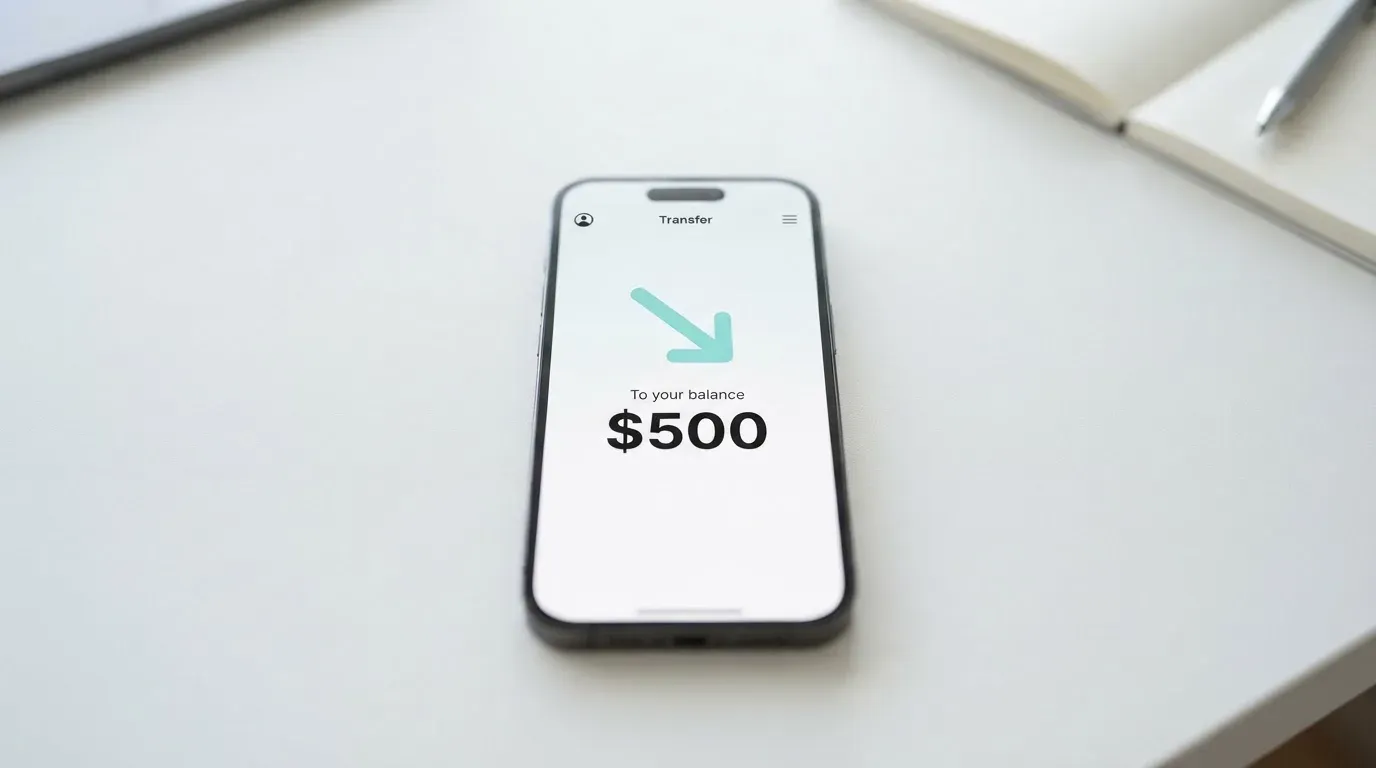
This is the strongest part of the product, and it is why the top-up criterion scores 9 out of 10. The route is: top up the Trustee Plus wallet in USDC (the English guide also names USDT), open the card section of the app, and use “Top up” to move the funds from the wallet onto the card balance. The wallet supports 30+ coins and networks, including TRC20, ERC20, Solana and NEAR. You can also go in from fiat, through Smart P2P with bank cards or through a personal IBAN for SEPA.
Your options, in one place:
| Route | What it involves |
|---|---|
| USDC or USDT to the wallet | The main route; then “Top up” inside the app moves it to the card balance |
| Other coins and networks | 30+ supported, including TRC20, ERC20, SOL, NEAR |
| Smart P2P | Buying with a bank card |
| Personal IBAN | SEPA transfers |
Three practical warnings about this section, and they are worth more than the list of options above.
The network choice is yours and it is irreversible. Blockchain transfers cannot be undone, and a deposit sent on a network the provider does not support, or to an address belonging to a different network, can be lost or need manual recovery with no guarantee. Also note a detail that catches people out: Circle stopped supporting USDC on Tron in February 2024, so “USDC over TRC20” is not a native option. USDC is natively supported on 38 networks as of 16 September 2026, including Ethereum, Solana, Base, Polygon PoS, Avalanche, Arbitrum and Stellar. If you are sending USDC, TRC20 is a USDT network, not a USDC one.
Second, the card does not state who pays the network fee for a wallet deposit, and it does not state a minimum deposit amount. On-chain fees are charged by the blockchain, not by the card, so they are yours to anticipate. Not stated.
Third, the way out. If you want to move money from the card balance back to crypto or to a bank account, the card’s public pages say nothing about the fees or about what happens to a remaining balance if you close the account. Not stated. For a prepaid balance model that is a real gap, because a prepaid card’s whole design is that the balance is yours until you spend it.
Paying with it every day
Day to day, this card does the basic digital-shopping job and little else. Apple Pay and Google Pay both work, and the card claims acceptance at 60+ million merchants worldwide, online payments and subscriptions included. If your spending is subscriptions, app purchases, travel booking and online services paid from your phone, that is a complete use case and the card handles it.
What is missing is anything physical and anything involving a human handing you a terminal. No plastic, no ATM. And the digital side has one unstated gap: the list of blocked merchant categories is not stated. That matters because MCC 7995, the four-digit code that covers gambling, is blocked by many issuers on specific cards as policy rather than by law, and the blocked list varies by issuer. If gambling or a similar category is your thing, you cannot find out from the public pages whether it is closed here.
Two smaller things you will notice only if you go looking. The app is also distributed as an APK directly from the company site, which means you can install it outside the app stores if you choose to. And I could not find Trustee Plus app ratings: the App Store lookup returned the separate Trustee Wallet app, at 2.86 from 36 ratings, updated 2026-03-19. Trustee Wallet is a different product from this card, so read that number as a signal about the company’s software generally, not as a rating for the card app. Dispute handling is not stated either: what happens when a charge is wrong, and who you go to, is not something the card publishes.
What can go wrong
Four things, roughly in order of how much they should worry you.
The company structure is split, and you are trusting both halves. The Terms name MIKEPAY INC. in Panama as the service provider. The card service is provided by WIREX Limited, registered in England, company no. 09334596, 9th Floor, 107 Cheapside, London EC2V 6DN, and the card page says the card is issued in Great Britain. No licence or regulator registration is mentioned on the pages I read. That means two counterparties, in two jurisdictions, and no visible regulatory status for either on these pages. There are real positives around them: Hacken audited the apps in February 2025, there is a bug bounty on HackenProof, 2FA and Face ID and an AML Check are described, and named partners include Kycaid, HackenProof, Binance, Kraken, MoonPay and WhiteBIT. But a bug bounty and an audit are not a licence.
The money is custodial. This card spends from a wallet the provider holds, not from your own self-custody wallet. Control of crypto belongs to whoever holds the private key, and with a custodial wallet the provider holds the credentials, so you must trust them completely. Custodial platforms have a record of large failures: Mt. Gox, about US$350 million reported stolen between 2011 and 2014; Coincheck, about US$400 million in 2018; Ronin Network, US$625 million in 2022. That history is not a prediction about Trustee, but it is the shape of the risk you are accepting.
Freezes after source-of-funds checks are the reported pattern. The company states no official incidents, but the user reports are consistent enough to take seriously. A Trustpilot review from June 2026 cites slow USDT transfers, unclear AML review, an unclear complaint procedure and confusing company information. Other reviews cite cards moving to a merged platform, failures to withdraw or pay, and funds frozen after source-of-funds checks. The Trustpilot rating for the trusteeglobal.eu page is currently shown as unavailable for a guideline breach, which means the visible rating is not something you can lean on either way. This one is not exotic. If your money goes in and a review flags you, the pattern across the industry is a hold pending documents, and EU rules require an institution that cannot complete due diligence to refrain from the transaction and, where necessary, end the relationship.
The regulatory position in Ukraine. In September 2025 the National Bank of Ukraine barred the Lithuanian operator from offering payment services in Ukraine; new registrations in Ukraine were halted, with the director saying existing clients were unaffected. Reporting in August 2026 said availability for residents was “still being checked”. The Terms of Use were last updated on 25 May 2026. If you are a Ukrainian outside Ukraine, note that the card’s FAQ promises you access regardless of residence while the Ukrainian regulator has been restricting the operator’s activity at home. I am not going to tell you how to read that as a strategy; I am telling you it is the context you are deciding in.
Two smaller risk items: there is no published card-freeze feature and no insurance mentioned, so if the card details leak, your first line of defence is the provider’s support rather than a switch in the app. And in the EU, e-money funds are not the same as bank deposits and may not be covered by a deposit guarantee scheme; the relevant obligation is that an electronic money institution must safeguard customer funds by segregating them or insuring them.
What to take instead
Three alternatives, all of which score above Trustee Plus, and all of which come with their own catch. I am putting the catch next to each one, because a comparison that only lists the good side is useless to somebody choosing.
| Alternative | Score | What it does better | What it does worse for you |
|---|---|---|---|
| RedotPay | 6.9 / 10 | Cheapest on paper: 10 USD virtual card, no maintenance fee at all, 5 USD welcome reward, deposit to the card balance is free. Card currencies USD and HKD. | Charges 1.00% per transaction as the crypto conversion fee, 1.20% for non-default currency, and 0.2 USD on small authorisations after the first five a month. Ukraine, Russia, Belarus and Serbia are on both its KYC and card-issuance exclusion lists. Physical card 100 USD. |
| Bitpanda | 6.5 / 10 | A real physical Visa debit card, EUR only, first shipment free, spends from a chosen asset converted to EUR. | Needs verified residence in a euro-area country, and users verified via “Bankident” cannot order. Non-EUR payments carry Visa mark-up. Cashback is stated inconsistently: 1% in the body, “up to 2%” in the summary, and it excludes fiat, stocks, metals and stablecoins. |
| Wirex | 6.7 / 10 | Free card issuance across the regions it lists, one physical plus one virtual card at once, and cryptoback in WXT up to 8% on the Elite tier and metal card. | Which cards you get “depends on your region”. No fixed FX fee is published; the rate varies by pair and is shown in-app. Cash withdrawals are “not permitted in Singapore”. A 30 GBP one-off administrative fee applies to accounts violating the General Terms. |
Read that table the way you would read a real choice. RedotPay is the closest competitor and the one to look at first if your priority is cost: its 1.00% transaction fee is the thing to weigh against Trustee Plus’s 0% on payments plus 0.5% to top up, and its hard exclusion of Ukraine is the thing that settles it for many readers regardless. Bitpanda suits a euro-area resident who wants plastic. Wirex suits someone who wants a crypto-linked card with a published rewards ladder and does not mind finding the exchange rate in the app.
If your reason for wanting a crypto card is that you cannot get an ordinary bank card, none of these is the answer either. They are all prepaid or debit products from payment institutions, not bank accounts.
Who I would recommend it to
I would recommend Trustee Plus to exactly one person, and I would rather be specific than generous.
I would recommend it to a Ukrainian, living outside Ukraine or in Ukraine, who wants to spend stablecoins online and from a phone, who is comfortable being identified by the app, who will check the network before every transfer, and who will move money back out before the one-year inactivity clock starts. If that is you, 10 USD to open, 0 USD a month and 0% on payments is a genuinely good deal, the wallet takes 30+ coins and networks, and Apple Pay means you never touch the card details.
I would not recommend it to anyone who needs cash, anyone who needs a physical card, anyone who needs to pay in their local currency and wants to know exactly what they are paying, anyone who needs a documented refund or dispute process, or anyone who is uneasy about their balance being held by a provider in Panama with an issuer in England and no licence mentioned on the pages I read.
And I would add one practical piece of advice that is not a recommendation at all. Before you commit anything, open the app, read the Terms, and look for two things I could not find: the list of countries We support, and what the conversion markup is on top of the Visa rate. Those two answers would move my score more than any feature the card adds next year.
Frequently asked questions
What is the Trustee Plus card?
Trustee Plus is a virtual Visa Prepaid card that spends from a balance you load yourself, mostly with stablecoins such as USDC or USDT. It is issued by Wirex Limited in England and operated by MIKEPAY INC. in Panama. Only the virtual, in-app card is available today; the physical card is on a waitlist. It is a prepaid product, not a bank account, and cash withdrawals are unavailable.
How does the Trustee Plus card work?
You load your wallet with crypto or fiat, then move funds from the wallet onto a separate card balance using the “Top up” control inside the app. From there it behaves like an ordinary Visa card online and in Apple Pay or Google Pay, converting non-dollar payments at the Visa rate. The balance cannot go negative, because the card only spends what you have already put there.
Is Trustee Plus a bank?
No, and this is the single most important distinction to hold on to. It is a prepaid card issued through a payment and e-money framework, with funds held by a provider rather than at a bank. Such safeguarded funds are not the same as bank deposits and may not be covered by a deposit guarantee scheme. If what you need is a bank account rather than a payment card, this is the wrong product.
Who owns Trustee Plus?
Two named parties, and you should know both. The Terms name MIKEPAY INC., registered in Panama, as the service provider, and the card service itself is provided by WIREX Limited, registered in England, company no. 09334596, of 9th Floor, 107 Cheapside, London EC2V 6DN, with the card issued in Great Britain. Neither a licence nor a regulator registration is mentioned on the pages I read.
Is Trustee Plus available in my country?
Honestly, you have to check, and the card makes that hard. The Terms require residence or incorporation “in countries and territories We support”, but that list is not published on the public pages, so not stated. Ukrainians are told they can get the card regardless of residence. A third-party site describes it as open to EEA residents, but that is unofficial and contradicts the card.
How do I apply for the Trustee Plus card?
Install the Trustee Plus app, complete KYC in-app through the partner Kycaid with a passport or ID photo plus a selfie, meet the age requirement of 18 or the legal age in your country, and the virtual card is issued in the app. Proof of address is not stated, nor are processing times or rejection reasons. New registrations in Ukraine were halted in 2025.
Does the Trustee Plus card require KYC?
Yes, identity verification is required before the card is ordered, and it is a single step run through Kycaid. The card does not publish the verification tiers, how long review takes, or what happens on a refusal. This matters because rules like this generally cover name, address, date of birth, nationality, identity documents, sanctions screening, and a politically-exposed-person check.
How do I top up the Trustee Plus card?
Top up the wallet in USDC (USDT is also named in the English guide), then open the card section and use “Top up” to move funds onto the card balance, which costs 0.5%. The wallet supports 30+ coins and networks including TRC20, ERC20, SOL and NEAR, and you can also come in from fiat via Smart P2P or a personal IBAN for SEPA. Check the network before sending: transfers are irreversible.
Is the Trustee Plus card safe to use?
Treat the balance as custodial money held by a provider, which is how most crypto card balances work. There are real safeguards: 2FA, Face ID, an AML Check, Hacken audits of the apps from February 2025, and a bug bounty on HackenProof. Against that, no licence or regulator registration is mentioned on the pages I read, card freeze and insurance are not stated, and reviews report funds frozen after source-of-funds checks.
Is Trustee Plus worth it?
For one narrow profile, yes: a Ukrainian spending stablecoins online and from a phone, who needs neither cash nor plastic. You pay 10 USD to open, 0 USD a month, 0% on payments and 0.5% to top up, which is hard to beat. For everyone else the price is not the deciding factor; the missing physical card, absent ATM access, undisclosed conversion markup and unclear country list are.
App and neobank cards – cryptocardsranked
Content created by the «cryptocardsranked» team