
A 300-asset Visa, but only for most US residents
 Available in US
The Uphold card is a Visa debit card that spends from an Uphold wallet holding 300-plus digital assets and US dollars, and it pays rewards in XRP. That breadth of assets is genuinely unusual. The catch is geography: the card is for residents of most US states and Washington D.C., it is not offered in Louisiana, New York or any US territory, and the company does not publish a UK or European card programme on the same page. If you live in the United States and you want a single card that can draw on a long list of tokens, this is one of the few realistic choices. If you are anywhere else, you will want to read the alternatives section first.
The conditions described here are current as of October 28, 2026.
Verdict
Uphold scores 5.8 out of 10 in my weighing of the categories below. It is a workable option for a US resident who already holds a mix of crypto and wants to spend it without moving it to a separate card product, and the dual-tier structure (Essential and Elite) gives a clear free-versus-paid choice. It loses marks for the very narrow geographic availability, for a non-trivial crypto conversion spread on the majors, and for the pattern of account-freeze complaints in the user-report landscape.
| Criterion | Mark | Why it lands there |
|---|---|---|
| Who can get it | 2 / 10 | US residents only, and not in Louisiana, New York or US territories |
| Cost | 6 / 10 | Essential is free, Elite is $99.99/year; crypto spreads 2.05–2.2% on BTC/ETH |
| Top-up options | 8 / 10 | 300+ assets, USD, stablecoins; bank transfer, direct deposit, PayPal or crypto |
| Reliability and complaints | 6 / 10 | Cross River Bank issuer, FDIC-insured USD; but freezes of weeks to 3 months reported |
| Everyday use | 9 / 10 | Virtual and physical Visa, Apple Pay and Google Pay “when available”, ATMs work |
| Total | 5.8 / 10 |
Who it suits. A US-based Uphold user with a long tail of holdings, who wants to spend those holdings from a card rather than selling first, and who is comfortable converting at a spread. The Elite tier rewards heavier users if the $99.99 annual fee pays for itself in the higher XRP cashback cap and the zero foreign-transaction fee.
Who it does not suit. Anyone outside the United States. Anyone in Louisiana, New York or a US territory. Anyone who wants a self-custody card where the private keys never leave their wallet. Anyone with a thin conversion tolerance: paying in BTC or ETH through this card costs roughly 2.05 to 2.2 percent in spread on top of any other fees.
Who will they give you the card
Uphold issues the card to US residents in US states and Washington D.C., and explicitly does not offer it in Louisiana, New York or any US territory. The rule is residence-based; the card pages do not extend it to citizenship.
The card runs on a standard US Visa debit setup. The physical card is USD, and the programme splits into two tiers: Essential, with a plastic card, and Elite, with a metal card. Essential has no annual fee, a $4.99 charge for the plastic, a 1.50% foreign-transaction fee and a $2.95 ATM fee. Elite costs $99.99 a year, the metal card is included, foreign transactions are 0% and ATM withdrawals are $0. Both tiers carry the same $25,000 maximum card balance. The terms require accurate real name, a valid US mailing address, a date of birth, and personal use only.
If you are a US resident in one of the excluded states, or a US citizen living abroad, this card is not the product for you. If you are reading from Europe, the UK, Canada, Latin America or anywhere else, the same applies. The “available in {country}” question is worth asking before you go further: only the United States qualifies here.
How to get it
Uphold says the application takes “under five minutes” and that there is no credit check. The first step is an Uphold wallet, which you set up inside the app; the card is added to the same account. Card terms ask for an accurate real name, a valid US mailing address and a date of birth; pages read for this review do not list the specific documents, proof of address, age threshold or the different KYC tiers used by the platform.
After approval, you can use a virtual card immediately for online and in-app purchases. The physical card is mailed to the US address on file; delivery time and shipping cost are not stated on the pages read. If the card is lost or damaged, replacement costs $4.99 on Essential and $29.99 on Elite, with one free replacement per year for Elite; expedited replacement is not available.
Two practical points. First, treat the five-minute figure as the application step, not the end-to-end experience: identity reviews and card-production waits add time. Second, the no-credit-check framing is correct as far as it goes, but it is not the same as no verification. The KYC step is a separate workstream and the complaints below are mostly about how that workstream is handled.
What it really costs: the fees section
The numbers below are taken directly from the card terms and the platform fee schedule. Where a figure is “not stated” on the public page, I have said so rather than estimate.

| Fee or limit | Essential | Elite |
|---|---|---|
| Annual fee | $0 | $99.99 |
| Virtual card | $0 | $0 |
| Physical card | $4.99 (plastic) | $0 (metal) |
| POS purchase | $0 | $0 |
| Foreign-transaction fee (purchases) | 1.50% | 0% |
| ATM withdrawal (in- or out-of-network) | $2.95 | $0 |
| Foreign ATM transaction fee | $1.50 | $0 |
| Card replacement | $4.99 | $29.99 (one free per year) |
| Close card | $0 | $0 |
| Customer service | $0 | $0 |
| ATM balance inquiry | not available | not available |
| Maximum card balance | $25,000 | $25,000 |
| Purchases and total withdrawals | $2,500/day, $10,000/month | $25,000/day, $100,000/month |
| ATM | $500/day, $2,000/month, 3/day, 10/month | $2,000/day, $10,000/month, 3/day, 30/month |
| Bank-teller cash | same as ATM | same as ATM |
| Crypto conversion fee (on the card page) | not stated | not stated |
| Crypto spread, BTC/ETH | 2.05–2.2% | 2.05–2.2% |
| Crypto spread, altcoins | 2.85–3.8% | 2.85–3.8% |
| Crypto spread, stablecoins (other than USD/USDC) | under 0.25% | under 0.25% |
| Crypto spread, USD and USD stablecoins | 0% (1:1, $20,000 monthly cap per customer) | 0% (1:1, $20,000 monthly cap per customer) |
| Crypto spread, precious metals | 2.35–3.40% | 2.35–3.40% |
The card itself carries no POS fee and no cash advance line in the published terms. The “all-in” cost of a real-world payment is therefore the foreign-transaction fee (Essential only, 1.50%) plus the spread on the asset you convert. USD and USD stablecoins convert at 0% inside a $20,000 monthly cap per customer, so a cardholder who tops up with USDC and pays within that cap is paying only the network fee on the deposit side and no conversion spread at the till.
To make that concrete, three everyday payments:
- A $100 grocery shop paid in USDC, US-based merchant. With USDC inside the $20,000 monthly cap, the conversion spread is 0%, the POS fee is $0, and the foreign-transaction fee is 0% in the US. Your only cost on the card side is the network fee you paid when you moved USDC into Uphold, which is on the blockchain, not on the card.
- A $100 grocery shop paid in BTC. The conversion spread on BTC/ETH runs 2.05% to 2.2%, so $2.05 to $2.20 of the $100 is the conversion cost. POS fee $0, foreign-transaction fee $0. The total card-side cost is the spread.
- A €90 dinner in Paris, paid in USDC on Essential. Visa converts €90 to USD on the processing day at the rate Visa itself sets, Uphold adds 1.50% foreign-transaction fee on the dollar value, and the USDC-to-USD conversion inside the monthly cap is 0%. On Elite, the foreign-transaction fee is 0%, so the only cost is the network fee on the USDC deposit.
The fee line on the card page for “crypto conversion” is itself not stated, which is unusual. The platform fee schedule documents the spread instead. If you are budgeting, read the spread, not a headline number, and use the Preview Trade button in the app to see the all-in price before you commit. Note that the foreign-transaction fee is not refundable by the bank, and the bank does not reimburse exchange-rate losses.
How to top up: the top up section
The card spends from your Uphold wallet balance, and that wallet is funded in one of four ways: bank transfer, direct deposit, PayPal or crypto deposit. The wallet itself holds 300+ digital assets and US dollars, with stablecoins highlighted in the product copy. The platforms you can top up from are wide; the platforms Uphold names by name are not.
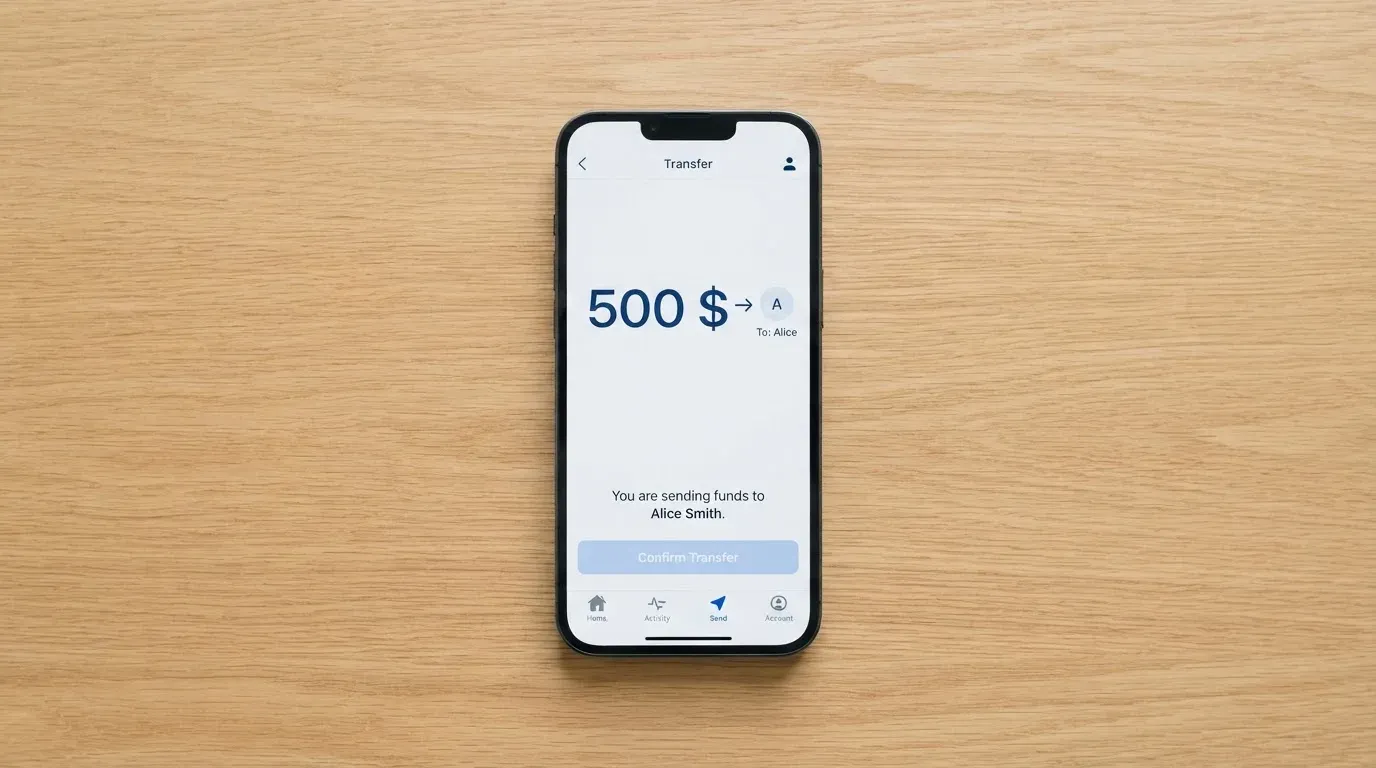
Per-method deposit fees and minimums are not stated on the pages read. Networks supported for crypto deposits are not listed on the card page either, which is a real gap: a USDC deposit sent on a network Uphold does not support, or to an address on the wrong network, can be lost, and blockchain transfers are not reversible.
Two structural details are worth understanding. First, the USD fiat account held at Cross River Bank is FDIC-insured; crypto and precious-metal balances are not, and the card balance itself is not insured as a deposit. Second, the maximum card balance is $25,000 on both tiers, so a high-balance user can spend up to that amount from the card at any time. Funds in the card account do not expire; the bank may cancel the card at any time, and you can close the card through customer service at $0. Withdrawal-to-bank fees are not stated.
In short, the top-up story is “many assets, several rails, limited detail.” If the specific network you want to deposit on matters to you, you will need to confirm support inside the app before sending. The card balance is a thin layer over the wallet, not a separate account.
Paying with it every day
The card is accepted wherever Visa is taken, online and in store. Apple Pay and Google Pay are supported “when available” — that is Uphold’s wording, which I would read as country, bank and device-dependent rather than universal. The blocked merchant categories are not stated on the card pages.
Rewards are paid in XRP. Essential earns 2% in XRP on every purchase, capped at up to $120 over the rewards window. Elite earns 4% in XRP on crypto- or metals-funded spend and 3% in XRP on fiat- or stablecoin-funded spend, capped at up to $300. The cap wording is the platform’s; the rewards currency is currently XRP, and the rewards are available for 3 months after activation for cards activated on or after 1 January 2026. In other words, the rewards program is a fixed window rather than an ongoing accrual, so the headline rate is best read as a maximum, not a steady-state yield.
The mobile experience is rated 4.7 out of 5 on the US iOS App Store, with 91,000 ratings, on app version 6.111.0 at the time of writing. The Google Play rating was not read for this review.
Disputes follow a defined process: start one in the Uphold platform, report errors within 60 days, follow up a phone report with written confirmation within 10 business days, and the bank decides within 10 business days. Provisional credit can be issued within 10 business days; resolution can take up to 45 days, or up to 90 days for new cards, point-of-sale or foreign-initiated transactions. An unauthorised Visa transaction is investigated in 5 business days plus a further 5. For lost or stolen cards, your liability is capped at $50 if you report within 2 business days, rising to $500 thereafter. The terms do not use the word “chargeback”.
What can go wrong
Two layers of risk matter here, and they are different in kind.
Operational risk. The most-cited complaint theme, in user reports from September and October 2026, is account freezes and restrictions without explanation lasting weeks to 3 months, often triggered after a first deposit, a card link, a withdrawal or a location mismatch. Other recurring themes are slow bot-driven support, identity-verification problems (expired links, lockouts after a phone change), and unexpected charges. The Trustpilot picture is split: the platform shows 4.6/5 across 27,602 reviews (about 6,386 in the last 12 months), with 67% five-star and 17% one-star and 0% of negative reviews replied to; a third-party aggregator cited a 2.4/5 figure. The official Uphold status page did record a Mastercard-related issue that froze some UK cards, resolved 19 May 2026.
Counterparty and security risk. USD balances at Cross River Bank are FDIC-insured; Uphold itself is not a bank, and the bank does not insure crypto or metal balances. Uphold recommends enabling 2FA and uses email verification for unusual activity, and describes a Reserveledger/Reservechain solvency proof; in-app card freeze, spending controls and insurance are not stated on the security page. Visa Zero Liability does not cover ATM transactions outside the Visa/PLUS networks, so an ATM in a country where Plus is not accepted is on you. The card-issuer side of the platform (US card, Essential and Elite) is Cross River Bank as the issuer, with Uphold HQ Inc. as the program manager; licences are not stated on the page read.
The pattern worth taking seriously is not the headline rating but the directional signal in the negative reviews: freezes are common, slow support is common, and identity checks are the most common trigger. If you keep balances on Uphold that you cannot afford to have frozen for weeks, that is a planning question you should answer before you fund the card.
What to take instead
Three comparison points are useful here, because they bracket Uphold on the dimensions that matter most: geography, cost and reward structure. None of them is a perfect substitute; each is closer to what a particular kind of reader may want.
Bybit Card scores 6.0/10 in my weighing. It is the right answer for someone outside the United States who can use a card from one of the supported regions: Argentina, AIFC (Kazakhstan), Georgia, Kazakhstan, Australia, Mexico, Brazil, Peru, and the broader Asia Pacific. It is explicitly not for European Economic Area customers. The card has no balance of its own: it draws on a Bybit Funding Account and a Flexible Easy Earn balance, fiat first, then crypto at a 0.9% conversion fee over the One-Click Sell rate in most regions. Rewards are tiered (2% to 10% in USDT) and, since 5 October 2026, only crypto-funded spending earns points or cashback. The headline features are a free virtual card in all regions “until further notice” and no annual fee, but physical-card issuance ranges from free (Brazil, Mexico) to around $29.99 (Australia, AIFC, Georgia). The geographic fragmentation is a real cost in practice: a cardholder who moves country may need a new card.
Coinbase Card scores 6.4/10. It is the US analogue, available in all US states except Hawaii. The setup is a Visa prepaid debit card that spends cash or crypto, with all crypto converted to USD for purchases and ATM withdrawals, and no spending fees or annual fees disclosed on the main page. Funding is by linking a bank account or routing part of a paycheck into Coinbase. Rewards are optional, the rate is variable and shown in-app, and the user picks from rotating crypto rewards. If the draw for you is “a US debit card that spends crypto”, the Coinbase Card is the most boring and most consistent answer; if the draw is “spend 300 different tokens”, Uphold is the broader option.
OKX scores 6.2/10. It is the European option: a euro-denominated Mastercard virtual debit card linked to OKX Pay, launched on 28 January 2026 in the EU plus Norway, with Iceland and Liechtenstein excluded. There is no card fee as of May 2026, no transaction fee and no OKX FX fee; the conversion spread is around 0.1% per the most recent explainer (a press-release figure of 0.4% is older). Cashback applies only to USDG purchases (USDC earns none), with caps between 2% and 10% depending on VIP level. The catch is that USDC or USDG must already be in OKX Pay, and other coins have to be converted first; there is no auto top-up, and a payment is declined if the balance is insufficient. For a European reader of this review, OKX is the closest functional equivalent to Uphold.
The honest summary: Uphold is the broadest-asset US option; Bybit is the right answer for a long list of non-US, non-EEA countries; Coinbase is the cleanest US option; OKX is the European option. There is no single “best” — the right choice depends on where you live and what you want to spend.
Who I would recommend it to
I would recommend the Uphold card to a US-based user who already keeps a meaningful spread of tokens on Uphold, who would rather spend those balances than sell them to a bank first, and who is willing to pay a spread to do so. I would point that person to the Essential tier first: the cost is zero to enter, the foreign-transaction fee is bearable if you stay domestic, and the 2% XRP rewards cap is enough to learn whether the experience is for you. I would only suggest Elite to someone who has already done the math and can show that the $99.99 annual fee is returned by the higher rewards cap and the zero foreign-transaction fee, which usually means someone who travels or who spends heavily on the card.
I would not recommend it to a non-US resident, a resident of Louisiana or New York, a holder of large uninsured balances who is uncomfortable with the freeze complaints, or anyone who treats their private keys as sacrosanct and prefers a self-custody card. I would also be cautious about it for anyone spending BTC or ETH directly: at 2.05% to 2.2% spread, that is a real cost, and the bank does not reimburse it. If you are in that position, the practical move is to top up with USDC inside the $20,000 monthly 0% spread window, and treat the card as a USDC-spending instrument rather than a BTC-spending one.
The single most useful thing you can do before you sign up is to use the in-app Preview Trade button on a representative payment, read the all-in number, and decide whether the spread is something you are willing to pay for the convenience.
Frequently asked questions
What is the Uphold card?
The Uphold card is a Visa debit card that spends from an Uphold wallet holding 300-plus digital assets and US dollars, with rewards paid in XRP. It comes in two tiers, Essential and Elite, and a virtual version is available alongside a physical one.
How does the Uphold card work?
The card spends from your Uphold wallet balance. You fund the wallet by bank transfer, direct deposit, PayPal or crypto deposit, and at the till the card converts the chosen asset to USD at Uphold’s spread, then routes the payment through Visa. USD and USDC convert 1:1 inside a $20,000 monthly cap.
Is Uphold a bank?
No. Uphold is not itself a bank and is not FDIC-insured. USD balances in the Uphold wallet are held at Cross River Bank, which is a Member FDIC, and that USD balance is FDIC-insured; crypto and precious-metal balances are not insured.
Who owns Uphold?
Uphold HQ Inc. is named as the program manager for the US card. The card issuer is Cross River Bank, a Member FDIC, on the Visa network. The wider ownership of Uphold is not stated on the card pages.
Is the Uphold card available outside the United States?
No. The US card page is for US residents in US states and Washington D.C., and is not offered in Louisiana, New York or any US territory. A separate UK card programme is referenced in older dispute records; the card terms read for this review describe a US-only programme.
How do I get the Uphold card?
Open an Uphold wallet in the app, complete identity verification, and apply for the card from inside the account. Uphold says the application takes under five minutes and there is no credit check. The virtual card is available immediately after approval; the physical card is mailed to the US address on file.
Does the Uphold card require KYC?
Yes. The card terms require accurate real name, a valid US mailing address and date of birth, and the platform follows US customer identification rules. Specific document requirements, age threshold and KYC tiers are not stated on the pages read.
How do I top up the Uphold card?
Top up the underlying Uphold wallet by bank transfer, direct deposit, PayPal or crypto deposit. The card itself has no separate top-up step; once the wallet is funded, the card spends from that balance up to a $25,000 maximum.
Is the Uphold card safe?
USD balances are FDIC-insured through Cross River Bank, and the platform recommends 2FA and email verification for unusual activity. The main safety caveats are that crypto and metals are not insured, that user reports of account freezes lasting weeks to 3 months are common, and that Visa Zero Liability does not cover ATM transactions outside the Visa/PLUS networks.
Is the Uphold card worth it?
For a US resident with a diversified Uphold balance who would otherwise have to liquidate first, the convenience is real and the Essential tier is free to try. For a non-US reader, or for someone with a thin conversion tolerance, the spread on BTC/ETH and the geographic restriction make it a poor fit, and one of the alternatives in this review is likely a better match.
Exchange cards – cryptocardsranked
Content created by the «cryptocardsranked» team