
The Utorg card is a virtual Visa you load with USDC — free to hold, free to spend, but thin on the details
 Available in US
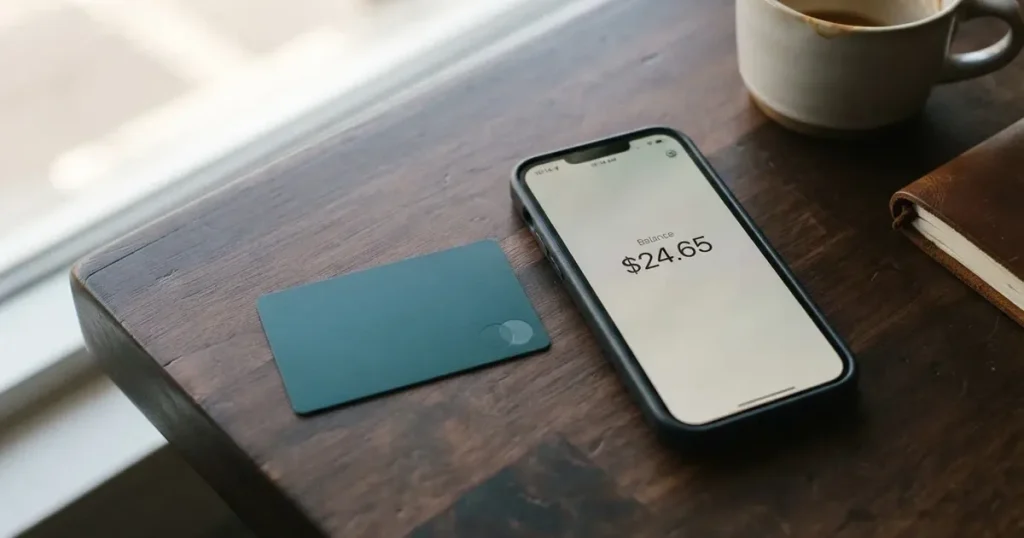
The Utorg card is a virtual Visa you create after an identity check and load with USDC, then spend like an ordinary card at any shop that takes cards. There is no plastic, no monthly bill and — on the card’s own claims — no foreign-exchange markup and no payment fee. That sounds like the ideal card for someone holding dollars on the blockchain who wants to actually buy coffee, groceries and train tickets without juggling a normal bank. But when I read the fine print, several things simply are not stated: whether you need a proof of address, what the crypto conversion costs, whether there are cash withdrawals, how long a disputed payment takes. And the country rules contradict themselves — the card page lists a set of European countries, while the FAQ talks about 190+.
If you have stablecoins and want a spending card, this is worth reading. If you are hoping for a metal card, cash withdrawals or cashback, look elsewhere. My honest score is 6.3 out of 10, and the table below shows why.
*Conditions are current as of October 28, 2026.*
Verdict: who it suits and who it does not
At its heart, the Utorg card is a straightforward tool: it is best for residents of the EEA and of Ukraine who already hold USDC and want to convert it to local currency and spend it at ordinary merchants, without a bank account in that country. That is the exact fit the card was built for, and if that is you, the value is real — the “zero fee” claims on payment and FX, while promotional, are unusually generous compared with most crypto cards.
It is a poor fit for almost everyone else. If you want a physical card, cash from an ATM, a card that works in your own local currency account, or rewards on your spending, Utorg does not deliver. Nor is it a fit if you want to hold funds and know you can get them back: the terms reserve the right to restrict or close your access at any time and say little about what happens to a balance if the service shuts.
On the criteria I score:
| Criterion | Mark | Why |
|---|---|---|
| Who can get it | 5 / 10 | EEA countries plus Ukraine, Norway, Iceland and Liechtenstein on the card page, yet the FAQ says “190+ countries” — the mismatch is unexplained. |
| Cost | 8 / 10 | Zero issuance and zero monthly fee, zero FX markup and no payment fees, all “for a limited time”; the crypto conversion fee is not disclosed. |
| Top-up options | 7 / 10 | USDC on Ethereum, Polygon, Arbitrum, Solana and BSC; the page lists no other coins. |
| Reliability and complaints | 6 / 10 | The card is provided by Chain Valley Sp. z o.o. with Wirex Pay, though a previous issuer named was Utrg UAB — the data conflicts; Trustpilot sits at 4.2 / 5 from 952 reviews. |
| Everyday use | 5 / 10 | Only a virtual Visa, instantly after KYC; Apple Pay and Google Pay work, but there is no physical card and no ATM. |
The total is 6.3 / 10. The strengths are honest — a genuinely cheap virtual card for stablecoin holders in the covered regions. The weaknesses are the classic crypto-card kind: the details that decide whether a card is actually usable, like FX spreads at conversion, limits per day, and what a refund actually looks like, are left unsaid.
Will they give you the card?
Eligibility is where the Utorg card is most confusing. The card page lists EEA countries — Italy, Germany, Spain, France and the Netherlands are the examples it gives — plus Ukraine, Norway, Iceland and Liechtenstein. The FAQ, meanwhile, claims support in “190+ countries”. Those two statements sit side by side without explanation, and the card page does not name the countries it excludes. Whether the test is based on where you live or on your citizenship is also not stated, and that distinction matters: if you live in one covered country but hold a passport from somewhere else, the answer is unclear from the public pages.
Third-party information, unofficial and not confirmed by the card, paints a more specific picture. One review site listed 31 countries as available in August 2026 — Austria, Belgium, Bulgaria, Croatia, Cyprus, Czech Republic, Denmark, Estonia, Finland, France, Germany, Greece, Hungary, Iceland, Ireland, Italy, Latvia, Liechtenstein, Lithuania, Luxembourg, Malta, Netherlands, Norway, Poland, Portugal, Romania, Slovakia, Slovenia, Spain, Sweden and Ukraine — and named Afghanistan, China, Japan, Nigeria, Russia, Singapore, the United Kingdom and the United States as restricted. None of that is on Utorg’s own card page, so treat it as a hint about where the card is *not* rather than a firm rule.
If you are in the EEA or Ukraine, resident and holding USDC, you are in the sweet spot. If you are anywhere else, or your citizenship is from a restricted country, do not assume approval — the card’s public pages simply do not tell you.
How to get it
Getting the Utorg card is quick by design. The identity check is AI-powered and described as taking “under 5 minutes”: you upload an ID document and complete a liveness check (a selfie-style verification of a live face). Whether you also need a proof of address, or a minimum age beyond the usual adult threshold, is not stated on the page.
Once you clear verification, the card itself is instant — it is a virtual Visa card generated in the app, not a plastic card posted to you. There is no physical card mentioned, so there is nothing to wait for and no delivery. On Android you need app version 2.88.0 or higher to set the card up.
One thing to know about the verification stage: rejections do happen, and the help centre has articles on “Source of Funds” and on accepted documents for that questionnaire. In a March 2023 Trustpilot review, the company’s reply cited specific reasons a verification had failed — a passport missing a signature, and a bank statement sent as a screenshot instead of a PDF. Read that as advice for your upload, not as a rule: send the clean, full documents the app asks for.
The practical sequence, then, is short: sign up, upload your ID and pass the liveness check, and your virtual card appears. That ease is one of the card’s genuine strengths — but it also means almost nothing is explained up front about limits or tiers, so there is no “level 1 / level 2” structure to climb. The card page shows no tiers at all.
Fees: what it really costs
On paper, the Utorg card is one of the cheapest things in this category. There is no issuance fee and no monthly fee — both marked “for a limited time”, which is the phrase to watch. There is also, again “for a limited time”, zero foreign-exchange markup and no payment fee. That is a genuinely striking offer: most crypto cards either take a percentage on every purchase or a spread on the conversion.

Here is what the card states, and what it leaves out:
| Item | What the card says |
|---|---|
| Issuance fee | Zero (marked “for a limited time”) |
| Monthly fee | Zero (marked “for a limited time”) |
| Conversion fee (crypto) | Not stated |
| FX markup | Zero (limited time) |
| Payment fee | None (limited time) |
| ATM / cash withdrawal | Not stated (no physical card) |
| Daily limit | Not stated |
| Monthly limit | Up to EUR 30,000 (card page) |
Two blanks matter most. First, the crypto conversion fee — the moment your USDC becomes merchant-currency — is not disclosed anywhere on the card page. Second, the ATM situation is not stated; since there is no physical card, cash withdrawal is unlikely to be a feature, but the card does not say so outright. Unofficial, unconfirmed third-party information suggests conversion happens at a live rate with no fixed public percentage, and that provider terms permit spreads, markups and network costs; it also suggests ATM fees simply “do not apply” to a virtual card. Neither claim is on Utorg’s own pages.
A few everyday payments, priced
Let us take three ordinary moments and walk through which fees actually bite.
- A small coffee in Berlin. If the card truly carries zero FX markup and no payment fee, the only cost is the crypto conversion of your USDC into euros — and that conversion fee is exactly the number not published. In practice, expect the merchant-currency amount to come out of your USDC at the live rate, whatever margin that rate embeds.
- A weekly grocery shop in Madrid, paid in euros. Same story: no card-side fee claimed, but again the USDC-to-euro conversion cost is undisclosed, and this is a recurring purchase, so any conversion margin is paid again and again.
- A dinner billed in dollars, say, on a US-facing site. Here the “zero FX markup” promise is doing its heaviest lifting — if it holds, you pay the dollar amount at the live rate with no added card fee; if it is only promotional “for a limited time”, your bill quietly includes a spread.
The honest summary: the card is free to hold and, while the promotion lasts, claims to be free to spend. The number you cannot verify from the public pages is the conversion rate your USDC actually fetches — and that is the number that matters most, because every purchase passes through it. Check the in-app rate yourself before you rely on the card for anything important.
How to top up the card
Topping up is where the card is clearest about what it accepts: USDC, on one of five networks — Ethereum, Polygon, Arbitrum, Solana or BSC. So you transfer USDC to the card’s address on the network of your choice, and it lands as spendable balance. The card page invites you to “effortlessly top up your Utorg Crypto Card with crypto”, and a help-centre article even explains what “Gasless top-up” means, though the answers themselves are not something I can relay.
What is not stated on the page: any deposit fee, any minimum top-up, and who pays the on-chain network fee (the gas, which the blockchain charges for the transfer regardless of the card — that cost is the network’s, not Utorg’s). Deposits and any cross-currency conversions are also flagged “zero fees, for a limited time”. There is a help-centre article titled “Why is USDT not available for card top-up?” — the title alone tells you USDC is the coin, not USDT, for topping up this card.
One practical warning that applies to any crypto top-up: blockchain transfers are irreversible. Send your USDC on one of the five supported networks to the correct address, or you may lose the funds or need manual support recovery with no guarantee. Unofficial, unconfirmed information also suggests the top-up fee is EUR 0 (as advertised), that conversion happens in real time at purchase with no prefunding needed, and that the older version of the card used to require you to load a euro balance first.
Withdrawing is the gap. The card page does not say how (or whether) you can take money back out; the “Sell crypto” feature is marked “Coming soon”. So plan this card as spend-only, not as a two-way bridge.
Paying with it every day
Day-to-day, the Utorg card is a virtual Visa that lives in your phone. It works at any online merchant that accepts cards, and it is designed to sit in Apple Pay or Google Pay — both are supported. A note for Android: card access needs app version 2.88.0 or above.
That is the appeal: tap your phone at a terminal, spend USDC-derived balance, no bank account needed in that country. The catch is that everything here is virtual. There is no physical card to tap at a reader that rejects tokenised or virtual numbers, and no ATM for cash. Whether certain merchant categories are blocked (gambling, for instance, which many issuers restrict by policy) is not stated, so you may discover the limits by hitting a decline.
There are no rewards to speak of. The card page mentions no cashback or any other reward programme, and third-party reports — unofficial — also confirm no cashback, with a July 2026 review praising the card as instant while noting “No cashback”. If you spend on the card expecting to get a little back, you will not.
Support, when you need it, comes through a Help Center, a support team and [email protected], described as available seven days a week (hours not stated), in English and Ukrainian.
What can go wrong
The largest risks here are structural, not technical. Let me walk through them in order of how likely they are to affect you.
The issuer is not clearly named. This matters more than it sounds. A card number encodes its issuing institution, and merchants look that up. The terms (updated 17 September 2026) say the card is provided by Chain Valley Sp. z o.o. in collaboration with Wirex Pay / Wirex Limited, and an April 2026 press release says Wirex now powers card spending for Utorg wallet users — but a review site earlier named Utrg UAB (Lithuania) as the issuer. The issuer information conflicts. The footer also says “Utorg is not attributed to banking services”. In practice: know that the entity behind the card is a payments company, and check the current terms for who stands behind it.
The “self-custodial” framing. The card page leads with “The first non-custodial Crypto Card” and the FAQ says “You hold your keys. You hold your crypto.” But the terms also say Utorg itself does not issue the cards, provide payment accounts, issue e-money, or custody your fiat or digital assets for the card — it is the front-end, and the balances sit with the provider. So the marketing promise of self-custody and the legal reality of a provider-held balance sit side by side. What that means practically: your access can be frozen or unfrozen (there is a help-centre article on it), and your key ownership does not protect you from the provider deciding your access stops. Insurance or safeguarding of funds is not stated, and neither is two-factor authentication.
Disputes and chargebacks. This is the sharpest edge. The terms say Utorg cannot approve, reverse or decide chargebacks, and it disclaims responsibility for refunds and disputes — those go to the card provider. It also says claims relating to Utorg must be filed within one year or are barred. How long a dispute actually takes is not stated. If a payment goes wrong, you are dealing with the card provider, not the app you have installed, and the clock is one year.
Account closure. The terms reserve the right to refuse, restrict, suspend, terminate or discontinue card access at any time, and say little about what happens to a balance if the service closes. With “Sell crypto” still “Coming soon”, there is no obvious on-ramp to get your balance out as cash.
Trustpilot, in context. The Utorg Trustpilot page shows 4.2 / 5 from 952 reviews, but only 5 of those reviews are from the last 12 months, so the score is carried by older history. Recurring themes in the reviews: a cancelled transaction and slow refund (Jan 2024, Nov 2024), repeated KYC rejections (Mar 2023), and a report that a wallet was shown as closed and not reopenable (Aug 2026 — to which Utorg replied the wallet remains available). Notably, no card-specific complaints appear; the card itself is praised as instant. In short: the complaints are about the platform, not about the card.
What to take instead
If any of the gaps above — cash withdrawals, a physical card, a physical-card feel in hand, or known limits — matter to you, there are peers worth looking at. I have scored the closest alternatives at their own totals so you can compare like for like. RedotPay scores 6.9, Wirex 6.7, and Bitpanda 6.5 — all a little above Utorg, mostly because they are more fleshed-out.
| Alternative | Score | The one-line case |
|---|---|---|
| Utorg (this card) | 6.3 / 10 | Free virtual Visa for USDC in the EEA and Ukraine; thin on disclosed details. |
| RedotPay | 6.9 / 10 | Virtual and physical, wide country list, but charges issuance and a 1% transaction fee. |
| Wirex | 6.7 / 10 | Physical and virtual, real network choice, but fees vary by region and it has its own history. |
| Bitpanda | 6.5 / 10 | Solid physical euro-area card with a licensed feel; euro-area residents only, and cashback on crypto spend. |
- RedotPay is the broadest on paper — virtual and physical cards, a USD or HKD card, USDC/USDT/ETH funding, a small 5 USD welcome reward. It costs more: 10 USD for the virtual card, 100 USD for the physical one (non-refundable), and a 1% transaction fee on the crypto conversion. Its country rules are also more transparent than Utorg’s, published across two lists that do not quite agree with each other.
- Wirex is the most bank-like of the set — a physical card you can use at ATMs, backed by an established account platform. It is also the one with history worth knowing: in November 2022 Visa terminated its global agreements with FTX, and the FTX US debit card programme was wound down. Its fees vary by region, and Singapore terms bar cash withdrawals outright.
- Bitpanda suits the more conservative reader: a regulated, euro-area exchange whose physical Visa you spend directly from your crypto balance, with monthly fees and cashback — but it is only for residents of euro-area countries verified in person.
Which is right for you? If you are an EEA or Ukraine resident holding USDC and want a zero-fee virtual card in your phone, Utorg remains a strong pick. If you want to hold cash, or a card in your hand, or you simply prefer a provider that publishes more, one of the alternatives above will serve you better.
Who I would recommend it to
I would recommend the Utorg card to a specific person: someone resident in the EEA or Ukraine, who already holds USDC on the blockchain, is comfortable with crypto-native tooling, and wants to spend that balance at everyday merchants — online or via Apple Pay and Google Pay — without opening a local bank account. For them, the value proposition is real and the price is genuinely low, at least while the promotional fees hold. A user who falls outside that description should probably pick a different card, and I have tried to be clear about where that line sits.
The one thing I would tell any of them: verify the current crypto conversion rate and the live terms in the app before you lean on this card for anything you cannot afford to lose, because the fine print leaves several blanks — and the blanks, not the fees, are where the risk lives.
Frequently asked questions
What is the Utorg card?
The Utorg card is a virtual Visa card you create after an identity check and load with USDC. You pay in stablecoins and the merchant receives local currency. There is no physical card — it lives in your phone and works with Apple Pay and Google Pay. It is aimed at people in the EEA and Ukraine who want to spend crypto at ordinary shops without a traditional local bank account.
How does the Utorg card work?
You top up the card with USDC sent on a supported network, and the balance converts to the merchant’s currency at the moment of payment. The card is a virtual Visa, so you add it to Apple Pay or Google Pay and tap or pay online. The card is non-custodial in design — you hold your crypto keys — though the card itself is provided by a payments partner, Chain Valley Sp. z o.o. with Wirex Pay.
Is Utorg a bank?
No. Utorg is a crypto platform, not a bank. The site is operated by UTORG LABS HOLDING LTD in Abu Dhabi, UAE, and the footer states that Utorg is not attributed to banking services. The card itself is issued through a payments partner rather than a bank, so any funds you hold are not the same as a bank deposit.
Who owns Utorg?
The site owner is UTORG LABS HOLDING LTD, registered number 000008060, with an office in Abu Dhabi, UAE. The card, however, is provided by Chain Valley Sp. z o.o. in collaboration with Wirex Pay / Wirex Limited, according to terms updated 17 September 2026. A previous issuer named was Utrg UAB in Lithuania, so the issuer details have changed over time.
Can I use the Utorg card in my country?
The card page lists EEA countries — Italy, Germany, Spain, France, the Netherlands and others — plus Ukraine, Norway, Iceland and Liechtenstein. The FAQ more broadly claims 190+ countries, but the card does not explain the mismatch, nor whether the test is residence or citizenship. If your country is not clearly on the card page’s list, assume you must check with support before relying on it.
Is Utorg card free?
Issuance and the monthly fee are zero, marked “for a limited time”. There is also zero foreign-exchange markup and no payment fee, again for a limited time. But the crypto conversion fee is not stated, and that is the cost that actually applies to most purchases. So it is free to hold, but the cost of converting your USDC is not published.
Does the Utorg card require KYC?
Yes. The identity check is AI-powered and described as taking under five minutes — you upload an ID document and pass a liveness check. Proof of address and any minimum-age requirement are not stated. Verification rejections do occur, so send the clean, full documents the app requests, in the format it asks for.
How do I top up the Utorg card?
You send USDC to the card on one of five supported networks: Ethereum, Polygon, Arbitrum, Solana or BSC. Deposits and cross-currency conversions are flagged as zero-fee for a limited time, but any deposit fee, minimum, or who pays the network gas is not stated. Transfers are irreversible, so double-check the network and address before sending. Note that USDT is not accepted for top-up.
Is the Utorg card safe?
It carries real structural risks. The card is provided by a payments company rather than a bank, the issuer details have changed over time, and the terms let the provider freeze, suspend or close your access at any time. Chargebacks are handled by the card provider, not Utorg, and claims must be filed within a year. The app offers a freeze control, but no insurance or safeguarding of funds is stated.
Is the Utorg card worth it?
For its core user — an EEA or Ukraine resident holding USDC who wants a free virtual card for everyday spending — yes, it is worth a look, especially while the zero-fee promotion lasts. But you accept undisclosed conversion costs, no physical card, no ATM, no cashback, and thin published limits. If any of those gaps matter to you, a more fully disclosed card may suit you better.
App and neobank cards – cryptocardsranked
Content created by the «cryptocardsranked» team