
A prepaid card bolted onto a crypto wallet, cheap in places and expensive in others
 Available in US
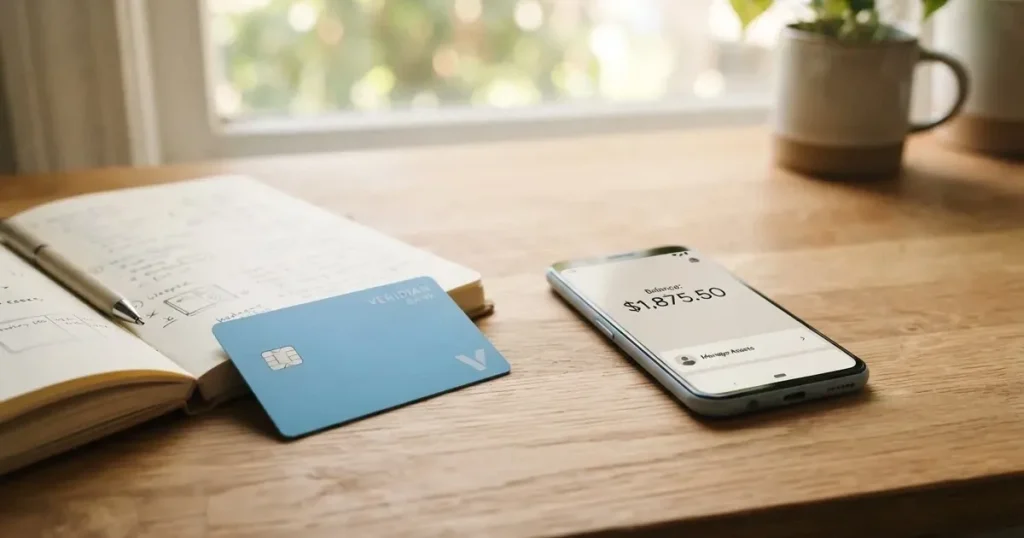
Volet is not a bank account with a card attached. It is a crypto wallet that also issues payment cards, and the card spends only what you have already loaded into the wallet as ordinary money. That single fact explains almost everything about this product: the reason it is quick to get, the reason it is cheap, and the reason certain numbers are hard to find. I scored it 6.0 out of 10. Details on the conditions are current as of October 28, 2026.
The card suits you if you already hold or plan to hold crypto, you want to convert it into spendable dollars or euros, and you are comfortable treating the wallet as a custodial provider rather than your own vault. It suits you less if your priority is an ordinary debit card with a stable sort of relationship to a bank, if the cost of moving money has to be predictable to the cent, or if you are in one of the places where card availability is restricted.
The single most useful thing I can tell you before anything else: Volet runs on three regional card families, and the fees, currencies and limits differ between them. Reading a fee you saw somewhere else may simply not apply to you.
| Criterion | Mark | Why |
|---|---|---|
| Who can get it | 8 / 10 | Service in 180+ countries; global digital Mastercard in 150+ countries, plus regional cards for Asia-Pacific and Europe |
| Cost | 4 / 10 | Issuance $5 for the digital global card, $5 for Asia-Pacific plastic, 1 USD/EUR for Europe Virtual; loading from the wallet 2.5% + $1 on the digital global card, 1% + 1 USD/EUR in Europe, 3.5% by card |
| Top-up options | 6 / 10 | The card loads only from the Volet fiat wallet; USDT, USDC, BTC, ETH and others are deposited and converted to USD or EUR; networks not named |
| Reliability and complaints | 5 / 10 | Issuer and legal entity not named, regional agreements; Trustpilot 4.1 from 5 across 965 reviews, with complaints about high fees, verification limits and cards not arriving |
| Everyday use | 7 / 10 | Digital and plastic Mastercard and Visa cards, Apple Pay and Google Pay on some cards; ATM terms not officially disclosed |
| Total | 6.0 / 10 | A capable regional wallet card that charges more than it first appears to |
Will they give you the card
The service says it operates in “180+ countries”, and card availability depends on where you are rather than on one global list. The global digital Mastercard is described as available in 150+ countries. Separate regional families exist for the Asia-Pacific region and for Europe, and the pages talk in terms of “region” rather than telling you precisely whether they mean where you live, where you were born, or both. The card’s public pages do not draw that line, so if your citizenship and your address are in different parts of the world, that is a question to ask support before you count on anything.
What is clearer is the shape of the map. Europe cards are aimed at residents of the EU plus Switzerland and Norway, with Turkey and Israel covered on the Visa side. The Asia-Pacific list names Australia, Cambodia, Japan, Malaysia, New Zealand, the Philippines, Singapore, South Korea, Thailand and Vietnam.
Those lists come partly from third-party sites rather than from Volet itself, so treat them as unofficial and unconfirmed. The same third-party sources list 29 restricted countries, naming the US, the UK, Puerto Rico, Cuba, Iran, Syria and North Korea, and count 51 countries as served. None of that is stated by the card.
That absence of the US and the UK is worth pausing on, because those are exactly the countries where people most often go looking for a card that behaves like a normal debit card. If you are in either, the honest answer from what I can see is that this is not a product for you.
How to get it
The signup has two layers, and that is genuinely one of its better features: basic wallet functions do not require identity verification. You can open the wallet, look around and use the basics. Verification is what unlocks cards, all card features, fiat funding methods without limits, full withdrawals and higher limits, and the card says it “usually takes only a few minutes”.
What the card does not tell you, and this is a real gap rather than a detail, is which documents count, whether proof of address is required, what the age threshold is, what the verification levels are, or why a verification might be refused. You will not find that in the public pages.
Third-party descriptions fill some of that space, unofficial and not confirmed by the card: an identity document, a selfie or liveness check, proof of address, and information about where the money came from, depending on the programme. One such source, in August 2026, says the Asia-Pacific programme specifically needs proof of residential address in a named country. Treat all of it as a reasonable expectation rather than a promise.
The card itself comes in several shapes. The global digital card is a Mastercard denominated in USD. Asia-Pacific offers a plastic Mastercard in USD. Europe offers a Virtual and a Plastic card on Visa or Mastercard, in USD or EUR.
Physical cards exist for Asia-Pacific and for Europe, Turkey and Israel. Delivery is described as “free or express”, with no timeframe given and no price for the express option. That last point matters more than it sounds: if you need a card before a trip, “free or express” without a stated time is not something to plan around.
The same third-party source lists replacement costs — $19.95 for the Digital card, €/$1 for a virtual European card or €/$5 for plastic, and $120 for Global Plus — and gives no delivery time. Unconfirmed, but useful for a sense of scale.
Fees: what it really costs
Issuance is cheap. The global Digital card is $5, Asia-Pacific plastic is $5, and the Europe Virtual card is 1 USD/EUR. No monthly card fee is listed, and the FAQ says there are no monthly fees. That is the good news, and it is also why the real cost lives elsewhere.

Here is the schedule as the card states it:
| Fee or limit | Value |
|---|---|
| Issuance, global Digital | $5 |
| Issuance, Asia-Pacific plastic | $5 |
| Issuance, Europe Virtual | 1 USD/EUR |
| Issuance, Europe Plastic | $5 / EUR 5 |
| Monthly card fee | Not listed; the FAQ says there are no monthly fees |
| Load from the wallet, global Digital | 2.5% + $1 |
| Load from the wallet, Asia-Pacific | 1.5% + $1 |
| Load from the wallet, Europe | 1% + 1 USD/EUR |
| Load by card into the e-wallet | 3.5% |
| POS and FX | No extra fee; Mastercard rate on Global, “no POS fee” in Europe |
| Crypto deposits to the wallet | Free |
| Auto-conversion to fiat or stablecoin balance | $1 for USDT/USDC; free for BTC/ETH/others |
| ATM | Not stated |
Now the part that actually determines your bill, and this is where you should slow down. Loading a card from your own Volet wallet is charged at 2.5% plus $1 on the global Digital card, 1.5% plus $1 in Asia-Pacific, and 1% plus 1 USD/EUR in Europe. If your wallet already holds dollars, every time you move that balance onto the card you pay again. That is a fee on a transfer between two pockets of the same provider, which is why it reads as high against the $5 issuance price.
Consider three ordinary payments. A coffee bought with the European Virtual card: you load the wallet balance at 1% plus 1 USD/EUR, then the card carries no POS fee, so the visible cost sits at the loading step. A $40 online purchase on the global Digital card: the load costs 2.5% plus $1, so roughly $2 on that amount, and the card states no extra FX fee at the Mastercard rate. A month of topping up from an ordinary bank card into the e-wallet: 3.5% each time, charged by the card on fiat top-ups, which is the route most new users take before they learn the cheaper path.
That last figure is the one that matches the volume of complaints. In February 2026 one reviewer calculated a total cost of up to 11% from wallet to card, and in August 2026 another described the fees for getting euros in as “somewhat high”. Those are user reports, not card statements, and I want to be precise about that. But they are consistent with the schedule above.
Two limits are stated. The global Digital card goes up to $50,000 per purchase; Asia-Pacific is up to $22,000 per purchase and $6,500 loaded per day; Europe limits are not listed. Monthly caps are not stated either.
Third-party sources, unofficial, fill in the ATM and monthly gaps: Europe €/$1.99 within the domestic region and €/$2.99 outside it, Asia-Pacific $2.99 ($1.99 in Australia), Global Plus $2 plus 1% and another 2% for non-USD, and no clear ATM fee published for Digital. The same source lists ATM ceilings of $500 per withdrawal and $500 per day on Digital, €/$500 per withdrawal and €/$2,500 per day in Europe, and $550 per withdrawal and $1,650 per day in Asia-Pacific. I would not treat any of that as settled.
How to Top up the card
This is the structural fact that decides everything: the cards load only from the fiat Volet e-wallet. There is no way to put crypto straight onto the card. What happens instead is that USDT, USDC, BTC, ETH and other coins go into the crypto wallet and are converted into USD or EUR, and that fiat balance is what the card spends.
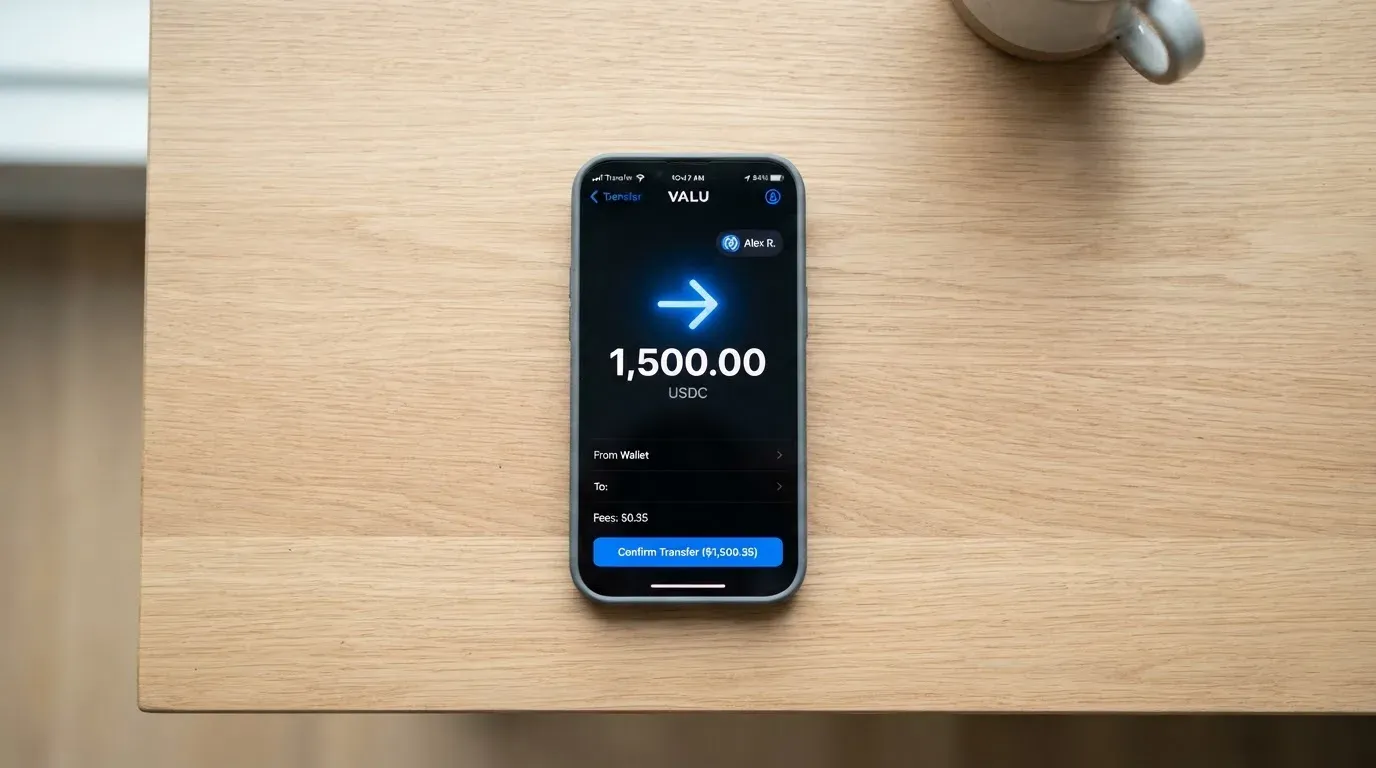
So there are two legs, and both can cost you. The crypto leg charges a network fee paid to the blockchain, not to Volet, plus the conversion fee: auto-converting USDT or USDC into a fiat or stablecoin balance costs $1, while BTC, ETH and others convert free. The card’s public pages do not name the networks, which is a genuine problem rather than a technicality. Blockchain transfers are irreversible, and a deposit sent on a network the provider does not support, or to an address belonging to a different network, can be lost with no guarantee of recovery. Check the network before you send anything.
The fiat leg is where the percentage fees live. A top-up by Visa or Mastercard card into the e-wallet costs 3.5%. Crypto-to-crypto-wallet transfers are free. Minimum top-up amounts and SEPA or bank transfer fees are not stated.
For Europe, the SEPA route is the one I would look at first, precisely because it is the leg the card leaves least documented — and undocumented is not the same as free. Ask support what a bank transfer costs before you assume it is the cheap way in.
Paying with it every day
Some cards support Apple Pay and Google Pay; the page says to check each individual card’s description rather than promising it across the range. Third-party reporting says Apple Pay and Google Pay work on the Digital and Spend Virtual cards, are not advertised for Europe, and are not supported for Asia-Pacific or Global Plus — unofficial, and worth verifying yourself before you rely on tapping your phone in a shop.
Blocked merchant categories are not stated. This matters more than it might appear, because a prepaid card from a crypto programme can be declined by merchants in specific sectors by the issuer’s own policy rather than by law. Nobody will hand you the list; you find out by being declined.
There is no cashback. There is a referral programme listed as “coming soon”: 2 USD/EUR per activated digital card and 5 USD/EUR per activated plastic card. Treat that as a promise on a waiting list rather than a current feature.
The app is a mild oddity worth flagging. The site shows both Google Play and App Store badges while the page itself says “iOS coming soon”, so the iOS app is not yet available even though the store badge appears. Store ratings are not stated.
There is no fee tier structure to climb. Each card type is a single tier, and the differences between them are regional, not a ladder of perks. On currencies, the Global digital Mastercard is USD, the Europe cards can be USD or EUR, Asia-Pacific is USD, and the Global card carries “no extra FX fee (Mastercard rate)”. The wallet exchanges fiat balances at “near-market” rates, though no figure is given, and multi-currency balances are not stated.
Dispute handling is not described. If a payment goes wrong, the public pages do not set out the route.
User reports and structural risks
No official incident about this card came to my attention. What exists is a pattern of user reports and a structural caution.
The pattern, from 965 Trustpilot reviews at 4.1 out of 5 as I read them: 72% five-star and 16% one-star. The one-star themes are fees, verification and withdrawal limits (in September 2026 a UK user could not complete full verification), transactions blocked from India without justification in January 2026, funds sent to an old wallet address in August 2026, cards not arriving in September 2026, and a bank-statement PDF rejected as proof of address in March 2025 — with Volet saying the issuing partner decides. In August 2026 a reviewer called the fees for getting euros in “somewhat high”, and in June 2025 another flagged high fees. Third-party guides describing Russian users routing money through a Volet EUR balance and exchangers, and finding card-load costs up to 3.5%, are unverified.
The structural caution is bigger than the reviews. The Volet e-wallet is custodial: your funds sit with Volet. If the provider has a problem, the money is exposed in the way that custodial balances always are, and crypto transfers do not reverse. Industry history makes the point — Mt. Gox (about US$350 million reported stolen 2011-2014), Coincheck (about US$400 million, 2018) and Ronin Network (US$625 million, 2022) were all failures of companies holding other people’s crypto, not of blockchains.
The company question is unresolved on the card’s own pages. The footer says only “the provider”; the card issuer is not named and licences are not stated. Third-party sources say Volet was formerly ADVcash and that the card issuers are not publicly named — unofficial, and the licence field there is still empty. What the card does publish are regional agreements, with documents titled “Agreement Canada” and “Agreement Costa Rica”, which tells you the contracting entity can differ by region. That is normal in this industry and it also means you should read the agreement that applies to you rather than the one you found first.
On security the card describes “multi-layer security, encryption, access controls and continuous monitoring”, with PCI-DSS, GDPR, SSL and ISO badges. Two-factor authentication, in-app card freeze, spending controls and any safeguarding or insurance arrangement are not stated, so do not assume them. Support is described as “24/7 live support”, with a support centre at support.volet.com and a contact page, and the site runs in about 20 languages including English, Spanish, German, French, Chinese and Japanese.
One more thing to know about this category generally, because it applies to any card like this: crypto card programmes have been shut down. Visa terminated its global agreements with FTX on 13 November 2022 and the FTX US debit card was wound down by its issuer; WaveCrest, a Visa issuer that supplied crypto card brands, was suspended by Visa in Europe in 2018, closing all WaveCrest-issued Visa programmes. Closures typically mean a notice period, then loading stops, then spending stops, then you are asked to withdraw what remains. In the EU, e-money institutions must safeguard customer funds in dedicated accounts or by insurance, and those funds are not bank deposits and may not sit under a deposit guarantee scheme — a nuance that matters exactly when a provider is under stress.
What to take instead
Three alternatives came up in the same category, and each fails or wins on a different axis. All scores are as I have them: Bitrefill 6.8, UPay 6.1, Kemy 6.0.
| Alternative | Score | Where it edges Volet | Where Volet edges it |
|---|---|---|---|
| Bitrefill | 6.8 | 2% total cashback with no cap; the card is described as free in the app | Volet names its loading percentages and its card types; Volet has a physical Asia-Pacific card |
| UPay | 6.1 | Personal and business cards, payments converting to USD, EUR, AED and others | Volet states its fees; UPay’s fees and card cost are not stated |
| Kemy | 6.0 | Unlimited virtual cards and one contactless physical Mastercard; 190+ countries | Kemy charges $15 plus $2/month on a virtual card and $250 plus $10/month on the physical one — far more than Volet |
Bitrefill is the one worth arguing about most. Its terms say access is “subject to eligibility criteria” and that “further eligibility requirements, established and verified by our partners, shall apply”, which is less specific than Volet about where it works. It supports deposits in Bitcoin, Lightning, Ethereum, USDC, USDT, Solana, BASE and Polygon, plus Apple Pay, Google Pay, Visa and MasterCard and SEPA. But its fees are also mostly unpublished: a deposit spread on crypto-to-euro conversion with no percentage, a SEPA pay-in fee of 1.99%, spreads from payment processors and ATM operators, no stated FX fee, and an inactivity fee after twelve months without spending or cash-out with the amount unstated. It publishes its cashback clearly and its costs vaguely; Volet is the reverse. There is an inactivity fee in Bitrefill and no monthly fee in Volet, which is a real difference for a card you might keep open for years.
UPay claims support in 180+ countries but says it does not serve residents of certain countries, with the list able to change, and its KYC partner accepts only identity documents issued by the same country as the user — a nationality-adjacent condition that Volet does not state. Its card cost and fees are not stated at all, though the card page warns conversion may happen during payment depending on network and settlement. Funding is BTC, ETH, USDT and USDC, networks unstated.
Kemy is the clearest contrast on price. Virtual cards are $15 to issue, valid three years, plus $2 a month, with top-ups at $1.5 under $100 or 1.25% from $100 and a 3.5% plus $1 transaction fee. The physical Mastercard is $250 including DHL Express, plus $10 a month, one per user. That is a card for someone who wants unlimited virtual cards and contactless hardware, not for someone who wants a cheap everyday card.
Who I would recommend it to
I would recommend Volet to someone who is already inside crypto, who wants regional Mastercard and Visa cards rather than one global card, and who has read the loading fee on their specific card type before deciding it is cheap. The Europe family at 1% plus 1 USD/EUR is the most favourable version of this product; the global Digital card at 2.5% plus $1 is the least.
I would be more cautious if you plan to load mostly by bank card, because 3.5% each time compounds quickly, or if your money arrives as USDT and you are in a hurry, because the conversion and network steps are where things go silently wrong. I would be cautious about anything you cannot afford to have delayed for a month.
And if you are in the US or the UK, or if what you actually need is a bank account with a card attached, this is not it — neither the card nor this review is going to talk you into something else.
Frequently asked questions
What is the Volet card?
The Volet card is a payment card issued through a crypto wallet rather than a bank. Your crypto is converted into a dollars-or-euros balance in the wallet, and the card spends that balance like a prepaid card. There are several families: a global digital Mastercard in USD, an Asia-Pacific plastic Mastercard in USD, and European Virtual and Plastic cards on Visa or Mastercard in USD or EUR.
How does the Volet card work?
You load money into the card from your Volet e-wallet, then spend it anywhere the network is accepted. Crypto deposits go into the crypto wallet first and are then converted to USD or EUR. The card cannot go overdrawn, because there is no overdraft — only a balance to draw down. Card payments use Mastercard or Visa rules, so 3-D Secure checks may appear on online purchases.
Is Volet a bank?
The public pages do not present Volet as a bank, and they do not name a card issuer or state any licences. The footer identifies only the provider, while regional agreements such as “Agreement Canada” and “Agreement Costa Rica” suggest the contracting entity varies by region. Third-party sources say Volet was formerly ADVcash. In the EU, providers like this usually operate as electronic money institutions, whose safeguarded funds are not bank deposits.
Who owns Volet, and is it safe?
Volet does not name its owner, issuer or licences on the card and personal pages, and that silence is the honest answer to this question. The service describes multi-layer security, encryption, access controls and continuous monitoring, with PCI-DSS, GDPR, SSL and ISO badges, and offers 24/7 live support. Reviews sit at 4.1 from 5 across 965 Trustpilot reviews, with recurring complaints about fees and verification.
Does the Volet card require KYC?
Partly. Basic wallet functions need no identity verification, and the card says you can use those straight away. Cards, all card features, fiat methods without limits, full withdrawals and higher limits require verification, which the card says “usually takes only a few minutes”. The public pages do not say which documents count or what the age threshold is, and third-party sources mention ID, a selfie and proof of address.
How much does the Volet card cost?
Issuance is $5 for the global Digital card, $5 for Asia-Pacific plastic, 1 USD/EUR for Europe Virtual and $5 or EUR 5 for Europe Plastic, with no monthly fee according to the FAQ. The bigger cost is loading: 2.5% plus $1 from the wallet on the global Digital card, 1.5% plus $1 in Asia-Pacific, 1% plus 1 USD/EUR in Europe, and 3.5% to top up the wallet by bank card.
How do I top up the Volet card?
Only from the Volet fiat wallet — the card cannot be loaded with crypto directly. You deposit USDT, USDC, BTC, ETH and other coins into the crypto wallet, convert them to USD or EUR, then move that balance onto the card. Auto-conversion costs $1 for USDT or USDC and is free for BTC, ETH and others, but the card does not name the networks, which matters because transfers are irreversible.
Is the Volet card free?
There is no monthly fee — the FAQ says so — but “free” would be a misleading summary. Issuance is between 1 USD/EUR and $5, and the loading percentages of 1% to 3.5% apply every time you move money in, while the card can only be funded from inside the wallet. Whether that is good value depends entirely on how often you top up and which regional card you hold.
Can I add the Volet card to Apple Wallet?
Some cards can, and the card says to check each individual card’s description rather than promising it across the range. Third-party reporting says Apple Pay and Google Pay work on the Digital and Spend Virtual cards, are not advertised for Europe, and are not supported for Asia-Pacific or Global Plus. Those details are unofficial, so confirm on your card’s own page before you rely on it in a shop.
Where can I use the Volet card?
Wherever Mastercard or Visa is accepted, on the card’s own terms — but the practical answer is narrower than it sounds. The card’s public pages do not publish a blocked merchant category list, and prepaid or foreign-issued cards can be declined at individual shops or in whole sectors by issuer policy. The Asia-Pacific and Europe cards are region-specific, and the global digital Mastercard is described as available in 150+ countries while the service overall says 180+.
Virtual cards – cryptocardsranked
Content created by the «cryptocardsranked» team