What the Bitget card actually does with your money
 Available in US
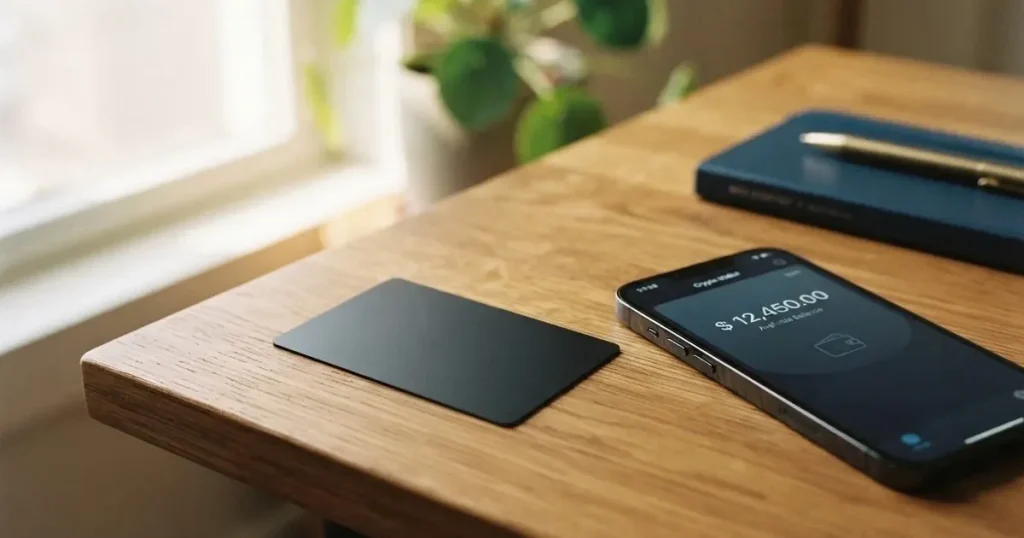
Bitget’s card is not really a bank account with a crypto twist. It is a prepaid-style payment card bolted onto a self-custody crypto wallet, and that single design choice explains almost everything you will like and almost everything you will trip over. Money stays in a wallet only you hold the keys to. In exchange, you carry the full weight of key management, and you spend against a loaded balance rather than a credit line. On my scorecard it comes out at 6.8 out of 10 — solid for one specific kind of user, weak for anyone who wants a normal card with normal backup.
The conditions described here are current as of October 28, 2026.
The verdict: 6.8 out of 10, and who it suits
Let me put the score up front and take it apart, because a single number tells you nothing on its own.
| Criterion | Mark | Why |
|---|---|---|
| Who can get it | 8 / 10 | 50+ countries and regions including the EEA, UK, Argentina, Brazil, Japan, Singapore, South Africa, Pakistan and Bangladesh; more regions promised; unofficial reporting says the US is closed |
| Cost | 7 / 10 | No annual and no monthly fee; 1.7% FX and a 0.05% conversion fee; 49 USD for a physical card in APAC; ATM 1% or 5 USD |
| Top-up options | 8 / 10 | USDT, USDC, ETH, SOL; self-custody app |
| Reliability and complaints | 4 / 10 | Bitget Wallet is the issuer; regional issuing partners unnamed; Trustpilot 3.4/5 on 82 card reviews; support is the weak point |
| Everyday use | 7 / 10 | Virtual card, physical only in parts of Asia and Australia; Apple Pay, Google Pay, PayPal, Alipay, WeChat Pay; ATM on the physical card |
| Total | 6.8 / 10 |
The card suits self-custody wallet users who already hold USDT or USDC and want to spend it without handing the keys to an exchange. If that is you, the top-up breadth and the absence of a monthly fee are genuinely good, and the 8/10 there is earned.
It does not suit you if you need a card in the United States, if you want a physical card in Europe or Latin America, if you want a customer-service team that answers on a human timescale, or if you would rather not be the only line of defence against a compromised seed phrase. Two of those deserve spelling out now. First, third-party sources — unofficial, and not confirmed by the card’s own pages — report the card is not available in the United States, and third-party catalogues disagree with each other about both fees and limits, so treat any number you find on a comparison site with suspicion. Second, the same sources mention an OSL Pay connection and describe the older exchange-branded Bitget Card as no longer accepting new customers; the card’s own pages name no issuing partner per region and state no licences. That silence is the single most important thing on this page.
Will they give you the card
Yes, in a lot of places — the availability map is the strongest part of this offer.
Bitget says the card is available in 50+ countries and regions. The named list includes the EEA, the UK, Argentina, Brazil, Japan, Singapore, South Africa, Pakistan and Bangladesh, with “more regions opening soon”. That is a wide map for a product whose name you would not spontaneously guess.
Against that: unofficial third-party reporting, not confirmed by the card, says the United States is not supported, and other unsupported countries are simply not listed. The same third-party material says Nigeria shows as not open, and reports that some applications failing proof-of-address review had accounts closed with a small balance deduction. I want to be careful here: proof of address is *not stated* anywhere on the card’s public pages. So the honest reading is that address documentation is clearly part of the process for some applicants, but the card itself never says so, and the deduction detail comes from outside sources you should treat as a warning rather than a specification.
That combination — broad availability, an unstated address step, an unofficial account-closure report — is exactly the pattern that produces awkward support conversations. More on that later.
How to get it
Identity verification happens inside the app: you go to Wallet > Card and submit an ID document. Approval can take as little as a minute if the information is complete. There are no tiers described, and no account levels; a help article titled “How to apply and verify my identity?” exists, though its text was not read for this review.
What you get is a virtual card, on Visa or Mastercard, with the issuing partner varying by region. One user reports Mastercard in Europe — unofficial, and the card does not name its partners. The currency of the card is not stated.
A physical card exists, but the list is short and specific: Singapore, South Korea, Japan, Vietnam, Malaysia, Taiwan, Australia, Thailand and the Philippines. That second list is narrower still — for the physical card the named countries are South Korea, Japan, Vietnam, Malaysia, Taiwan, Australia, Thailand and the Philippines. Applicants must be citizens or residents, and an employment pass or proof of address is required. It costs 49 USD including international shipping, deducted from the card balance; inviting three friends offsets it. Delivery is by FedEx, and if the card has not arrived after two weeks you are told to contact support. Delivery time is not stated. If you lose it, you freeze it, get a new virtual card with a new number, and can reapply for a physical one.
One thing to internalise before you start: this is a virtual card first. If your country is not on the physical list, “getting the card” means living with a card number in a wallet app, and if that breaks, you break.
Fees: what it really costs
The headline is friendly. There is no annual fee, no monthly card fee, and no interest markup; the virtual card is free to issue. The issuance fee for the card in general is not stated, so I cannot tell you what a virtual card costs in every region from the card’s own words.

Where the money goes is in the small print. Here is everything the card states.
| Fee or limit | Value |
|---|---|
| Annual fee | None |
| Monthly card fee | None |
| Interest markup | None |
| Issuance fee (virtual) | Free per aggregator; otherwise not stated |
| Physical card, production and shipping | 49 USD, APAC |
| FX fee | 1.7% |
| Conversion fee | 0.05% |
| ATM fee | 1% of the amount or 5 USD per transaction, whichever is higher |
| ATM extra charge | Some ATMs add their own fee |
| ATM limits | 3,000 USD per transaction, 10,000 USD daily (max 20 withdrawals), 100,000 USD monthly (max 30) |
| Daily spending limit | 50,000 USD |
| Annual spending limit | 990,000 USD |
| ATM withdrawal counts toward | The daily spend limit |
Two everyday payments, so the arithmetic stops being abstract.
A 40 USD lunch paid in a currency other than your card’s. The conversion fee is 0.05%, so roughly 0.02 USD on 40 USD — trivial. But if the merchant’s currency differs from the settlement currency you eat the 1.7% FX fee, about 0.68 USD on the same 40 USD. The card says settlement rates “closely match Google’s live rates” and that Bitget does not profit from exchange-rate spreads. Take that at face value and it is a genuinely fair claim; the 1.7% is the visible cost of the currency mismatch, not a hidden mark-up.
200 USD of monthly spend. This is the threshold where the picture changes. Once monthly spend reaches between 200 and 400 USD, assetback typically covers top-up and conversion fees; beyond the monthly allowance, standard fees apply. The exact amounts inside that band are not stated, which is frustrating — the card tells you a range where a number would have been more useful.
Now the contradictions, because they matter more than the table. Unofficial third-party sources, not confirmed by the card, report a top-up fee of 1% per Bitget’s own help centre while its blog articles say 0% — the card contradicting itself. The same sources say the physical card is exempt from the FX fee up to 600 USD a month. On limits, the official figures above stand against unofficial claims of 120,000 USD a day and 150,000 a year on the physical card, a European user reporting a 5,000 USD daily limit, and a public data listing showing 50,000 USD daily. Only the daily figure matches anything else. Plan on the official numbers and treat the rest as noise. The ATM fee is not stated on the general pages either; the 1%-or-5-USD figure comes from the APAC physical card FAQ.
Top up: how the money gets in
You fund the card with crypto: USDT, USDC, ETH or SOL. No top-up fee figure is given for the general case, and the minimum top-up is not stated. Assetback “typically covers most top-up and currency conversion fees”, standard fees apply beyond the monthly allowance, and the conversion fee is 0.05%.
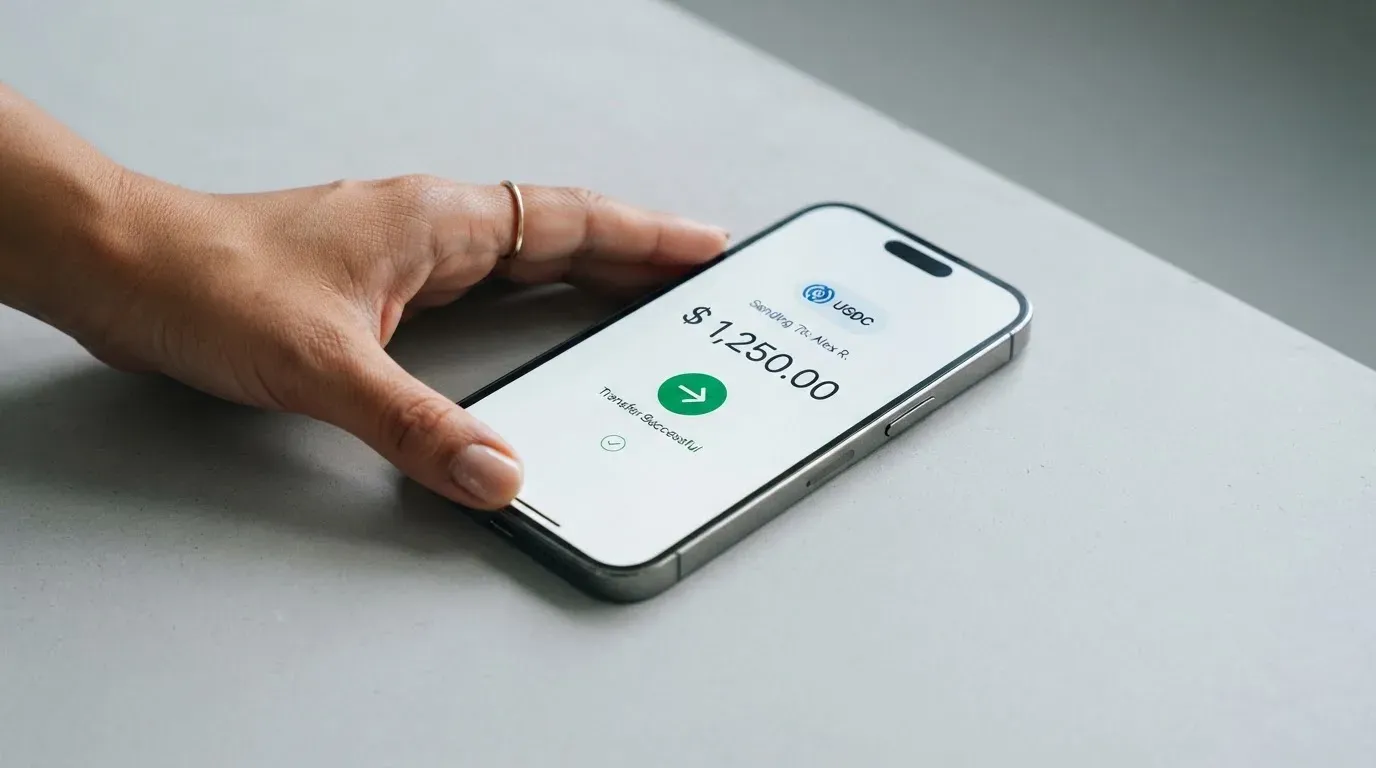
That is the easy part of the story. The part worth sitting with is what happens when things go wrong, because the card does describe it: if you lose your wallet or seed, an already-activated card still spends, but top-up, withdrawing from the card and card recovery are all impossible. Read that again. The card keeps working and you cannot refill it. A help article titled “Topping up my card” exists, and its text was not read for this review.
Under the hood this is where the self-custody design becomes concrete. You are sending on-chain, usually on USDT or USDC, and the network you choose has to be one the card supports — a transfer to a network the provider does not support can be lost, or need manual support recovery with no guarantee. ERC-20 transfers on Ethereum need ETH for gas, so a wallet holding USDT and nothing else cannot send. Tether says it disables tokens in wallets on the sanctions list and has frozen funds tied to illicit activity, so stablecoins are not censorship-proof. And if you are topping up a stablecoin, know the peg is an aim, not a guarantee: TerraUSD collapsed in May 2022, and USDC temporarily lost its peg in March 2023.
The practical takeaway for you: check the network in the app before you send, keep a little native gas token on hand, and treat every transfer as final. On-chain fees are charged by the blockchain, not by the card, so that part is outside Bitget’s control.
Paying with it every day
This is the part of the offer that is straightforward, and it is where the 7/10 for everyday use comes from.
The card works wherever Visa or Mastercard is accepted. You can link Apple Pay, Google Pay, PayPal, Alipay and WeChat Pay. Certain merchant category codes are excluded from rewards, and the blocked categories are not stated. The whole thing runs on the Bitget Wallet app, under Wallet > Card; its store ratings were not read for this review.
The reward is called assetback: 2% base for all cardholders, rising to 3% for new users or once you reach a monthly spend threshold, paid in BTC, gold, US stocks or USDC, with the choice changeable once per calendar month. Certain merchant categories and refunds are excluded, and assetback is not paid on refunded, reversed or cancelled transactions. Help articles on refunds and cash withdrawals exist; their text and the time frames were not read.
Two mechanics will bite you if you are not careful. Some MCCs are excluded — many issuers block the gambling category, 7995, by policy rather than by law, and the blocked list varies by issuer. And a declined authorisation can leave a hold on your funds for several days, typically up to seven. Help articles on problems with purchases, refunds or cash withdrawals exist; I have not read them, so I cannot promise how fast a disputed transaction resolves.
One more thing that explains a lot of declines in this category: address verification compares numeric parts of the billing address you type against issuer records, and it is mainly offered in the US, Canada and UK, generally unavailable for foreign-issued cards. Some merchants decline prepaid or foreign-issued cards because the issuer lookup reveals the type and country. If a purchase fails in a place you would expect it to work, this is often why.
What can go wrong
Let me sort this into what the card says, what unofficial sources say, and what is simply unknown.
The issuer is not named. The card is issued by Bitget Wallet. Issuing partners vary by region and are not named; licences are not stated, and unofficial reporting could not find them either. One reviewer mentions OSL Pay. Visa and Mastercard do not issue crypto cards to consumers themselves — they license issuers and can suspend a programme. In November 2022 Visa said it had terminated its global agreements with FTX, and the FTX US debit card was wound down by its issuer; WaveCrest, a Visa issuer that supplied crypto card brands, was suspended by Visa in Europe in 2018, closing every WaveCrest-issued Visa programme. Closures follow a pattern: a notice period, then spending and loading stop, then you are asked to withdraw remaining balances. A 2026 closure reported by a secondary source had new loads ending 8 July 2026 and spending stopping 8 August 2026 — single source, unconfirmed, and worth knowing because it shows how fast this can happen.
Support is the worst-scoring criterion, at 4 out of 10. A third-party site lists the Bitget Wallet Card at 3.4 from 82 Trustpilot reviews, the lowest score for support and transparency. A user report describes the exchange itself at roughly 2/5 on about 2,000 reviews, with support and account-verification disputes as the themes, one reviewer saying Bitget and partner OSL Pay stopped responding after a loss. Help is reachable — Help Center, Discord, Telegram, X, Facebook, YouTube, Instagram, GitHub, TikTok, and a Support icon in the app — but reachable is not the same as answered. The recurring complaint theme for the card is automated generic replies and Bitget not replying to reviews.
A hash of a wallet situation. This is a self-custody app, which is the main appeal and the main risk. Control of crypto belongs to whoever holds the private key or seed phrase; a seed phrase is typically 12 to 24 words and unencrypted, so anyone who obtains it can restore the wallet and spend the funds. Transfers are typically irreversible, and a stolen key has no recovery path — the network cannot freeze or return funds. If you lose it, the card still spends and you still cannot refill it, as the card’s own pages say. The card’s safeguards are real but modest: freeze under Card > Manage > Freeze Card, help articles on a lost seed phrase and on turning off payments, and a linked Protection fund whose contents were not read. With self-custody-linked cards the funds stay in your wallet until the moment of payment, but you bear sole responsibility for key loss, phishing, and clipboard-hijacking malware that swaps copied addresses. That last one catches people who thought they were careful.
Compliance friction. KYC rules require regulated businesses to verify customers and assess risk under anti-money-laundering law, including ongoing monitoring. In the EU, due diligence covers name, address, date of birth, nationality and ID documentation, a sanctions check, the purpose of the relationship, and whether you are a politically exposed person. If due diligence cannot be completed, EU rules require the institution to refrain from the transaction or relationship and, where necessary, end it — which is why accounts get closed or frozen pending documents. Nationality is screened separately from residence, because sanctions screening and issuer risk policy often apply to citizenship and country of birth as well as address. Prepaid and debit cards generally go to adults 18+; some issuers set higher limits. There is nothing here about dodging any of that, and I would not try: KYC on a card like this is the price of admission, not an obstacle to be routed around.
Two closed-card reports, both third-party. The official record of incidents is not stated. Unofficial: a physical card press release dated 2026-04-01 per an aggregator, and separately that the exchange-branded Bitget Card stopped accepting new applications on 2026-08-01. If you have seen an older Bitget card and assumed it is the same product, check which one you are signing up to.
Your recovery options may be thinner than a bank’s. A chargeback is a refund ordered by the issuer to settle a dispute, with reason codes such as fraud, duplicate billing or goods not received. US debit card reversal rights come from Regulation E and credit card rights from Regulation Z; prepaid-card coverage varies and should not be assumed. Treat this as a prepaid card for dispute purposes and budget accordingly. And a tax note, stated plainly as information rather than advice: the IRS treats digital assets as property, so exchanging them for goods, services or dollars generally produces a taxable gain or loss, measured in local currency at fair market value on the transaction date. Each card payment funded from crypto can be a separate disposal. Check this with a professional in your own jurisdiction.
What to take instead
MetaMask, KAST and Zeal each scored lower or similar on my scale, but they fail differently, and one of them is probably closer to what you actually need.
| Bitget | MetaMask | KAST | Zeal | |
|---|---|---|---|---|
| Score | 6.8 | 7.1 | 6.1 | 6.1 |
| Network | Visa or Mastercard, varies by region | Mastercard | Visa (Platinum, Infinite) | Visa |
| Where | 50+ countries, EEA, UK, Japan, Singapore and more; not US (unofficial) | 45 listed countries, others on a waitlist; US/UK sign-ups temporarily closed (FAQ) | Residence-based list shown at KYC, not published; region-of-ID also counts | 150+ countries to spend; programme live in EU, UK, Brazil, Colombia, Mexico, Japan, Singapore, Philippines, Indonesia, Thailand |
| Card cost | No annual or monthly fee; 49 USD physical in APAC | Virtual free; Metal 199 USD/year | Standard 0; Premium 1,000 USD/year; Private 10,000 USD/year; 40 USD delivery | Not stated, no fee schedule published |
| Fees | 1.7% FX, 0.05% conversion | “Minimal fee per transaction”, amount not stated; no FX fee, Mastercard rate | Stablecoin top-up 0%, USD spend 0%, transaction 0%; non-USD FX 0.5%–1.75%; declined 0.50 USD | No additional FX fee, Visa wholesale rate |
| Funding | USDT, USDC, ETH, SOL | Wallet balance on Linea, Base, Monad, Solana; mUSD, wETH, EURe, GBPe, USDC, USDT | USDT, USDC, PYUSD, RLUSD across Ethereum, Solana, Polygon, Arbitrum, TRON | EUR/USD/GBP balances in a card Safe on Gnosis Chain, Celo |
| Rewards | Assetback 2%, up to 3% | Cashback 1% Virtual, 3% Metal on first 10,000 USD | 1.5% / 2% / 3% cashback by tier on capped monthly spend | Up to 4% cashback in GNO |
MetaMask (7.1) is the closest alternative on score, and the cleanest structure. It issues through Monovate with Crypto Life as card provider, Mastercard, virtual card issued instantly, Metal pre-orderable in the app afterwards, one card per user. It charges no FX fee and uses the Mastercard rate. Cashback is 1% on Virtual and a headline 3% on Metal, though the footnote limits 3% to the first 10,000 USD and then 1%. Two caveats: it says the citizenship rule is not stated, and its FAQ has US and UK sign-ups temporarily closed — which is the opposite trade to Bitget’s. Solana-only wallets cannot withdraw credit. It also has its own wallet-key risks, so it is not a safety argument, only a features argument.
KAST (6.1) is the most transparent on rules and the most expensive on tiers. It shows a residence-based country list at KYC rather than publishing one, references a Restricted Locations list without naming countries, and is explicit that living in a supported country with an ID from a restricted one can still fail; a VPN does not bypass it, and only your own ID is accepted. Its fee line is the clearest of any of these: stablecoin top-up 0%, USD card spend 0%, transaction fee 0%, Apple and Google Pay 0%, non-USD FX 0.5%–1.75% depending on your residence country, transaction country and programme, a flat 0.10 USD on non-USD transactions under 25 USD, and 0.50 USD for a declined transaction. But Standard is 0 USD a year with 1.5% cashback on the first 2,000 USD a month, Premium costs 1,000 USD a year, and Private 10,000 USD a year — billed annually upfront, no monthly option. There is also a 1 USD a month inactivity fee after 12 months. Its terms say acceptable tokens are “currently USDT and USDC”, which conflicts with the PYUSD and RLUSD shown in the app.
Zeal (6.1) is the one with the least published. Spend in 150+ countries, Visa, virtual card addable to Apple Pay, balances in EUR, USD and GBP, up to 4% cashback in GNO on Gnosis Chain provided you hold GNO in the card Safe, and rates can change. But no fee schedule is published, and no physical card is mentioned. Zeal says it adds no FX fee of its own and converts at the Visa wholesale rate, though Gnosis Pay fees such as ATM may still apply.
Pros and cons, side by side:
- Bitget pros: no annual or monthly fee; four funding assets; 50+ countries; self-custody throughout.
- Bitget cons: unnamed regional issuers and licences; Trustpilot 3.4/5 on 82 card reviews; physical card limited to nine countries; conflicting published figures; support the weakest link.
- MetaMask pros: no FX fee, transparent issuer, immediate virtual card, higher headline cashback.
- MetaMask cons: tiered cashback falls back to 1% past 10,000 USD; 199 USD a year for Metal; US and UK sign-ups closed per FAQ.
- KAST pros: the clearest fee schedule in the category; 0% on stablecoin top-up and USD spend; up to 10 cards.
- KAST cons: annual membership of 1,000 or 10,000 USD for the better cashback; region-of-ID rules; terms conflict with the app on tokens.
- Zeal pros: 150+ countries to spend in; no added FX fee.
- Zeal cons: no published fees; no physical card; cashback conditional on holding GNO.
Who I would recommend it to
I would recommend this card to you if three things are all true. You already hold USDT or USDC in a self-custody wallet and understand what that means. Your country is on the availability list and you do not need a physical card, or you live in one of the nine countries where it exists. And you have somewhere else to go when support does not answer, because it sometimes will not.
I would steer you elsewhere if you are in the United States, if a physical card in your hand is non-negotiable and you are outside Asia and Australia, if you plan to lean on chargebacks or ATM cash, or if you would rather your money sat with a licensed institution that names itself and shows you paperwork. For that last profile, a licensed e-money institution is the more conventional answer: in the EU such an institution can issue e-money, payment cards and wallets but cannot lend, and may serve the whole EU/EEA from one member state’s licence. EMIs must safeguard customer funds by segregating or insuring them, and those funds are not bank deposits and may not sit under a deposit guarantee scheme. A card is a payment service regulated separately from the crypto side, which is why a crypto card often depends on two licences — and MiCA, the EU’s crypto-assets regulation, applies its stablecoin rules from 30 June 2024 and the rest, including CASP rules, from 30 December 2024, with grandfathered providers continuing only until 1 July 2026 or until they are authorised or refused. ESMA keeps a register of authorised CASPs you can check a provider against. Bitget’s public pages name no licence and no issuing partner, so that check has nothing to find on this card.
Frequently asked questions
What is the Bitget card?
It is a prepaid-style payment card attached to the Bitget Wallet app, issued on Visa or Mastercard depending on your region. You load it from your own crypto — USDT, USDC, ETH or SOL — and it spends that balance like a normal card. It is not a bank account, and the crypto stays in a self-custody wallet you control rather than with Bitget.
How does the Bitget card work?
You top up from your own wallet, the card converts what you spend into fiat, and merchants see an ordinary card number. Because it runs on a loaded balance rather than a credit line, it cannot overdraw. The card number starts with an issuer identification number that merchants can look up, so a card issued in one country can sometimes look foreign to a shop in another — a common reason for declines.
Is Bitget a bank?
No. Bitget is a crypto exchange and wallet provider; the card is issued by Bitget Wallet, with issuing partners varying by region and not named on the public pages, and no licences stated. Visa and Mastercard do not issue these cards themselves — they license issuers, and they can suspend a programme, as Visa did with FTX’s agreements in November 2022.
Which countries can get the Bitget card?
The card says 50+ countries and regions, including the EEA, UK, Argentina, Brazil, Japan, Singapore, South Africa, Pakistan and Bangladesh, with more regions opening soon. Physical cards are limited to South Korea, Japan, Vietnam, Malaysia, Taiwan, Australia, Thailand and the Philippines. Unofficial third-party sources say the United States is not supported and Nigeria shows as not open.
Does the Bitget card require KYC?
Yes. You submit an ID document in the app under Wallet > Card, and approval can take about a minute if complete. Proof of address and the age requirement are not stated on the public pages, although third-party reports mention address review and accounts closed after a small balance deduction. There are no tiers — it is one flat application.
What does the Bitget card cost?
There is no annual fee, no monthly card fee and no interest markup, and a virtual card is free to issue. The costs that do appear are a 1.7% FX fee, a 0.05% conversion fee, 49 USD for a physical card with shipping in APAC, and ATM withdrawals at 1% of the amount or 5 USD per transaction, whichever is higher.
Is the Bitget card free?
Mostly, yes — but “free” covers the card, not the spending. You still pay the 1.7% FX fee when currencies differ and the 0.05% conversion fee on conversions. Once your monthly spend reaches 200 to 400 USD, assetback typically covers top-up and conversion fees, with standard fees applying beyond that monthly allowance.
How do I top up the Bitget card?
Send USDT, USDC, ETH or SOL from your self-custody wallet, on a network the app supports. No minimum is stated. Check the network before sending: transfers are usually irreversible, and one sent on an unsupported network can be lost or need manual support recovery with no guarantee. Ethereum-based transfers also need ETH for gas.
Is the Bitget card safe?
That depends on what you mean. It is not custodial — your keys stay with you — but that makes you solely responsible for key loss, phishing and malware that swaps copied addresses. Bitget publishes no licence or named issuing partner, and 82 Trustpilot reviews average 3.4 out of 5, lowest for support and transparency. If the card is activated and you lose your seed, it still spends but you cannot top it up or recover it.
Is a Bitget card worth it?
Worth it if you already hold USDT or USDC, live in a supported country, do not need a physical card, and want no monthly fee with 2% assetback rising to 3%. Not worth it if you need US availability, a physical card outside Asia and Australia, ATM cash, or dependable support. Compare it against MetaMask, KAST and Zeal before committing — KAST publishes the clearest fee schedule, Zeal publishes almost none.
Wallet cards – cryptocardsranked
Content created by the «cryptocardsranked» team