
A euro-only Visa debit card that spends your crypto and metals at the till — and what you need to know before ordering
 Available in US
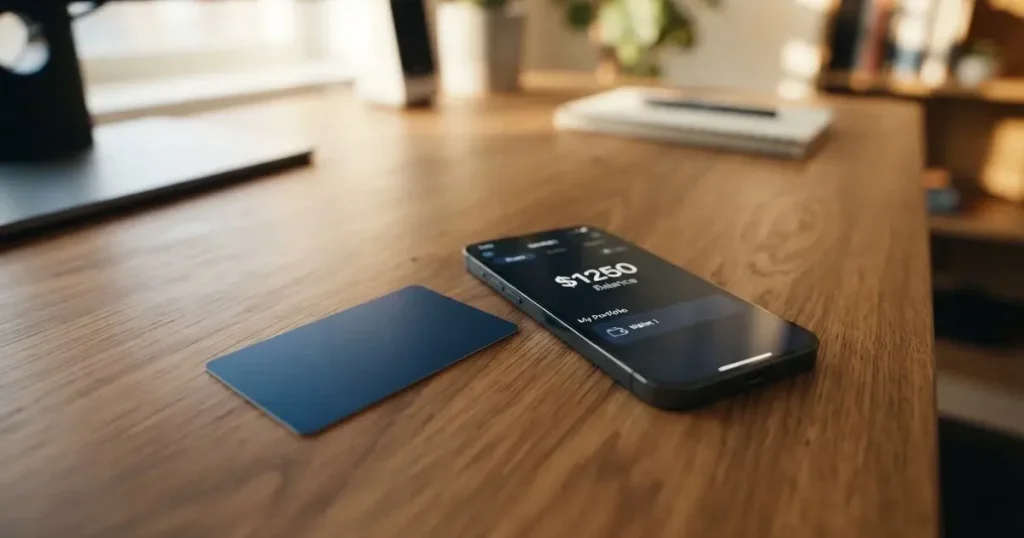
The Bitpanda card is a physical Visa debit card that lets you pay in shops and online using a cryptocurrency, a precious metal or euro balance held inside your Bitpanda account. The asset is converted to euros at the moment of payment, the card settles in euros, and the money never sits on the card itself. If you have a Bitpanda account, live in the euro area and want a straightforward way to spend your holdings in everyday life, this is one of the cleaner options on the market. If you live anywhere else, or if you do not already use Bitpanda as your platform, the card is not really built for you.
Conditions are current as of October 28, 2026.
Verdict
I give the Bitpanda card 6.5 out of 10. The setup is tidy: a single Visa debit, free to order and to keep, with a euro-area residence as the only hard gate. The issuer is a properly regulated Maltese e-money institution under Visa’s licence, and complaints specific to the card are hard to find. The weaknesses are just as real. Non-euro-area users cannot order the card, anyone who verified through Bitpanda’s Bankident flow is excluded, the spread on the crypto-to-euro conversion is not publicly disclosed, and the cashback rate is fixed at 1% — not the “up to 2%” that the page summary sometimes hints at. The card fits a specific person: someone based in the euro area, already on Bitpanda, who wants to spend crypto or metals in euros without thinking about top-ups. It is a poor fit for anyone outside the euro area, anyone who wants a virtual card, and anyone who needs a multi-currency balance.
| Criterion | Mark | Why |
|---|---|---|
| Who can get it | 4 / 10 | Euro-area residence and a verified Bitpanda account; Bankident-verified users excluded |
| Cost | 7 / 10 | Free to open, free monthly, free first delivery; reissue €5.90, ATM 2% (min €2), FX €0 but Visa adds its own mark-up; crypto spread not disclosed |
| Top-up options | 6 / 10 | Spends from a chosen crypto, metal or euro balance; Crypto Indices are excluded |
| Reliability and complaints | 8 / 10 | Issued by Transact Payments Malta Limited under MFSA supervision; no card-specific complaints found; Bitpanda’s overall Trustpilot is 4.1/5 |
| Everyday use | 8 / 10 | Physical Visa, Apple Pay, Google Pay support, ATM up to €500 a day; virtual card not confirmed |
Who They Will Give the Card To
The rule is short and a little unforgiving. To order a Bitpanda card you need a verified Bitpanda account and you need to live in a euro-area country. Residence is what counts, not citizenship, and two euro-area jurisdictions — Cyprus and Liechtenstein — are excluded by support article. If you completed your Bitpanda identity check using the German “Bankident” flow rather than document upload, you cannot order the card either; the system treats you as a different kind of customer.
That last point catches out people who joined Bitpanda to buy a little bitcoin and ended up there through a German bank. They hold a fully verified account, they can trade, and yet the card button stays grey. There is no workaround published: the card page simply says Bankident-verified users cannot order. If you are one of them, the only path is a different verification tier, and whether that is available to you depends on your account.
What is not stated on the card pages is just as telling. The list of accepted identity documents, the address-proof rules, the age minimum, the KYC tiers and the processing time for verification all fall into that gap. The card page assumes you already have a Bitpanda account that meets its standards; it does not tell you how to get one if you do not. If you are starting from zero, expect to go through Bitpanda’s general sign-up and verification first, and only then look at the card.
A practical test before you get your hopes up: open the Bitpanda app, look at the top right for the card option, and see whether it lights up. If it does not, the residence or verification rule is almost certainly the reason.
How to Get It
The card is ordered inside the Bitpanda app, not on the website, and there is no separate application form to fill in. You pick the card, confirm your shipping address, and Bitpanda mails a physical Visa to you. Delivery takes three to seven working days depending on where in the euro area you sit; the first shipment is free. The card is valid for five years from issue and a replacement is sent automatically before it expires.
There is only one card product. No tiers, no metal edition, no premium version. You can have one active card at a time, and you can add extra physical cards at €10 each if you want a second one in your wallet or to hand to a family member on the same account. Whether you can also generate a virtual card for online use is not stated on the card page; the official line mentions only the physical Visa. If a virtual number is something you need, treat it as an open question and check in the app before you commit.
Two things about the reissue fee are worth noting because the official pages disagree with each other. The fee table says a reissue costs €5.90; the FAQ says €9.90 for a card reported as damaged, lost or stolen. The lower number is the more frequently cited one, but if your card goes missing, expect the higher one. The card page also does not say which countries beyond the euro-area residence requirement can actually receive a shipment, so if you live in, say, France but have the card posted to a UK address for a relative, that route is not confirmed.
What It Really Costs — Bitpanda Card Fees
The headline numbers are friendly. Opening the account is free, the monthly fee is zero, and the first card ships for nothing. The everyday spending economics are mostly fine, with one important gap: the spread between the platform price and the mid-market rate at the moment your crypto gets converted to euros is not stated. That spread is the real cost you pay, and Bitpanda does not put a number on it.

| Fee or limit | What Bitpanda says |
|---|---|
| Account opening | Free |
| Monthly fee | Free |
| First card delivery | Free |
| Reissue (general) | €5.90 |
| Reissue (lost/stolen/damaged) | €9.90 per FAQ |
| Extra physical card | €10 each |
| Crypto-to-fiat conversion fee | Not stated; spread not disclosed |
| Non-EUR transaction fee | €0 (but “Visa mark-up fees apply”) |
| ATM withdrawal fee | 2%, minimum €2 |
| Free ATM allowance | Not stated; top VIPs get unlimited free withdrawals per VIP scheme, but the public page does not commit to a number |
| Daily spend limit | €10,000 |
| Weekly spend limit | €70,000 |
| Monthly spend limit | €280,000 |
| Daily ATM limit | €500 |
| Minimum payment | €1 |
To make that table feel like real life, three everyday payments are worth walking through. First, a €40 lunch in Berlin paid from a bitcoin balance: Bitpanda’s platform trading fee for selling the payment asset is debited from your account on each card payment — its rate is not stated on the card page — and the rest converts to euros at the platform rate, which is then handed to Visa for settlement. There is no separate FX fee because both sides are in euros, but the spread you did not see is the cost. Second, the same lunch in Tokyo paid in yen: Bitpanda’s own FX fee is €0, but Visa adds its own mark-up, and Bitpanda does not tell you how much that mark-up is. You only see the final euro amount on your statement. Third, a €100 cash withdrawal from a German ATM: 2% with a €2 minimum, so €2, plus whatever your local bank adds on top. Local-bank surcharges are not Bitpanda’s to control and they add up at foreign machines.
There is also a structural fee most users never think about. On every card payment, the platform trading fee for selling the asset you are spending is debited from your account. The card page does not put a rate on it; you see it as part of the conversion on the trade side. If you are selling bitcoin to pay for a coffee, the cost of the trade comes out of the bitcoin you are converting, and that is on top of whatever spread is in the price.
The cashback rate is a separate story. The product page body says 1% on qualifying crypto transactions. The page summary sometimes says “up to 2%”. The Product Terms, version 2.0.0 dated 1 April 2025, fix the rate at 1% of qualifying transactions, paid into your EToken wallet in the same asset you spent, and exclude non-EToken payment assets. So the real number is 1%, and the “up to 2%” wording is not confirmed. Fiat, stocks, metals and stablecoins do not earn cashback; only spending from the listed crypto assets counts.
A third-party summary at CryptoCardHub (updated February 2026) repeats the 1% figure, the 2% ATM minimum-€2 fee, and the lack of monthly or FX fees, which matches the official Product Terms.
How to Top Up the Bitpanda Card
There is no separate “top up the card” step, and that is the single most useful thing to understand about the funding model. The card is not a wallet you load. It is a payment instrument attached to your Bitpanda account, and when you tap or insert it, the asset you have chosen as your main payment asset is converted into euros and sent to the merchant. Your bitcoin, your gold, your euros — they all stay in the Bitpanda account, and the card simply tells the system which one to draw from.
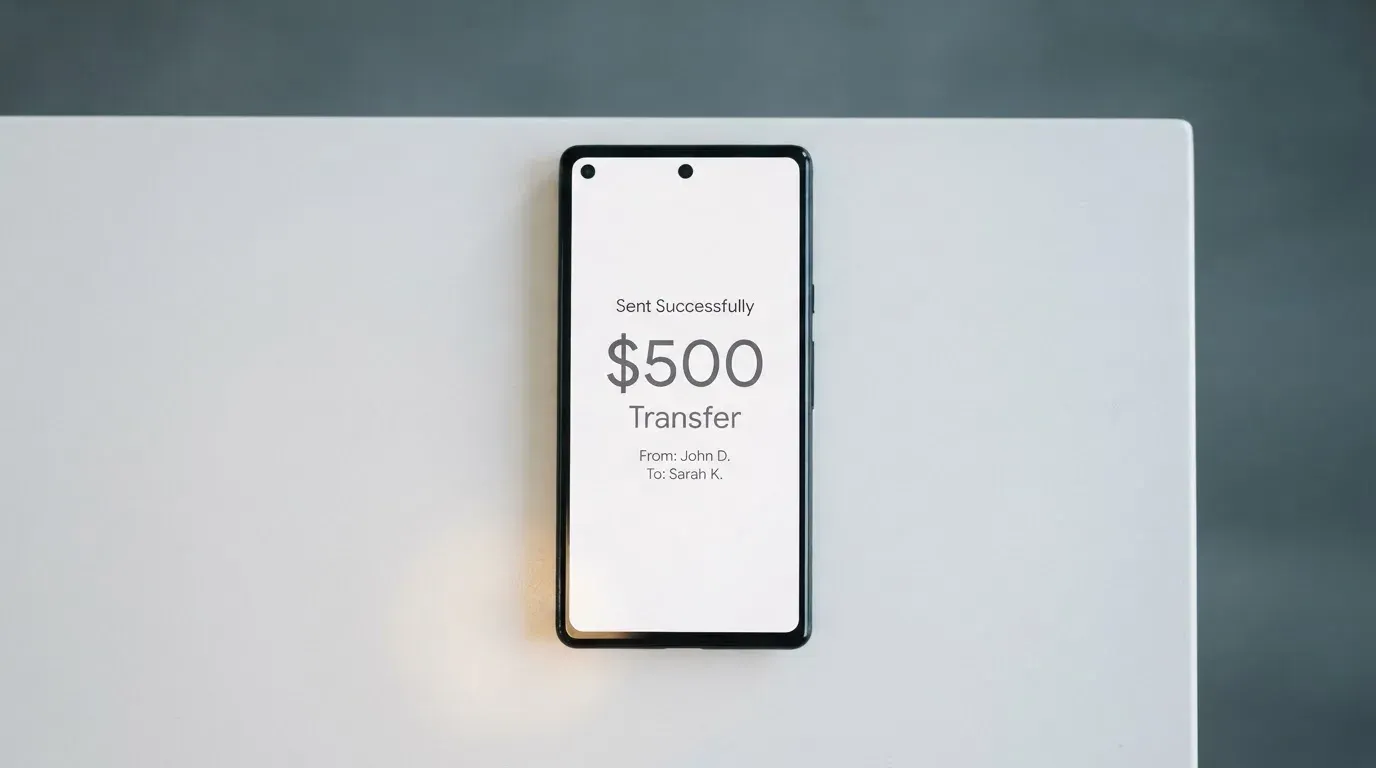
In the app you pick a main asset and, optionally, a fallback. If the main asset runs low or is unavailable, the fallback is used instead. The eligible list covers the cryptocurrencies Bitpanda trades, the precious metals, and euros. Crypto Indices are excluded. The minimum amount the card will process in a single payment is €1, so very small transactions can be declined.
To fund the underlying balance, you go through the standard Bitpanda deposit options: bank transfer, SEPA, payment methods available in your region, or buying crypto with a card inside the app. A card-specific top-up fee is not stated. Network fees for any on-chain crypto deposit are charged by the blockchain itself, not by Bitpanda, and they are paid in the native token of the chain. If you send USDT to a Bitpanda deposit address on the wrong network, the funds may be lost or only recoverable through support with no guarantee — a risk that comes with the territory, not with Bitpanda in particular.
The “main and fallback” structure is genuinely useful if you want, say, a euro balance as your main and bitcoin as your fallback for the days you feel like spending your BTC. The card does not need a manual top-up before each spend; it just reads your account and converts at the moment of payment.
Paying With the Bitpanda Card Every Day
At the till, the card behaves like a normal Visa debit. You insert or tap, the merchant sees a euro transaction, and the receipt is in euros. The card is added to Apple Pay, and a support article confirms you can add it to Google Pay like any other Visa — though the card page itself only names Apple Pay explicitly. Tokenised wallet payments are supported, and each token can be restricted by the issuer to specific channels (in-app, contactless, online) if needed.
The everyday experience has a few soft edges. The card cannot be used at certain merchant categories listed in section 5.12 of the cardholder agreement with Transact Payments Malta Limited, and that section was not read in full for this review. If a payment is declined at, say, a gambling site or a specific kind of online merchant, the blocked-merchant policy is the most likely reason. Online, 3-D Secure is in place — Visa Secure, in this case — so you may be asked to confirm a one-time code or a biometric in your banking app on top of an Apple Pay or Google Pay confirmation.
There is no virtual card number published on the card page, so the single-use online card numbers some issuers offer are not a confirmed feature. If you shop online often, that is one of the few things you cannot do as cleanly here as with some competitors. ATM withdrawals work with a €500 daily limit, and a 2% / €2 minimum fee applies. Free ATM withdrawals used to be a perk for the top Bitpanda VIP tier; the VIP scheme moved to a Vision (VSN) token in July 2025 according to a third-party source, and the card page does not commit to a free-withdrawal allowance in writing.
Refunds, chargebacks and disputes follow the standard Visa rails with a few wrinkles. The Product Terms say refunds including chargebacks are credited to the EUR wallet minus fees. An older card-account terms page — which names different issuers (Contis and Solaris), so it may not apply to the current Transact Payments Malta card — tells users to contact the merchant first, to report unauthorised or incorrect payments within 13 months, and to expect a decision on a refund within 10 business days; for unauthorised payments, the refund is processed no later than the end of the next business day after notification. None of this is unusual for a Visa debit, but the older page and the newer product terms do not perfectly agree on the issuer, and that is a small flag.
On the app side, the Bitpanda app is available for iOS and Android. The Google Play rating, taken from AppBrain (an unofficial third-party page seen in October 2026, possibly out of date), sits at about 3.6. That is a usable app, not a beloved one, and the rating is not card-specific.
What Can Go Wrong
The honest answer is: not much that is card-specific, and quite a lot that is platform-specific. On the card side, the issuer is Transact Payments Malta Limited, a regulated e-money institution supervised by the Malta Financial Services Authority under registration C 91879. The card runs under a Visa Europe licence. That is a serious regulatory footprint and it is the main reason the card earns a respectable mark on reliability: there is a real licensed entity on the other end, not just a brand and a marketing site.
The risks live higher up the stack. Bitpanda is a custodial platform, which means your crypto sits in their wallets, not yours, and the card does not change that. The user holds no private keys; if the platform has a bad day, the card is the least of the worries. Custodial failures are not a theoretical concern: Mt. Gox, Coincheck and Ronin Network each lost hundreds of millions of dollars, and the lesson from history is that “regulated” and “safe” are not the same word. The Lithuanian deposit insurance scheme does not cover the safeguarded funds of an e-money institution, and the older Bitpanda card-account terms page says the cardholder’s liability is capped at €50 in cases without gross negligence. That is reassuring in one direction and not in another.
A second category of risk is operational. If Bitpanda opens a “Proof of funds” review on your account, all payouts — including the card — are disabled until the review closes. Reviews happen during compliance checks, and the experience of waiting them out, according to user reports, ranges from a few days to several weeks. While a review is open, the card simply does not work for outgoing payments. If you depend on the card for rent, that is a hole in your cash flow.
The complaint picture for the wider Bitpanda business, as of 20 October 2026, is mixed but not alarming. Trustpilot shows 4.1 out of 5 from about 15,896 reviews, with 73% five-star and 17% one-star. The 17% one-star bucket has themes: blocked withdrawals, account restrictions, high currency-exchange commissions, slow support during compliance reviews, German replies to English-language messages, and a deposit-cashback promotion reportedly paid only in part. None of these complaints is specifically about the card; they are about the platform that the card sits on top of. The third-party AI-generated summaries on rfp.wiki mention frozen accounts, KYC friction and support under stress, but I would not lean on those as primary sources.
A third risk is regulatory drift. The EU’s Markets in Crypto-Assets regulation (MiCA) has been phasing in since June 2023, with the asset-referenced and e-money token rules applying from 30 June 2024 and the crypto-asset service provider rules from 30 December 2024. The grandfathering period runs until 1 July 2026, after which providers either hold a MiCA authorisation or stop. The card itself is a payment service, regulated separately under e-money and payment-services law, and the platform running it depends on two licences: one for the crypto side, one for the card. If either licence changes, the product changes with it.
Finally, the cashback wording. The card page summary says “up to 2%”; the Product Terms say 1%. If you do not read the Terms, you might plan around 2% and be disappointed with 1%. That is a small risk, but it is the kind of fine-print gap that catches people out.
What to Take Instead
If the euro-area-only rule is a blocker, or if you want a virtual card, or if you want cashback that you can actually plan around, three other cards are worth a look. None of them is a clone of Bitpanda, and each one makes a different trade-off.
RedotPay (6.9/10) is the most internationally available of the three, though “internationally available” still has a long exclusion list. Residents of around 47 places — including the United States, India, Indonesia, Morocco, Nepal, Singapore and Turkey — cannot be issued either the virtual or the physical card. Russia, Belarus, Ukraine and Serbia are on the restricted list on both the KYC and card-issuance sides. The card itself comes in two flavours, a USD card and an HKD card, each with its own BIN. The virtual card costs US$10 to issue, the physical one US$100 (non-refundable), and account maintenance is free. Transaction fees are 1% on the crypto conversion, 1.20% on non-default-currency transactions, with a small-auth waiver for the first five transactions of US$1 or less per card per month and a declined-transaction waiver for the first three. Funding is by on-chain deposit (USDT-TRC20 minimum 1 USDT after network fees) or by buying crypto with a credit card in the app. A 5 USDT welcome reward is paid, valid for 30 days and not usable towards the issuance fee. There is no card cashback rate published; rewards live in a separate “Points & Rewards” programme.
Wirex (6.7/10) sits in a different position. The service area is “Worldwide (130+ countries)”, and card availability depends on your region, with fees published for the UK, EEA, APAC, Singapore, Australia and “Other”. In Singapore, cash withdrawals are not permitted. Card issuance is free in the published regions; the metal card costs 45 GBP in the UK and €45 elsewhere, with free DHL Express shipping in the UK. The card page advertises no annual or foreign exchange fees, but the FX fee on the fee page is described as “market-leading exchange rates” with the actual rate shown in the app before you confirm. One-off fees include a 30 GBP administrative charge for accounts that breach the general terms. Funding is by SEPA, Faster Payments, ACH or PIX, and the account holds cash, stablecoins and cryptocurrencies. The Cryptoback programme pays in WXT, ranging from 0.5% (Standard) to 3% (Premium) to 8% (Elite, the metal card); the metal card’s headline is “up to 8% back in WXT”. A long list of MCCs is excluded from rewards, including gambling, crypto purchases, cash advances and a number of money-services-business codes. Wirex is the broadest of the three on geography, and the most complex on fee structure.
COCA (6.4/10) is the lightest touch. It is available in the UK, EEA, Asia, South America, the Middle East and Africa — the card page does not enumerate the full list — and its terms define a separate list of restricted jurisdictions (Afghanistan, Iran, Iraq, Cuba, Syria and others). The card is a Visa, physical and virtual, with the currency not stated. Fees are “disclosed at the time you access the Service” rather than published on a fee table, and the site advertises “fee-free swaps” without committing to a card-specific fee schedule. Rewards are up to 8% cashback in stablecoins on card spend and up to 50% on subscription services (Netflix, Spotify and similar), with the higher tiers requiring $COCA to be held in the wallet; once you cross the tier’s monthly cap, the rate falls to 1%, and downgrades have a 30-day grace period.
If you live in the euro area and are already on Bitpanda, none of these three is a clear improvement on the Bitpanda card for euro spending: Wirex charges you for the metal card and offers variable FX, RedotPay’s USD/HKD focus does not help in euros, and COCA’s fee transparency is poor. If you live outside the euro area, all three are more accessible than Bitpanda, and the choice comes down to which fee model you prefer and whether you want a virtual card.
Who I Would Recommend It To
The short list is short. I would recommend the Bitpanda card to someone who lives in the euro area (excluding Cyprus and Liechtenstein), who already has a verified Bitpanda account, who has not verified through Bankident, and who wants to spend bitcoin, ether, gold, silver or other listed assets in euros without thinking about top-ups. The free issuance, free monthly fee and the Apple Pay / Google Pay support cover the practical day-to-day, and the regulated issuer is the kind of detail that does not matter until it does.
I would not recommend it to anyone outside the euro area, to anyone whose Bitpanda account was verified through Bankident, to anyone who needs a confirmed virtual card, or to anyone whose primary need is to earn cashback at a competitive rate — the 1% rate is real, the “up to 2%” line is not. I would also be cautious about relying on the card as a sole payment method during a compliance review, because payouts including the card are paused while a “Proof of funds” request is open.
If you are in the target group, the card is a quietly competent product. It does not try to be the most rewarding card on the market, it does not advertise the lowest FX, and it does not pretend to be something it is not. It spends your Bitpanda balance at the till, it is regulated, and it works. For the right person, that is enough.
Frequently Asked Questions
What is the Bitpanda card?
The Bitpanda card is a physical Visa debit card that spends the cryptocurrency, precious metal or euro balance held in your Bitpanda account. The chosen payment asset is converted to euros at the moment of purchase and the merchant is paid in euros, so the card behaves like an ordinary Visa debit at the till.
How does the Bitpanda card work?
You pick a main asset in the Bitpanda app and optionally a fallback. When you pay, the system sells the chosen asset for euros at the platform rate, the card network settles the transaction in euros, and your balance is debited. There is no separate top-up step: the card reads the underlying Bitpanda account.
Is Bitpanda a bank?
No. Bitpanda is a crypto platform, not a bank. The card is issued by Transact Payments Malta Limited, an e-money institution regulated by the Malta Financial Services Authority under registration C 91879, and it runs under a Visa Europe licence. Bitpanda Payments GmbH provides the payment services on the platform side.
Who owns Bitpanda?
The product terms name Bitpanda GmbH, based in Vienna, as the contracting party for the card, with Bitpanda Payments GmbH providing payment services. The platform is privately held; ownership details are not on the card page.
Is the Bitpanda card available in my country?
The card can be ordered by residents of euro-area countries, with Cyprus and Liechtenstein excluded. Delivery countries beyond the residence rule are not stated on the card pages, so if you are unsure, the most reliable test is to open the app and see whether the card option activates.
How do I get a Bitpanda card?
You order it in the Bitpanda app after your account is verified. Bitpanda mails a physical Visa to you, delivery takes three to seven working days, and the first shipment is free. The card is valid for five years and a replacement is sent automatically.
Does the Bitpanda card require KYC?
Yes. You need a fully verified Bitpanda account, which means completing the platform’s standard identity verification. The card page does not list the accepted documents, and users verified through the German Bankident flow cannot order the card.
How do I add the Bitpanda card to Apple Wallet or Google Pay?
Apple Pay is named on the card page. A support article confirms the card can be added to Google Pay like any other Visa, even though the card page does not mention it directly. Open the wallet app on your phone, add a card, and follow the prompts.
Is the Bitpanda card safe?
The card sits on a regulated issuer (Transact Payments Malta Limited under MFSA supervision) and uses standard Visa safeguards including 3-D Secure, anti-fraud monitoring and app-based card freeze. The custodial risk sits with the platform, not the card: if Bitpanda has a bad day, the funds in your account are at risk in a way the card cannot fix.
Is the Bitpanda card worth it?
For someone in the euro area who already uses Bitpanda and wants to spend crypto or metals in euros, the card is a clean and low-fee option. For anyone outside the euro area, anyone who verified through Bankident, or anyone chasing high cashback, the value drops sharply. The 1% cashback is fixed by the product terms, the conversion spread is not disclosed, and the card pauses during compliance reviews, so the value depends on whether those constraints fit how you actually want to spend.
App and neobank cards – cryptocardsranked
Content created by the «cryptocardsranked» team